The Shelf Life of Leadership Knowledge Is Shrinking; Here Is What Replaces It | Newday
 Apple Podcasts
Questions Answered in This Episode
- How should healthcare leaders navigate fear and trust during AI transformation?
- What replaces leadership knowledge when its shelf life keeps shrinking?
- Why do successful leaders find the common ground when technology swings the pendulum?
- How can organizations leverage AI they're already using without realizing it?
- What's the leadership shift required to displace yourself before AI does?
About This Episode
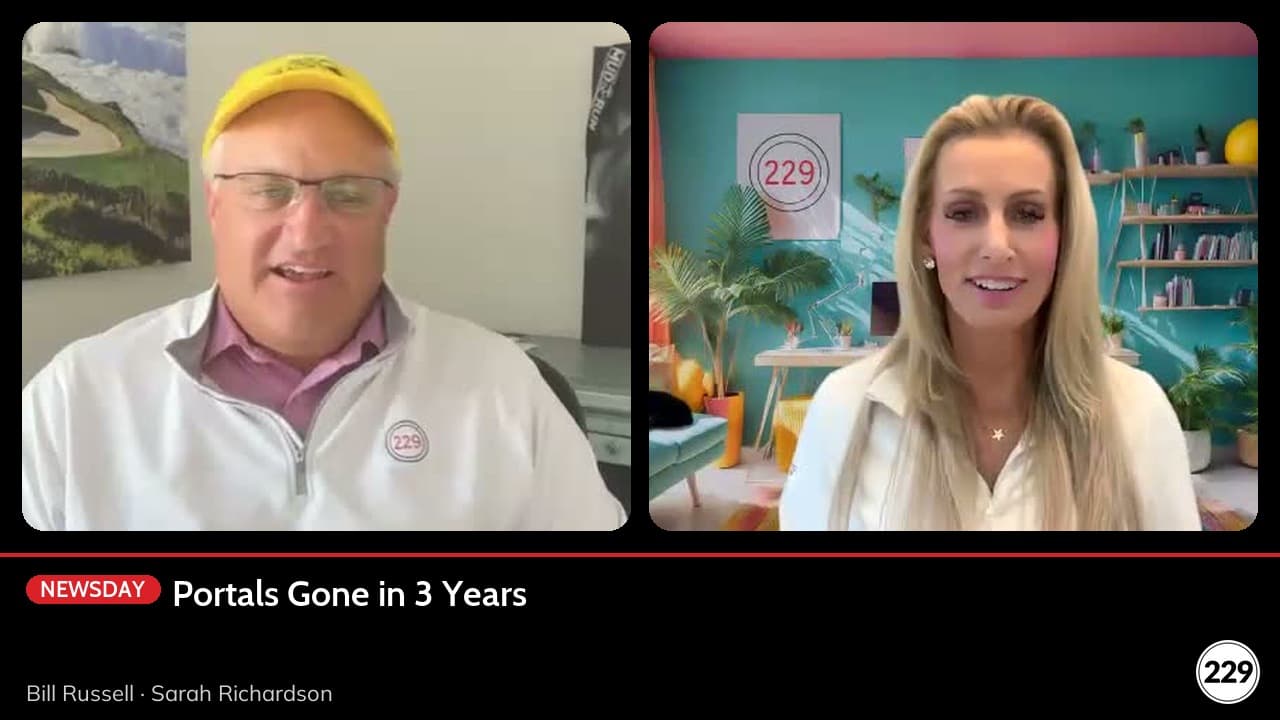
May 25, 2026: Bill Russell, Drex DeFord, and Sarah Richardson turn the episode into an informal review of Sarah's MIT AI Strategy and Leadership course, and the insights are worth the homework. From the surprisingly perfect parallel between today's AI resistance and the original Luddites, to the counterintuitive finding that the organizations succeeding with AI are the most operationally aligned, not the most technically advanced, this conversation cuts straight to what healthcare leaders actually need to know right now. Lead with curiosity, start with clean data and aligned people, and remember that the real AI differentiator is not automation. It is velocity.
Key Points:
02:27 Inside the MIT AI Class
08:42 Trust and Leading Through Change
18:41 Operational Alignment Wins
22:52 Curiosity and X Teams
26:17 Courage and Closing
Keep up to date on the latest in health IT:
https://thisweekhealth.com/news/
Donate: Alex’s Lemonade Stand: Foundation for Childhood Cancer
Transcript
This transcription is provided by artificial intelligence. We believe in technology but understand that even the smartest robots can sometimes get speech recognition wrong. The Shelf Life of Leadership Knowledge Is Shrinking; Here Is What Replaces It | Newday I'm Bill Russell, creator of this week Health, where our mission is to transform healthcare one connection at a time. Welcome to Newsday, breaking Down the Health it headlines that matter most. Let's jump into the news. Bill Russell: All right, it's midterms, and today we are joined by Drex DeFord and Sarah Richardson. Um, and Drex and I have decided, uh, as you guys may have known, th- uh, Sarah Richardson is taking an MIT course, uh, around AI. And so what we decided to do was... 'Cause, you know, you can't, you can't do tests anymore because they, they use ChatGPT and they answer questions. So we thought we would do an open book test, uh, with, with Sarah on, uh, on, on what she is learning. Let's, let's start this off with giving everybody a little bit of background. So Sarah, what, what's the name of the course? Sarah Richardson: It is the MIT, uh, AI Strategy and Leadership. It's essentially calls it, like [00:01:00] thinking, you know, in the new world what we're up against, and it's highlights the fifth industrial revolution that is the tsunami of AI that is facing all of us today, healthcare and beyond, essentially. So funny enough, though, Bill Russell: So that's how they're, that's how they're pitching it, the, the fifth industrial res- revolution? Sarah Richardson: Yeah. Bill Russell: I... That took a little bit of time to kick in in healthcare. I mean, there was, there was some doubters like, "Hey, people are talking about... This is like cloud computing. This is like blockchain. This is like..." And then it started to l- like pick up, and now there-- I don't think there's a CIO in the country that's not ta- having this conversation and talking about it almost on a daily basis. So, Sarah Richardson: And I'm in the class with two of our CIO community members because, again, the, the class positions itself as thriving in a new world of AI. So I'm in the class with Lisa Johnson. Uh, actually, she's a VP of technology for... but under CHRO, so she's got like 17 hospitals and, uh, Tamara Havenhill Jacobs. So the three of us have [00:02:00] our own chat where we regularly either are giving each other cheers or we're lamenting of like, "Whose idea was it to take this class in the middle of everything else that we do every day?" Drex DeFord | 229Project: It Sarah Richardson: And Drex DeFord | 229Project: your idea too, wasn't it, Sarah Richardson: it was my idea, and then I advertised it, and they signed up. We will be done. The- they're both chairs for our upcoming June CIO Summit, so we will all be done with class before we get to Napa. So we will be celebrating with, uh, some fruits of the Napa Valley for sure. Drex DeFord | 229Project: Hmm. Bill Russell: Not, not to give M-MIT a chance for, uh, free advertising here, but what, what's, what's the class like? Is it-- So it's, it's, it's all remote and it's, it's all online. How, how do they, how do they make it dynamic? How do they make it engaging? Sarah Richardson: A couple of different ways. So the recorded content is a mixture of reading and videos from all kinds of expert sources, which is really interesting because it's multi-industry, a perspective I always appreciate, inclusive of healthcare. And then they have two live office hour sessions if you're able to attend, and then those are recorded so you can go back and watch them. So each [00:03:00] week, a new module gets released. They are all cumulative upon the previous learnings. You have pillar one and then pillar two, a couple of different just really specific sessions overall. Like pillar one, the first six weeks of class was data strategy, leveraging business for AI, really all of the, the basics to the dynamics, the history. And now part two, which we're halfway through the second component of class, is about AI leadership. And so, um, just really, really cool. I Drex DeFord | 229Project: ん。 Sarah Richardson: is literally the mad scientist. He's absolutely one of the most engaging instructors, even just listening to his recorded content. Just love him. Um, but you really get to see how AI enables new enterprise activities. You learn the, the leadership that are important to have out there, but you also create the organizational and departmental AI and data strategy. You assess and evaluate your current organization's mindset, your team's ability to [00:04:00] innovate, uh, and challenge the status quo, and then also do future architecting for your own organization, individuals, teams, and systems. What I find most fascinating... And you have quizzes, graded quizzes. You have a weekly assignment. This last week we had a simulation, which they said takes 90 minutes. Nobody who plans thoughtfully and likes to map out how to get stakeholder engagement is gonna only spend 90 minutes, so I was up till well after midnight on Sunday doing that exercise. I did obviously, do well. I'm pretty retentive in that fashion. What I love most how much it focuses on your data strategy, your data governance, and then where you can layer in aspects of AI following that. the change management leadership strategy components that are required. So- There's a part of me that says, "I know we did everything right in my last role because we literally are-- have, like, followed the MIT playbook historically." And then what we're bringing forward here at This Week Health and [00:05:00] how we continue to inform not only our CIOs and CXOs in the 229 community, but how we are utilizing AI inside of This Week Health to produce some of these newer capabilities, absolutely fascinating. So I feel like I get an A for the work I did before, I get an A for the work I'm doing in class now, and we get an A at This Week Health because of the way we are leveraging all of the things that have, have been taught, but also that we're doing as we move forward. So that was a long dialogue. Although more than anything, I'm so grateful to be taking this because the timing is absolutely ideal. Bill Russell: So, um, I was kidding about the midterm. We're not gonna quiz you on all this stuff, but you have been sending over, some, some great, some great quotes. And Drex, I'd, I'd love for you to weigh in on some of this as well. The, um... And, and you-- I, I wrote a couple of them down over there on my board. You sent a couple in email Um, you know, the s- shelf life of leadership knowledge is shrinking. AI is not just a technology shift, it's a leadership sh- shift. I wanna talk about leadership a little bit and, uh, and Drex, I, I'd love for you to, to, to weigh in here [00:06:00] as well. Um, uh, what, what is the leadership shift? Is it a, is it a mindset shift? Is it a shift in skills? Is it a... just the amount of pressure that's, you know... And when you go into these new eras, I wrote, I wrote in my article about the Luddites, and the misnomer about the Luddites is that they were technology averse. Drex DeFord | 229Project: Yeah. Bill Russell: And if people don't know the story, you can look up the story, but the, the short story of this is people used to create things with looms in their houses, and it was their job, and they would create these things. They would create one, uh, at a time. And then factories, uh, started buying these machines, which could do, you know, 10 at a... Drex DeFord | 229Project: It Bill Russell: Yeah, ste- steam power. Drex DeFord | 229Project: right? Bill Russell: And then so the Luddites actually would go into the factories and destroy the, the new machines, and they got, uh, the reputation of being technology averse. And I made the point they're not technology averse, they're, um, they're displacement averse. Their, their whole livelihood, their whole whatever [00:07:00] had been displaced and, um, and, and so they revolted. We're in a, uh, this, these changes of this magnitude really accentuate leadership. What, what should today's leaders be thinking about, and how should they be approaching this? Drex DeFord | 229Project: I've been on the bandwagon now for a while about trust and, um, and I think fear and trust are kind of two things that go together. Sarah, I looked at some of the notes, you know, thanks for sharing notes from the class. But fear is one of the things that, um, that you all talk about in the class, so I'd like to hear more about that. But this idea of like people are afraid and, and they're not... It's not-- They're afraid for a lot of different reasons. They're afraid that their job is gonna be eliminated. They're afraid that they're gonna lose their income. They're afraid for their kids who, uh, programming seemed to be a really good skill that their kids would be able to make a great living on, uh, for the next twenty-five years. And over the last two years, that has become like, I don't know that we need at the rate or [00:08:00] the volume that we have them today. So there's just a lot of fear around a, a lot of stuff, which gets to the trust issue. I can't trust what I see. I can't trust what I hear. I can't trust the email that my mom sent me this morning. Uh, all of that is the thing that leaders are trying to navigate today and trying to sort of help their teams through this of there's some mourning that's going on. I mean, I think there's a lot of things that are happening right now. How are you guys talking about that in the program? And, and how, how has that come up as like topic that seems to kind of be a part of every topic that you have in the, in the program? Sarah Richardson: Yeah. Here's why I love what you shared, because even I do that. Like, even internally I'm like, "Is this email real? Is this person, you know, is this who we think it is?" And that's just the email aspect. I was talking to one of our CIOs yesterday in our community as well for a, for a summit prep, and that person preparing for a board presentation about how they are dealing with too much governance [00:09:00] in their organization, but also the idea of technical entrenchment, how people are just now like hunkering down, like over, you know, their burrow because Anytime we introduce things that are new and scary to people, there's always that pendulum factor. We've talked about it for years. You're here, it swings over here. How do you bring things back to the middle? And to me, that's where those most successful leaders will find the common ground, is how quickly you can reconcile the swinging of the pendulum to a way that feels like the technology's exciting. It's, when we tried to, you know, when we tried to block the internet when it first came out from people going out there and wasting time, until then it became this huge productivity tool, and you had to find those champions. Drex DeFord | 229Project: Yeah. Sarah Richardson: is really the same thing, and one of the presentations I've given at a couple different industry events recently is, look, AI's been around for a long time. It was 2022 when the gauntlet started to spin up because of the chat capabilities and generative properties. But we've always used predictive analytics, clinical decision support. I [00:10:00] mean, I remember the biggest PO I ever signed was for clinical decision support with McKesson back in 2001. It was like a million-dollar PO, and I thought it was a big deal at the time. So now you've got that same perspective coming in with AI. Find the use cases that make sense. Find the capabilities that an organization really needs to lean into, and it may or may not start with something that goes from predictive to generative to agentic. But those pieces are all in there, and you're already using ML and these other components inside. And so when people realize they're already using something, they just didn't know that that's what it was called at the time. Oh, and by the way, here's some really cool ways to leverage our data and to get the insights and to get rid of repeatable processes. Those are the things that make the most sense first. We're starting to see it from some of our community members, but the fear is when you actively are the one seeking to displace yourself before you get displaced by something else. And how do you go about it thoughtfully? The number one thing, though, you gotta have clean, [00:11:00] trusted, unbiased data in a way that each person becomes the owner and the stewards of that information. But guess what? Along with governance, which we've all talked about for 30-plus years, that's the same in terms of how you leverage, manage, and think about best ways to create new opportunities with the data that's inside your organization. Bill Russell: I-I'm gonna go back to the question, um, how do leaders approach this? Uh, it, it... If people follow me on LinkedIn, I wrote, I write, uh, the CIO Playbook on Tuesday, I do Fiction on Thursday, and then I do, um, bre-breakfast with Albert on, on Saturday. Each one has a little bit of different tone to it. On Tuesday, I'm looking at what we're hearing in the, in the industry. I'm, I'm trying to really identify where things are going and to build frameworks for people so that they can, they can sort of make sense of what's going on in, in their world and that kind [00:12:00] of stuff. It's more definitive. I'm saying, "Hey, here's a framework. Use this. Think about it this way." On Saturday, it's, it's more, uh, it's more follow me along on this journey. I'm not really sure where it's going. And, and I, I take you into places where I, I back myself into a- an alley and I say, "This is what I did with AI. Man, what a mistake." Like, I, I thought, I thought this was gonna happen and this happened. Like, it's just sort of telling people, it's like, "Hey, we're all sort of figuring this out as we go." Drex DeFord | 229Project: The Bill Russell: Um, kind- Drex DeFord | 229Project: a kick out of right now is the y- you've created the, the trading, uh, bots and the different, uh, versions of the trading bots and watching how they're doing in the Bill Russell: Yeah. Drex DeFord | 229Project: It's Bill Russell: And, Drex DeFord | 229Project: it's very Bill Russell: I created, like with the most me in it, performed the worst. Drex DeFord | 229Project: Yeah. Bill Russell: the one with the most... A- actually, the one with the most me and AI working together is performing the best, Drex DeFord | 229Project: All right. Bill Russell: is, That, that is sort of the moral of that story, which is, and I let AI kind of like create its own, and that's not per- It's performing better than the one I created on my own. But, um, but there is this, this sense in which what, what a leader does is, um, with... And I think I shared this with you before, you know, definition of leadership is you have followers Right. [00:13:00] So do you have people who are saying, "Well, they're out in front." Now, you don't have to be too far out in front, you just have to be out in front and be able to say, "Hey, I stuck my head around the corner. This is what I saw. Let's, let's go around the corner." You don't have to say, "This is where it's gonna be in three years," 'cause none of us know where this is gonna be in three years. But you can say, "Hey, this is where I think it's gonna be in the next three months. This is where I think it's gonna be in the next six months. Like, let's, let's take a few more steps around this corner together and get there." And you're... And again, you're building that off of trust. You're learning together, you're figuring it out, um, uh, and, and you're not, you're not putting out anything more than what you have and what you can put out there. You're not the expert on where AI is going to go. But you can study things like the Luddites, because that's almost a perfect example of, hey, steam engine came in, and if you look at the turmoil, and it was tumultuous. Complete shift in the economy, complete shift in, uh, cities, cities, rural. [00:14:00] And same thing when the car came out, you know, you had suburban, urban. I mean, there's big changes that happen culturally, that happen, uh, economically, and you, you, you should study those, those, those times of, of change right now, because that's what we're heading into. And it's, uh... Yeah, and p- and people are looking for, "Hey, w- what is around the corner?" Drex DeFord | 229Project: What advice do you have for me? Bill Russell: Yeah, and how... Drex DeFord | 229Project: interesting too, I think this idea of building community around This new thing that we have creates an opportunity for there not to just be one leader, but for us to have sort of like co-leaders that are feeding on each other and teaching each other, the good things and the bad things. Don't do this. I tried to do this. I mean, it's part of what you're writing on Saturday, right? Here's what I did. I thought this would work really well. Let GPT go trade on its own, and it turns out that's not, you know, that's not the best version. It's those kinds of things as [00:15:00] you sort of experience them and then share with others that can help everyone go faster, I think. Bill Russell: Yeah. Uh, Sarah, I wanna come back to, uh, one of y- one of your one-liners, and I think it's an area where you, you excel. Uh, "AI doesn't fail because of the technology fails, it fails because organizations resist change." Sarah Richardson: Mm-hmm. Bill Russell: Um, I was, uh, I was talking to someone who essentially said to me... Oh, no, it was the, it was the Stanford article. We talked a little bit about this last week. they were surprised that the, the IT organization was a, a little bit AI aver- not a little bit, they were AI averse. They're like, "Hey, what... Let's figure out what this means first before we st- start sprinting down this, this street." Um, talk a little bit about, I, I'd love to hear what they're talking about in the class, but I'd, I'd love to hear your thoughts as well on, uh, organizational change and how you bring an organization along on this journey Sarah Richardson: It's truly about the people, and in healthcare it's about the people more than anything. And so you've got those workflow-heavy environments. You've got regulation, [00:16:00] fragmentation, people's lives are at risk. And when- You start to consider truly that you can get a framework from MIT or anywhere else. Then you come to 229 Project, where you can get some of that, real-world validation of what needs to happen because the things are actually the people. What are we doing about clinician burnout? Well, we talk about the ambient listening capabilities. What are we doing about workflow redesign? Go back to the production model that Drex likes to talk about. Figure out the workflow first because that's the scariest thing people are used to. Trust. Does the patient trust how you're using technology and how you're bringing them into the loop? Are we sharing data appropriately through interoperability? Do we have the right quality metrics in place from a data perspective? How are we governing this without becoming too process-heavy? Because if you have data governance and you have AI governance and you have security governance, and now you've got these other pieces in there, these shouldn't be separate. A- you shouldn't have a chief AI officer separate from your data officer, separate [00:17:00] from your information officer, separate from your in- innovation. My two cents on all of this. Drex DeFord | 229Project: Yeah, that might be heresy. There might be some Sarah Richardson: might be heresy, but everyone's always, you know, scrabbling for, like, this title of this new thing, and all these titles are now changing and perspectives. The thing is, all these people still have to come together to make good choices for the outcomes we're looking to, to deliver in healthcare. And so you can build your empire and your fiefdom. You also can sit there and think, how many titles or people does it really take? Throw all the titles out the door. Are the right people at the table having the right conversations about what needs to happen? If you have bad operations, if you are not operationally aligned in your organization, that starts at the top, starts with culture, all you're gonna do is have these silos that don't ever come together, and it's always somebody else's mess to clean up. Favorite thing that Drex always says is, "You're just gonna make a train wreck even faster and messier than you did before." That's not just because you didn't fix the workflow. That's because operationally the humans weren't aligned. You get great workflows, and you get great people figuring things out, what can't you do together? And we see this so well with, um, Vituity, you know, with Amit, who's one of our 229ers as well. They have regular hackathons. They solve 1,400 hours' worth of problems all the time 'cause they're all bought [00:18:00] into, what can this do for us? Like this. They're excited about the disruption. Um, the reason my last team was so successful is because I had a bunch of rock stars who all wanted to do something drastically new and different. And most of us left because the organization was gonna put a Ferrari on a dirt track. That's a, that's a David Jimbruno quote, and giving a little bit of shade to my last org. But it's true because so what? You're gonna have all this amazing capability and if you're not gonna do anything with it, then you just spent a whole lot of money to really not do much particularly differently other than save dollars. And this is not about just saving money. This is about saving lives. Bill Russell: I, I wanna come back to something that, uh, Sarah just said for you, Drex, which is, uh, organizations are succeeding with AI aren't necessarily the most advanced technically, they're the most aligned operationally. Is that right, Sarah? Most aligned operationally. Sarah Richardson: Yes Bill Russell: Um, Drex, that, that does feel like it's in your wheelhouse. What are your thoughts on [00:19:00] that? Drex DeFord | 229Project: Yeah, no, I mean, that, that makes, you know, great sense to me. I think that the... If you're aligned organizationally, and this gets back to the whole titles, like we can have 40 titles, that's fine, whatever. It's a team sport. healthcare is a team sport. We talk about cybersecurity is a team sport. All of these things, they all... Everything's connected to everything else. Nothing happens without the other part of the machine moving, right? So you kind of have to be aligned, and you have to be headed in the right direction. And the more you know, you know and understand about the workflow all the workflows are connected together, the more likely you are to be able to do something like use AI to figure out, where do I find big savings that can take pressure off the people who are part of that workflow, who can make sure they get home on time, who can make sure that we are doing things that are better for patients and families? I think the alignment's incredibly important. I think the other part I would say, transparency in all the work that you're trying to do is incredibly important because that fear and that [00:20:00] lack of trust, transparency is kind of like the lubrication that helps those changes happen. It keeps those antibodies change, right? And like, uh, I've sort of written this article several years ago about how change are healthcare pe- people who work in healthcare who really have as like an additional job additional job duties, antibodies to change. Anytime somebody wants to change something, their job is to go out and fight against that change. But transparency kind of takes a lot of that away. People can't make things up in their head. They know what's really happening, and they can get on board and go along for the ride too. So, um, transparency turns out to be a really important part of it. Bill Russell: , There's a heavy emphasis on automation when we, when we have conversations around AI, and it's not, it's not wrong to have that conversation. I understand it's, it's probably the immediate, uh, ROI to, to AI is, is automating something. But it would seem to me that [00:21:00] Velocity is the, is what we're going to look back on and say, "This is what changed everything." The speed at which we're able to move, the number of new ideas we were able to, uh, come up with. Um, this is where that alignment becomes so... The operational alignment becomes so, so critical because I don't-- I think each organization i- is going to be able to come up with a, a new set of ideas and thoughts. I mean, every CEO, every CIO, CTO, whatever, can sit down with, with a large language model and, um, if they know how to use it, it's not only a mirror back to them, it's a good thought partner. It... You can say, "Hey, challenge me. Give me, you know, different ways." And you can have really strong conversations. In fact, the kind of conversations that you would only have, you know, every now and then in the industry running into people, you can now have, like, on a, on a daily basis and say, "Hey, challenge my thinking. Hey, let's bring in all this thinking from, you know, these articles, this, uh, YouTube video, whatever, and how does [00:22:00] this impact our thinking and our approach?" Or, uh, "How can I apply this to, you know, this healthcare system?" and that kind of stuff. So you can have really... The, the amount of ideas is not going to be the bottleneck. It is going to be, it's going to be velocity. The ability for the organization to learn, to implement, to grow, uh, rapidly, and that is going to be around alignment. It is, um... And th- this is what I think I, I liked the most about that Stanford article, was, uh, you know, taking that all-day session and having those conversations. Not necessarily, "Hey, here's what the technology can do," but the conversations of, "Okay, let's find out where everybody's at so that we can get everybody on the same bus, uh, and thinking the same way in terms of how we're going to, uh, utilize this and how we're going to approach it." This is, uh, these are fun times. Sarah, what would you, you know, I, I love these, these notes that you s- you sent over. I feel like Drex and I get to go to the [00:23:00] class, without going to the class, which is the best way to go to class. What's, what's your, uh, what's your biggest takeaway from this? Sarah Richardson: My biggest takeaway right now is how important it is to continue to be curious as an executive, To lean in, ask better questions, not just try to chase something that's happening in the industry right now, and finding ways to prove the model out in the small incremental wins. It's nothing d- that we haven't already done before. And what's really cool about so much of the way that the technology is established inside of healthcare is that we already have the information available to us. And so if we can combine the technology, the operations, the humanity, a little bit about the people process technology, but put that extra lens on it, Then we start to appreciate transformation Uh, as a continuous process inside of our organizations in ways that people are empowered to make those [00:24:00] decisions. One of my favorite concepts from class, and I've done it in the past, I believe we all have, I used to call them pods or ninja squads, tiger teams, is the idea of an X team where you're constantly sourcing external perspectives to amplify what these core teams are doing inside your organizations. Because if you get too many people who have been in one place for too long, it becomes very insular, and you don't even know how to do a workflow differently because you've never seen it any other way. Drex DeFord | 229Project: Mm-hmm. Sarah Richardson: And that's where the wins with many of our partners come through and say, "I see this at 100 health systems every single year," and we do, too. Have you thought about X or have you thought about talking to so-and-so? It's-- I believe it's what made all of us very successful when we ran major healthcare systems, and what keeps us nimble today as a team of 18, that constant desire to look outside of us to source the best material for us, and that is-- probably will continue to be my biggest takeaway. It's a reinforcement, but also a lot of the really cool perspectives that, um, synthesize [00:25:00] everything that, uh, probably my first 32 years of my career has led me to thus far. I really enjoyed the class. Um, three more weeks to go, um, and it keeps getting harder. Like, wait a minute. I mean, this is a girl who went to UNLV, so I mean, going to MIT, I'm like, okay, put on some, uh, bigger, uh, pants, I guess you could say. But, uh, you know. Uh, I do love, though, that we are doing the right thing for our community right now and, uh, that means a lot. Bill Russell: Drex, any courses lined up to go to? Drex DeFord | 229Project: No, actually, it's funny. Um, I told Sarah this earlier today, 'cause I think in the beginning of our conversation about the MIT course, we had sort of talked about both going to the course, and I think I said something like, "No, you go ahead. You go first, and I'll, I'll kinda see how it goes." And so I'm glad Sarah's- Uh, done this. It's, uh, like you said, we've been able to learn vicariously through, um, the notes and other things that she shared with us without doing the homework. Bill Russell: All right. Sarah Richardson: Oh, Bill Russell: we'll vote later on whether we make her the chief AI [00:26:00] officer for, uh, for the, for the organization. Drex DeFord | 229Project: There you Sarah Richardson: yeah, Bill Russell: Good to... Sarah Richardson: displacing you is gonna be super easy in that endeavor. Like, I don't Bill Russell: Oh, no, I'm the, Sarah Richardson: I don't Bill Russell: I'm the, Sarah Richardson: coding, Bill, FYI. Bill Russell: the, I'm the techie nerd. You, you... We need a, we need a chief AI officer that's looking at the, uh, overall structure. I'll tell you, there was a... And we'll talk about this another time, but there was a post by Aaron Levie. And as I have said to you guys, he's one of the people I keep up on. Aaron Levie, the, uh, CEO of Box, and he talked about the shift from task automation to system-level execution , in organizations. And it's really interesting just to, to, um... He, he believes that we're going to see new roles in organizations that are going to pop up, and those roles are gonna be about really redefining the, uh, the workflow and the, uh, and, and how we do things. And I, I just think when we talk about leadership, I just think it's gonna take courage. Sarah Richardson: Yep. Bill Russell: And I mean, I don't, I don't think the job huggers are gonna do well in the next, next couple of years. I think [00:27:00] it's gonna require some courage to get out there and say, "Look, we're, we're flying without a net." Like, this is a, this is a generational shift that's going on right now, and, uh, it needs leadership and, and I'm gonna, I'm gonna take the flag and get out in front a, uh, a little bit. Not by yourself. I don't think the CIO is running out in front of the organization by any stretch. I think they are, uh, people that can rally other people. I think they can, uh, tell stories. I think they can, uh, create a narrative. Uh, I think they can help to make meaning of all the things that people are reading and trying to understand. And, uh, I think in doing so, they will really establish themselves as, as leaders moving forward. Cool. All right. Well, that was the midterm. Can't wait for the final. It's gonna be fun. That's Newsday. Stay informed between episodes with our Daily Insights email. And remember, every healthcare leader needs a community they can lean on and learn from. Subscribe at this week, health.com/subscribe. Thanks for listening. That's all for now.