Small Health System’s AI Advantage and the ROI Question Nobody's Ready For | Newsday
 Apple Podcasts
Questions Answered in This Episode
- Why are small health systems outmaneuvering large ones on AI prioritization and governance?
- Can building custom AI solutions in-house actually beat buying expensive vendor software?
- How are AI coding assistants changing what health IT teams can build themselves now?
- Which health systems have actually tied AI investments to measurable revenue or cost reduction?
- Is your organization expanding AI beyond pilot users—and measuring real productivity gains?
About This Episode
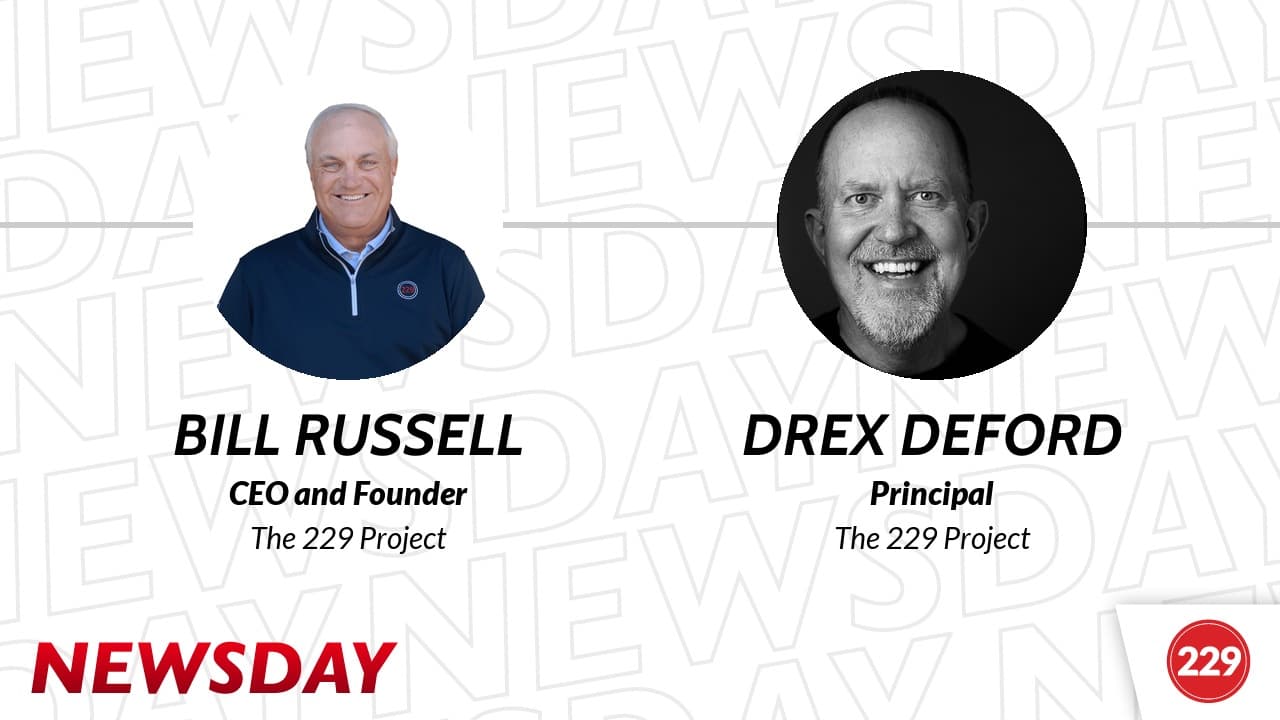
June 22, 2026: Bill Russell and Drex DeFord launch into Newsday fresh off city tour dinners across Atlanta, Philadelphia, Pittsburgh, and Rochester. The two dig into what's actually happening with AI on the ground: a smaller health system that vibe-coded a nurse scheduling app and made it work while bigger systems looked on skeptically, the build vs. buy debate coming back with new energy, and Anthropic's announcement that Claude now writes over 80% of its own production code. Plus: the ROI reckoning that's coming for every health system spending on AI, and a big Abridge announcement on the horizon.
Key Points:
- 02:30 Build Versus Buy AI
- 10:55 Copilot Scale and ROI
- 21:37 Mythos and Security
- 25:25 Ambient AI Market Moves
Keep up to date on the latest in health IT:
https://thisweekhealth.com/news/
Donate: Alex’s Lemonade Stand: Foundation for Childhood Cancer
Thank You to Our Episode Partner

Contributors
People featured in this episode — open a profile for more.


Transcript
This transcription is provided by artificial intelligence. We believe in technology but understand that even the smartest robots can sometimes get speech recognition wrong.
Small Health System’s AI Advantage and the ROI Question Nobody's Ready For | Newsday
[00:00:01] Health systems have been trying to automate operations for years. Luma was built for it from the start. AI native with 10 years of experience at over a thousand organizations. Luma's platform runs from patient acquisition to the back office. And one of the largest specialty practices in the country cut referral times from weeks to hours. Find out more at Health, where our mission is to
[00:00:39] transform healthcare one connection at a time. Welcome to News Day, breaking down the health IT headlines that matter most. Let's jump into the news. All right, it's News Day and today Sarah has dropped out and she has left Drex and I for to discuss the news. I know, can you believe that? Can you believe she did that?
[00:00:59] >> It's her worst nightmare. It's her worst nightmare. She's left the house and the kids are now >> Well, she's the one who does all the homework and so we're sort of left here with no one to copy off of. So we're going to have to We're going to have to to go at it here. Let's see.
[00:01:14] >> That's explicit instructions. Don't burn News Day down while I'm gone. That's what she said. So >> I was uh So I was in Atlanta, Philadelphia, Pittsburgh last week. You did the Boston, Rochester.
[00:01:28] >> Boston, Rochester, yeah. >> So, you know, we we can we can start there and work our way you know, work our way back to some of the news stories and interesting things that are going on. What's You know, what What What are you hearing specifically from the front lines that I don't know, maybe was something you were surprised to hear or something that confirmed something that you knew was going on.
[00:01:52] I think from the confirm confirmation perspective, there's still a lot of challenges with prioritization and not enough resources and you know, giant appetites. Interestingly, I feel like we've gone there's a little bit of like then the argument that used to happen a lot was that the small places would say to the big places, "Well, of course you can do
[00:02:17] that because you have money to do those kinds of things." Whatever the projects And now when it comes to things like governance and prioritization and AI focus on AI, like we have to sort of only focus on a few of these AI projects, the tables have kind of turned and the big places have the Look, there are these AI projects that are coming out of the woodwork and you
[00:02:42] know, blah blah blah and smaller places are saying, "We're actually managing that. We've figured out, we're doing some stuff, we're managing it." I mean, maybe not perfectly, but they're making And so the tables have turned and now the big places are saying, "Oh, well, your environment isn't as complicated as ours and so it's easier for you to >> I'll go one step further than that. It was interesting in in one of the
[00:03:05] this health system, smaller health system in the corner, was talking about how they vibe coded an application for nurse scheduling and >> just just away they went and the others were sort of looking down their nose at them like, "Oh, well, we would never do something like that." And part of me sitting there going, "Why not? He just told you he saved X amount of dollars, got a custom-fit solution, the nurses love it and
[00:03:27] everything else." Why would you look down your nose at them like you would never do something like that? I mean, >> Um but yeah, the smaller organizations I think are more resourceful because they've had to be resourceful forever.
[00:03:42] >> I saw I saw your post about that. And you know, this is the how do you define innovation, right? Is innovation buying stuff that somebody else is creating and you're just implementing it earlier than a lot of other folks or is innovation really the I don't have resources I got to just figure this out and so that's what's happening at some of these smaller places. I don't have the money
[00:04:06] to spend on the annual maintenance to get a thing that isn't going to fit me well the ill-fitting suit that is nurse scheduling. I'm going to build a custom suit for myself and it's going to take a little bit of resources but I'm going to be able to leverage those resources against other things too and you see a lot of small places this whole build versus buy conversation isn't something
[00:04:32] that we heard a lot of two years ago in places and we hear it a lot more now. >> Yeah, who who's the gentleman from Phoenix Children's? >> Dave he's like he coded >> Dave was amazing at like having a around requirements and maybe even talking to a vendor and then saying like I think we can just build that
[00:04:58] And then going you know going off and doing it. >> Well, it would be interesting to interview the people who are there now cuz he he has I think retired. >> And so he he well he had moved into the COO role >> I I think since then he may have retired so now they are in that space where it's like post the the developer is gone the the super you know whatever is gone and it would
[00:05:27] be interesting if there's an a strong pull in one direction or another now that that person is is gone and this is that's what everybody fears when they think about building software it's like man how are we going to maintain >> You got to have a discipline for it.
[00:05:45] >> Right. Well, I used to always say this to my team I'd say, like, you have to choose which problem you want to solve. Right? So, identify the the you're going to have you're going to have a set of problems and you're going to have to solve those problems. And in some cases, you get to choose between >> And in this case, you could have a problem where you have so many things that you are spending, you know, per
[00:06:07] user per month or per token per use or whatever, you have so many of those things that your budget's completely >> Or you could figure out how to do some of these things and start to pick off these things one by one and go, "Yeah, you know what? I'm not going to I know it's just a little thing, but we're not going to do that. We're going to go ahead and code it." >> And you've talked about this in the past. Coding now is a very different
[00:06:33] thing than it was 3 years ago or even 6 months ago. You're able to do things now with the help of a coding assistant like Claude or You're able to to to make things, to create things, to build things that you really needed a ton of specialized skill for 6 months ago and maybe now not as much.
[00:06:58] >> Well, I just I just met with our coding team, me and two other people. Our giant coding crew. >> And one one is one is part-time, but we talked through this that Anthropic, the the founder of Anthropic released a uh >> I saw this.
[00:07:14] >> Boris Cherny released a video and he said, "Anthropic says Claude now writes over 80% of its production code." And the head of Claude code says he doesn't really prompt anymore. So, that's probably I think the thing that that our our team discussed a bunch is like, "All right, if he's not prompting, what does it look like?" And he says he writes orchestration loops that let the agent prompt and check itself.
[00:07:38] And, you know, >> out a better way to to it. >> They got a better way to do it. And as I was sort of talking about that with the team, they said, you know, Bill, we're already doing that on the database hygiene side. We're already doing that on the security side. So, we have a we have loops that run all the time that are saying, hey, is this still secure?
[00:07:54] Is this And and it's looking through and and identify those things. Um now, what we don't do is we don't have it fix it. We have it send us, you know, emails and they're like, all right, are you ready to move to the next level? I'm like, >> You're in the loop. Yep.
[00:08:09] >> I'm like, I I'm not sure we're ready to move to the next level. I want to create some more harnesses around it and that kind of stuff. But they they're like they're like, look, we're already doing that there. What are you picturing for the code? But I I I use that story to say, I think the nature of this has pretty dramatically. And then the other team might the other thing my team said to me is the difference between Claude 4.4 and
[00:08:32] 4.5 and 4.6, these are all the versions we've used to create our internal systems. And 4.8, they're they're like, Bill, it's an order of magnitude.
[00:08:43] Whatever they did in 4.8 was a was a significant jump. >> It's unbelievable. >> over 4.7 and 4.6. And we are on the cusp of Mythos, which they're saying is a another order of magnitude. And I've said, all right, well, help me understand what you're what you're saying. They're like, It used to be like pair programming. I'd say, hey, do this and I'd look at it and I'd go, oh, no, do it this way or do it this way. It now does it, looks at it on
[00:09:10] a screen and says, no, no, I don't like the way that looks. I don't like the way that feels. Oh, that might create a security It's like it's like recursively checking itself. >> And then by the time it's done, it could and they're saying, look, it takes a little longer.
[00:09:24] But when it's done, it's done. >> Very We're we're doing a lot of a lot fewer fixes when the code is done. I'm not trying to say that everybody should code. I I am not. But I do think it's an arrow in the quiver that people are unwilling to pull out at this point. And and just to be fair, I would say there was only two health systems in three cities that were doing any coding at all.
[00:09:50] >> Mhm. I think that the the other part of this is just for health executives personally, it's a thing that you should know about and understand. I have an assistant that you and I work together on, you helped me build. But, I have an assistant that I work with every day. I open up Claude code, I give it a a prompt that is
[00:10:16] morning coffee. And the morning coffee prompt causes it to do a bunch of different things. And it gives me a lot of information, it searches out a bunch of stories that I've that I may have happened overnight on the cybersecurity side of the house. It gives me a ton of stuff. And I continue every day to make changes to it and improve morning coffee. And it
[00:10:40] the the assistant continues to give me prompts about how I can make my morning prompt better and make myself more productive. And so, those kinds of experiments, I think are really important. I think the other thing, too, is that sometimes you have a little thing that bugs you that you've been working on that you're struggling with.
[00:11:01] And you can sit down with Claude code or what you know, whatever it is that you use, GPT co-pilot, and try some stuff out. Just try some stuff out. The the main thing is just the real the reality that you're probably not going to break anything, right? You can just go mess around and play around with And it gives you some idea of what some of the capabilities are and how hard or how easy it is to create things. I guess
[00:11:26] I knew this was going to happen cuz it's always the same progression that happens with Microsoft products, right? So, last last year um their their Copilot was really limited pilots, 100 people, 200 people at most.
[00:11:45] And they're like, man, I don't How do you get the ROI for this? Let's go ahead and use it. this year I'm hearing 4,000, 5,000 users. And you know, and and they're being very judicious cuz that's still not 40,000 or >> Which, you know, some of these health systems are, you know, easily that Uh nobody's nobody's doing it across just a blanket site license and saying,
[00:12:11] let's do this. they're expanding. They're they cannot deny that it has made them personally more effective.
[00:12:21] >> That was an interesting finding for me, and I think we're going to see that more and more as we go out over the next next couple of months is more organizations are saying, yeah, we we had it for a Now it's it's broader. And and people are going to use it for things like you said, they're going to help them for the basics, email, PowerPoint presentation.
[00:12:41] >> It's really interesting, too, to think, so the next question on that and city tour dinners is what have you used AI for at this point that has actually either created new revenue or reduced cost?
[00:12:58] Have you, you know, all this talk about people are going to lose jobs or have you made any decisions about jobs and you know, that has that's a whole implication that I think a lot of health systems are just starting to really understand. I think they've made individuals more You know, really more productive or just
[00:13:22] more busy? Have they figured out how to do more stuff? You know, I don't that's that's just another I think a big ball of wax that we still have to work our way through. Are you hearing the same thing on the road?
[00:13:34] >> I love the two questions you asked. Um you know, that the the winners around AI are going to be able to connect it to workflow. The workflow to economics and economics to to to really accountability. And it's it's interesting to me that I feel bad when I say to them you know, we talk about ROI and they're like, oh, it's it's it's better for the physician.
[00:13:59] I'm like, in what way? Well, you know, it creates more time for them. And how are they using that time? It's like, well, you know, they were using pajama time now they're in that. I'm like, all right, you do understand that from an economic standpoint that did not help your health system at all.
[00:14:12] I'm like, at some point you have to tie this AI usage, it's a tool that you're going to be spending money on to some kind of of financial return for the organization. And I feel bad saying And in some rooms, I'm kind of guilty.
[00:14:27] Like you know, how we we you know, we have a broader mission than that. And um in the nicest possible way, I want to >> And I mean, but I get their argument a little bit, too, right? Is that, you know, does that ultimately create safer care for patients and families? It's hard to do the math behind that. Does it create better access for patients and families? Are patients and families more
[00:14:53] satisfied with their care and so they're more sticky to that health system? There's so many um softy kind of like not super well-defined things that also come just with that physician, you know, use of >> not an an open checkbook, either, right?
[00:15:11] >> Yeah, I mean, this is we saw the stories last week about companies who had blown >> their entire annual budgets in just the first few months of the year because of token consumption. Because people are doing a bunch of things and trying a bunch of things, but it's not actually either creating revenue or reducing >> My my team says to me, he goes, "Hey, I I I noticed in one of those stories that
[00:15:36] that you sent over that they they used a billion a billion tokens. You okay with us burning through a billion tokens?" I'm like, "Of course I'm not okay with you burning through a billion tokens." They're like, "Okay, so how much how much, you know, engineering do you want to do about optimization?" I'm like, "Absolutely I want you to >> Well, I mean, you've you've also written stories about that, you know, the amount
[00:15:57] of tokens that we burn through here as we do >> the work that we're doing and building the internal systems that we're building because we've decided to build instead of buy because we can do a bunch of cool stuff and we are doing a bunch of cool stuff with the things we built internally, but >> Did you have good conversations around workforce while you were out there?
[00:16:17] >> You know, amazingly enough, when we got to Rochester when I got to Rochester, the Rochester conversation was significantly focused on the challenge of change. When we talk about capacity planning, capacity isn't just the dollars to buy things and it's not just the amount of available time inside of IT to do those new projects because
[00:16:44] they're spending a ton of time running current operations, it's also the capacity of the departments themselves, lab, rad, pharmacy, nursing, to actually take on new projects and do change. They >> They have a lot of ideas. There are a lot of things that they want to do, but when it sort of boils down to, "Okay, when do you want to do this project?" that change management, that, you know,
[00:17:11] change in workflow is a lot harder than it looks. And that was a lot of the conversation at Rochester. >> Yeah, the the capacity management is is is the most pressing issue right now in I mean, budget is I mean, if it's if it's one, two, it's they're very close to each other, but it's you know, cuz we talked about OB3, we
[00:17:35] talked about all that stuff. OB3 and cross pressures ram again, we talked about all that stuff. But, on the the the IT staff's overwhelmed with the number of projects that are coming through, the staff, the clinical staff's overwhelmed with the number of projects, the the optimizations and everything they're they're being asked to do. But, the appetite of the organization is greater than what the organization can afford, and it's it's greater than what
[00:18:00] the organization can actually implement. And so, prioritization was a significant that we had. One of the meetings, it sort of devolved into almost a hand-wringing kind of thing as you I mean, you've been in those >> Misery loves company, right?
[00:18:17] >> Yeah, yeah, you do you do the CISO meetings, and sometimes those guys get augured down into like people don't know what we have to go through, and and it was like and it was sort of auguring into that into that space, and I'm like, all right, what can we do >> in this space? And and you've had to manage this, I've had to manage this.
[00:18:33] This is This is not a new problem for us. We've we've we've never had enough supply to meet the demand that an organization has. And so, you you do have to prioritize. You've talked about having that list of projects we're not doing published so that people could see, hey, it's like, we know you're here.
[00:18:52] We we we got you. We we we understand that and you're on the list, but it will be, you know, evaluated that the next time we have the the capacity. I I found the organizations that know their capacity can can communicate it >> I think that's the, you know, take the emotion out of the argument around capacity and actually define it. And good ways to do that. I mean, there's
[00:19:17] timekeeping systems, there are other things you can actually document the amount of time that individuals put against daily operations, against admin, against whatever, and that leaves whatever it leaves for the capacity.
[00:19:29] >> lightweight timekeeping. This is >> Oh, yeah. No, no, I don't mean minute-by-minute lawyer-level, you know, billing timekeeping. You know, we always started with a very here's four categories. Just log your week on Friday afternoon, how much time you think you put in each of the categories. And once we got traction there, we said, "You know what would be easier if you just took 10 minutes every day and and put
[00:19:55] this in." And here's two more categories. Like you could sort of boil the frog a little bit. But people got into it and and they and they stayed into it if you could show them that you were using that data to help show how good they are and the amount of work that they're doing.
[00:20:12] >> they're they're overwhelmed and it's like, "Look, all I need you to do is open your phone and, you know, do this little thing and that gets into the database. And you know what I get to do with that information? I get to take that information to the next governance meeting and say, "Look, this is our capacity. You thought it was going to take this to do this project, it actually took this to do that project."
[00:20:32] And and I mean, that's that's a little deeper. I would that's not lightweight, that's actually project-based allocation and that kind of stuff. But if you can get to that level, you're able to you're able to start to steer the conversation, to influence the conversation from an IT perspective because the organization believes because you get so much money that you >> You have infinite capacity.
[00:20:57] >> Infinite capacity. >> Yeah. And and for most of the departments, since we don't have a cost accounting system, IT is free to them. So, they should just be able to ask the Information Services Department for whatever it is that they want and the Information Services Department surely will deliver it because they just should do that. That's their job. And when they can't, you get mad and upset and you start to badmouth the Information
[00:21:24] Services Department and then you start your own hobby shop because I'm going to do this cuz Information Services can't deliver. It just creates a whole cascade of problems you really don't want to deal with.
[00:21:34] >> Yeah. I mean, the people that are able to talk about their capacity in very real terms seem to to get in front of this. The other thing I will say is if there was a if there was a communication quotient, like there's there's a a bunch of different things that make CIOs really effective here. One is a communication quotient, the ability to control the narrative, the ability to I don't know what this I don't know what
[00:21:56] to call this. Stay near around kind of thing. Because it those meetings are hard cuz you're essentially potentially saying no to some very powerful people and those have downstream consequences. I want to I want to do a little shotgun at the end Will we see the proposed rule in the month of June for Australia >> security rule?
[00:22:17] >> Yeah. [laughter] >> No, I don't think so. >> You don't you don't think we'll see it in June either. I How about will we see Mythos in June? >> You mean as a public release?
[00:22:28] >> I I don't know. I I I No, I don't think so. I think they just added like another 150 partners >> People are very concerned about this. I mean, this this is top of mind stuff.
[00:22:39] It's like and and they were saying, well, will Mythos get released in June? And I'm like it could. I mean, it depends how far along Glasswing is. >> Yeah. I mean, they just they just added another 150 partners to the Glasswing pool. So, there's a bunch of other people now that are using it to look at their products and and services. And in some cases, I actually was talking to one of our
[00:23:03] partners, they're using it not only to look at their products and services and the way that those things work, but they're also looking because they're connected to customers, they're also looking at things that are happening with their customers in the cloud. And so they're picking up things that customers need to know about using Mythos. So it's really I mean it's really interesting, but I I'm not I don't know. And you know, there's
[00:23:26] already been leaks of Mythos too. So >> Yeah, you call it Mythos and I call it >> Mythos Mythos Mythos >> Mythos Mythos and a couple of CIOs were going back and forth on but you know, what they knew about it and they were kind of wondering it's like, hey, we're a pretty sizable health system. I have no idea why health systems of our magnitude would not be included.
[00:23:49] Of course, they were saying, hey, you know, you know, this this partner has access, this partner has access, Epic has apps, you know, there's a whole bunch of health care players or even cross industry players that that we we would recognize in health care that have access. And so they're securing their which I assume means they're considering those mission critical kind of systems.
[00:24:13] And that stuff is flowing downhill. I mean, I think I think we're seeing uptick in patches and and stuff on uh on your iPhone and on your devices and I think that's that's that's in preparation for uh for some of this stuff, but that >> I I think, you know, we worry a lot I mean, I worry a lot about it, too. I mean, that's Yeah, that's the world that I live in now. I worry about this stuff all the time. But the bad guys
[00:24:38] when they get their hands on it are going to be able to use it for a lot of bad things. But as we stand right now, the good guys are using it for a lot of great things. They're making their own software safer and better and a lot of them are leaning into it super hard right now and that's just generally good for everyone.
[00:24:56] For the health systems, I think you got to think about if you're worried about the weaponization of vulnerabilities, we always worry about that. Maybe it's going to happen faster, but the patching isn't the end-all, be-all. I mean, I'm you know, I used to say all the time like you got to patch, you got to patch, you got to patch. And you do have to patch, but there's defense in depth. And the reason that we have all the other
[00:25:18] things that we do is that sometimes patching is not going to be possible. It's stuff that is unpatchable. And so, you got to have other other ways of >> you know, defending yourself against those vulnerabilities.
[00:25:33] >> And one of our tables the whole patching uh came up because it's like, you know, the the the thing we're being expected to do at least with the current technology and the the nature of health care and the devices we're talking about, you know, there's there's a better than you know, 30 to 40% of our equipment that we just cannot do just not turn on auto patching and expect good things to happen. I want to close with this. One of our one of our
[00:25:58] partners is um is Abridge. They have a big announcement this week. >> And it'll be it'll be exciting. They're the reality is that just the the ambient listening and creating a note has been Right? And And so, you know, we see we see a lot of these players going in the orders, coding, um down that whole rev cycle impact.
[00:26:25] >> stuff. Yeah. >> path. And I think that's the first of many paths that we're going to see. And you know, it it'll we'll probably talk more about this next week cuz Sarah is heading out there this week.
[00:26:37] >> She's there now. Yeah, right. Right. She said it that way. >> Yeah, so she'll be in she'll be in New York for that uh for that announcement. I expect some heavy hitters be in that room. >> Uh it's interesting cuz I hear CIOs saying today, "Oh, oh, we're you know, we're we're we're we're just going to go to Epic. You know, we're just and I'm like, yeah, if you look at it as just, you know, listen and take a note,
[00:26:59] I understand that that rationale, but if you measure it against all these other things, you're you're going to be talking a different economic model than just listening and taking notes and you know, creating a better environment for your >> Going back to that earlier conversation, right? I mean, it's what's the ROI?
[00:27:19] What's the ROI for this? And there's going to be a version of ROI for Epic's ambient and there's going to be a version of ROI for a bridge and others. And you got to do the math.
[00:27:32] >> And that's going to be it's going to be important for the uh for the players, the ambient players to really establish to use that ambient listening as a wedge and then to establish themselves as additional value within the within the workflows and within the entire system.
[00:27:47] So, it's going to be an exciting and interesting set of announcements this week and we will we'll report back next Drecks, always great to catch up. Good >> Miss Sarah, but that's how we got the shorter episode. Don't Don't tell her I said that, though. That's not true, actually. We're We're We're at 30 minutes again this week. We're going to get in trouble.
[00:28:08] >> I know. >> Anyway, we'll see. Hey everybody, thanks for listening. That's all for now. >> That's News Day. Stay informed between episodes with our daily insights email. And remember, every healthcare leader needs a community they can lean on and learn from. Subscribe at