Healthcare's AI Reckoning: Real Wins, Real Costs, Real Questions | Newsday
 Apple Podcasts
Questions Answered in This Episode
- Is personal productivity gain enough to justify AI investment in healthcare systems?
- How do you measure ROI when AI saves time but doesn't directly increase revenue?
- Which AI deployments actually solve their intended problems versus creating more clutter?
- Will an intelligence layer across all healthcare finally succeed where HIEs failed?
- What accountability framework should govern AI decisions before deployment explodes?
About This Episode
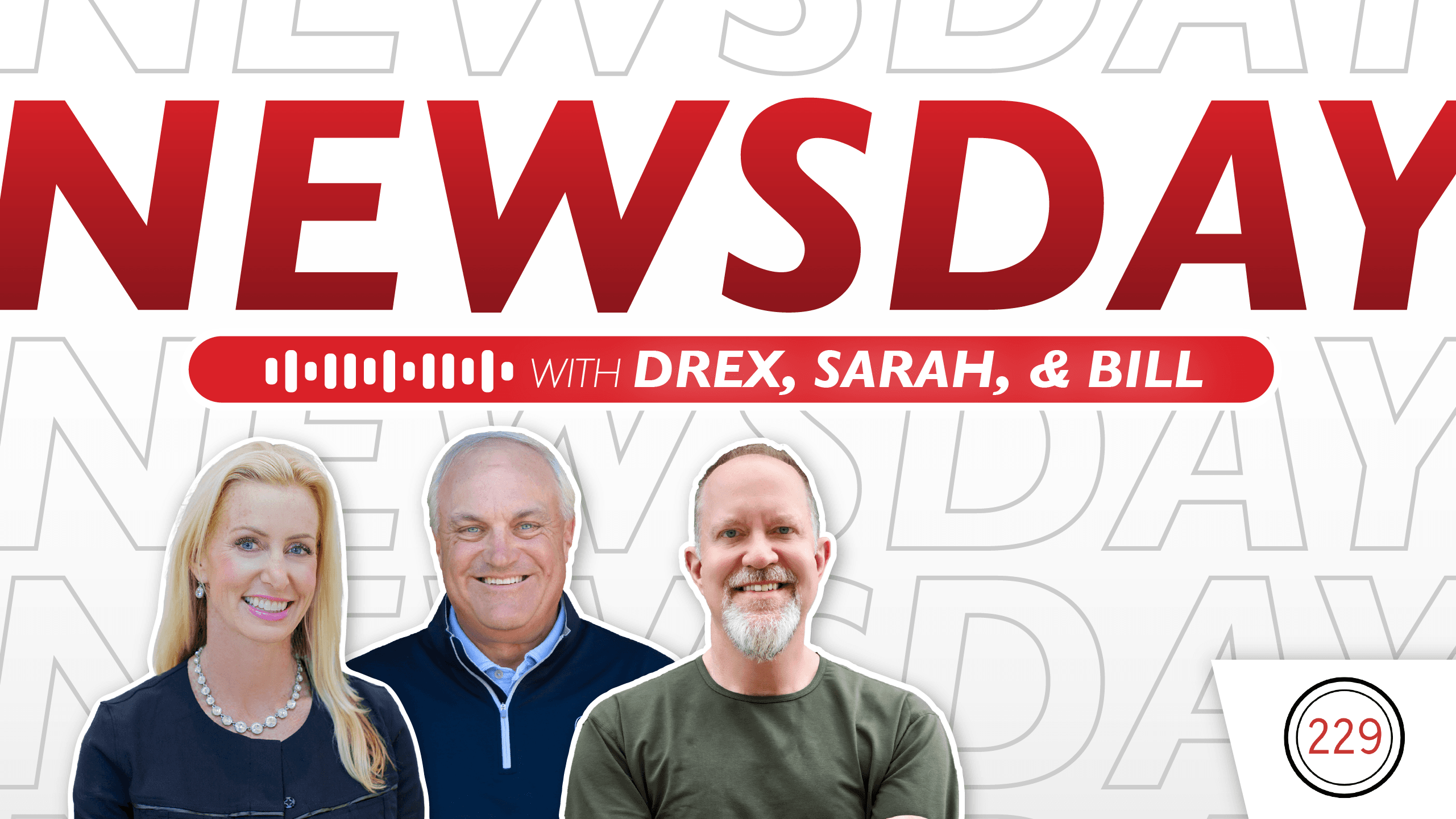
June 15, 2026: Bill Russell, Drex DeFord, and Sarah Richardson sit down to work through the question sitting at the top of every health system's agenda: what has AI actually done for us? Personal productivity gains are real. Meeting counts are dropping, hours are being saved, and individual leaders feel the difference. But the enterprise ROI case is proving harder to make. With Dave Lundahl's three-era framework for healthcare IT adding historical weight and the ambient listening wave cresting, the industry may be entering its accountability phase.
Key Points:
04:22 Governance Five Questions
08:08 Cost ROI And Licenses
10:04 Third Era Of Health IT
17:49 Patient Companion Future
23:47 Wrap Up And Next Week
Keep up to date on the latest in health IT:
https://thisweekhealth.com/news/
Donate: Alex’s Lemonade Stand: Foundation for Childhood Cancer
Contributors
People featured in this episode — open a profile for more.


Transcript
This transcription is provided by artificial intelligence. We believe in technology but understand that even the smartest robots can sometimes get speech recognition wrong. Healthcare's AI Reckoning: Real Wins, Real Costs, Real Questions | Newsday [00:00:00] Speaker: I'm Bill Russell, creator of this week Health, where our mission is to transform healthcare one connection at a time. Welcome to Newsday, breaking Down the Health it headlines that matter most. Let's jump into the news. Bill Russell: All right, it is news day, and we are in different hotels around the country. Uh, the, uh... I am, I am in the Airport Marriott, uh, Gateway in Atlanta. Sarah Richardson, where are you, uh, where are you reporting in from? Sarah Richardson: Boise, Idaho Bill Russell: Boise, beautiful Bo- wow. What kind of hotel do you have there? You probably have like a Sarah Richardson: is. Well, I'm in a hotel, The Element, one of the Marriott series. It's their AC series, and this place opened 12 days ago, so it's brand new and it's lovely Bill Russell: Wow. And Drex, what closet are you in? Drex DeFord | 229Project: This is an ongoing gag with the three of [00:01:00] us. So I, uh, my hotel in Boston is the Citizen M, which is like I checked into my RV. a tiny little room. It's just, it's a magnificent piece of architectural Bill Russell: E- engineering is what it is. Drex DeFord | 229Project: Yes Bill Russell: Uh, well, this is, this is, comes to a very, uh, significant hiring practice. It's like I, I didn't have to train Drex to get the, the cheapest anything because he came up in the military. He, Drex DeFord | 229Project: Right Bill Russell: worked for cheap companies. He worked for for-profit healthcare. It's like, Drex DeFord | 229Project: Yeah Bill Russell: so when he goes to get his hotel rooms, he goes to, like, getadealhotels.com and all of a sudden he comes back, "Look, I got a, I got a hotel room for $110." Drex DeFord | 229Project: Yeah. Not, not tonight. Not this one, no. But, Bill Russell: No, but Drex DeFord | 229Project: It's a very interesting... We did this, we stayed in a citizenM when we were all together in January in Palo Bill Russell: Oh, Drex DeFord | 229Project: or Bill Russell: yeah. The Drex DeFord | 229Project: that was the [00:02:00] first blow-away experience of just, like, that's how small a hotel room can be. Bill Russell: Yeah Sarah Richardson: Yeah Drex DeFord | 229Project: Well, you posted something about a bill and you got, like, a million likes or Bill Russell: Yeah, Drex DeFord | 229Project: bunch Bill Russell: 100,000 100,000 impressions and some, some cr- crazy, crazy craziness. We could go in a lot of different directions here. Uh, we tend to talk about AI a fair amount. Um, let's talk about, l- you know, we are-- we're doing city tour dinners. You're at Boston. Boston, Boise, and At- Atlanta tonight. we did a signal index, which if you're not familiar, we do a signal index of where the, uh, industry is moving and that kind of stuff. it's interesting. Some of the findings are, uh, what you would think in terms of, uh, AI and the use of AI. But one of the, one of the more nuanced things is, AI is working for health system leaders personally. I'm not saying for the system and it's driving, you know, tons of money and that kind of stuff. [00:03:00] It, it is in some areas, I guess. Uh, you could see it in rev cycle and others, but, but the stories people shared were more about the personal use. It's like I don't start with a, an empty, you know, sheet of paper anymore. It's taking notes for me. one of the more interesting one-- ones was, um, our team used to have four meetings to decide what we were going to do, and now with the use of AI, we've essentially taken that down to one to start a project. It's like, it's like we- we've consolidated that. And so there's, there's a personal productivity gain that's being felt in healthcare. Now, this does... Again, it doesn't, it doesn't equate to significant savings across healthcare. Drex DeFord | 229Project: うん。 Yeah. Bill Russell: how many p- co-pilot licenses do you buy, and does it make sense to create that and whatnot? how much stock do you put in that personal productivity gain, and is it the same for every role and every person? Like, would you do thir-- [00:04:00] If you had a 50,000-person company, would you do 50,000 licenses if it saved everybody two hours a week? Or does it have to be specific? does there have to be a specific use case and ROI to it? I think I know the answer to this question, but I'm gonna, I'm, I'm gonna start with you, Sarah, because Drex needs more time to think. He's in a smaller space. Sarah Richardson: There's a couple ways I think about how CIOs are framing some of the AI conversations today. And I'm already wondering, are we at a point where from our signal and next thing we know that people have, you know, 40-plus solutions deployed. already too soon to be thinking about how you consolidate your AI solutions the way we have been consolidating, you know, post-EHR point solutions and some of that build versus buy? And so there's already the rigor and the governance that comes with the fact that as multiple things got approved and the shiny objects came into play, after a three-year window deploying some of this stuff, you actually start to realize which ones are [00:05:00] solving the problems they intended to solve and which ones do we need to be thinking about so we can scale and operationalize them more efficiently. So I look at every AI deployment or every option as like... I'm gonna call this the Sarah's five questions, and I literally have been talking about this over and over again, is what the problem we're solving, the data being used, and is it ours? are outputs validated? What risks are we accepting? And who's accountable when something goes wrong? If you're using that kind of framework with all the conversations inclusive of what's new, what we already have, and how we need to think about it going forward, you're gonna be in a good space for the right conversations, uh, from governance and otherwise as more people start to use some of these tooling mechanisms Bill Russell: I agree. I agree with you 1,000% in that, uh, the- this falls outside of that, and the reason it does is there's, uh, there's personal productivity gains. It's like, uh, you know, it, uh... Actually, Drex, as I kick this to you, I'm thinking about we- So I made a [00:06:00] change to our domain and you lost access to your assistant for a couple of days. There's a personal productivity that we've all experienced through this that's very real. It's hours. It's serious hours for each of us that these tools are giving us. Are we going to weight that in a health system or does it have to be tied to, "Hey, we're reducing readmissions," or we're collecting more, uh, you know... Does it have to be... Is, is personal productivity enough of a reason for AI? Drex DeFord | 229Project: Yeah. See, I think this is the other problem that a lot of companies who have AI and bring it into healthcare, it's a problem they have trying to make the business case for it. They like to make the case that if we save the physician time with AI, the physician's probably gonna see more patients, which will lead to more revenue. But there's no direct tie to that, right? like with me, if I s- if y- if I'm using my assistant, my [00:07:00] assistant save me- saves me time, that doesn't mean that I'm gonna go do more city tour dinners. Bill Russell: Right. Yeah, Drex DeFord | 229Project: burned out. It Bill Russell: in fact, you can't is Drex DeFord | 229Project: Right, exactly. In my case, that it's hard to make that tie. I could do another show, but I don't know if that's a good thing that, you know, does somebody wanna hear an- you know, another show from me? Probably not. Uh, but, but it's, it's the, it's hard to make the, it's hard to make the tie. It's hard to put it together. I think it saves me time. It makes me more comfortable in my job and the pace that I can do things. I feel less rushed, I feel less stressed, but it doesn't necessarily contribute to the bottom line. Does it have to contribute to the bottom line? I think when you look at big health systems and the pressure that they're under right now, they're looking for does it save money or does it create increased revenue? And if Bill Russell: Yeah, it go- it goes back to, it goes back to s- Drex DeFord | 229Project: goes to the top Bill Russell: comes back to Sarah's, uh, criteria, right? It's Drex DeFord | 229Project: Yep Bill Russell: it's gotta, it, it, it's gotta deliver. I, becuase Drex DeFord | 229Project: you should write that too. You [00:08:00] should write an article, these are Sarah's five questions. Like, that's a... You should get that out there, 'cause I think that's a great framework to think about it Bill Russell: Because over the last month there have been m- countless stories of the cost of AI, Drex DeFord | 229Project: Oh. Bill Russell: and the exorbitant cost of AI. And so, Drex DeFord | 229Project: maxing and, uh, Bill Russell: yeah, Drex DeFord | 229Project: the other issues Bill Russell: so if it's freeing up your time and that time's not being allocated back to the company in a way that either drives revenue or reduces r- very real costs, like get rid of a contract, that kind of stuff, then, you know, I mean, I understand why people are like, "I can't believe they don't give me access to Claude." I understand why they're saying that, because they use Claude at home and like, "Man, this is really effective. Why can't I use this at, at work?" But I think what those people need to understand is there's no direct correlation between saving you two hours and the organization getting, you know, 5X on those two hours of Drex DeFord | 229Project: do you have to look at the job too? Like, I think [00:09:00] we're going through this phase right now in a lot of health systems where they're even looking at things like does everybody really need an email account with access to the Bill Russell: Oh Drex DeFord | 229Project: world and, you know, things like that. Bill Russell: lips to God's ears. Let's get rid of all email accounts Drex DeFord | 229Project: Yeah, yeah. So w- I, I think when you start to think about that, like what are the jobs that don't, you know, there's a correlation here too. What are the jobs that don't necessarily need access to email accounts? Are those jobs that maybe also don't need access to AI? Not necessarily. I don't know. Just thinking about how to slice and dice this Bill Russell: yeah, I just thought, I th- I thought that was a, that was an interesting finding. And by the way, everybody who says they're doing more than one AI project, one of them is ambient listening Drex DeFord | 229Project: Oh, for sure. Bill Russell: Right. So when they say Drex DeFord | 229Project: other, the other two come from Epic, so Bill Russell: Right. When they say they're doing two, it's like we're doing ambient listening and we're doing, you know, whatever, or, or from Workday or from [00:10:00] ServiceNow, uh, and, and some of the other players. It, it just keeps coming in. Um, uh, Sarah, you had a, you had a story you wanted to, uh, chat about. Uh, the floor is yours Sarah Richardson: Yes. Well, this comes from our own community too. This comes from Children's Minnesota CIO, Dave Lundahl, has been at our events. And I loved his perspective this week from Healthcare IT News when he said that hospital information systems and EHRs, they're called the AI era. It's really the third era because he looks at it from three chapter perspectives: dumb terminals, which, hey, green screens were a thing. We all, you know, we all... The three of us have lived through that era, for sure. To the EHR, to the AI era, and he really does share that the biggest inflection point is the AI space. And this has been at JP Morgan talking about fatigue on these ChatGPT wrappers and the generic positioning of AI, the honeymoon space where everything got approved because it was, you know, HIPAA [00:11:00] compliant. It claimed interoperability and measurable outcomes. And then really being able to s- realize how many conferences there are. HIMSS is doing AI executive leadership and, and other healthcare forums throughout the spring and through the summer. So, know, if we're in the third era, it really does frame what our community is wrestling with right now. Bill Russell: it's interesting to see these... w- where these tools are gonna go. There's gonna be an intelligence layer that sits across all of healthcare, and the question is, does it sit from the patient through the health system to the payer to the, um... I, I mean, there's so many other people on the other side of this as well. I mean, to pharma, to, you know, um, it- how, how broad is that intelligence layer going to be across that system? And that's-- I mean, the, I, I think that's the real promise of AI, 'cause we've talked about these HIEs of the [00:12:00] past, the health vaults and the others. Like, why, why weren't they successful? Why didn't they take hold? Um, 'cause, you know, nobody needs a big closet full of all their records. I mean, it's, it's helpful, but it's marginally helpful. What's, what's... What we have now, though, is the ability to have that big closet full of records and at any given time, walk up to the front door and just ask it a question like, "Hey, you know, am I..." Drex DeFord | 229Project: you in there? Bill Russell: Yeah, I mean, what's... You know, tell me, Drex DeFord | 229Project: Yeah Bill Russell: d- does Bill have a history of this? Has this happened? Or whatever. And not only, not only the, the provider, which is where it used to sort of get stuck. I mean, we're talking about the patient querying this thing. We're talking about the provider. Yeah, Drex DeFord | 229Project: So the WHOOP data, Bill Russell: your fitness partner. Drex DeFord | 229Project: yeah Bill Russell: It's... Yeah, this, this, this does represent a, a very, uh, different thing. The question is, who's going to, who's going to build it out and who's going to own it? 'Cause the [00:13:00] EHR providers clearly own, you know, this, this space. And we-- Because we live in this space, we think it's, it's massive. But the reality is, in terms of your health, it is one slice of your entire health journey. Drex DeFord | 229Project: Actually a pretty tiny slice too. It's only when you go to the doctor, and it's only when you go to the hospital, um, that's what's in your electronic health record. For the most part, the other stuff there unless it's been, you know, taken as like a history every time you show up and they ask you for the same history over again. so that data's in there. But it makes me think about other stuff too. if we're gonna use all this data for all this stuff, does it incur... Are we hoarders now? Are we like data hoarders? Bill Russell: we, Drex DeFord | 229Project: we Bill Russell: we absolutely are data hoarders Drex DeFord | 229Project: the data. We talked a little bit about that last time, about, um, what data we d- do we keep, when do we delete data from the past, how much does it cost to store all of that. And Sarah, it kinda com- kinda [00:14:00] piles into this story around, um, know, you sprinkle a little I- AI on it. I think we've gone through a little bit of a phase where boards show up or CEOs show up and say, "I just went to this conference. You... How... Can we do some more AI?" They don't know what they really want. They know they want more AI, but now we're, we boomerang down to the, the token maxing problem and the cost of, like, doing all this stuff but not really getting the payback that we need. Sarah Richardson: Well, let's remember that ours, our, even our payer models and our physicians, I loved the CMIO meeting we had not too long ago because the amount of data that humans are collecting about themselves or the expectations on the wellness journey is not how our insurance organ- is set up today. I mean, it's not set up for wellness. Drex DeFord | 229Project: Yeah. Sarah Richardson: all of us go through this. Like, if you're sick, you go and talk to your PCP, do your annual wellness checks, et cetera. But our ongoing wellness journey or our ability to say, how many steps I'm taking. Here's the peptide schedule I'm on. Here's all these things," those are outside [00:15:00] of the EHR for the most part, your doctor may or may not even want that information. That is not how they are incentivized to care for you Drex DeFord | 229Project: 嗯。嗯嗯。 a rural wellness program Sarah Richardson: the real wellness program, and you self-pay for those wellness programs most of Drex DeFord | 229Project: I, you know, there's a little bit of an AI versus AI thing going on too, 'cause, like, my claims AI is now fighting with my, with the insurance company's AI who's trying to deny my claims. there's that whole machine that's running in the background too Bill Russell: Oh, man. Um, Drex, how long you been on the Whoop? Drex DeFord | 229Project: Uh, like 45 days or something. Not, not long. I'm a, I'm a late adopter. I was a little skeptical, right? Um, but now that I'm, now that I'm in the system, like I, look every morning. It's like the first thing I look at. How did I sleep? I answer my survey [00:16:00] questions. I look at my sleep debt, which is like a chronic thing. Bill Russell: It's amazing how many things lead to health and health-related challenges. Uh, for me, I have a, uh, rotator cuff impingement on my left shoulder, and, um, you know, you wouldn't think twice about it. It's like, you know, what, what does that, what does that really mean? Let, so I can't play golf for six weeks, not that big a deal. But you know what has been a big deal? I can't freaking sleep Drex DeFord | 229Project: messes with your sleep. Bill Russell: Um Drex DeFord | 229Project: have a, I have a hip thing going, Sarah, I know that you have stuff going on too. It messes with your sleep. That's really the, the bad part of an injury Sarah Richardson: that I've been taking, uh, different peptides that are all, like, designed to treat different aspects of exactly what we're talking about, and they're working. I'm 80% less pain than I had before I started optimization with HRT and peptides. Bill Russell: Wow. Sarah Richardson: I know Bill Russell: All right. Well Drex DeFord | 229Project: Bill's getting on the peptide bus now Bill Russell: No, [00:17:00] I-- Sarah Richardson: stack, Bill Bill Russell: I'm on, I'm on, I'm on the other end of this, but, uh, it's inter-- The, the reason I, the reason I bring that up is I, I think more and more, uh, I, I got into a, a LinkedIn... I, I wouldn't say it's back and forth. I just-- Every now and then I comment on a, on a post, and one of the things I commented on was the, um, uh, somebody was talking about the, uh, ambient listening for the patient, the patient coming in and doing ambient listening on their behalf, and this person made the case that there's no, uh, business case to support it. I, I don't, I don't disagree with that, to be honest with you. I mean, I'm not sure, like, as a patient, am I gonna pay for this? I don't think so. It would have to-- There would have to be some other aspect to it, um, some other economy that sort of gets created in order to, uh, to drive it. But more and more, I'm just wondering, uh, we're, we're investing a lot of money in AI and, and whatnot. Uh, how's the patient going to benefit [00:18:00] from all of this? Uh, is it just a better experience when they see the doctor? Is it better documentation? Is it the abil-ability to make sense of that, uh, documentation? Is it the ability to self-diagnose? And I know people are cringing right now when they, they hear that. But my gosh, the number of people in the last-- I live in a place where people are, you know, older. The number of people who have now found AI as their personal, uh, primary care physician, for lack of a better term, is, uh, is pretty significant. And I'm wondering if that's how the patient-- If the-- If we as providers don't give them any kind of window through an AI engine into our stuff, is their experience just gonna be, you know, "Hey, my shoulder hurts. Let's diagnose this." I did this, by the way. I went to one of the AI models. I said, "My shoulder hurts. [00:19:00] Let's diagnose this." Now, I also s- I also saw my friend who's a physical therapist, and I, I talked to him, and he confirmed everything the AI said. But it's like, "All right. Take your arm, put it here. Now, you know, get somebody to push down. Can you resist?" And it gave me all these things, and it said, you know... Um, essentially, it gives all the caveats. Like, you should probably see a doctor, but, you know, you need to know these things. And generally, based on the fact that you can do this and can't do this and can do this, it's a, it's an impingement. Sure enough, I see the physical therapist. He goes-- And he works on shoulders and knees and hips all the time, and he's just like, "Yeah, you-- That's exactly what you have." And I'm like, "Interesting." Um, how, how is the-- how is this gonna help the patient? What's the so what for the patient, all this investment in AI? Sarah Richardson: It becomes your companion for, as it matures along with the expectations of the patient. I think about where the consumerism aspect of healthcare is, I mean, even this morning there was a conversation on one of my podcast channels, [00:20:00] one of my newsfeeds, about 60-- people over 65 have more than four chronic conditions, and they use digital for their companionship because that's what's available to them. So the loneliness eco- epidemic being handled by the digital companion or the capability to do that, can remind you to take your medication, to get out, to walk, to go find community. you have this younger generation, the ones that are tracking with three devices, the ones that do expect to have the real-time ability to diagnose themselves off of their phones. The c- the companion consumerism aspect of any generation and having different needs, that's where it will continue to flex to, and those will be the expectations you have of generations logging into MyChart, is where's my AI companion? Of course, we know Emmy's out there, but what's the ability on my phone to be able to diagnose in real time and have the pieces that make sense feed into whatever aggregation of your medical record that you have today, and then we're sharing that with whatever practitioner we happen [00:21:00] to choose to spend time with. I use Teladoc most of the time to go get my primary care Bill Russell: HEDR Drex DeFord | 229Project: there's-- You know, this is the weird world of like, we've talked about this before too, but I'm, I'm ki- I'm still back on the PHR wagon, the personal health record wagon. It's, it's not the, it's not the, you know, Google PHR. It's not the thing that we thought of in the past. I think the tech has put us in a place where we can actually maybe do something really cool. Pull data out of our electronic health record from our primary care doc, but also the hospital, plus all of our personal devices, plus Sarah, plus, you know, all the RPT's records, all the things that, that, that is the data hoarding, I think, that we will eventually get around to, all of it capped by an AI agent be able to tell us, "I'm seeing a trend here. Based on everything else I see, I think this might be happening. You know, [00:22:00] heads up. And by the way, here's some clinical trials that you're eligible for, and they will pay you for your data." Like, there's so many cool things that could come out of this world that we're just starting to ski into right now Bill Russell: Yeah. I, I mean I'll, I'll close with this. This, uh, just getting back to the data hoarder thing. Uh, I've been using my assistant slightly longer than you guys have been using your assistants, and I had to clean it up this weekend because, um, I kept putting information in there and it's great that it's, you know, context engineering, harness engineering. It, it really does a great job at knowing what's going on and whatnot. And I, I just left a ton of like PowerPoints and other things that I fed it over time, and all of a sudden my hard drive was full. I'm like, "Oh, this is interesting." It's a cloud-based system, but my, my memory for it and my context for it is local. Drex DeFord | 229Project: All runs on your machine, Bill Russell: All runs on my machine and so it got... It, it Drex DeFord | 229Project: Sure Bill Russell: up and I'm, I'm sitting there going, "Oh, this is, this is an interesting [00:23:00] problem, side effect that I hadn't thought about." And if you, if you take me, my personal context and say, "Oh, well, you just filled up a, you know, a 500 megabyte hard drive." Um, if we give everybody that kind of assistant and whatnot, it'll, it'll be interesting to see, uh... I, I think there's so many, there's so many costs associated with this that are, that are pretty interesting. But, um, but it just, it just strikes me as we are gonna be data hoarders and we probably cannot have enough information. The WHOOP is great. The, uh, information you're getting from, uh, your, uh, physicians and physician assistants and others is great, as well as just 1,000 other pieces of information that are gonna make these tools so much, uh, better at helping us with our, with our healthcare journey. Uh, look forward to talking to you guys next week. Next week when we get back, we will have talked to seven different rooms about what's going on and, um, I mean, Last out, real quick, what do you think you're gonna [00:24:00] hear this week from healthcare leaders? Drex DeFord | 229Project: I think there's gonna be a lot of conversation about, about AI. I think there's gonna be a lot of conversations about resource challenges. Those are probably the top two things that in my head I'm walking into dinners and I, I, I'm betting that's gonna be at least a good chunk of the conversation Bill Russell: Yeah Sarah Richardson: I'm betting on the financial structures that accompany that, the governance opportunity that remains across the prioritization and honestly, um, really the upskilling and burnout factors. It's almost like we've solved to a degree the clinician burnout issue with ambient, but now we've also exacerbated the burnout on the rest of the organization because of expectations of the type of technologies we're gonna deploy and the belief that, oh, we can just do more stuff because AI makes us more efficient. You're actually creating a different burnout problem Bill Russell: I agree. I think there's, uh, pressure on the top line from [00:25:00] OB3. I think there's pressure on the bottom line from bundling and, uh, tokenomics and AI. It's, it's an additive thing to the budget and, uh, the, price increases, Ramageddon and whatnot. So you have pressure on the bottom end, you have pressure on the top end. I think that is going to, that's going to be a majority of the conversation and then there's going to be, all right, I feel like we're getting into that era where it's like, okay, we have to prove that AI actually did something. Like, what, have you done with AI that actually has improved the health system, not just made your PowerPoint slides look a lot better? Drex DeFord | 229Project: Is this gonna come around to... Like, we do a lot of projects, and then the projects wind up under pressure the next fiscal year. what did that really produce? Can't we cut the number of people who are supporting that application now? This is a drill that we've been through before. This is the same TV show. We're just Bill Russell: we- Drex DeFord | 229Project: have Bill Russell: have we ever had this much push on a [00:26:00] technology? Have we-- Like, even... Drex DeFord | 229Project: technology, Bill Russell: Yeah, never. Never has anyone come to us and said, "Look, we n- uh," the board, "We need more AI." Your CEO, "We need more AI." Your clinician saying, "Hey, can AI do this?" And whatever. I mean, it's-- We've never had this much push on, on it. And the crazy thing is the financial pressures are real, and at some point, we know historically because we've been burned here before, at some point somebody's gonna say, "Hey, is this actually delivering value?" And, you know, somebody has to be the adult in the room and say, "Hey, we can do 75 AI projects. We have the staff, we have the know-how, we have the people," but to what end? Like, what, what are we doing? And that's, that's where the CEOs, I'm looking for the CEOs to step in and set direction and say, "This is what's important. This is whatnot." 'Cause the, the reality is nothing's changed. We still have to have a strategy and execute against that strategy.[00:27:00] Sarah Richardson: Mm-hmm. Bill Russell: Well, thank you again. It's always great to, uh, catch up with you all and, uh, how do we end this thing? Thanks for listening. Sarah Richardson: listening. Bill Russell: That's all for now Sarah Richardson: now. Drex DeFord | 229Project: now That's Newsday. Stay informed between episodes with our Daily Insights email. And remember, every healthcare leader needs a community they can lean on and learn from. Subscribe at this week, health.com/subscribe. Thanks for listening. That's all for now.