The Directionless AI Phenomenon and the Technology IT Can’t Say No to | Newsday
 Apple Podcasts
Questions Answered in This Episode
- Why can't IT leaders say no to AI initiatives flooding their demand pipeline?
- What happens when you layer AI onto bad data governance?
- How are nurses supposed to embrace automation bolted onto the wrong clinical artifacts?
- Who actually owns the AI vision and strategy inside your health system?
- Are you doing lots of AI without seeing real ROI or cost reduction?
About This Episode
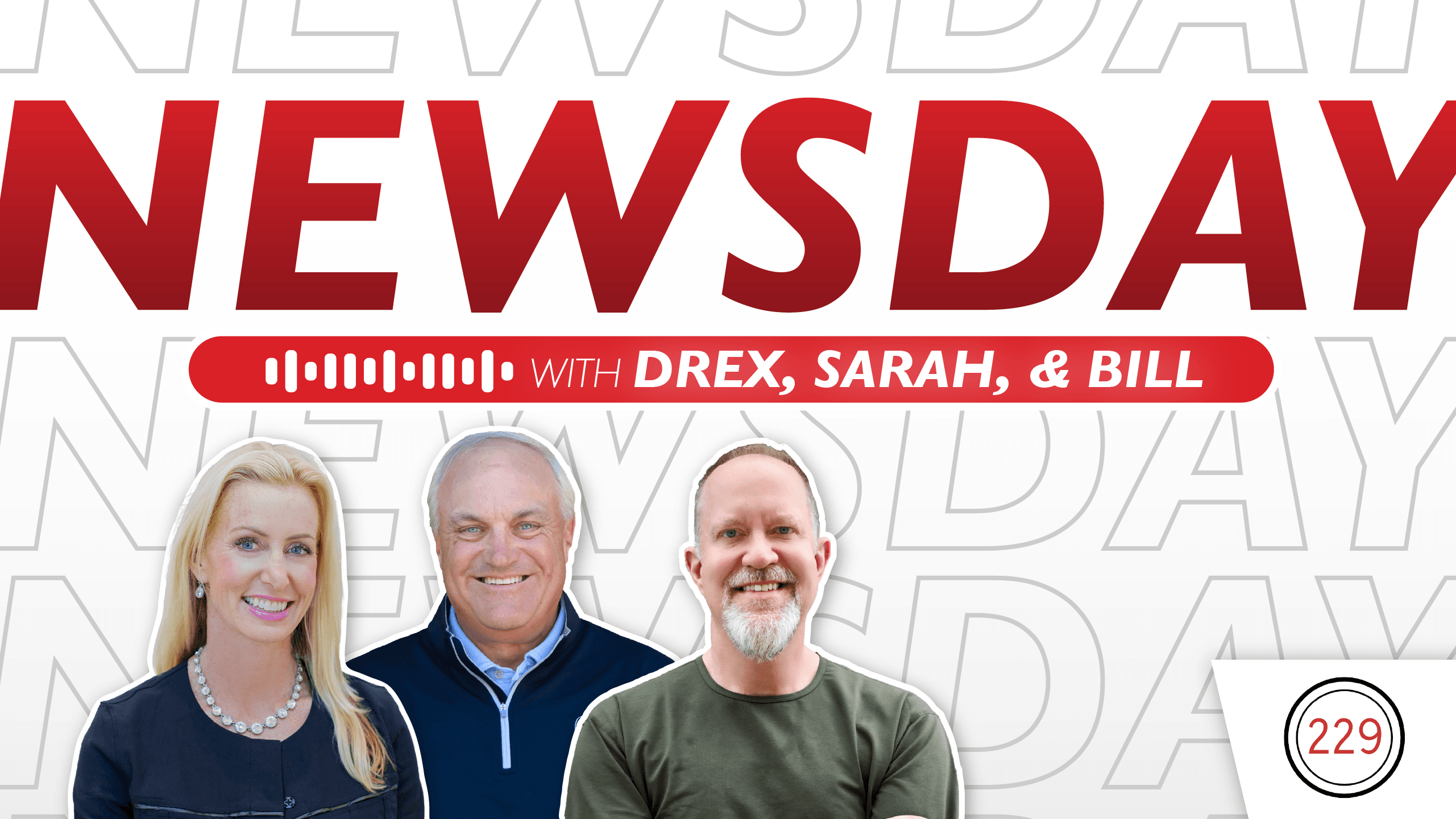
July 6, 2026: Bill Russell, Drex DeFord, and Sarah Richardson are back from four executive summits in Napa, covering CIOs, Chief Application Officers, Chief Analytics Officers, and CNIOs. The through-line across every room? AI pressure is intense, budget cuts are real, and a clear leadership vision is nearly impossible to find. From nurses being left out of decisions they should be driving, to analytics leaders managing a shadow IT explosion, to health systems already quietly building agents for referrals and claims, this is an unfiltered read on where health IT actually stands right now.
Key Points:
01:05 Napa Summit Themes
04:55 Nursing Wins and Workflow
07:22 IT Demand and AI Vision
13:20 Bright Spots and Agent Builds
Donate: Alex’s Lemonade Stand: Foundation for Childhood Cancer
Thank You to Our Episode Partner
Contributors
People featured in this episode — open a profile for more.


Transcript
This transcription is provided by artificial intelligence. We believe in technology but understand that even the smartest robots can sometimes get speech recognition wrong. **Drex DeFord:** [00:00:00] If you're still paying maintenance fees on legacy systems, you can't shut down, you're not alone. Health systems are drowning in cost and risk just to store old data. Harmony Health IT Migrates that clinical and financial data into a secure archives so you can finally decommission those systems and keep every record compliant and accessible. Find out more@harmonyit.com. **Speaker:** I'm Bill Russell, creator of this week Health, where our mission is to transform healthcare one connection at a time. Welcome to Newsday, breaking Down the Health it headlines that matter most. Let's jump into the news. **Bill Russell:** All right, it is news day and it's hat day. For those of you who are watching, on YouTube, you can see the hats, but those of you who are listening, just know that, the wonderful Sarah Richardson is wearing her pink Alex's Lemonade Stand hat. Drex, the, the scary Drex, is wearing his black [00:01:00] hat, and with all the stuff that's going on in cybersecurity these days, it's, uh... Oh, put it on backwards, doing the, **Drex DeFord \| 229Project:** you go. **Bill Russell:** grunge thing. It's great to see you. And, I have the traditional yellow hat on. we had a great, great, uh, couple of weeks in Napa, especially for Alex's Lemonade Stand. Over 20, I think 21, $22,000 wa- was raised for, uh, children battling pediatric cancer and, and families and cures and, Man, what a, what a great couple of weeks. We're gonna, we're gonna run through, without giving up who said what and whatnot, we're gonna talk high level themes from the, event. So first of all, I did a, uh, CIO event, and then I did a chief application officer event, which was a first for me. Drex, you were at the first one, but, but bugged out for the second. What was, what was your event? **Drex DeFord \| 229Project:** I had the chief analytics officers or the chief AI officers, and it sort of depended where they were in their [00:02:00] growth and evolution at their organization, but it was great **Bill Russell:** So that was a first for us as well. And Sarah, you hosted, you hosted a first as well **Sarah Richardson:** Yeah, the CNIOs, and then this last weekend was another group of CIOs **Bill Russell:** Yep. So, well, I'm wondering, y- you know, we, we have not gotten a chance to compare notes. Drex, you left, and then, Sarah, I, I bugged out pretty quick to get to the airport, after the, uh, the last session. I, I will say that, would it be, would it be wrong to say that AI was a part of the conversation? **Sarah Richardson:** EHR **Drex DeFord \| 229Project:** would not be wrong. There was tons of AI discussion **Bill Russell:** well, all right, so let's start with you, Drex. I mean, beyond the cliché, y- we did generally talk about AI, but we talked pretty specifically about AI as well. What, what do the analytics officers, what are they seeing with regard to AI? **Drex DeFord \| 229Project:** Yeah, it was... I mean, it's interesting to, to see the, you know, the surveys that we do in the front now of the, of the [00:03:00] events, the signal surveys, and the consistent response around capacity and challenges with capacity, and that ran through a lot of the conversations in the Analytics Summit. how do they run what they do today? How do they run that well given all the other demand? And so they're trying to reserve capacity to run what they do today well and figure out how to optimize it and consolidate tools and do all those things, so saving time for themselves to run better while dealing with all this other external demand. And, and, you know, the, the issue over everybody can see it. It's coming. It's at the very beginning of the wave right now, but there's a giant wave of agents that are coming, and how are you gonna run those and manage those and, and deal with, the fallout that may happen from some of the shadow AI stuff that's going on right now? Those were two big topics. **Bill Russell:** I- i- [00:04:00] it's interesting to me as we have these conversations, the, the, the frustration that, that seeps into the conversation because the executive leadership team does not understand AI. **Drex DeFord \| 229Project:** Hmm **Bill Russell:** It's not magic. It's not like you sprink- you sprinkle it on a problem that has existed for 20 years and all of a sudden that problem goes away. Like, if, if you have bad data governance, you know what happens when you put AI on it? You have bad AI, bad data governance at scale **Drex DeFord \| 229Project:** i- it's, it's that train wreck, you know, becomes a fast and efficient train wreck. And they talked a lot about that, too, this idea of there's also this evolution that's happening from business intelligence to artificial intelligence. This whole, like, we used to build dashboards and now, like, that, that, the whole world is changing, like right in front of them, and how do they keep up? and we talk about, you know, sort of like headless applications, this idea that I'm just gonna have a thing that I talk to every day that I ask [00:05:00] questions, and it gives me what I need in the way I need it just in the nick of time, as opposed to a static dashboard that had to get built and run and run and run, and over time, maybe it gets a little stale. **Bill Russell:** Sarah, **Drex DeFord \| 229Project:** really an interesting angle **Bill Russell:** Sarah, there was, there's, there is excitement, I heard you talk about some of the excitement in your room with regard to AI. and I want to hear about that, but I'm almost more curious what the CNIOs, 'cause I mean, these are the frontline, How are they talking about AI? Or, or maybe they're talking about it less, I don't know **Sarah Richardson:** They talked about it less sort of. So I would say that the intentionality by which we are producing some of the signal reporting for them coming into these summits so they aggregate on the things they wanna talk about, that for the nurses specifically, the reliable wins are still the mechanics behind their documentation opportunities, not just where the AI layers in. So they continue to say a dependable gain for them is the unglamorous [00:06:00] work, an, an Epic macro, a flow sheet redesign, an order management system, or even documentation reduction efforts that will cut time for them. Because what they're seeing today is automation's getting bolted onto the wrong artifacts, like their end of shift report, part of a care plan. It may or may not have produced clinically output, and so they still wanna be part of that early conversation about where time can be delivered back, but also scaled appropriately for nursing because the burden's still attached to them at this point, and they don't necessarily understand the ROI on some of these earlier initiatives. So involve your nurses earlier to make sure that the right aspects of it are being utilized most effectively **Drex DeFord \| 229Project:** They're looking for a lot of really tiny **Bill Russell:** Yeah, incr- yeah, **Drex DeFord \| 229Project:** wins, **Bill Russell:** incremental **Drex DeFord \| 229Project:** they're **Bill Russell:** type **Drex DeFord \| 229Project:** looking for likes, "Oh, you know, you guys changed everything about the way I work." They really want these little wins **Sarah Richardson:** 'Cause the little wins will [00:07:00] stack up to a big win. **Drex DeFord \| 229Project:** Yeah **Sarah Richardson:** but they get brought in after the fact, and that is absolutely not where it needs to be. And it was so amazing to see how much confidence and clarity and ability this group truly has, and they're finally getting that toehold inside of their organizations. **Drex DeFord \| 229Project:** Hmm. **Sarah Richardson:** To a degree, it's, disappointing that it's taken this long for nurses to have a bigger voice, yet you're seeing it. And so let's celebrate that they are starting to get that influence in the spaces that are most important. And that is the workforce that we need to be paying likely the most attention to in terms of the overall holistic experience you get inside your four walls and your clinical and virtual settings. They really do run those ships **Bill Russell:** The role of IT in AI in various forms kept coming up. It's like, hey, you know what? This stuff's coming into the, the, demand generation pipeline. It's just coming into the, the intake [00:08:00] process, and it's like, man, this stuff's coming from all over the place. AI, in some organizations they feel like they cannot say no. On the flip side, they're being asked to reduce costs. You know, it's like, and then you potentially have, you know, higher level executives making promises. Like, they're hearing things from conferences or from other health systems and they're going, you know, "Hey, we're going to, you know, we're going to do this." And it's, you know, and IT's sitting here going, "Time out. We've talked about th- like, we've talked about this." **Drex DeFord \| 229Project:** Hmm. **Bill Russell:** Like, you can't, you, you can't just do that. Like, we have to get... if you're not gonna do online scheduling and get the doctors to put their schedules online, you can't... Like, AI, that's a, that's an operational project. It's, and there's, this is the, the frustration I was talking about, but it's also, it's a clarity challenge that we have, and it's, it's who's in charge [00:09:00] of the AI vision within the organization? And the, the knee-jerk is to say the CEO, and I would tell you, I know very few CEOs who know IT well enough to speak into the IT strategy, let alone AI well enough to speak into the AI strategy. And the only CI- CEO I know that has clearly articulated a vision for AI is, uh, is Baylor Scott & White. It's, uh, you know, it, it's, it's, McKenna, Pete McKenna, Baylor Scott & White, did an interview on the Hospitalogy podcast that was the most articulate view of, of how AI could be utilized, and what he was able to do was to give clarity and focus to, okay, we have this new gun. We have this AI gun. That's where we're gonna point it, instead of, you know, just shooting holes all over the place. Like, oh, we're gonna... Maybe we'll do some nursing. Maybe we'll do some, some, you know, clinical management. Maybe we'll do some, revenue cycle. It's like, it can be pointed in [00:10:00] a lot of different directions. What it needs more than anything right now is clarity from leadership that says strategically, this is what... Because it's no different than any other tool. This is what we're doing as a health system. This is what we're gonna focus on, and that's what Pete did. He **Drex DeFord \| 229Project:** I think a lot of that focus comes from the ROI conversation too. we're doing a lot of AI in a lot of places, sprinkle AI on everything, but the reality is there are a lot of organizations now are coming to the realization that we're doing a lot of AI, AI, but I don't know that we're getting a lot out of it, right? And that, how are we going to use it to, we say this all the time, how are we gonna use it to increase revenue or decrease expenses? Like, it doesn't always have to just be that, but it kinda almost has to get to that point, or it's not **Bill Russell:** We, always hedge on that. It's **Drex DeFord \| 229Project:** doing **Bill Russell:** always have to be that, but it kind of... U- unless, yeah, anyway **Sarah Richardson:** it's just adding two hours of work to [00:11:00] everybody's day. Are you more efficient? Sure, because you're working two more hours to cram in what would've been four more hours of work. **Drex DeFord \| 229Project:** Michael **Sarah Richardson:** not reducing spend in spaces where you think it would yet first, and now people are having to learn how to manage tokenomics, and that's, that's a thing. I mean, it truly can either make or break you in a day **Bill Russell:** A- AI has been additive to the budget that is already squeezed. And so I don't know about you guys, I, I, I mean, I asked both of my groups, you know, "Have you been asked about the cost pressures that are either here now or going to be here?" And, they're very real. I mean, it's very real, and there, there are some pretty dramatic asks from organizations. And so this- **Drex DeFord \| 229Project:** You can say draconian because I think there's some of that happening right now too **Bill Russell:** There is. There's, there's people asking questions like, "Can we..." Like, "We're gonna ha- Not, not can we, it's we're gonna have to redo how we think about things. It's almost like they're being [00:12:00] forced to use AI because the assumption is AI can do this stuff. Now they're like, "All right, well, I, I guess we have to figure this out," 'cause we've cut so many people in certain areas, it's like how are we gonna do cybersecurity with, with AI? Like AI doing AI, battling, battling it out. Well, I don't know, Drex. I, well, we didn't have a CISO meeting this week, but I would imagine that's a pretty common conversation **Drex DeFord \| 229Project:** I think that's definitely part of the conversation, and it's not just a conversation that's happening the cybersecurity world, AI versus AI, but in claims management. And, you know, what, you know, the, the insurance companies are building amazing artificial intelligence capabilities to be able to look at, review. And, I mean, the good part of my heart says I'm hoping that they're doing it because it creates a situation where they reject, reject fewer claims, and they need less information to make a good decision. But I think we see a lot of this is about rejecting claims and, you know, not, paying the money that, you know, [00:13:00] maybe they should or delaying the payment of money. A- and health systems are just in a tough situation right now. They need, they need the money when the claim drops, even before, and they're, it's just not happening right now. So there's AI versus AI in a lot of places. **Bill Russell:** The **Sarah Richardson:** say that an analytics, someone in finance had said, "Oh, I found this really cool new AI tool, so I already let four people go, and can you get it implemented right away?" And the CIO was like, we haven't even vetted this product yet." But **Drex DeFord \| 229Project:** Yeah **Sarah Richardson:** eliminated four positions before they even brought IT into the conversation about the feasibility of the tooling. And so somehow it became that CIO's problem to figure out really fast **Bill Russell:** Well, let's, let's try to end on a high note. So **Drex DeFord \| 229Project:** Okay **Bill Russell:** what was the thing you heard that you're gonna walk away from and you're, you feel optimistic or maybe the health systems felt optimistic about, you know, [00:14:00] the potential in maybe one of the areas **Sarah Richardson:** there were three CIOs who have already started building agents that automate activities inside of their health systems. One was for referrals, one was for, how they manage investments, which I thought was super cool, and then another who has negotiated in the HIPAA agreements into the usage of some of these agents so that that part is covered, and it's a base that some people hadn't necessarily thought about. A lot of the conversation around the Copilot and Anthropic perspectives of what is covered by HIPAA and what do we have covered in our usage of these tools. And so places that already have got things established and working and figuring out, that next piece though is what's the commercial capability? What's the security around it? But literally already building agents to fix other problems inside of their organizations, and doing it in a way that's really thoughtful, not just weekend [00:15:00] warrior activity. **Drex DeFord \| 229Project:** I think the thing that I saw, and that I see in a lot of the conversations that I have, even though I'm not in the other summits, is people, reimagining what their jobs are going to have to look like. The idea that what I do today, we're just not gonna be able to make this work. Like, my job has to be a different job. And that, in the analytics room, you could definitely see that shining through. People were completely thinking... I mean, and a lot of this is in the spirit of everything's connected to everything else, right? The workflow has to be squared away. The data has to be squared away. We're gonna drop these agents in on top of that stuff, and then these agents are working with each other. Like, we just have to change what the CIO's job is, what the chief analytics officer's job is, right on down the line. The, the, the world is not static. We've gotta, we gotta move. Semper Gumby, always flexible **Bill Russell:** That Bert Gumby. Drex always has a, uh, a, [00:16:00] a good catchphrase to go, uh, with this. Yeah, for me it was a combination of things that I'm excited about. One is the, There was a couple organizations in our chief application officer group that had, played around with, uh, Agent Factory, with Epic's Agent Factory, and they are seeing some use cases that, are viable. Obviously, they talked about the pluses and minuses of it. It's an early-stage product. They don't... You know, there's a whole bunch of capabilities they'd wanna have, but they didn't. But they're like, "No, I see the potential. I see where it's goi- going to go." And the fact that they're gonna be able to share those, those, advantages with the entire community **Drex DeFord \| 229Project:** Yeah **Bill Russell:** is pretty interesting. There was a significant conversation in both the groups around the, complexity of Epic analysts, and they're looking at what, Epic is doing in that space to... They're, they're actually pointing AI at that Epic analyst space to say, "Okay, how can we make their jobs more efficient, make it [00:17:00] better?" you know, those, those kinds of, those kinds of, things. **Drex DeFord \| 229Project:** I mean, I think isn't it also like the oddness of the demand of Epic to have, you have to have this many humans to do these things, and in this world maybe that's, **Bill Russell:** I, I think this U-- **Drex DeFord \| 229Project:** on the number of humans **Bill Russell:** I think this... There are, uh, there are a lot of expectations going into this UGM, and, and, and part-- and a lot of the expectations are, they're going to provide some clarity of what they're doing. They're doing a ton of stuff in a lot of different areas, and it's like, all right, slow-- It's almost like, not slow down, because everybody needs them to go fast in their own area, but it's like, provide us clarity. Where are you going? How fast are you going there? And what, what can we expect? Because there's... The, the demand on application rationalization is pretty, pretty real, especially in that chief apps off- officer. That's pretty real, and they're looking at it going, "All right, Epic, you know, th-this three-year, like, you announce, [00:18:00] and then you sort of play with it, and then you get a little better, and then you finally do it well. Like, can we compress that a little bit so it's not a, a three-year wait from the time you say you're gonna do something till you do?" 'Cause they wanna replace it. Their platform, you know, platform first is, is a mantra that has pretty much permeated all of healthcare. **Drex DeFord \| 229Project:** Hmm **Bill Russell:** A-and so if, if the big players can do it at a, let's say, at, at a level of parity with the others, it may not have all the features, but at a level of parity, like they can, they can showcase it. They're able to make that case now that, hey, we can reduce this application and bring this over. And you guys both know, being in that chair, some of those battles before when you were, weren't under financial pressure, those are really hard because you're like, "I'm not getting rid of this app. It does everything I want it to do, and yours only does 90% of what I want it to do. We're gonna keep this app, and then we're just gonna add another [00:19:00] one to it." Um, and so, you know, to a certain extent, that's helpful. And then Sarah, I would say the same thing. I, I heard at least three build stories in the room, and I thought, all right, is this, is this the start of maybe a different way of approaching IT? And, and, and I, I think it is, 'cause Agent Factory is sort of a build, and so is, you know, just some of the other tools they're looking at. I-- Might be a new s- a new **Sarah Richardson:** Build versus buy is back, for sure. The, there's, there were two themes though that I feel like are super important for us to continue to pull through in our conversations going forward, and that's the shadow IT with the build versus buy, 'cause now people are coming in from their weekends and saying, "Oh, I built this cool tool for my team." **Drex DeFord \| 229Project:** In a way, I know **Sarah Richardson:** that are up against that. But also, that art of the possible with build versus buy. What can you build yourself and have secure enough that it is significantly reducing the cost you spend on third-party applications? **Drex DeFord \| 229Project:** You can [00:20:00] build those prototypes really fast too. I mean, it's one thing to sort of explain to somebody what you're thinking, but when you can literally just, you know, I'm gonna sit down tonight and I'm gonna build a front end to be able to show people what I'm thinking, you can get there a lot more quickly now than ever before **Bill Russell:** Yeah, it is, it's, it is gonna be interesting. the o- only other point I would make is a lot more people are buying seats for Copilot, so that was sort of a surprise to me. I don't, I don't know if it was... I don't know if you guys picked up on that as well, but, you know, pilots, pilots are now going into the thousands from the hundreds. And it's not, it's not system wide, but it's, it's an acknowledgement that these tools really are effective, at the administrative side, on the IT side, and people are utilizing them. So we'll have to keep an eye on what Microsoft's doing. They're coming out with... They came out with five new models. I don't know why you'd come out with five new models, but they came out with five new models, and I think they're going to bake that into the whole Copilot ecosystem. And [00:21:00] so we will see health systems start to get access to that and start to utilize those. Um, I used to, I used to look down on my little brothers who were using Copilot and be like, "Oh, I'm so sorry." Um, maybe that won't be the case as Microsoft, moves forward. hey, it was great seeing you guys in Napa. Oh, w- man, what a great locat- Let's do it again next year. Same place. **Drex DeFord \| 229Project:** let's **Bill Russell:** do that again. That was, uh, that was fantastic, and I understand why you live near there, Saros **Sarah Richardson:** When I drive to that event, it's like my favorite, and it's a pretty drive. So it's like, oh, so great **Bill Russell:** So should we do Seattle next year too? Just **Drex DeFord \| 229Project:** Sure. **Bill Russell:** Yeah, come up. If it's, if it's in, if it's August 5th through the 12th, we could do it in Seattle. Otherwise, no, we're not doing it there. **Drex DeFord \| 229Project:** Come on, don't give me that hard of a time. It was beautiful this **Bill Russell:** that's a, misnomer. Seattle's beautiful for a couple hours a day. All right. Hey, hey everybody, thanks for living, listening. That's all for now **Speaker:** [00:22:00] That's Newsday. Stay informed between episodes with our Daily Insights email. And remember, every healthcare leader needs a community they can lean on and learn from. Subscribe at this week, health.com/subscribe. Thanks for listening. That's all for now.