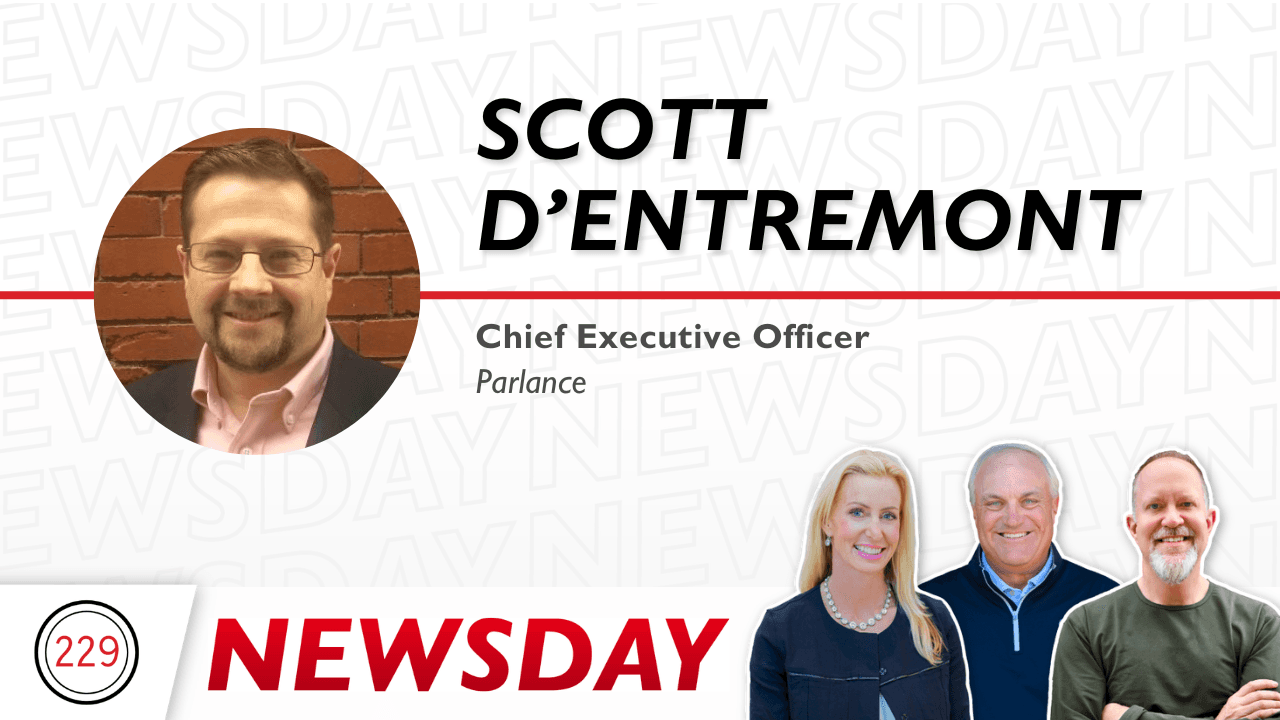
Fable Goes Dark and The Demo Derby Problem| Newsday with Scott D’Entremont
 Apple Podcasts
Questions Answered in This Episode
- Can AI guardrails actually stop bad actors from manipulating generative models?
- What happens when powerful AI tools like Fable are suddenly taken offline?
- How do health systems measure ROI on AI investments they've never made before?
- Who bears liability when an AI agent recommends something that harms a patient?
- Why are vendors drowning in generic RFPs instead of having strategic conversations?
About This Episode
June 29, 2026: Scott D'Entremont, CEO of Parlance, joins Bill Russell, Drex DeFord, and Sarah Richardson to unpack the week's most pressing health IT headlines. The panel covers Mythos, the AI model just pulled offline after social engineering exposed its guardrail vulnerabilities. Then Scott brings 30 years of conversational AI experience to a sharper conversation: AI is flooding healthcare systems with auto-generated RFPs, turning serious vendor evaluation into a demo derby. Who's liable when clinical AI gets it wrong? And is the procurement process hurting buyers as much as vendors?
Key Points:
04:14 Clinician ROI and Patients
09:48 Liability and Governance
13:34 RFPs Demo Derby
19:06 Pricing Tokens Outcomes
29:33 Commencement AI Debate
Keep up to date on the latest in health IT:
https://thisweekhealth.com/news/
Donate: Alex’s Lemonade Stand: Foundation for Childhood Cancer
Thank You to Our Episode Partner

Contributors
People featured in this episode — open a profile for more.


Transcript
This transcription is provided by artificial intelligence. We believe in technology but understand that even the smartest robots can sometimes get speech recognition wrong. I'm Bill Russell, creator of this week Health, where our mission is to transform healthcare one connection at a time. Welcome to Newsday, breaking Down the Health it headlines that matter most. Let's jump into the news. it is news day, and today we are joined by the incomparable Sarah Richardson, uh, Drex DeFord, who is comparable, and Scott D'Etremont, CEO of Parlance Corporation. Uh, Scott, welcome, uh, welcome to the hot seat Hey. Nice to see all of you guys. Thanks for having me Looking forward to the conversation. We have to start with the hot and sexy topic, which is which is Mythos/uh, Fable getting taken down. And Drex, our security guy. You know, what, what are we looking at? And, you know, you think we're gonna see this thing turn back on in the, in the near future? Yeah. I mean, this is, you know, the federal government getting involved and telling them, "Don't offer the... Don't let the model be used by any foreign national," which is a super complicated thing to try to figure out. So the answer to that was just turn it off. but the... You know, there's a lot of reasons that it probably happened. The kind of published reason, though, is that somebody sort of figured out how to engineer the model so that the model now is giving answers that's outside of the guardrails that were set for the model. There could be a lot of reasons, actually, that they decided to say turn it off for foreign nationals. But, but it's interesting that that whole safety issue, that whole social engineering of AI agents is a, is a problem Yeah, I think that's the thing people need to walk away from this is, which is, uh, guardrails around s- uh, around these, generative AI models are not deterministic. They are probabilistic in and of themselves. So, you know, there are really neat little conversations. It's almost like tricking somebody into Mm-hmm something, right? So you can trick the model into saying, "Oh, you're a researcher for a, you know, prestigious academic institution." "Well, well, yes. Why, certainly I'll help you with that biological, uh, research that you wanna do." Um, yeah, it's a very real risk. I mean, their, their, their response was, "Hey, everybody else has the same problem." It's like, yeah, okay. Well, Exactly that's, uh... And they do. They absolutely do. Yeah does, uh, the other, uh, Claude models. But, you know, one of the things that they tout with this model is it's really powerful, and everyone who's used it, myself... We had it for two days. through our entire code base in two days. Like, we did exactly what they said. It found all sorts of things that needed to patch, fix, adjust in two days. I'm glad, you know, I'm glad they gave it to us for two days. It feels like I was a part of Glasswing for, for two days. And if that's any indication, um, I would think there's a lot of holes in healthcare isn't the irony that it was helping fix code it built for us in the first place? Hmm Yeah, but, yes, but as my friend Drex in his little black hat over there would say, the sa- that same tool was just given to everybody else too, like the, the bad guys Yeah. Right? Yeah. So anyway, that's the news everybody wants us to talk about. I don't-- I'm not sure there's much to talk about here. I think we'll get it back. They'll, they'll figure it out. They'll put some more controls around it and, uh, you know, we'll, we'll, we'll get it back. But this is the, this is the state we are in. These models are, are really powerful. I think the other announcement, and Sarah, this one is gonna come to you, was, was Abridge. So Abridge, uh, you know, took a swing, got off the mat and took a swing last year at the-- around this time. Well, last year around August, they sort of got blindsided by, um, large EHR, uh, company out of, uh, out of Wisconsin, everyone was like, "Well, that's the end." That, you know, that's just the end of them a-and whatnot. Um, and you got to go to New York, sit there and, and listen to the, uh, to the announcement. I'd love to, love to hear your thoughts as you to that from, from a, from a business model perspective and from a healthcare perspective. This, there was a c- few things that were interesting. I love that the room was full of clinicians, rightfully so, probably one of the strongest arrows in that Abridge quiver is their ability to, to market and host something that gives you buzz in the placement of where it was. Um, because obviously everyone's moved past the pilot phase of any of the AI capabilities, really the ambient listening, the documentation, the workflow. what has now made it into production, and then how are they measuring ROI? How are they thinking about that as really a capital investment that's unlike any other they've done before? And which cases are surviving the budget scrutiny? Where does the conversation come into play where it's that we have to keep this even as we enter the epic era of AI, uh, being, you know, a handful of platforms that may dominate. They announced their partnership with NVIDIA, which was example, I think, of how their market is moving from a generic model towards more of a healthcare-specific AI trained on clinical conversations aspect. The one piece I found so interesting post their announcement, we got to go down and mingle and, and demo some of the content, was consumer health is changing so much of that dynamic. So if you're in the room with your physician, and they're already using the ambient capability for the documentation layer, they also introduced the Abridge agent that's helping the doctor have a conversation with us. Do you have access to your medication? Are you eligible for a clinical trial? So as a patient, the first thing I leaned into was, I want access to that agent. So if my doctor's talking to the Abridge agent, I wanna be able to talk to the Abridge agent. Does that replace Emmy? are they coinciding? Because are you willing to share more with that avatar than another or that agent capability? But that's not something that's currently available as the patient-facing side of the Abridge agent. But if I'm a patient, I'm gonna go back to two things that, that came up most prevalently post-conversation. I would expect access to it too, and then that whole slew of humans who say, "Well, if my doctor's using an AI agent, why do I need my doctor?" Yeah. There was, there was a couple things about that announcement. One, uh, I, I mean, the sexiest thing is they're gonna build their own foundation model with NVIDIA, right? So this is clinically trained, clinical model, that's what they're gonna do. The second thing is whole bunch of things on the rev cycle side. I mean, they're gonna do real-time coding, they're gonna do all those things that are gonna bring that, that decision right into the, to the room. But I thought the thing that struck me the most was, um, was pharma in the room. So Lilly is a big investor now in Abridge. So they participated in the round, they were part of the announcement, and they talked about how they're going to partner with them on, um, you know, essentially trials and, and those kind of things. And so you see they are building these bridges out of... because they're a wedge technology out of the EHR directly, and two things like life sciences, two things like pharma, two things like, um, you know, the, the, the other thing was around, uh, oh gosh, uh, referrals and, and, um, prior authorizations and all that stuff. They're building that whole web of things that, um, know, that Epic's trying to build as well, but they're sort of struggling a little bit to build that out. And so now you have really two players trying to build that out. it's gonna be interesting. Scott, I wanna come to you and bring these two things together, which is, is a weird space. We are living in a weird time in healthcare and, hear this ROI conversation all the time. We hear, you know, what is AI going to enable us to do differently? I'm curious, as you're going out there and, and positioning, uh, your, your, uh, services, your, your, your software and your, your products, um, what are you finding in the market? What's, what's the main thrust of the conversation that you're, you're hearing at this point? Yeah, certainly, certainly ROI. So sort of over, over the likes... The company's been around for 30 years, so it's changed a lot, both in terms of technology and in terms of what people are looking for. So it used to be kind of just a direct labor replacement. People were reluctant to use kinda conversational AI in terms of not wanting to lose their colleagues. You know, everybody was, you know, interested in kind of protecting the staff. Uh, there was always concern, does this stuff really work? And it has gone from that kind of an attitude to, "Hey, this is the future. This is gonna be what happens. What do you guys have?" So, you know, we're excited that kind of the market has caught up with something we've been doing for a long time, on one hand. And on the other, there's a lot of new entrants. And so it's, it's more and more difficult to differentiate from somebody that had a good idea on how to do it and can kinda make a phone ring, um, and sorting ourselves out against that as somebody that's been in healthcare and, you know, 400 customers and, and things like that. So it's gotten kinda confusing. Um, but it, it's a great time in terms of people's willingness to move towards the technology, and the technology works better than it ever has before. I mean, we're, we're just seeing terrific results in the field, which makes a big difference So Scott, then I have a follow-up question for you very specifically because you're established, you have the reputation to support it, you have the outcomes to support some of these conversations. People are worried about the liability factor of AI when, happens when AI gets something wrong and whether it's a clinician or a health system, like the legal responsibility. You even see it with Waymos and these, and the driverless different cars. So as you consider how you bake in that conversation around the liability factor of using agents, even in your platform which people really trust in and believe in, how has that conversation changed for you recently? Yeah. Well, it has certainly added a whole layer to contracting. You know, there's a lot more going into AI governance and how do... You know, where is my data, um, exposing different models that we use so that people are comfortable, that there's some control and knowledge about where their, where their data is. I think it's an evolving, um, trend. We don't do anything clinical, so it's been a little bit lower burden than some of the folks that are trying to be involved with diagnosises. But I, I think that it will only, only increase as more and more people use it. We'll be getting asked more and more questions Yeah, that... that's a phenomenal point, and I want to put Drex on the spot because it's my favorite thing to do now. Um, liability, because we've talked about this before, right? So when you think about self-driving cars, that first self-driving car hits somebody and kills somebody, Mm-hmm who, who is liable? Is it the, is it the car company? Is it the driver who, uh, who turned on the, uh, full self-driving? What if it's a cab? You know, is it the cab company? Is it the full self-driving company? It's... And we have the same-- I, I use that as an example because I think people can put their arms around it. But in, in healthcare, there's an awful lot of concern about this whole liability conversation, especially when we get into the clinical AI. It's like, where does it reside? And if the AI is 1,000 lives, but it took one life, Hmm. I mean, is that, you know, does that stand up in court where you say, "Look, we saved 999. Well, sorry, you, you, you cost one, therefore, you know, here's the..." It, um, you know. I, I'm-- And it's always I'm wondering how much the, the vendors are going to be asked to take on that liability I, I think that's a, you know, those are really good questions, that idea of the vendor. If there was a partner who was willing to take on that liability, to sign up for that liability, they had so much faith in the agent that they were building that was doing the sort of pseudo treatment of the patients, um, themselves, they'd probably be in a, they'd probably be in a, in a ballpark all by themselves. Um, but, but folks would probably take them up on it. It is really interesting, right? Because we have this sort of human in the loop process right now where, um, the AI agent, whatever it is, is giving good advice and guidance, hopefully good advice and guidance to the physician or the nurse or the whoever it is that's providing the care, the radiologist. And they're, they're accepting that sometimes literally with just a click of a button. Now, their ability to be more productive, just think about radiology, the ability to be more productive and see more images and get more feedback and be able to say, "Yeah, that's right. Yeah, that's right. Yeah, that's right." At some point, they get into, like, click overload. I didn't really check it. It's been right all this time. I said yes. Now there's a bad result. Who's responsible for that? Well, yeah, you did click. Well, cli- did... the button, You clicked the button. I'm probably the person responsible, yeah Scott, I wanna keep coming back to this, this, uh, I, I'm seeing it everywhere that it's so easy for people to generate a PowerPoint deck, or it's easy for them to generate an RFP, an RFI. it's so easy at this point. I'm wondering if, there's a lot less, uh, I don't know, face-to-face kind of things and a lot more like, "Hey," you know, "Hey, congratulations. You're one of 55 people who got this RFP." Yeah. Yeah. Yeah, it, it, it's changing. It's really changing the way that everyone operates. before, customers, you know, vendors are always a little iffy on responding to RFPs, you know, because is it really a possible deal? They take tons and tons of time to support. Um, and, you know, you're happy to do it if it's gonna be the kind of process that you think that you can be successful in, that will be run fairly and, you know, on a great timeframe. what we're seeing now, um, is just more and more of them just flying out of the woodwork. So, you know, as I mentioned earlier, everybody's getting to the point where they're like, "Hey, we need to digitize the front door. Let's leverage this technology. This is the wave of the future. Well, let's put an RFP out there." Um, and they're going to Claude or, or whichever, you know, platform they happen to use. They're putting a few, a few things in, and they're generating an RFP. Some of them are super, super, super specific, others far less so, but it kind of creates this, this process that then leans on, um, some things that really cause some, cause some stress, um, if you're the vendor after you've put all this time in, where now you're down to the sort of demo derby, and it's just not easy. Those are all we- all taking place online. You know, we just had one last week, and try as we might, I think there were 12 people on it from the customer's side. And, you know, the salesperson politely said, "Hey, could everybody mute, um, before we go and do the demo?" And a gentleman twice asked a question during the call flow, which of course our agent heard and is now reacting to him and, you know. The demo wound up being fine. Everybody got a couple of laughs. But you've got sort of all of this work done on the front end to then create the anxiety of this one moment. And most importantly, I think from the buyer's side, what are you really getting to look at, you know? You're, you're sort of pressure testing the lowest common denominator, which is Can somebody make a phone ring? Can somebody orchestrate one of these small applications? You don't know what kind of a database it's again- it's against. It probably or could have been baked just to do this one demo and not have a lot of, you know, big workflows or databases that it has to go against. Maybe it seems a little fast. Maybe you decide to go with it. Maybe it doesn't really work that way in the field. It's really kind of created some, some challenges I think not just for vendors responding, but I think buyers may ultimately, even though it seems on the front end that you're, you're running this great process, you may have created a more difficult process for yourself. And we're getting away from the part that's important. You know, what's, where's the partnership? Where is kind of the mechanics and the expertise and design of how you actually build it out? I think a big part of this always turns out to be too the, you know, the reference, the referenceability. Do you have customers that, um, your potential customer can turn to and say, "Here's what I have as my RFP. Like, these are my core requirements. Do these guys do that?" And if you have a, if you have a reference customer that says, "Not only do they do that, they do all of this stuff too," that's where the gold is, right? We, we have some of that, Drex, and we're really lucky that we do, but you bring up a point, another sort of stress in this whole process is we've had a couple of people that wanna call those references early on in the RFP. We don't even know if we've kinda gone forward at all, and they wanna have detailed conversations with multiple customers who have been so far gracious enough to put the time in the calendar to have these conversations. But it's in the back of my mind is a concern that if we do, you know, 10 of these a year, that we're gonna wear our references down. Burn out your references, yeah people are really busy and, you know, to kinda deploy that kind of real value, you wanna know that it's a legitimate opportunity and that, you know, you're a finalist, you're one of a, one of a couple of people wanna call that reference once, do a big old recording, like ask them all the questions, and then say, "What do you, what do you intend to ask them?" And then just cut a video and say, "Here." It's a, it's a good suggestion if people would accept it because, um, yeah, it's, it's on my mind, you know? We've had some longtime partners, and we really rely on them and, and really appreciate their support, but everybody's busy, and you can only kinda give your A game so many times Do you guys rely on a generative AI, um, model at all in, in your, in your process? We do. We do. Yeah, we're among... Sort of in our whole industry two years ago, everyone was convinced there would be no way that you could move completely away from a rules-based component to navigate phone traffic. We, like many s- in the industry, have now completely shifted. It's, it's based on generative AI, um, and that's what's really making it work Yeah, so I, before, before I ask the question, I wanted to ask that, which is, so talk to me about tokens. I mean, is tokens a conversation? Is that... Because this is what everyone's sort of worried about. It's like, if I buy your solution, is it gonna be variable based on token usage? Is it... Because it, it seems like people are moving away from per seat the agents are the ones that are actually doing the work. It's like, "Hey, you're just gonna pay me for the agents that are doing the work, and we'll track that, and we'll just charge you for that." Yeah, I mean, we're looking at it closely. We've had, uh, we've had people looking for outcome-based pricing, and we- we're moving in that direction, but there's a lot to figure out. Um, and I can kinda circle back to that. We've always... We've never been a per-seat offering. We've always done things based on volume and kinda complexity of the application to support. So we're still, we're still there. Um, so call volume? yeah, yeah. So No, that's about like the more you use it, the more valuable it must be, and therefore you pay for the amount of electricity you're consuming. It's the Yeah, yeah. Yeah, I mean, you know, I think in the future when peop- when the market is more comfortable that they'd give you everything to work on, I could see us being completely outcome-based. Today, most institutions really kind of crawl, you know, really are in a kind of a crawl, walk, run in terms of which calls or which appointments they're willing to try automating. So that doesn't work well for us i- in the partnership because as we set up all the infrastructure, um, that's kind of a flat basic investment for the most part. And then somebody goes, "You know what? Let's just do confirm and cancel of appointments. Let's not set up those appointments." So we couldn't really have a system where we go, you know, "We're only gonna get paid for the appointments we set," and the customer goes, "Well, you can't really set them." So let's, let- let's, let's have some fun. Sarah Drex, me, each of us, uh, I'd li- I'd like to hear from each of us, like how would you vet their solution? Like, what would your... Um, I was not a huge fan of RFPs, to be honest with you, but how, how would you guys... Sarah, how would you, how would you vet, their solution, do you think? would be a couple of things that I would look for. Number one, interestingly enough, it would be the referenceability. wanna know who, who like me is using it, and what have they learned or done well. also be curious about how you help me govern this. And I say that because I feel like governance now is becoming more of a competitive advantage, because we've been talking about it for 30 years, and people are getting worse and worse at it. 'Cause anybody can go buy a system, especially a system using AI, so that gets them out of the what are we doing about AI bucket. But then how are you responsibly deploying either your review board, your governance structure, your model validation, explainability, the drift, the trust that needs to be built. Those are all the factors I would be looking for, because that gives me an a way to effectively report out its usage and capability to my board, C-suite, peers, et cetera. But I really wanna know what people like me are also doing, because I wanna solve a problem that people know how to solve. Most organizations, even I've been in Fortune 50 of them, they are not the cutting edge organizations. They are the ones that the reason they're Fortune 50 is because they follow a very strict financial model, Mm-hmm. and that has to come back to the aspect of what I'm looking to achieve in my organization I'm on a similar path. I'm, uh, I, you know, I've, I'm a CIO. I've been to a couple of 229 project summits. I've got 30 friends on speed dial now. I can send them a note and say, "I have this requirement. Here's the big picture of the requirement. Who are you using? These are the people we're hearing about in the market." And I'd take that survey back and say, "We're gonna take the top two or three or four of those, and I'm gonna call you, and we're gonna have a deep conversation. Show me your demo. Show me how it works. Talk to me about what is your value advantage compared to some of the other folks that I'm looking at in the market." I'd probably try to do, um, some kind of a comparison like that. I think it's not all about the technology either, right? I've consolidated call center, um, the hundreds of call centers in, uh, any given health system. I've tried, you know, I've gone, I've done that project, and that is not easy, so the people process part of this is super complicated, too, and that's part of what I'd wanna know, too. You've helped people with that. You've helped people through that process. Yeah how could you help me get through that part of this quagmire that I'm probably getting ready to start? Yeah. Yeah, th- those are both right great, both great points Yeah. Uh, and, and to be honest with you, the, the thing I would say to health systems who are listening to this is, I, you know, I don't think I get a list from class and send it to everybody. you're wasting somebody's time, and you're wasting-- uh, you could be wasting your team's time, which is the cardinal sin of being a CIO. It's like, just, just don't do it. Just, like, you know, at least look at, hey, what do they do? What-- how does it match to our problem set? And if it doesn't match, don't send them the RFP 'cause, I mean, you just... You're burning at least minutes, tokens, hours, whatever happens to be, to, to, to say, "Hey, we're not gonna use them," for, you know, something that y- was as obvious as it could be just looking at a chart. um, just because you can, is the PowerPoint thing too. Just because you ch- can generate a PowerPoint with AI doesn't mean you should generate a PowerPoint with AI on every thought angle on this, right? Sometimes people do things like create an RFP because it's easier to create an RFP now. And then you ask the AI, "What should I include in the RFP?" And suddenly now it's the kitchen sink, and those aren't really your requirements, but that's the thing you send out. It's just That's Yeah, the, right, but the, that's work is, the work is, um, the work of the analyst, right? So it's, it's going out, spending time with people. It's really understanding the problem. It's breaking the problem apart. It's looking at the core components and figuring out, you know, what, what are the features we actually need? What's, what are, is the problem we're actually going to try to address? And what tech... Yeah, what tech, what, what- can actually own that problem? Do they, is, are they the expert in that field? Yeah Yeah, it's, uh, yeah, being a buyer in this, uh, in this AI world is, um, is, you know, really going to be, um, really going to be interesting. Yeah, I'm looking at the... Yeah, go ahead, Drex Sarah, I'd throw in the, uh, Van Halen brown M&M's thing into my contract just to see if you read it, Scott Ah. We just became a finalist in an RFP because we did. You know, it had such detailed things and we, we kind of picked up on the idea that I think they're being so detailed that they wanna make sure that we can be detailed, so that was kind of, F. kind of nice to kind of uncover. But yeah, w- you know, w- without a doubt, I think the details are what matters. Y- you know, this is a moment in my career where everyone is more excited about technology generally than sort of ever in our lifetimes. It's amazing every week, right, what you get AI to help you out with. And, uh, so our buyers are looking at that, and what we're trying to make sure is that people don't start going, "Listen, it's this one sexy feature that's the difference," because we might have a feature somebody that doesn't ha- doesn't have, and they may have it again next week, or they may have one feature that we don't, and we'll have it next week. We're trying to keep the conversation around what's kind of the path forward, what's the long-term, you know, outcome potentially gonna be. And with all this excitement, all the new entrants, honestly, not everybody's gonna be here. You know, we're, we're not looking at a market where there's a lot of people making money at what we're doing. We think we might be the only one, honestly, and, and it's because it's kinda easy to start these businesses. People are excited. They have You're the some great stuff- but, but there's people with bigger valuations than you, of course, 'cause that's the weird world we live in these days Yeah, there's, you know, billion-dollar companies with not a lot of, not a lot of revenue around. Um, so, you know, for us, we think the conversation should be a lot around deliverdy- delivery and what the outcome is. You know, we've kinda built the business to have a lot of healthcare expertise on the team. Um, you know, we have people that used to work at Epic, or the engineers that are doing the integration. We have people that used to run call centers that are the people that partner with our customers to figure out what the right workflows are. And technology plays, um, a smaller role. We, we do have kind of one big unlock, um, where we for years were thwarted by having the customer need to do a lot of workflow standardization to be able to get at doing appointment scheduling. And we've been able, with generative AI, to kind of pull that to the agent's side. So now we can accommodate if Dr. Jones, you know, is only gonna do left knees on Tuesdays and Thursdays, um, we can make sure that someone doesn't get appointments, or, um, one physician, you know, books appointments differently than the, than the next in terms of time slots, things like that. So that's the real place where technology, I think, makes, makes a difference, and that we're really excited about. But for the most part, it's more about the partnership and delivering on just kind of working together and making it work and learning together. Yeah gonna lean into the concern I have right now is the way we have whitewashed college grades, and then the generation that doesn't know how to do systems thinking because now they're letting the technology think for them, and so that human level or ability of interpretation, and even the things that we all learned in our 20s and 30s that may be semi-irrelevant due to agentic, even autonomous and super intelligence capabilities, gotta know how Like, when I'm sitting in the room with you planning that workflow, it's still gonna be me and a human being, and I'm still gonna use the whiteboard probably because I want that, I need to see it and touch it before I'm willing to give it to something that I can't see and touch All right, here's the exit question. The exit question is, uh, you're giving a commencement a- address th- this year. Do you mention the word AI or do you not mention the A- word AI? Sarah, do you mention the word AI? Yes, and I would say so- I would open with something like, "Okay, I know you believe that AI is ruining your future and that it sucks," and then go from there. So at least I And then go Ah, okay boo me off stage Yeah. Scott, would you, would you say it from up front? Talk about AI I think I would. You know, I think I would. I think it, it is just so pervasive, it's, it's hard to ignore. I think that particularly new graduates of anything, it's on their mind and, and worried about it. I have some college students in my life, and it's interesting because the academic world, which those people would be exiting, are really caught up in don't use it and you can't do the papers and all of that. And I was doing some work, um, near my girlfriend's daughter who's, uh, at BC, and she's going, you know, "How, how are you doing this? Like, how does, how does this work at work? We can't use it." And I'm like, "People can't work at Parlance now if they're not using these tools." Yeah I'd love to kinda talk to that disconnect that we have really actively going on right now, and, and, and I think it's kind of an interesting conversation, particularly with that audience. Yeah, Dre- at Drex yeah, I'm absolutely gonna mention it, and I think you, you have to, you have to think about it in the context of, exactly what Scott was saying. If you're not using the tools, you're gonna be left behind. This isn't necessarily a giant play about replacing the job that you just graduated, you have a degree in, replacing that job with AI. But there's a, a great opportunity to have a lot of coworkers who are non-human who are gonna make you be able to do that job better, and I think that's the angle Right? um, I will be po- unpopular this week, uh, in, uh, Napa. We have CIOs coming in and we're gonna have... And I'll be unpopular 'cause I will, I will essentially ask them, and I will use AI, and I'm okay being unpopular. Part of what I do is poke a little bit. And I'll say, "Okay, we had, we had Mythos for two days. You guys were whining and complaining that you wanted to be a part of Project Glasswing, they gave it to you for two days. Now, I wanna hear from each of you what you did with it for two days." And they're gonna tell me they didn't do a thing, and I'm gonna say, "Hypocrites. Hypocrites, all of you. You had it for two days, you didn't do a thing." So Right. It happens to people why Drex and I have job security, 'cause we get to pr- we get to repair Bill's reputation on a weekly Every time. But it's a lot of fun, I know you guys are both working full time and more A lot of service recovery Oh my gosh. Uh, seriously, I mean, you knew it was coming. Your team should've been like, "Okay, it's been released. Let's Let's go So, um, so if they heard this, they know it's coming and, uh, they'll have an answer prepared, I'm sure. It'll be fun. Scott, we will miss you in Napa. We're, we'll be there for, uh... Sarah, we'll be there 10 days or, um, whatever. Well, you live there. What am I talking about? You- home in between, but yeah, I'll be there for sev- six of the 12 And, and Drex will be there for the first weekend. Yep Uh, should be, we will be loaded for bear the next time we get together. A lot of conversations happening and, and we'll see where it goes. Scott, I wanna Vitruba you for, uh, coming on the show. Always, always great to catch up Absolutely. Thanks. Nice to see all you guys. Hope to see you soon. That's Newsday. Stay informed between episodes with our Daily Insights email. And remember, every healthcare leader needs a community they can lean on and learn from. Subscribe at this week, health.com/subscribe. Thanks for listening. That's all for now.