 Apple Podcasts
Questions Answered in This Episode
- Did ChatGPT actually integrate with Epic through the official front door?
- Why does read-only access to medical records limit ChatGPT's clinical utility?
- What liability concerns make health systems hesitant about ChatGPT in clinical workflows?
- How do established vendors architect AI differently than direct ChatGPT integration?
- Will ChatGPT's partnership with UCSF change everything for health systems?
About This Episode
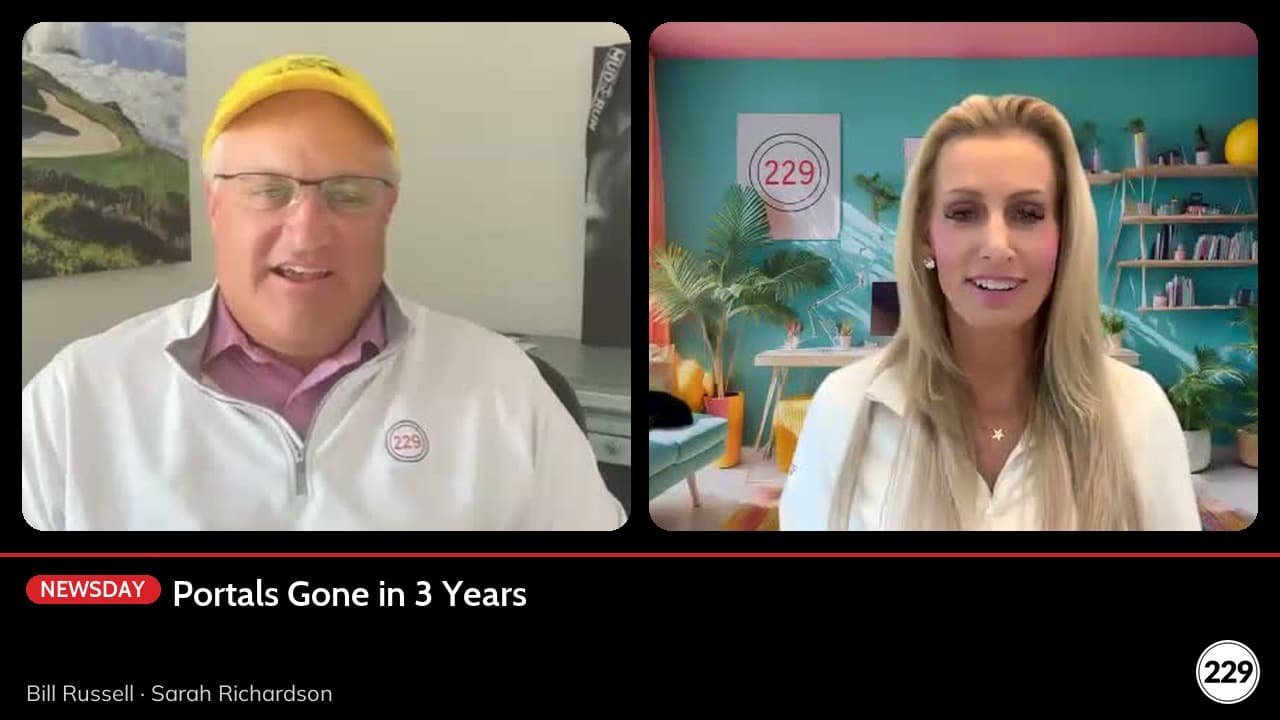
September 7, 2026: Bill Russell and Sarah Richardson take the ChatGPT-UCSF headline apart. Silicon Valley called it game over. Bill's read: they did not come through Epic's front door. Read-only USCDI over FHIR. No write-back. No warranty. A badly built agent can fire 75 API calls into production Epic and slow the EHR. Doctors want a predictable system.
Key Points:
0:00 Does it really change everything?
0:16 Newsday open
2:48 Tegria
3:17 ChatGPT at UCSF
6:51 75 calls into production Epic
12:54 UGM in CIO quotes
20:28 340,000 applicants and Rangers
31:23 An 8% margin on the backs of Orange County
34:38 Close: New Orleans, then San Diego
Donate: Alex's Lemonade Stand: Foundation for Childhood Cancer
Thank You to Our Episode Partner


Transcript
This transcription is provided by artificial intelligence. We believe in technology but understand that even the smartest robots can sometimes get speech recognition wrong.
ChatGPT Did Not Come Through Epic's Front Door | Newsday with 229Project
[00:00:00] Bill: And that's what they're doing. And I'll tell you what, it was… today was one of those days that you wish you could put your glasses on and not read social media or your headphones, because, you know. people who really do not understand what goes on inside a health system are like, oh, this changes everything. I'm like. Does it… does it really change everything? And, you know, and so I only responded to a handful of them, but as I sort of looked at it, it doesn't really… I mean, it's interesting.
[00:00:16] Bill: It is Newsday, and I love starting News Day before Sarah is ready. It puts us on the same, same wavelength, although you've been busy. You're in, beautiful Southern California, and for those who don't know, Drex is at Burning Man, doing whatever it is that Drex does.
[00:00:33] Bill: Burning Man. He says it's a, it's an exercise in building culture and building community. And so, since we're all about community, we look forward to him telling us these stories from this year's Burning Man. Sarah, you're in Southern California, great event last night.
[00:00:53] Sarah: Yes, we got to co-host an event with one of our premier partners, and just one of those evenings where everything goes exactly as planned and intended, and maybe exceeded expectations on all fronts.
[00:01:03] Bill: I want Southern California, it's like, cue the sunset over the hills now.
[00:01:08] Sarah: And you couldn't… it couldn't have been better. It wasn't windy, it was warm, the sun set perfectly, no clouds, it was… it was one of those moments where, you know, every once in a while, I'm like, why did I move to Northern California? Not that being in wine country is.
[00:01:21] Bill: Yeah, not that being in Napa, or… you're not exactly in Napa.
[00:01:25] Sarah: Pushing enough.
[00:01:25] Bill: That, yeah, you're, you're, like, comparing two beautiful places and going, why did I move?
[00:01:33] Bill: Yeah, I mean, there are things to, to really miss. We raised our youngest daughter in Huntington Beach, and it was… it was very different than raising our other two in Missouri. All three of them would say, absolutely loved their high school years and that kind of stuff, but when you compare
[00:01:50] Bill: what Katherine did, like, we get phone calls, it's like, hey, I'm up at the Getty at the museum, hey, I'm, you know, I'm at Pantages, I'm watching, you know, a Broadway play and stuff, and you're just like. you're a high school student, like, you shouldn't be doing… like, I don't know what you should be doing, but… I mean, Southern California, there's just so much to do, it's crazy.
[00:02:11] Sarah: It is, and I feel like what I love is, even though LA is spread out and can be hard to get to between OC and LA counties, the fact that the healthcare community here is so tightly integrated, like, people make long drives to be able to spend thoughtful time together, especially when it's tackling issues.
[00:02:25] Sarah: that are the things that they're having conversations with either their board, their peers, the C-suite as well. So when they get to spend time together, it's a true, like, decompression, sharing of ideas, and they all leave any event that they go to with a narrative that was a good use of the X amount of hours that it took to Steven to be available on a Tuesday night at, you know.
[00:02:44] Bill: All right, all right, pull us back to work. I get it, I get it, like, be serious, here we go. Alright, we're going to, the story of the day is ChatGPT, that came out last night. It is, what day of this? Today's Wednesday. So last night on Tuesday, ChatGPT came out, and there was an article
[00:03:32] Bill: That, they have partnered with UCSF, I believe. Yep, UCSF Health. They, connected up ChatGPT to the medical record, and also there's a handful of, plugins for public data, clinicaltrials.gov, CMS, ARCSNorm, DailyMed, PubMed, and they,
[00:03:56] Bill: you know, touted this release. Now, a couple things about the release. One is… You know, connecting into Epic is a big deal, but Epic is not really in this thing at all. They did not connect, like, through the front door. It is a front door, but it's not THE front door. They connected, just like everybody else can, through fire. resources, get the US CDI data set.
[00:04:21] Bill: And, they're… that's how they're pulling the information in. So, UCSF set them up, to access the record that way. They got it approved, and they're using the… the connections from the 21st Century Cures Act, right? So, that was the big thing for 21st Century Cures. Like, we're gonna open this up so that we can… we can do research and that kind of stuff.
[00:04:45] Bill: And that's what they're doing. And I'll tell you what, it was… today was one of those days that you wish you could put your glasses on and not read social media or your headphones, because, you know. people who really do not understand what goes on inside a health system are like, oh, this changes everything. I'm like.
[00:05:06] Bill: Does it… does it really change everything? And, you know, and so I only responded to a handful of them, but as I sort of looked at it, it doesn't really… I mean, it's interesting. But when you think about it, so ChatGPT,
[00:05:23] Bill: Read-only, first problem, so read-only, can't write back, so it's not really in the clinical workflow, so the doctors can use it, but if they identify something, they have to click out of it, go back into Epic, and do their thing. As I said before, it's not the complete medical records, it's the USCDI, data set. You know, the next thing is.
[00:05:44] Bill: Just the sheer fact that these health systems are already paying for tokens. They have ART, that they're paying for. They have… a lot of them have a bridge, some of them have ambience, they have some other tool that is… that has come through the front door, and can get the entire longitudinal medical record.
[00:06:05] Bill: And and then, you know, after I posted my story, a couple people said, hey, you know, don't… don't forget about the fact that ChatGPT essentially warrants no, none of their responses. So it's like, you're gonna have to do all the checks to make sure that it's,
[00:06:24] Bill: you know, that it's giving good information, and the quality. And then the last thing, and then I will kick it over to you, because I'm not sure you got a chance to sit through all this, because you had a pretty busy day out there in California. The last thing was. You know, I had a great conversation with somebody who does a lot of work with Epic, and one of the things they talked about is the importance of architecture.
[00:06:48] Bill: And the comment they made to me was, if you don't architect it correctly, these agents will go out and create, like, 75 requests while it's hitting the API, which is hitting the production epoch system. which all of a sudden slows down the Epic system in production. And,
[00:07:08] Bill: doctors don't like that. They like a predictable EHR, and so, while I think it's an interesting experiment, and I think it's interesting that ChatGPT can get in there, I think it was overblown on social media today. I think a lot of health systems are going to look at that and go.
[00:07:25] Bill: That's interesting, and hopefully have the conversations with their board and other people, and say, yeah, this is interesting, we already have access to this. Like, we can do it through art, we can do it through… our, ambient listening partner. Did you get a chance to see all this today? I know you had meetings most of the day today.
[00:07:46] Sarah: I didn't, I haven't seen any of it, but I mean, at the same time, there's maybe that window where you're grateful that you might have the 24 to 48 hour buffer to wait till some of the hype, like that hype cycle that goes downhill very, very fast.
[00:07:59] Sarah: I tend to be… and I had some real… I already did a dinner last night with a bunch of our community and one of our premier partners, like I noted, who is doing exceptionally and fantastic,
[00:08:12] Sarah: work in this space. The ability to have, you know, the whole ambient solution be a part of the journey, and then the ability to say, everybody has access to clinical decision support in your organization, like, everybody, and the fact that people are using… we had doctors telling stories last night about
[00:08:27] Sarah: how they're using it in real time in the patient visit, and it's saving them 20 minutes post-visit just to be able to have that conversation with the patient in the moment. And the physician's like, I'm learning really cool things about things I wouldn't have known or had time to research as well. But the reciprocally, though, Bill, and what I'm really appreciating, I had a conversation with our partner today, that they do secure web browsing, and how they allow you to understand, like, if people are trying to get out to these different models, or these different opportunities.
[00:08:53] Sarah: that they know about it. They'll block it, and they'll say, oh, Bill Russell's trying to access this LLM, or this program. now you can have the thoughtful conversation to bring these things in-house, continue to avoid some of your shadow IT, continue to manage the cost of some of these requests that are coming through. Meanwhile, behind the scenes, you've got, you know, ECRI creating reporting pathways for errors, you've got
[00:09:17] Sarah: tech leaders who are understanding how to more effectively prepare for these AI-enabled cyber attacks. And then lastly, you have HIMSS launching frameworks to measure value for AI. So all the noise is happening, all the foundational elements still need to occur, and your core partners are the ones who are keeping up, in many cases. Because they have to be a step ahead of you, so they can tell you what you need to be preparing and telling your board as well.
[00:09:42] Bill: Yeah, I think there… there… there's a couple of echo chambers. We have our own echo chamber in health IT and healthcare, for sure. But there's a Silicon Valley echo chamber as well, and I can just give you an idea of the headline on this. Well, ChatGPT and Epic came together, game over. I was like.
[00:10:04] Bill: Really? Do you really understand how health systems operate and how they function, and the kind of pressure that the IT team, the health IT and the clinical informatics team, is under to make sure that the information is always correct, every single time?
[00:10:22] Bill: Well, you can't… you can't just take a flyer and say, well, you know, ChatGPT doesn't really warrant… they… they actually literally say in the thing, not to be used for any kind of clinical
[00:10:35] Bill: diagnosis, or whatever. I'm like, well, that's exactly what they're trying to use it for. They're trying to pull the medical record together, and so they're trying to cover themselves if they make a mistake, and I'm like, well, we don't have that luxury. And so we… and a bunch of them are using… look, I think Epic's using Chatgpt. In fact, I'm pretty sure they are. They're using a partnership with OpenAI.
[00:11:00] Bill: I think, Ambience is using a partnership with OpenAI, I'm not sure if a bridge on the back… now, a bridge is making their own model moving forward, but they're either on Anthropic or on ChatGPT, so they're all utilizing it, but the reason we trust them is the harness, and the fact that these are
[00:11:22] Bill: you know, organizations that have spent a fair amount of time creating that hardness to make sure it is right every time you look at it, and they don't… they're not as flippant as, say… as, say, OpenAI is. So…
[00:11:37] Sarah: and the… The time it will take to mature just even that same game over, like, that game over, it's like. equals how many months or years down the road when it's something that you know that you could just most easily either plug and play or utilize effectively. So, game over, you know, pick a date, because it's not today. And… they're…
[00:12:01] Sarah: It's harder for mega platforms to stay as current and nimble as some of the points solutions, or even other platform SaaS solutions, and that's where you're starting to see the differentiation between a great idea that someone built in their basement versus something that's had years to curate. There is a happy balance in between all of it, and you know how I feel about all your eggs in any one basket. And so, it would be far from game over. I'd actually be able…
[00:12:26] Sarah: probably fuzzed up if I had to now go and have an entire conversation with my peers and the rest of the board to explain what that statement really means in terms of
[00:12:36] Sarah: game over, as an example. It's way more nuanced than that. And that's where you will see, again, the differentiation between those who have embraced AI in a way that is accretive to the mission of the organization, and those that are just trying to, like, paddle to keep some of these, rogue initiatives at bay.
[00:12:53] Bill: Alright, here's what I wanted to do. We did our… we did two weeks of us talking about UGM, and we've had some time now, so the articles have been written, and what I did is I went out into Albert, and I asked Albert to collect
[00:13:11] Bill: The thing we're focused in on is the quotes from CIOs from across the health systems and what they saw at UGM. So, if you haven't heard our recount of what we heard and how we saw it, you could go back and listen to the last two episodes. What we're gonna do this time around, though, is take a look at some of the reporting, so…
[00:13:31] Bill: Let's see, Becker's, too big for its britches, CIOs question Epic's expansion beyond the EHR. This, this actually is funny, because they attribute this quote, to Aaron Meary. at Baptist Health in Jacksonville. You can only do so many things. He pointed to Rangers as an example, comparing Epic's expanding workforce ambitions
[00:13:53] Bill: to last year's launch of its Ambient AI documentation tool, which he said somewhat froze the industry for third-party dictation vendors. This could have the same chilling effect on consulting companies out there.
[00:14:05] Bill: it would go head-to-head with some of the large consulting firms. Dr. Mary noted there's precedent in the market for vendors, self-supplying implementation staff, enterprise resources planning, ERP planning vendors, such as Workday, do something similar with their own deployment teams. I do question, is Epic getting a little too big for its britches right now? He said it could be…
[00:14:28] Bill: Core focusing on AI. It could be core focusing on AI and data and other things. Which are right in its backyard. Interesting. I wonder if… you know, Aaron's usually pretty good at selecting words. It's one of the reasons I like interviewing him. He… he really thinks through what he's gonna say. I wonder if he knew that that was going to be the soundbite they… they took, because he's…
[00:14:51] Bill: he's a fairly big fan of Epic, and right there, he's just saying, hey, you know, stop, stop going in all these directions, let's, let's, let's focus on your, on your, on your core competency here a little bit.
[00:15:05] Sarah: Well, you assume that anything you say is going to be a headline. We've all known that for years. That's why sometimes it bodes as well, and sometimes it doesn't. But the win in having Aaron say that, specifically, is that it's a reminder that, hey, by the way, like, you're doing a lot of really good work, and he's the first 1010 ever for utilization, and…
[00:15:25] Sarah: the ability to say, maybe you don't need to go into everything. Maybe everything does not need to be some bastion that you're supposed to go tackle. by the time, you know, 2029 rolls around, are you really going to swap out your ERP for something that's embedded? Focus on the things that you're incredibly good at doing, and certain things, honestly, can and should be left to other people. Dilution effect.
[00:15:48] Sarah: Has… has a tail on it, that you can't back out of things when everything is in a singular environment, and there will always be parts that you evaluate and say. I love all… I love 80% of this, but 20% of this needs to be something that is being innovated in a way that is not about taking something else over, it's solving a new problem.
[00:16:13] Bill: This is… this is the world we live in, though, right? So, you have Aaron saying that, and then you have, Tom Bentley, CIO for, THE Ohio State University, the Wexner Medical Center.
[00:16:25] Bill: He says, we really need to question any point solutions that we're using and stick with more platform solutions like Epic. He said, we might be able to gain a little bit of ground in a little bit of a niche area, but in the long run. I think it's going to hurt us and slow us down. And it's not hard, like, if you just walk that hall and talk to people after, like, somebody gives a talk.
[00:16:49] Bill: to get that kind of varying, response, sort of like, hey, here's… here's… Aaron hears it and goes, yeah, you know what? They froze the market, I really wish they wouldn't do that, I wish they would support innovation. And then Tom's saying, hey, I'm glad they're making it easy for me, because
[00:17:08] Bill: Epic's a vendor I trust. They do things pretty well. I know they're… I know what they're doing when they freeze the market, and I know what they're doing when they're ready to go live, and you know, I… him, just like many others.
[00:17:22] Bill: probably feel like, I've already… I've already been burned by selecting somebody else, and then 3 years later, having to replace it, and you have the replacement costs, and the switching costs, and all that stuff. So, it's… it's interesting. Lot… Let's see, you want a couple more quotes from here?
[00:17:41] Bill: Yes. Let's see what we got here. We've got Jeff Patterson, SVP and Chief Digital and Information Officer at Henry Ford Health in Detroit. Sounded more optimistic about eventually adopting Epic Ops. That's interesting. Even though the timeline doesn't line up for his system yet, Epic has said the suite won't be built out system-wide until around 2029. He said.
[00:18:04] Bill: We probably can't wait that long, given Henry Ford still runs on a 30-year-old version of PeopleSoft. Oh, I feel… I feel for him. Still, he said Epic Ops' ability to tie utilization data directly to the clinical record is something we've never seen from an ERP partner, and he expects Henry Ford to adopt it eventually, once it's matured. We'll probably be in the next truck.
[00:18:27] Bill: He said we won't be the, only adopters. So, I mean, he's, he's looking… man, Epic Ops is interesting.
[00:18:37] Bill: It is 2029, it's pretty far out there, and it's new for Epic, but it's not new for other players. Like, we were on… we were on Meditech at St. Joe's, and we… it's completely integrated. ERP and…
[00:18:54] Bill: and EHR, and I'll tell you what, he's not wrong. There's a lot of benefits in those two things being strung together. Obviously, the Epic ecosystem is a lot bigger than that. You can even, you know, tie into the payers and other stuff, so their ecosystem is bigger, but it's interesting that they've never built this piece out until now.
[00:19:14] Sarah: Well, and I've continued to write about, is it a platform, or is it a boondoggle, is it built into what you're already paying for, or is it best in class? And I feel like, for all the KPIs and things that we measure in terms of success, of whether or not we're going to go after an initiative, how well it performs when it's in place, when do we decide to retire, or rationalize it at some point.
[00:19:36] Sarah: All of those pieces come into play, and if you want to decide, do I want something that's best in class, that's truly the best, for whatever period of time, which is why maybe you only do a 1, 2, or even 3-year renewal in this case, or do I go with built-in, and is it good enough? Where is it best, and where is good enough.
[00:19:54] Sarah: a metric that you're willing to bring forward. And when I hear people say, well, it's good enough, because cash is king, or we have, you know, margin compression issues, etc, I still think about, when you are in healthcare, as a patient, do you ever want to hear good enough?
[00:20:09] Bill: Okay.
[00:20:10] Sarah: Maybe when you've exhausted all your other possibilities, but if affordability or the chance to bring something in is considered best in class, isn't that what you're going to go after most of the time?
[00:20:24] Bill: Yeah. I'll tell you, a lot of talk around the, Ranger program as well. Roll that out, A couple things she said, which were really interesting. Past year, they had 340,000 applicants for
[00:20:37] Bill: jobs at Epic. That's amazing. Many were highly qualified, but of course, we couldn't hire them. With Rangers, we'll be able to hire and train more of these capable people to help you. And we talked about the funding for that, and where that's going to come from.
[00:20:51] Bill: You had a lot of people talking about it. Steven Beale says Rangers would remain tethered to Epic in terms of employment and training, et cetera, et cetera. He sees that as positive. Capital expansion budgets could go away at any time, which is why outside staff stay for years instead of
[00:21:10] Bill: converting to employees. We have some folks that have been with us for 2 years in key strategic positions, because it's hard to train the individuals and the talent pool. So if Epic offers a competitive alternative to this. It'll be interesting. It's… you know what's… I mean, there's a whole bunch. Shaw from Baptist Health South Florida.
[00:21:31] Bill: He talks about Rangers stay on a fixed payroll with Epic while embedded with the customer. That seems to be, and Amy Trainor also from Ochsner, comments it as well, that it could be really helpful. This is the one thing I thought flew under the radar a little bit.
[00:21:47] Bill: And, I was… I was as excited as they are. I'm looking at it going, first of all, they're going to be Epic employees. There could be a case made that being an Epic employee carries more cachet than being a St. Joseph Health employee. You know what, even though they work in Southern California, they, they're, they're…
[00:22:08] Bill: Epic trained, they're Epic certified, they're Epic, you know, fill in the blank, and it might be a better career trajectory than I'm able to offer as a health system. And then the other thing is there's… it's a little bit of a high… the hidden budget aspect of it. is kind of nice. I would assume you would take advantage of this kind of thing. Are you concerned about this kind of thing?
[00:22:32] Sarah: I mean, so, you know me, I like to always look at both sides of an equation. Here's what I like about it, to a degree, is I was one of the Cerner IT workshops. Remember, I ran a hospital that Cerner ran IT, and I was the independent CIO as a part of that equation.
[00:22:48] Sarah: What I loved, though, was… and there's some amazing friendships I still have to this day, and that was going back almost 15 years that we did that, is when you work for the vendor, or for the partner. And you are truly objective, and you are exceptional at what you do.
[00:23:04] Sarah: you get an inside view of, this is a really good part of what we do, and we really suck at this piece over here. And so, here's where we're going to maximize the relationship that we have, and here's where you should still be thinking about third-party or other solutions, or get source talent to help us with other pieces. And we did that. There'd be modules.
[00:23:22] Sarah: that they would say, don't do it yet, it's not ready. Like, go keep keeping this alive, or do this, or here's how we should integrate some of this information. And so, you get that level of insider information that is ethical and appropriate, and allows you to make really, really good decisions.
[00:23:38] Sarah: The part, though, that also comes into play, and this is where your leadership is the most important aspect, is what happens with a person who just is, like, a lifer and loves this company and knows that they can do no wrong, and they do steer you down a path. All of that comes down to who is watching the team as
[00:23:55] Sarah: they perform different functions, and how effective is it for you longer term. The only piece that becomes a little bit of a concern is, once again, edging out third parties.
[00:24:08] Sarah: who provide staffing services, or provide some of the new near-shore capabilities, or allow you to have a different view because they've seen so many different health systems. So, you can argue either side. At the end of the day, to your point, you can get some really qualified, amazing talent, especially if they have an objective lens about what's good and not good for your health system at a given time.
[00:24:29] Bill: Well, one last article here, and then, I don't know, we'll, how long have we been going? Have we been going for 20 minutes?
[00:24:38] Sarah: Maybe. I don't know.
[00:24:39] Bill: Feels like it, so let's… We'll do the last article, and you and I still have one more news day without Drex, and…
[00:24:48] Sarah: you on Friday.
[00:24:49] Bill: But I think we're gonna move on. We'll definitely move on from UGM and start talking about some other stuff, but this is the Blistering Pace article, and I thought this was interesting, only because we get so many different perspectives, and they're talking specifically about Epic's AI
[00:25:03] Bill: roll out. Sarah Hatchet, SVP CIO, Cleveland Clinic, had this to say, it's nice to see the AI vision that Epic laid out previously actually coming into real features and products that are very applicable to big problems we're trying to solve in healthcare right now.
[00:25:19] Bill: Where last year felt a little more aspirational, this felt like more of a traditional product roadmap. Chiro, our friend Chiro, CIO… CIDO, I believe, at Providence, said, our operators are working long hours and don't necessarily have the time to create nor consume
[00:25:38] Bill: training for these new features. If not done correctly and consistently, it will create care gaps, and that can be a risk.
[00:25:45] Bill: AI has done a great job in fast-tracking production. Together, we will now need to explore opportunities to reduce the training burden using AI. In short, the factory has created the production. The question is, is the consumer ready to consume all of it? And we did talk about that.
[00:26:03] Bill: a little bit. Eric Neal, managing the volume of AI that's coming at us is a hot topic. How do we sift through everything and find the solutions that are going to deliver real value?
[00:26:15] Bill: To the patients and to the organization, people are talking about pilot fatigue, and we just don't have the resources and time and capacity to go pilot everything. This was really the topic of my Tuesday article, that we need to continue to focus there's a level above this, like, hey, what features do we do? And that is organizational strategy, and I think we need to get back
[00:26:39] Bill: to that. A couple of quotes. Let's see… already gave Amy Traynor a shout-out, Aaron Amiri a shout-out, let's see who else is in here. Sunny Sappra, Chief Information Technology Officer, UVA Health. I, I look at,
[00:26:56] Bill: Oh, here's what he took away that was positive. On unifying AI across the platform, he said tracking token usage and projecting AI costs seems to be an issue in a lot of places. I was actually… I see… I understand why he's talking about this in a positive light. Epic did show us their dashboard, which is incredibly…
[00:27:18] Bill: transparent on token usage, and that's really exciting. Ryan Smith, CDIO, Intermountain Agent Factory is another area of excitement, since it gives organizations a governed way to build their own agents inside the system, addressing any number of potential use cases. On the IT side, I'm glad to see Epic delivering analyst
[00:27:38] Bill: Build tools to reduce the effort required to support build activities. And finally, Tim Skeen gets the last word, EVP and CIO, Sentara Health, out of Virginia. He says, Agent Factory and certifying his own staff.
[00:27:53] Bill: to build on the platform is what excited him at UGM. There are plenty of other stories. I'm gonna stop there. A lot of… a lot of different, perspectives. It was interesting to start with Sarah Hatchet, who said. Last year felt aspirational, and this year feels real. Like, we have some things…
[00:28:14] Bill: To take back and look at solving the problems that we have in front of us.
[00:28:21] Sarah: So you've always said, don't start with your problem. Start with the strategy and the vision, and then figure out how you back into some of those. So, you have more, we, I say you, we, whomever, we have more available to us at any given time than we ever have before. That doesn't change the fact that, what do we constantly hear about? Capacity, governance, budget, you name it. So, you're still only going to go after a finite amount of things.
[00:28:43] Sarah: that can really move the needle inside your organization, and now what you have in front of you is a much larger smorgasbord of options and how to solve for some of that. So then, strategically weigh How is the best way to solve, to meet this strategic objective, which is ideally solving a problem we have in the organization, what tooling or mechanisms do we want to go about doing that?
[00:29:03] Sarah: Well, I'm glad in some cases it's… this was aspirational, now it's operational. It takes time to bake things into any workflow. If it takes 12 to 18 months to make a decision, it can take 12 to 18 months to decide how well something's performing in your environment. So it's a 3-year cycle at your best window, your best guess. And every other year, you might need a little bit of a break on some of these pieces, because
[00:29:26] Sarah: we have a hard time keeping up as individuals with the amount of information coming at us. Then, every time you add anything to that, and you're running a major system… I mean, we're, what, 20 people now?
[00:29:36] Sarah: Think about even the change curve internally for us here at 229 Project. There is always that adaptation component and adoption that's so important, and so if I was still running a health system, if you, Drex, and I were really running the 229 health system, we would be over the moon thrilled at all of the options in front of us. And what would we still sit down and do? Grab a pizza and be whiteboarding this out for hours and hours and hours with our architects and our clinicians to understand What path?
[00:30:00] Sarah: Could be best, and have 5 or 6 different paths to get there, because we know that you have to have a plan for a plan for a plan, plan for it to fail, and still be able to make a thoughtful decision.
[00:30:10] Bill: Yeah, it's interesting, the… you know, I did the article on Tuesday, and I said, you know, don't let the problems drive, or the features drive where you're going.
[00:30:20] Sarah: Ew!
[00:30:21] Bill: And, you know, that article was not read as much as I would like. I will come back to that topic, probably.
[00:30:27] Sarah: It got referenced last night, not just by me, which is cool. People read your stuff besides us.
[00:30:32] Bill: Yeah, yeah, it's… well, you know, if they could just click a like button every now and then and let me know they're reading it, that would be great. Yeah, you know, about 30, 3,800 people read that article, which is, which is great. But the… the reality… when I was at St. Joe's, one of the things I maybe didn't appreciate while I was there
[00:30:52] Bill: was, Annette Walker, who was our Chief Strategy Officer, and, Obviously, our, CEO and that team was, you know, Deborah Proctor and the team was amazing. One of the things they always did is they led with vision.
[00:31:11] Bill: Meaning, the mission and the vision of the Sisters of St. Joseph was always in front of us, and that was to, you know, build the healthiest communities in Orange County. And I remember the one year we were at 8% operating… 8… I think 8% operating margin. Which was, which was fairly healthy. And, and Deborah presented to us as…
[00:31:35] Bill: Partially a success, partially a failure. And because, based on our mission, we were making that money on the backs of the people in Orange County, and she's like, we have got to reduce our cost structure.
[00:31:49] Bill: We've got to reduce our cost structure so we can reduce the burden on these people, and I find in healthcare today, there's… there… there are some, obviously. I mean, I talk about the CEO at Baylor, Scott & White, and I love the fact that he's leading with, okay, we are going to address access. And we're gonna make… we're gonna become the most accessible system
[00:32:12] Bill: in the state of Texas, and people are going to find us, and they're gonna be able to come through our front door. We're going to reduce friction, we're going to make it easier for them to get an appointment, and, you know, it's, like, very focused, it's very, it's very story-driven, it's very patient-driven, and people get excited about that. They don't get excited about, hey, we just went to UGM!
[00:32:33] Bill: they came out with this, this, and this. That's what we're gonna do the next year. People are like, oh my gosh, and you know what's gonna happen next year? They're gonna come out with more, and you just keep cranking and cranking and cranking. What they want to know is, hey, I was at a party the other night with my neighbors.
[00:32:49] Bill: And they want to know what we're actually doing to make healthcare cost less, and to make the appointment, you know, or to help them with their daily health journey and those kinds of things. We've got to create those narratives, and it not be driven by the… the latest feature. We know this. Like, we know… we've made this mistake before. It's… it's just interesting to me. Anyway.
[00:33:12] Sarah: You know, my soapboxes are always access, equity, affordability, all of the pieces that make sense, and at some point, I'm gonna roll that boulder up some form of an insurance hill, and hopefully not just get steamrolled every time I try.
[00:33:25] Bill: I know. But…
[00:33:26] Sarah: Now that we don't work inside the four walls, think about how much harder it is even for us to get access to care. And we know who to call if there's a catastrophic need. But if I just need to go get a checkup, get in line. I mean, I don't have the back door, I can't walk down the hall and get a prescription anymore.
[00:33:43] Bill: You know, it is interesting, because even… even outside, we know enough people. And, you know, I know the CIO of the health system I go to, and he's like, hey, if you ever have any issues, let me know. And, yeah, so we even have those relationships.
[00:34:00] Sarah: Yeah.
[00:34:00] Bill: That help us, But not everybody does, and we… that's what we need to work on.
[00:34:07] Sarah: They still call us to help them, and we do, which is, you know, I probably know how to access care better now than I ever have, but I still have to, to a degree, get in line.
[00:34:18] Bill: Well, Sarah, great, great going through this. I'm glad you were at UGM, with me this time around. That was, Yeah, it was… it was good to, have somebody else who was in the room, and now we can, Now we can look at, how people are going to apply it. We've got a lot of stuff coming up. We've got,
[00:34:38] Sarah: Much good stuff coming up.
[00:34:39] Bill: Yeah, we've got New Orleans coming up, then we go to San Diego. We've got a lot of regional staff roundtables, which I'm looking forward to. I mean, these are the… These are our largest events. We make them small so everyone has a voice, but, yeah, we'll go to New Orleans, next, and then we'll go to, San Diego after that, and just a steady, steady stream. Atlanta, Philadelphia, Boston.
[00:35:03] Bill: Kansas City… we go to Denver? Yeah.
[00:35:06] Sarah: Portland, Denver, yeah.
[00:35:08] Bill: Wow.
[00:35:09] Sarah: Cities.
[00:35:10] Bill: 12 cities this… 12 cities… and, 22 cities next year, so we're going to expand it a little bit. If you would like to have one of our regional staff roundtables in your city, just, let us know. We would love to, come out and have you be a part of that. Cool. All right, well, I will see you next week, and Thanks, everybody, for, for listening. That's all for now.