43% Will Let an AI Give Patients Medical Advice | Newsday with 229Project
 Apple Podcasts
Questions Answered in This Episode
- Where does the AI cannon point next?
- Why do good solutions get turned away?
- Will you let an AI assistant talk to most of your patients?
About This Episode
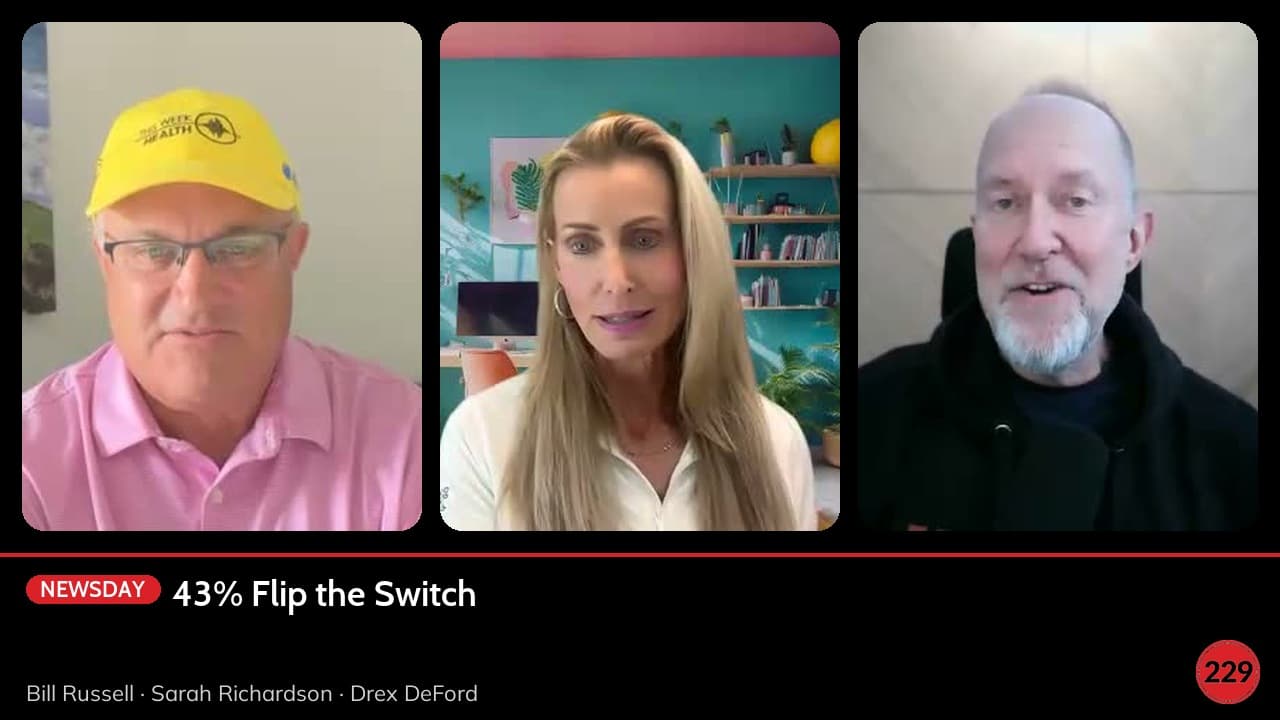
August 31, 2026: Bill Russell, Sarah Richardson, and Drex DeFord come off a pulse survey of 246 health system leaders. Where the AI cannon points next: patient access and revenue cycle, 86 votes each. Bill's read: you have to win on the financial side before you get licensed to do anything else. Then 43% said AI assistants will be available to most of their patients. 4% said they will not. A clinician CIO at the forum had just flagged a MyChart golf answer as medical advice.
Key Points:
03:32 Pulse survey
04:39 Where the money is going
06:45 Governance vs medical staff alignment
09:03 Workflow, vulnerability, ego
11:14 AI is the final exam
12:32 Glasswing and fluid Epic updates
15:18 Agent Factory
17:07 Patient AI assistants
18:58 43% will flip the switch
20:55 Lawyers
21:41 FTC probe
23:04 Epic NDAs
26:35 Three CIOs
29:06 Integrator and Particle Health
31:48 Data governance
33:18 32,000 machines
35:34 Leadership exits
37:03 Close
Donate: Alex's Lemonade Stand: Foundation for Childhood Cancer
Thank You to Our Episode Partner

Contributors
People featured in this episode — open a profile for more.


Transcript
This transcription is provided by artificial intelligence. We believe in technology but understand that even the smartest robots can sometimes get speech recognition wrong.
43% Will Let an AI Give Patients Medical Advice | Newsday with 229Project
[00:00:00] Bill: And we asked them specifically, over the next year, where are you going to be pointing this AI cannon at? And we got two answers, patient access and rev cycle. By… A lot, actually, by a long shot.
[00:00:15] Bill: Alright, it's Newsday, and we got, Cranky Sarah and, Pre-Burning Man Drex with us this morning.
[00:00:23] Sarah: I was cranky. I was cranky.
[00:00:26] Bill: Yeah, well, we got you up at 4 o'clock this morning, so that was… that's brutal to get you up before, and what is pre-Burning Man Drex? I mean, is that, like, are you checked out yet, or are you just, like, in your mind? I'm sitting there going, I need camping, I need this, I need…
[00:00:41] Drex: Yeah, you know me, I'm always checked out, so…
[00:00:43] Bill: It's a, it's a full-time project management gig to plan for Burning Man, though, isn't it?
[00:00:49] Drex: There's a lot… there's a lot that goes into it. I mean, because whatever… basically, it's like… You have to take everything in that you're gonna take in, and then whatever you mess you make while you're there, you have to pack up and take with you. And basically, the city has virtually no rules, except… Get there and, like…
[00:01:09] Drex: just act right, and then take all your crap with you when you leave. Those are pretty much the rules at Burning Man. Safety third, we say all the time.
[00:01:19] Bill: Well, actually.
[00:01:20] Drex: So, yeah.
[00:01:20] Bill: We have been living vicariously through you. I will never go to Burning Man. My… you know, I joke that my wife's idea of camping is a Holiday Inn. Which would be the lowest level. I mean, my idea of camping is like, I don't know, the Embassy Suites, so it's hard for me to imagine, going… it's dusty as all get out. I mean, it's in the middle of the freakin' desert, isn't it?
[00:01:43] Drex: It's the middle of the Black Rock, the Black Rock Desert, and yeah, it can be super dusty. There'll be a windstorm every day, probably a few, and you know, you'll batten down the hatches and goggles on, and masks on, and you know, wherever you are, you just kind of hunker down and… Wait for the haboob to blow through, and then you move on.
[00:02:06] Bill: Hey, that's a thing. I lived in, I lived in Phoenix for a while, and they had, mon… monsoons? Is that what they call them? But you could watch these storms moving across, and you're just sitting there going, oh my gosh, that's gonna hit us, that's gonna hit us, that's gonna hit us, and then it… when it hits, it's like, it's serious. It's like…
[00:02:21] Drex: Yeah, it's a funny name, but it actually is called a haboob. And we, the first… my first experience with them was when I was in Desert Shield, Desert Storm, and you know, like, you see the giant wall of, like, what is that? That looks like it's something out of a movie.
[00:02:40] Drex: And then it smashes into you. And it's the same kind of thing there. But, you know, you just hold onto your hat, everything's good.
[00:03:32] Bill: Well, cool. Well, we've got, we've got leftovers from last week, so we're gonna eat some leftovers here. Actually, it's not really leftovers, it's, it's, you know, you give, you give UGM a week to shake out, you talk to some people, you do a survey, and you get, some, some new insights. You guys both got a copy of this.
[00:03:51] Drex: Everybody writes their LinkedIn posts, too.
[00:03:53] Bill: Well, yeah, everybody writes for the… so, yeah, and I did that too, so I can't make fun of anybody, so we all… we all did. Did… you guys both got a copy of the UGM… Pulse index that we did, a pulse survey that we did.
[00:04:08] Bill: I thought some of the things… we're not gonna share this whole thing, because this is something we do for our 229 community, but there are some of it we will share externally. And if you are a health system leader and want to be a part of these, by all means, hit our website, let us know you want to be a part of these, and
[00:04:26] Bill: We have a, you know, the way you get these surveys sent to you is you complete them. If you complete them, you get the results. If you don't complete them, you don't get the results. It's pretty much how we go. Not a new model, class has done this for years, and we thought it was a good model. One of the first things, though, is where's the money going? We talk about AI a lot.
[00:04:50] Bill: And we asked them specifically, over the next year, where are you going to be pointing this AI cannon at? And we got two answers, patient access and rev cycle. By… A lot, actually, by a long shot.
[00:05:06] Bill: We also had in there bank, beds and length of stay. We had operating rooms and block time. We tried to identify those areas where there was gonna… and then we had none of these, which was a very small percentage. But, but yeah, these two won by a lot. Patient access and rev cycle. No surprise there, right?
[00:05:26] Sarah: No, in fact, it's what you have been sharing in our summits, what we talk about inners. If you're going to point the cannon somewhere, those are the two best options you have. for scalability, and really, I think, to be able to displace the work that people don't want to be doing themselves, and also seek new opportunities and ways to create efficiencies and really clean up some workflows that are out there, too.
[00:05:49] Bill: Yeah, it's… it's… and the reason I've been pointing at these two is I… I'm kind of… The nice way of saying it is pragmatic. There's another not-so-nice way of saying it, which is, like, look, you have to win on the financial side before you get licensed to do anything else. These two are strictly tied to money. Patient access.
[00:06:10] Bill: is bringing more people in the front door, and RevCycle, obviously, is RevCycle. It's making sure you capture more of the dollars that are owed to you for the work that you've been doing. I'm surprised they tied, and they literally tied. 80… 86 out of…
[00:06:25] Drex: 3686, yep.
[00:06:27] Bill: Yeah, 86, 86. So they literally tied. I think one is… You know, we asked them to identify the… where these are gonna get stuck. And RevCycle, they named governance as the blocker, and Patient Access, they named Really alignment. I'm gonna say that the survey said doctors…
[00:06:49] Bill: As the… as the wall for this, but really, the… the context of the question was, it's alignment across your medical staff. So, patient access is going to be medical staff alignment, rev cycle is going to be more just, governance.
[00:07:05] Bill: As a whole. I thought that… this, to me, was one of the more interesting, questions, more interesting, conversations. It's not that people aren't using it elsewhere, it's just… You know what, you have to be so careful on the clinical side.
[00:07:19] Bill: you know, can you really point this cannon at quality and outcomes yet? I feel like people are saying, well, when Epic's ready, well, and maybe it's because we were at UGM, when Epic's ready. We'll go ahead and turn it on in those areas, and do the sepsis model, and do whatever else they come up with.
[00:07:39] Drex: I think there's some of it, too, is just they realize that there's… There are problems in the… in the process. It's hard to say it that way, maybe. There's waste in the process when it comes to rev cycle. Are we really capturing everything we should be capturing? It feels like there's some holes there. There's a lot of…
[00:07:58] Drex: denials, a lot of rework, a lot of stuff. Can't we make this better? And then on patient discharge, I think there's a lot of the same kind of things. We have a lot of patients that are ready to go, and are ready to get out of here, and we have patients in the ED who are ready to be admitted, and somehow we have a traffic jam, and what the heck's going on here? Can't we figure that out?
[00:08:17] Drex: And those are crazy makers in a lot of hospitals, and I think that's why, you know, they're pointing their efforts in those two places.
[00:08:28] Bill: Sarah, we are still hearing that this is not a technical challenge, this is a,
[00:08:37] Bill: I was gonna say a people challenge, but people is really… it's an organizational challenge. It's like an… it's… and you talk a lot about organizational change management. It's like, we are bringing this new thing in here. There's a lot of work that needs to happen before we, you know, turn it loose.
[00:08:55] Sarah: It's a ton of the workflow reviews. And the thing is, too, and this is where, whether you're bringing in a partner or otherwise to help you think through it, to see how it's been done really, really well, you get people who have done certain roles for a long time, and they're great at them. And to reimagine a workflow, if you've never seen it before, you do need some help sometimes, and so being vulnerable enough to be like, hey, let's kind of tear this apart and see where it makes sense.
[00:09:19] Sarah: Whether that's the solution the partner's bringing forward to help you rethink some of the workflows, and by the way, here are the best practices from systems like yours to think about. If you can create the space where you've redesigned the workflow, decide what you can and can't automate, where you want some of those humans, then that natural ability to adopt it, to change it, to reward it, to incrementally build upon that.
[00:09:40] Sarah: That's not always a muscle most people are comfortable with, because they're worried about, if I automate all these things, am I gonna not, like… are we not gonna have a job? Are we gonna work ourselves out of that? And the answer in some cases is. not necessarily, especially in the beginning. You've got a lot of clunky processes where you say, it's because we've always done it this way. And I've been in multiple organizations where we have rewritten platforms or redone workflows.
[00:10:03] Sarah: And, literally, how long it took for people just to realize they could do something differently, even if it was painful to un… to, like, unbreak it.
[00:10:15] Sarah: to make it the best version that it can be. It takes a lot of vulnerability to say, hey, especially when you're collecting the finances in an organization, to show that you could have been doing a better job. To have that conversation without it being punitive is a delicate one, and I've seen some really great
[00:10:33] Sarah: Solutions get turned away simply because it was almost embarrassing for an organization to admit that they didn't do it well.
[00:10:43] Drex: There's an ego involved, right?
[00:10:44] Sarah: Yeah.
[00:10:44] Bill: This feels to me like the final exam. Like, we have been doing this, you know, we did the EHR change, then we did the ERP change, we did… and now we're gonna bring in AI, and it's like. have we learned the lessons of these big projects over the years to finally, finally, you know, do it well? I mean, Drex, what's your… what's your… what… I mean, do you agree with that? I mean, it feels like…
[00:11:07] Bill: This is it, with, like, organizational… we learned with the EHR, oh my gosh, we really screwed this up. Then we said, no, no, we learned our lesson, it's about the people, it's about the process, it's about organizational change, you can't go any faster than that. whatever. Okay, well, this is, like, the final. Like, AI is the final exam.
[00:11:24] Drex: we had really good processes, I think we have really amazing processes, and then somebody comes in and tells you that's it's crap. Like, what's going on over here, right? And the epic version of that example is the Glasswing project, where they have brought in… they've been, you know, pulled into Project Glasswing, and Glasswing has looked at all of the code.
[00:11:44] Drex: and said there's some challenges here, and so we see all these releases now from Epic that are basically tied to better, safer. Coding. It's that version of being at a health system where, you know.
[00:11:57] Drex: the AI is coming in and saying, like, there's some changes you might want to consider making here that are really important, and if you don't have an ego about it, it's awesome. If you have an ego about it, you go into a defensive crouch, you start trying to fight it, and I think that's the…
[00:12:14] Drex: You know, that's the organizational change stuff that Sarah preaches about all the time. It's, it's, you know, there is resistance in the wire all the time, and a big part of the job is fighting through that resistance.
[00:12:25] Bill: This is… this is that squirrel moment, where I go, I go, squirrel! You brought up glasswing, so it's like, oh, I gotta talk about it. The, they talked about, you know, Epic had gone to, update cycles, which were, I think, twice a year.
[00:12:42] Bill: Or they were quarterly, but most people did them twice a year. And now they're just talking about fluid update cycles, like, hey, you're gonna be getting code essentially all the time, which means you're gonna be testing all the time, which means you're gonna, you know, like, just be ready for that kind of pace. And I started thinking about that, I'm like.
[00:13:00] Bill: I can't add staff, right? I mean, that's the thing we're hearing over and over again. I can't add staff. How am I gonna… how am I gonna keep up with this? I mean, it's like… it's almost like AI is creating this problem, AI is the answer to this problem, but we don't know how AI solves this problem. Like, we need to get… We need to get in front of some of this stuff.
[00:13:18] Drex: I mean, testing becomes really important in this process, right, because… if you're in another industry, this ability to sort of take rolling updates and be able to roll back if something breaks, like, you don't kill people. In our business, it's a much different thing, and we have a lot of systems, and a lot of systems that are independent or interdependent on other systems.
[00:13:40] Drex: So there's a lot of testing that has to go on, and when we accidentally break something, it actually takes down a bunch of different stuff, all of which patients and families are depending on. So… Yeah, we're really sensitive, and we have a lot of legacy stuff, too, so…
[00:13:56] Sarah: And do you start to look at letting… I mean, honestly, Epic is already… going to be an operating system for a lot of these AI opportunities. And so, do you look at it and say, okay, the native integration outweighs the risk of…
[00:14:14] Sarah: deeper platform dependency, do I still use a third party for some of that that Epic can't build or bundle for me? And how am I gonna govern some of this automation, but in the end, you're going to want to start using Agent Factory to tackle things with Penny and others, and Drex is like, there's always gonna be the counter, the counterweight, but if you are risk adverse.
[00:14:37] Sarah: and you want to go dabble and lean forward in this space, that's where you get to start to do it, whereas we'd be off already having built and automated half of our organization and waiting to see what makes sense to become integrated, but truly, if you are risk adverse, and this is what I love about our summits.
[00:14:53] Sarah: we just did the revenue cycle one in Chicago. We have organizations who are, like, sending out, like, transparency on, this is how much this is gonna cost, this is what you're gonna get, these are all the different pieces. We have the person sitting next to that person saying, we're not ready to do that yet. There's no way we're gonna tell you, you know, the pieces beyond this. And so. If you're risk adverse, do you lean into Agent Factory?
[00:15:14] Drex: It's a smart business model in a lot of ways, too, right? Because Epic is essentially telling the industry, if you… everything that you do runs on Epic, then you're going to be able to take these updates, because we've driven you toward a standard build, everything that we can send you was already going to be tested, there's only a few things that you need to… if it's… if you're worried about Epic, it's going to work great.
[00:15:37] Drex: the people who want to dabble around the edges and do the other stuff and have, you know, other partners engaged in the clinical workflow from a systems perspective are the ones who are going to have to worry more about testing. It is really smart from Epic's perspective.
[00:15:55] Sarah: But wouldn't you, like, go all in with what makes sense from what they have to bring, and then whatever the peripheral components are that you know you can optimize better or differently, that's where you lean in with either stuff you're doing on your own, or you decide to use some of the third parties that have just enough of an edge that the cost makes sense. I mean, Stanford will probably always keep chat EHR, because it's helping their clinicians
[00:16:19] Sarah: you know, connect on, I think, what was one of the case studies, unresolved lymph node biopsies for cancer diagnoses. I mean, are those things that they keep in place as a complement To what? is being offered through the EHR.
[00:16:32] Drex: Makes me wonder if there's sort of the haves and the have-nots as we get into this, right? Yeah. If it's good enough. we'll run it in Epic. If it's not good enough, we'll consider going out. This hasn't really changed, I think, but if it's not good enough, we'll consider going outside. But I, you know, the market does freeze because of things that are announced at UGM, stuff that's coming, and…
[00:16:54] Drex: People wait. I want to wait. I want it to be epic, and I'm just gonna hold my horses.
[00:16:59] Bill: The N on the survey, for people who are wondering, is 246. The, so 250 people, not everybody who was at UGM, some were remote and listened in and that kind of stuff.
[00:17:13] Bill: one of… and we're not going to cover the entire survey, but one of the last things I want to cover before we talk about what has not been talked about, and that is the leadership changes and the FTC, preliminary… is it an investigation? Do we call it an investigation? I'll get there in a minute. Yeah, tell me. Regardless, the,
[00:17:38] Bill: the… Patient AI assistant. This is the question that we put in there, and it was almost an aside. Like, I wasn't sure whether I was going to put it in there, but Epic ended up talking about it. In fact, in the CIO forum, they showcased the AI
[00:17:56] Bill: You know, a person asking within, Within the, within MyChart, they asked a question about, hey, can I play golf with this, whatever, and it responded and said, oh yeah, we've given all we know about you, yeah, go ahead and play golf this weekend.
[00:18:14] Bill: To which one of the CIOs, a clinician, raised his hand and, appropriately said, hey, you do realize that's medical advice. Like, you are now dispensing medical advice. Let's just be real clear about that, because that's not… we're dispensing medical advice. That's not the doctors dispensing medical advice. Like, the AI agent
[00:18:36] Bill: is dispensing medical advice. And so, I found that question to be really fascinating, and with our survey about, you know, patient AI assistance, how many of you anticipated doing it? 43%.
[00:18:53] Bill: said AI assistance will be available to most of our patients. 43%. Next closest was no decision, and then, others were, you know, pilot, limited, or were not going to offer it. By the way, not offering it? 4%.
[00:19:11] Drex: 4%! Only 4% said, we're not going to do something in that space.
[00:19:16] Bill: So by the end of this year, really cool, we're going to be able to ask an AI agent from our health system, be real clear here, not ask ChatGPT, or ask Claude, or whatever you're using. This is… through my chart, asking medical advice, 43% are saying, hey, I'm gonna flip that switch. We're gonna start answering questions.
[00:19:39] Bill: Any… any thoughts? I'm aghast. I didn't think we were this… this… I thought we were more conservative than this. I was really…
[00:19:47] Sarah: People are doing… people are doing it anyway.
[00:19:49] Sarah: I mean, to your point, they're doing it in chat. If you don't get the answer you want from Emmy, you're gonna go ask chat or Claude or whomever anyway, and you're probably gonna still ask both of them to see, are their answers the same or different, and then you might surface that up, well, this said this, or this said that. I mean, getting into a debate with an agent is a lot less time consuming to a degree for the health system, but all of that is still being tracked inside, so they know what you're thinking about.
[00:20:14] Sarah: gives them the type of intel, like, what are people asking their bot, and what are the things they need to know, helps you design the curriculum or the capabilities inside of it as well. I mean.
[00:20:27] Sarah: if you're asking it something that it doesn't know the answer to, or it can't provide you an effective answer, you're gonna know that. I mean, I'd be super curious, like, what the teams will be reviewing in terms of the types of queries that they are getting inside of those chat mechanisms, because that's gonna help you drive what your patients are really wanting to know most about.
[00:20:47] Drex: I got one word for you. Lawyers. This is… we just haven't… we just haven't crossed that, that little threshold yet. But either inside the organization, once the General Counsel kind of understands what's happening, they're going to be concerned and pull the parking brake.
[00:21:06] Drex: Or something, you know, we'll see some kind of lawsuit out of this. Because this is the thing we talk about all the time, too, like, who's responsible for these things that AI says? Is it the AI? Is it the company that built the AI? Or is it, like, I'm supposed to be human in the looping, all this stuff, and we're letting it happen? So, I'm responsible.
[00:21:29] Bill: Alright, let's talk about what wasn't talked about. So, the FTC probe. Probe is the word I was looking for, by the way.
[00:21:34] Drex: Oh, man.
[00:21:35] Bill: Not the Ford probe. This is… this is an actual probe from the FCC.
[00:21:38] Sarah: car's still made?
[00:21:40] Drex: Lawyers probing.
[00:21:42] Bill: Lawyers probing, yeah, I don't know if that car's still made. So, here's… here's what we know, from reporting, actually. I, I, I, I haven't read anything. I haven't read… if the FTC did publish anything, I haven't ever read it. Here's… Here's what we know. They're going to be looking at how EPIC grants or restricts third-party access to patient data.
[00:22:02] Bill: His investigative demands went to other health tech companies, not just Epic. Medcitystat, add a second lane employment agreements and, NDAs that may keep EPIC people from joining competitors.
[00:22:20] Bill: And, you know, for the most part, all of this stuff is still, you know, people familiar with the matter are saying these kinds of things. If we just stopped at those two,
[00:22:32] Bill: you know, there's… obviously, there's the lawsuits that are going on. You know, the Texas AG sued Epic in December over restrictions and fees that allegedly keep systems off rival platforms. Epic denied it. Particle Health. lawsuit is still ongoing, and this is, like, revealing the business practices of Epic as we… we move along. I thought, first of all, it was interesting to…
[00:22:57] Bill: note that the employment agreements and NDAs… I, out of curiosity, found two people who I know are former Epic people, and I said, how onerous is this? It's onerous. Like, I would be embarrassed to write up, like, you can't work for any of the people who are Epic clients. Think about what we just said, any Epic clients.
[00:23:19] Bill: Like, there's a list, there's a huge list of people, like, you can't work for any of these people, you can't… I mean, it's… it's extensive, and probably scary to these… 20-something, 24, 25, 26-year-olds. So that's interesting to actually look into. I'm not saying they don't have a,
[00:23:39] Bill: a firm… I'm sure they've looked through it with legal. I'm not sure… I'm pretty sure they have a firm legal foundation for what they're doing. I just don't think it's…
[00:23:49] Bill: You know, and the Epic people will call me on this, but I just don't think it's the right thing to do. To say to a 25-year-old, hey, you came to work for Epic, you got all the benefits, now you can't work for anybody, essentially, associated with healthcare, based on the knowledge you got while you were working here. I think that's… I don't know. Is it just me? Because you guys are giving me blank stares, I just…
[00:24:10] Drex: No, the… you know, I have… we… I mean, we all have friends. We all have friends who started at Epic and moved on. We have folks in the company who started at Epic and moved on, and are, are doing other things now. I've had conversations with them leaving, starting their own companies, doing stuff. They… there's basically a, you know, a super thick
[00:24:30] Drex: book of documents that you have to sign and agree to, and you get the out brief, and there's a regular conversation afterwards about making sure that, you know, where you're at and what you're doing, and nobody's stepping on anybody's toes, and yeah, it's tough. I mean, I think it's a…
[00:24:46] Drex: it's a landmine field that you have to kind of tiptoe through to make sure that you're not… and the other thing is, too, like, ultimately, you're going to want to connect back to Epic for something, and you don't want to blow up that relationship by accident, so… I know, it's tough.
[00:25:03] Sarah: Well, and… what… The mass exodus of some of the leadership.
[00:25:08] Sarah: you have now seen an opportunity to go into industry that is beyond what that agreement may look like. And so, as soon as… I mean, think about the advent of this new industrial revolution of technology we're in today. It has opened up doors in places people never anticipated. So, when there is a way to get out, or to do something different, you go for it. Example's been set. And so.
[00:25:32] Sarah: Whether or not they rewrite some of these agreements or figure out different ways to keep people sticky to them, like any organization, if you make things too restrictive, people will find a way eventually to move on, and that may or may not be part of why you saw so much of the leadership move on, because they realized that they could, into something that wasn't going to get blocked.
[00:25:50] Bill: Yeah, you know, I can see an agreement like this. I don't want kids coming out of college kids. How old am I now when I'm calling kids coming out of college? Anyway, you get the idea. Working for me for 4 years, taking that knowledge, and, like, leaving, and, like, just spewing it out to the world. And they do hire a lot of young people, and…
[00:26:09] Bill: And whatnot. So, I mean, I feel for them, they don't want their trade secrets to get out, but this probe is really more about the former. So, restricting third-party access to patient data. I had a dynamic interaction with, 3 CIOs. An argument. I had an argument with 3 CIOs.
[00:26:33] Drex: Okay, good. So in a boxing match or something.
[00:26:36] Bill: dynamic interaction, and they essentially were making the case that anyone who wants data from Epic can get it. And I'm like, Guys, I… I think if I lined up these, these…
[00:26:52] Bill: you know, these, startups and these what… they would… they would argue with you. It's like, well, then they… they shouldn't be in the industry, they don't know what they're doing. You can easily get access, and I'm like… and I'm sitting there going, okay. maybe…
[00:27:05] Bill: there's definitely a disconnect between what the CIOs, at least those three, thought, and what I hear from developers who are trying to work with Epic. There's definitely a disconnect.
[00:27:18] Drex: Is there, is there something about, I'm trying to think, it's been a while since I've looked at some of these documents, but is there some assertion in there that sort of boils down to, we're concerned about
[00:27:32] Drex: companies who may have access to data in Epic because they may misuse it for things that they're not supposed to use it for, and so that's the gatekeeping that they want to do, because they want to… I mean, this is sort of like mom and dad taking care of all the kids, right? Health systems don't know enough to be able to do this on their own, so we're Epic, we have to kind of take care of everyone, and… Make sure that the data
[00:27:55] Drex: goes to the right place for the right reason. I think there was… there's something, I'm sure I'm butchering it, paraphrasing.
[00:28:01] Bill: Yeah, I'm gonna forget the company name, but there was a company that was essentially using the, The… the way in… that Epic had given, there was a, like, an appropriate way to come in… oh gosh, what was the name of that company?
[00:28:15] Bill: But they were essentially using it for legal action. So when somebody was thinking, oh, I'm gonna sue the Drex DeFord Health System, they were using the interoperability that was created by the government to collect information on the medical records so that they could build a lawsuit case against them. And Epic said, hey, we're gonna close that door, and they're like, well, we're gonna sue you. It's like, well, wait a minute, like.
[00:28:37] Bill: you're actually, you know, going in to harm the people that have created the medical record. This is not for… and the key term here is, in the… for the betterment of care, or for the, you know, for the use of care. That has nothing to do with the use of care.
[00:28:55] Drex: Treatment Payment and Operations, or…
[00:28:57] Bill: Yeah, yep.
[00:28:58] Drex: Yeah.
[00:28:58] Bill: Yeah, gosh, I wish I could remember the name. There, there's, there's a couple, like, there's a couple of lawsuits out there right now, and as you would imagine.
[00:29:07] Bill: But yeah, I think this is all about the use of data, and Epic maintains that their intellectual property is that data structure, and how they've brought it all together, and maybe the workflows, but for the most part, they really maintain that if they were to lose control of the data structure that is in Epic, they would they would be at risk as an organization, and I think…
[00:29:32] Bill: the FTC, probably somebody pushed this forward, I don't know who pushed it forward, but I think HHS and the ONC and others for years. Like, both administrations, both sides of the aisle, have wanted the medical record to be opened up on behalf of the patients.
[00:29:54] Bill: And… and we've talked to people. We've talked to people, Democrats, we've talked to Republicans. The thing in HHS and ONC and others has been very consistent, is they believe that there is a… there's a new world on the other side of patients having access to their medical record that is good.
[00:30:12] Bill: We don't maybe agree on how care gets delivered after that, but it's good for Drex and Sarah and Bill. To have access to their medical record to do with it what we, would do with it, and there's people on the other side who's like, I'm afraid to give it to Drex Sarah and Bill, they haven't gone to med school. They don't know what they're doing with the medical record. They might get bad advice, which might lead to harm.
[00:30:37] Drex: Yeah, they don't know what they're reading. I mean, the… This has always been, you know, part of the challenge, especially when you get into patients that have certain, you know, diagnoses. You know, patients with mental health.
[00:30:50] Drex: challenges. Getting access to their medical record and being able to read things that are being written about them by their physician might make things worse, and so there's always this… there's a lot of this, strain and stress, I think, around
[00:31:07] Drex: should patients have access to the record? How much access should they have? Should there be restrictions around it? It's not just patients, then, obviously, it gets into partners, partners who may be giving… be giving medical advice and guidance, or operations advice and guidance to the health system. How much data do they get? How long do they keep it? All of those kinds of… Challenges.
[00:31:27] Bill: Integretort, by the way, was the name of the company. I don't know if they're suing. But they were a customer of Particle Health. Particle is one of the lawsuits, but the company's name was Integrator, and they were getting access to the medical record for lawsuit research.
[00:31:41] Sarah: But it uncovers one of the most important things we always talk about. If you do not have an enterprise data architect, and a data governance program, and a way to track all of the data in your organization in a way that you are… because that, I mean.
[00:31:55] Sarah: minus your team, that is your most valuable resource. To have the intentionality needed for that to go well is a whole team, a whole department, it's a ton of work, and it's a daily slog sometimes to make sure all the data generated by your organization is done so in a way that's clean, you can trust, and you can utilize to make great decisions.
[00:32:15] Sarah: I'm amazed at how many organizations don't put the same level of intentionality around their data management programs as they do around other aspects of running the organization. So if you don't have your data in good shape in your organization in the first place. It doesn't really matter who has access to it, because you're not going to make better decisions with crummy information.
[00:32:35] Bill: Thank you so much, Sarah. I think that your phrase, all that stuff you were just talking about right there, the data governance and knowing where your data's going and all that other stuff. I think it's heard in two different ways.
[00:32:46] Bill: I hear it in the way that is like, yeah, of course, like, every organization has that, and that's absolutely what they think should be. And then there's other people on the other side who are saying, oh my gosh, like, do you understand how hard that is to know where all of our data is and what it's doing? Like, that's an impossible thing, and I think in this world we live in today. that's now the new baseline. Like. I understand how hard it is, but…
[00:33:11] Sarah: That's a requirement.
[00:33:12] Bill: it's a requirement. It's like, this is the new world. It's like… like when I said to my team, and they… they did their inventory, and said, hey, we have 32,000 machines on the network, plus or minus 10%. I'm like. Yeah.
[00:33:24] Drex: Bless her.
[00:33:25] Bill: Alright.
[00:33:25] Drex: 10%.
[00:33:26] Bill: Well, now that I'm CIO, we're gonna… we're gonna start by getting down to plus or minus 2%. They're like, well, we've got to do a physical inventory every time. I'm like, no. Figure out how every time we can press a button and see this plus or minus 2%.
[00:33:40] Bill: And they're like, oh my gosh, like, we've never had that requirement before. I'm like, it… yes, but into… and this was, like, 10 years ago, it's like, but in today's day and age, in the cybersecurity world we live in, we can't have machines on our network that we have no idea they've been there, or what they're doing. Like, we have to know, and I think where we were with machines maybe 15 years ago, is where we're at with data today.
[00:34:06] Drex: It's a really good analogy, this idea of, if you don't know what you have, you don't know what your risks are, or what you can do with that information. I mean, for years and years, we went through data quality, data quality, but everybody was kind of like.
[00:34:20] Drex: But to what end? What gets better if I clean that thing up in the EHR, or if we consolidate these databases that we've built, or whatever? And then AI came along, and suddenly it was like, oh, now we actually have a real reason to make this stuff better, to know where all those machines are, the equivalent of that in data, to know what our sources of truth are, how this data gets compiled, how it…
[00:34:43] Drex: Comes together and we do analysis. AI really kind of put that on the front burner, and suddenly that became an important project, and everybody is headed in that direction.
[00:34:54] Sarah: And it's a forever project, that's the thing. It's not like data cleanup or data management's a one-time thing. It's a forever thing. I'm hopeful y'all are making the investments in those teams and those people, because it… and it takes… it takes a small army to do it well.
[00:35:08] Bill: Sarah, Sarah giving people a life sentence. It never hits.
[00:35:12] Sarah: It never ends. I mean, the ultimate CFO fight is, how much do I have to pay to maintain and keep data healthy? I'm like. It's a… it's a line item. It doesn't go away.
[00:35:23] Bill: I will cheat and give myself the last word on this thing, which is… I talked to some people, and they're like, I'm surprised Epic did not address the fact that these executive leaders have left the organization at that event. And, the last… I mean, my last word on this is.
[00:35:38] Bill: I'm like, did you really expect Judy to stand up there and give you sort of an apology, some sort of apologetics around, hey, here's what happened, and here… I'm like, that was never going to happen. That's not their culture. They believe that there's a… Group of people that are going to rise up as this group of people leaves, and they are going to be just as strong
[00:36:00] Bill: As they were before, And, yeah, I'm not surprised that we didn't hear anything about it. I think if they address it at all, it will be on an individual basis. By the way, I was in the CIO forum. They didn't address it.
[00:36:14] Bill: I don't… I think everyone was sort of given the marching orders of, if you want to have an individual conversation with a… with a healthcare leader, by all means, do that, but if… it will not be addressed from up front, because then it… then you read about it in Becker's, and you read about it in, you know, some of the other,
[00:36:32] Drex: There's always things that you don't say in those kinds of presentations that then spin into rumors and everything else. So, yeah. That's a tough one.
[00:36:42] Bill: So, they stayed true to their messaging, and I respect that about them. Well, that is our second full UGM episode. I don't think we're gonna go to a third. I think next week we'll actually talk about, news in its entirety. Is next week an actual… oh, it's… this is a weird, weird calendar, isn't it? Because I thought…
[00:37:06] Sarah: first.
[00:37:06] Bill: It's the 31st, I thought we'd have off, but we don't have off next Monday.
[00:37:10] Drex: No.
[00:37:10] Sarah: went after that?
[00:37:11] Bill: It's the one after that.
[00:37:12] Drex: I won't be here. See you guys later.
[00:37:16] Bill: You won't be here for the recording next week?
[00:37:18] Drex: Right.
[00:37:19] Sarah: He's gonna be a Burning Man.
[00:37:20] Drex: Burning Man.
[00:37:21] Bill: Oh my gosh.
[00:37:22] Drex: And I won't be here for the one after that. Well, that's Labor Day, right?
[00:37:26] Sarah: That's Labor Day.
[00:37:27] Drex: I'll be back.
[00:37:28] Sarah: Yeah.
[00:37:28] Drex: And then I'll see you in New Orleans. I'll be… I'm getting… I'm arriving home, and I'm getting on an airplane the next day to come to regional staff.
[00:37:34] Bill: Our regional staff roundtable, so it's gonna be a lot of fun. Hey, As my mom would say, Drex make good choices, alright?
[00:37:43] Drex: So…
[00:37:46] Bill: Hey everybody, I want to thank you for tuning in. That's all for now.