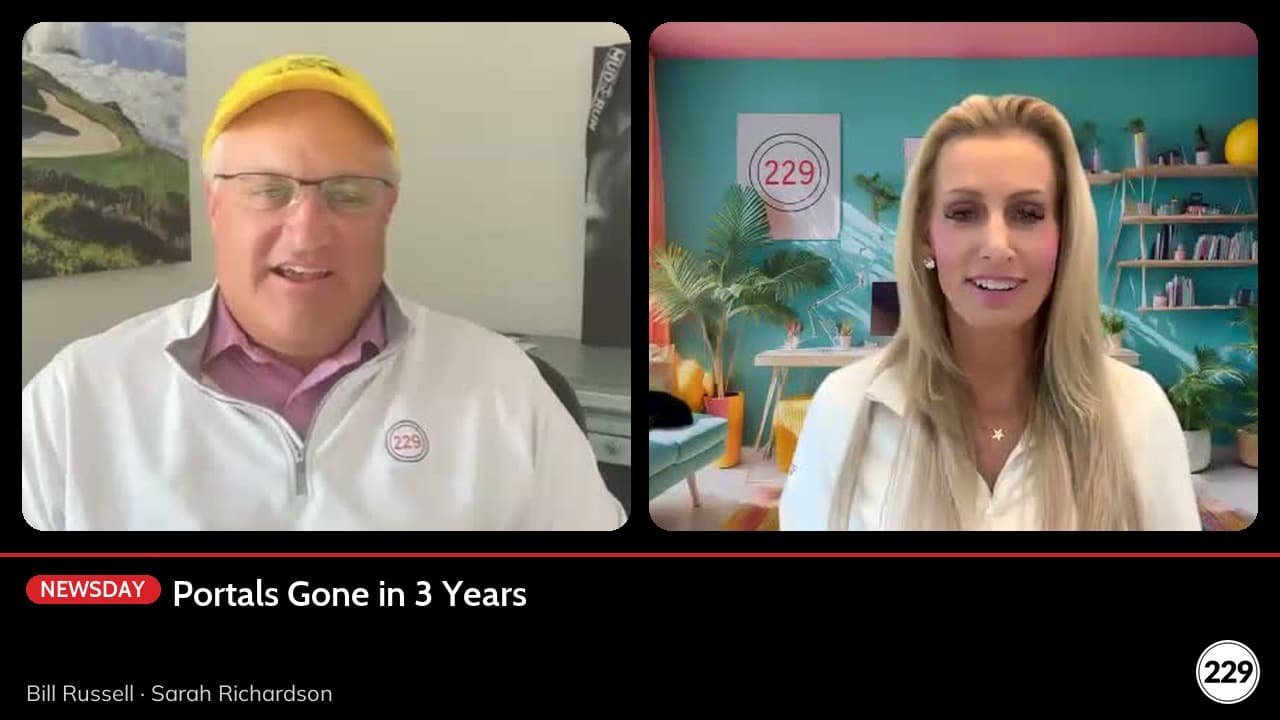
Patient Portals Are Wiped Out in 3 Years | Newsday with 229Project
 Apple Podcasts
Questions Answered in This Episode
- Where will patients book an appointment in 3 years?
- Why is no health system on the MCP list?
- If tiny NCH can ship a patient persona, what is everyone else waiting on?
About This Episode
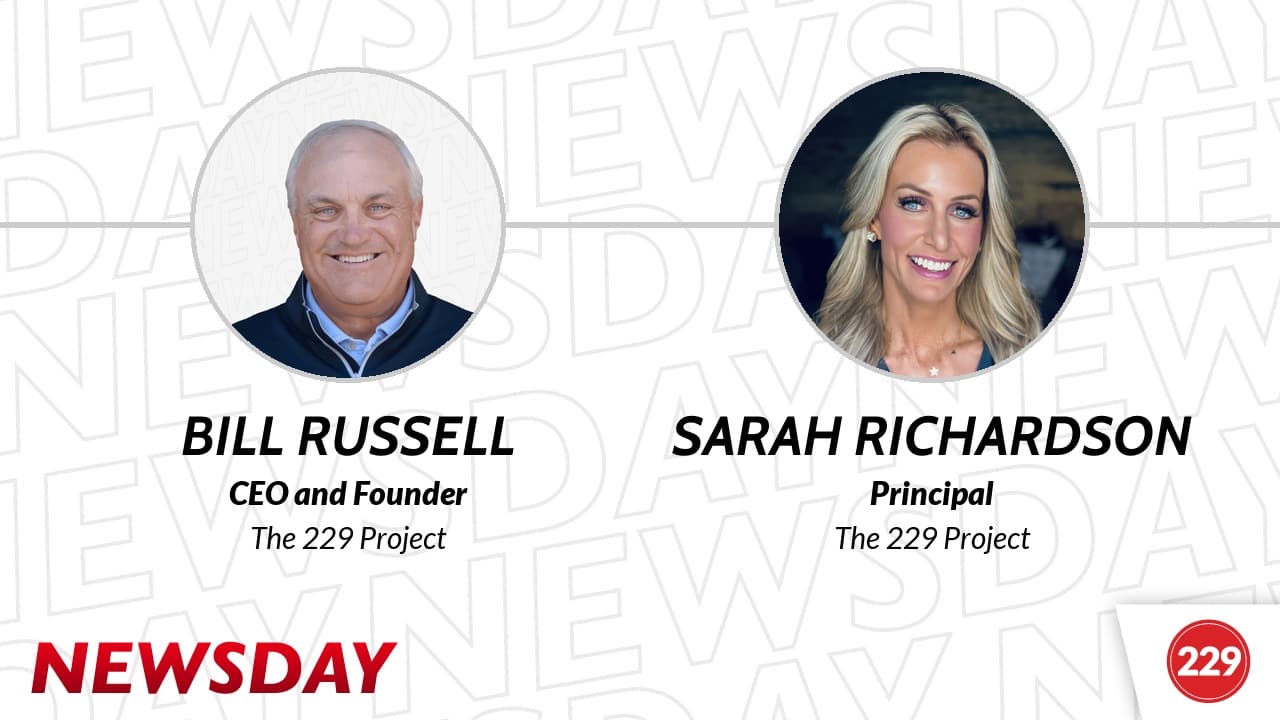
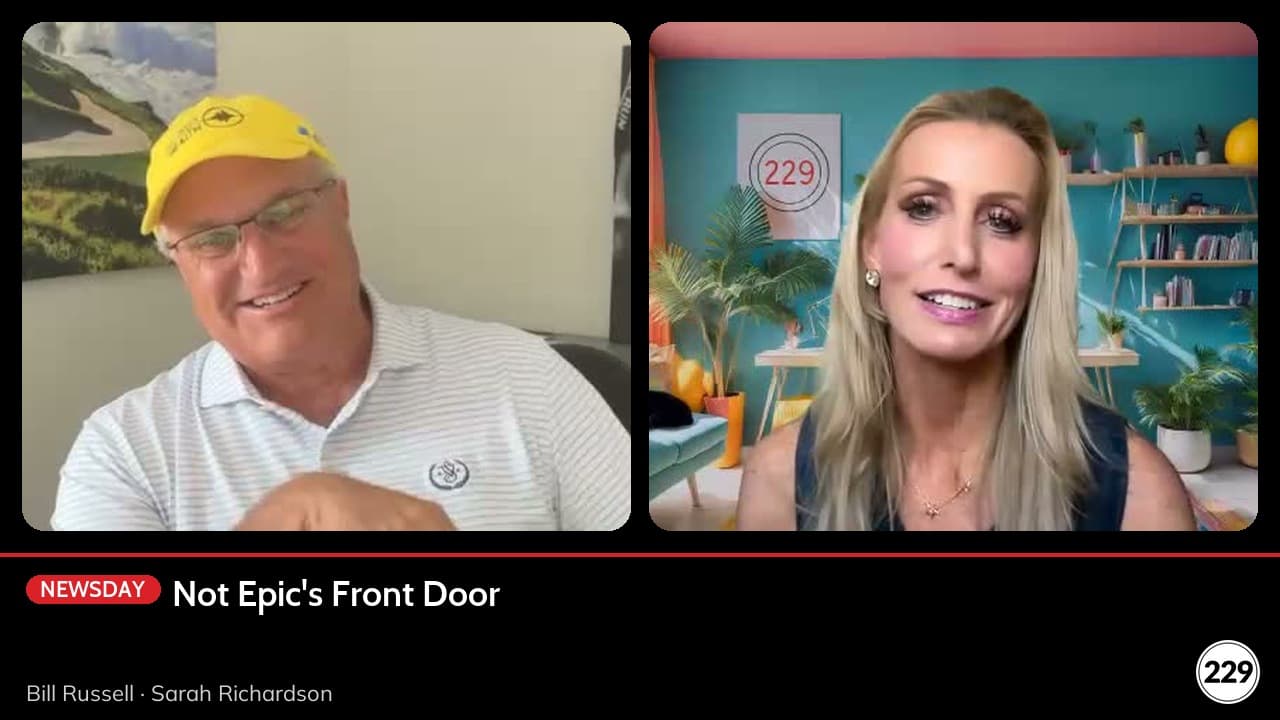
September 14, 2026: Bill Russell and Sarah Richardson. The fight is the intelligence layer on top of the EHR. Epic put Art, Emmy, and Penny on the table. ChatGPT already pulled USCDI over FHIR at UCSF. Bill's read: CIOs did not open those APIs. 21st Century Cures did. The loser is the patient portal. He gives it 3 years. Appointments go through the AI. NCH, tiny, is already running a ChatGPT-like persona with nurse triage.
Key Points:
0:00 Patient portals, wiped out in 3 years
0:24 Newsday open
1:48 Who owns the intelligence layer
4:44 Cloudticity
10:54 Portals gone. Patients are in the AI
16:29 No health system on the MCP list
19:32 If tiny NCH can ship it
28:22 Computer use inside Epic
30:22 Close
Donate: Alex's Lemonade Stand: Foundation for Childhood Cancer
Thank You to Our Episode Partner



Transcript
This transcription is provided by artificial intelligence. We believe in technology but understand that even the smartest robots can sometimes get speech recognition wrong.
Patient Portals Are Wiped Out in 3 Years | Newsday with 229Project
[00:00:24] All right, it is Newsday, and Sarah Richardson is with me. Sarah, great to see you. Have you heard from Drex? I've not heard from Drex. Do we think he's alive? He's alive because I got one exclamation point response to a photo I shared from our event on Tuesday night. All right, well, that was Tuesday. We will see him next week in New Orleans. Actually, by the time people hear this, we'll see you next week.
[00:00:49] It will be last week in New Orleans because we are recording on Friday, September 4th, and we're actually recording for a week for Monday because we usually record on Mondays, but Mondays, Labor Day, so we won't be recording.
[00:01:04] Then we have to get on planes to go to New Orleans for our first of our fall regional staff roundtable, first of 11 or 12, whatever. You get the idea.
[00:01:15] Yeah, so looking forward to those and looking forward to having Drex back and hearing all the stories and very few pictures from Burning Man.
[00:01:23] I don't know if it's like an unwritten rule or whatever.
[00:01:28] I believe he posts them on some of his social channels.
[00:01:32] I'm the person who only has LinkedIn, so if he's out there doing cool stuff on Insta, I wouldn't know about it.
[00:01:40] I understand based on the few pictures I have seen, I understand him not posting those pictures on LinkedIn.
[00:01:47] All right, here's what we're going to talk about today.
[00:01:50] There's been an awful lot of talk about the intelligence layer.
[00:01:54] What's going to be the intelligence layer on top of the EHR on top of the clinical information on top of the operations within health care, and there's there's a handful of stories that we could talk about with regard to this.
[00:02:09] Actually, I just finished.
[00:02:11] Well, I'm not finished yet.
[00:02:13] By the time this airs, it will be almost done.
[00:02:16] The the intelligence era series with Sarah Chen on Thursday. That's my fiction series that some people are reading, and we laid out the four areas of intelligence.
[00:02:33] And operations being one clinical being another.
[00:02:38] It's not called access. What I call it. I think I call that relational relational intelligence is what I called it.
[00:02:44] And then obviously there's the the internal quality is the fourth that we have.
[00:02:53] So those are the four areas that we're looking at, and it's interesting to see the battle start to go on here.
[00:02:59] Because we you and I were at UGM and, you know, a lot of the conversation was about the intelligence that is being put on here.
[00:03:10] Now, if I break it into those four categories, you know, that essentially the the relationship, which is the patient experience, the quality aspect, the operations aspect.
[00:03:26] And we look at the we look at those four areas, and you think about it, we saw just from Epic alone, you know, our Emmy and Penny.
[00:03:37] So patient, clinical operations and and backroom operations as well.
[00:03:48] So we're seeing them lay some stuff down.
[00:03:51] We're seeing this UCSF story, which popped up.
[00:03:58] Let's see a couple weeks ago, I guess it popped up UCSF partnering with with chat GPT and essentially using the fire connections that are available within Epic to pull the information out and put it into chat GPT.
[00:04:12] There's two aspects of this, by the way, one is they did it already for the patient.
[00:04:16] They're saying, Hey, you can move that all for the patient.
[00:04:19] And I see the value of that. But then this with UCSF was really about was about clinicians utilizing it for getting that longitudinal patient record.
[00:04:30] And I think that's a different category. In fact, I went back and forth with couple texts this week with people who are saying, Oh my gosh, this is so dramatic.
[00:04:38] And so whatever I'm like, I'm not, I'm not really really sure if it is.
[00:05:31] You know, that's, that's sort of the frame and that's what I want to talk about.
[00:05:35] There's just an awful lot of people vying for that intelligence layer around the health system and all the data that that resides in it.
[00:05:43] I'm curious, you know, that's what I want to talk about.
[00:05:48] Where do you want to take it?
[00:05:50] Well, we've been talking about Epic for like about three weeks and I appreciate.
[00:05:54] I think if you extrapolate their 47% general market share.
[00:05:57] There's also so much more than Epic to the, to the story, whether it's Oracle Health, Meditech, Athena, others, they're all developing similar capabilities.
[00:06:08] Think about Oracle for a second. They have their AI powered patient portal.
[00:06:12] It's all grounded in the medical record and it has the clinical agents supporting chart review, documentation, orders, coding.
[00:06:19] All that patient data remains inside Oracle.
[00:06:22] And that portals guard rails to a degree prevent it from providing the diagnosis or treatment recommendations.
[00:06:28] Then you've got Meditech who's embedded their ambient intelligence for physicians and nurses, a conversational chart review through ask expands.
[00:06:37] They've got patient navigation through my health assistant and agents for again denial management.
[00:06:42] Then Athena and others similarly moving from standalone AI features toward native clinical.
[00:06:47] They're all required because of because of the 21st Century Cures Act and patient blocking rules and whatnot.
[00:06:58] They're all required to provide these APIs.
[00:07:01] So now what you're seeing is these other people sort of come alongside and they don't really have to.
[00:07:09] You know, go through the normal channels like of becoming a development partner and all that other stuff.
[00:07:16] But you could actually create something now, chat to PT, for example, on the patient side and get information from Epic, from Meditech, from Athena, from.
[00:07:26] And that's, you know, from a patient standpoint, I think it's pretty exciting.
[00:07:31] I think this is actually a great time to be a patient.
[00:07:34] It is a good time to be a patient because there's the aspect of does the HR become the complete intelligence layer to your point or do organizations intentionally combine the native capabilities that are there with the external platforms and these solutions.
[00:07:48] It goes what you and I both been writing about this week built in or or best to breed or buying something different than as a differentiator and all about the patient.
[00:07:58] I'm always taking the patient thing. There's three things I always think about. Trust in accuracy. Can I see where the information came from?
[00:08:06] Can I make a, can I correct a mistake and can I reach a human being in that process?
[00:08:10] So all of this technology is fantastic. But every once in a while, you just want to get to the person who can help you through some of that.
[00:08:17] Then access and continuity. I think the way I look at it is AI helping get me through the next step in my primary care or specialist imaging hospitals or can only work inside of one organization's portal.
[00:08:34] If I'm a patient and I do, I see multiple, I see different practitioners in different settings. How do I bring all that stuff together?
[00:08:39] And then the question that's always been out there, Bill, is who holds the information? Like how can it be used and can the patient take it with them when they change providers, when they change insurance, when they go to, in my case, Providence for PCP and Sutter for orthopedics and a concierge physician for holistic practitionership and an acupuncture is like all these pieces.
[00:09:05] How are we thoughtfully being able to start to bring those things together? So I'm not logging into four different places and creating my own agent on top of it.
[00:09:12] You know, it's interesting. I got into a dynamic discussion argument, otherwise known as with a couple of CIOs and they were talking about how open the EHR is and that kind of stuff.
[00:09:26] And I have enough gray hair to look at them and essentially say, you didn't do that. Like the federal government forced your EHR providers to do that.
[00:09:37] Now, some have exceeded it and done more than they actually had to and that kind of stuff. Great kudos, but it wasn't the CIOs that made that happen.
[00:09:47] It was the federal government made that happen because when the federal government was trying to do it through the health systems,
[00:09:54] we found every work around possible. A great example is we have to publish our prices and I would ask the CIOs like,
[00:10:04] how are you publishing your prices? Oh, it's available on our website. I go through their website. I'm like, no, it's not.
[00:10:10] Oh, yeah, it is. You go to this page, this footer over here, you click on this thing. There it is.
[00:10:17] And I pull it up and I'd be like, are you freaking kidding me? This is like your charge master.
[00:10:22] I didn't understand the church master when I was inside the health system because it was so convoluted and they're like, oh, yeah, well, that's all they asked for.
[00:10:31] You know, we didn't we adhere to the letter of the law, not the spirit of the law. It's like, we want people to know how much their health care is going to cost.
[00:10:40] I'd use that as an example to say, we would not have interoperability if it were if it were up to health systems across the country.
[00:10:47] So the federal government step said they do this and they create this thing. I think the big loser here.
[00:10:53] The big loser is patient portals. I think they're wiped out within three years.
[00:11:02] And it'll be interesting to see how that how that goes down and how people feel about that because they're going to be like, oh, but what about an appointment?
[00:11:10] What about this? I'm like, I think it's all going to be done through your AI.
[00:11:12] Yeah, so once it wipes itself out, like you're the patient. What is your experience three years from now when the portal as it exists today doesn't exist anymore?
[00:11:22] What is your what do you want your experience to be?
[00:11:25] Well, you know, if you were to backtrack a couple years ago, I was saying that I thought every health system was going to have some aspect of an AI model, and they were going to have a persona.
[00:11:39] So, you know, persona for this health system would be, you know, whatever, Sarah, and the persona for this one would be Bill or whatever.
[00:11:47] But it would be connected into our information, meaning like parking and specialties and doctors and all this other stuff, so that when you came to our website, if you even came to our website anymore, what I'd rather have is they come to our persona
[00:12:05] and they click into our persona and it says, hey, this is Bill with St. Joseph's Health. How can I help you today? Well, I have an appointment tomorrow. Oh, let me look that up. Oh, here's your appointment.
[00:12:16] Now, we know that like notable and others are doing this kind of stuff, but I think we're just going to see this stuff get commoditized really quickly into the large language models. That's what I thought two years ago.
[00:12:28] I still believe there's some aspect of that that's going to happen where every health system is going to figure out a way to plug into these models, because that's where people are interacting with their health.
[00:12:42] Sarah, I ask you once again, where are you interacting with your health the most? Is it in my chart or is it in your AI?
[00:12:49] It's in my AI.
[00:12:52] And you're not alone. You're like 95% of the people I talk to. That's the answer.
[00:12:59] Well, I'm not, of course, asking it for the type of diagnosis that would I would not be having the great conversation with my doctor. It is tracking food, nutrition, sleep, hydration, supplements, lab results from, you know, ongoing holistic protocols.
[00:13:14] It's keeping track of a bunch of different things. And my favorite thing, my favorite thing to do with my agent is, Hey, I was on a plane today. Here's what I've eaten so far. Here's my hydration.
[00:13:24] I'm getting home at 8 p.m. What should I eat to hit my protein goals that's not going to disrupt my sleep tonight? And it's like, Oh, go eat this and drink.
[00:13:43] And they go shopping with you, right? And because we knew that food was such a huge part of health. And I forget, I'm sure we didn't fund that that long. It was like just a one off kind of thing.
[00:13:56] But that's what you're describing. It's like, Hey, I'm on a plane. What should I eat today? What should I drink? And it's like, you now have that subset of a program with a nurse walking through the, the grocery store with you.
[00:14:10] You now have that 724 365 on a plane in a grocery store at a restaurant.
[00:14:16] It doesn't know about it.
[00:14:18] That, well, yeah, and that that becomes. So that becomes.
[00:14:21] It doesn't even care what I had for dinner. That becomes the conversation that I think we need to figure out. We didn't want to move stuff into the EHR because we didn't want the liability.
[00:14:32] So we said, Oh, do you want to move the Fitbit in? They're like, No, I can't move that in. Do you want to move the scale in? No, I can't move that in.
[00:14:36] Look, if that gives me a reading that is out of line with the other readings and it's in the EHR, we technically, as the doctor, as her doctor, I have to be able to respond.
[00:14:47] Now, we have tools and we have agents now that can identify those things, escalate them and whatnot. So I think we might be getting to a point where it's how do we connect into those conversations at the right moment?
[00:15:00] I don't want to know all the conversations you're having. But at some point, when you ask a certain question, I wanted to connect to your doctor, your physician, your health system, and be informed by your medical record and be able to capture some of those conversations.
[00:15:19] I think.
[00:15:21] Yeah, but then you have to go back and say our patients adopting AI because they prefer the technology or because the health system isn't accessible when they need it.
[00:15:29] And would you rather go and ping a question, my chart, hoping for a response, and then maybe you use any or another built in capability to continue to query that system, but you're getting the real time information that you need and.
[00:15:44] But this is where I struggle with CIOs today because we have lost our technical capability. We're great leaders. I mean, just phenomenal set of leaders and I'm not, this is not categorical.
[00:15:55] But and great at discerning technologies and purchasing and, and negotiating and all that stuff. But we've lost our technical. And so when I say things like, Hey, you should be able to connect up an MCP server to your health system.
[00:16:08] They just look at me like.
[00:16:10] I have no idea what you just said. I'm like, I can't believe at this point in the world. You don't know what an MCP server is because I'm now connecting my AI agent to like.
[00:16:20] I mean, when I pull up in chat GPT or Claude or some of these others, the list of MCP connections, it goes on forever.
[00:16:29] Not a single health systems in there.
[00:16:33] Well, they have a very different set of I think some of the security needs and functions and other elements that have to be reviewed in greater detail.
[00:16:41] Bull crap. I'm connected to QuickBooks. Are you kidding me? That has every piece of information for our company. They could bankrupt my company.
[00:16:49] Are you telling me they can't do they can't do that level of security? They absolutely can. But remember, when we go, and this is what we argument, we hear all the time in our summits.
[00:16:59] They say, Oh, well, you guys get to have all this fun at 229 because there's you own your own company. So you guys can go and screw around with all these MCP servers and ideas and perspectives because you're not.
[00:17:08] Regulated by the government. You don't have to worry about a breach, et cetera. I mean, think of all the things that we just that we play with here.
[00:17:16] And we talk about would we do that in the 229 health system? You talk it about in what's the Meridian Meridian's the your fiction series health system.
[00:17:24] But if we were back running a major health care system.
[00:17:28] 100% I would be 100% either be working with companies that do this or I would be doing it within within our organization.
[00:17:36] And here's why you're already doing it. Those fire APIs are providing all of that information.
[00:17:42] So what they're doing now is saying, all right, you're not going to provide it for me. I'm just going to, I'm just going to tap into it because you can't block me because if you block me, I file something with the federal government.
[00:17:51] You get hammered. So you can't you can't block me. And fire is how we do this. So we we essentially create these APIs that are that have security protocols around them.
[00:18:02] They are. They're also essentially.
[00:18:09] Gosh, I'm losing the word, but you get the idea there. They're essentially just a small portion. Every API can only grab certain amount of information.
[00:18:18] And it only has certain controls, right? So they can either read or write. Now, in all the cases of these fire APIs, almost anyway, the one from the federal government, it's all read only.
[00:18:28] So they can only read only. They can't write back into it. So we have the ability to create the APIs to put the right level of security controls around the APIs and the right scoping there. Thank you.
[00:18:42] The right scoping around the API. So it's only has access to certain data at certain times and that kind of stuff. So we've been building this stuff. We know how to build this stuff, or at least the EHR providers know how to build this stuff.
[00:18:55] And so, yeah, I would absolutely be trying to figure out, okay, how do I get how do I get bill? I don't like using my own. How do we get? And I know some organizations are doing this.
[00:19:07] And they have like something named after the sister that founded the organization is the persona. And you can actually interact with that. And it has access to the schedules and access.
[00:19:18] And there's a handful of them. In fact, one of them you used to work for, because it's the I'm down here in Naples and NCH actually has a pilot going with an A. Can you believe that?
[00:19:31] I mean, NCH is tiny, tiny, tiny, tiny. And they have a pilot going and you can essentially interact with this model, just like chat GPT go back and forth. It kicks in this triage protocol, a nurse triage protocol, which is, you know,
[00:19:47] and it asks you certain questions. And if it gets to a certain point, it'll say, you know, call 911 or it'll say, hey, you know, it looks like we should schedule an appointment and that kind of stuff.
[00:19:57] I'm like, all right, if NCH is doing it, and you know the resources they have, like next to none. Okay, well, I would think everybody can do it.
[00:20:07] Well, it's not that everybody can't do it. And it's funny, like, I think you're trying to convince me on this. You know that I would be like the one that's doing all the ninjas side.
[00:20:13] I mean, it's more likely that someone's going to call you out of the blue and say, we want you to be our CIO than me. So I'm going to try to convince you now while you're at this point.
[00:20:23] They're going to be like, Oh, wait, you're, aren't you a podcaster?
[00:20:30] But here's what I find fascinating about all of this. Yes, all of this is fun. And we would be doing this. We would have a complete, I call them garage bands and engine teams, whatever, doing all these cool things.
[00:20:39] There are so many other aspects still. Like if you're the CIO that still has every other traditional aspect of what you have going on, you, you may want to be doing this and you could be doing this.
[00:20:50] But the impact of the scale by which you can implement or do other aspects of it is still going to be limited by your C suite and your board. I mean, heck, we have a CIO coming to Lake Oconee next month who said, can you please query my peers coming to this event about how long we need to retain.
[00:21:07] The recorded transcription from our ambient experience because we're only doing, you know, seven days and our legal team wants 30. So it's stymying.
[00:21:18] Some of their needs and expectations to do exactly the things that you're talking about. So it depends a lot on who's running your organization. It can take months as you know to influence all the right aspects of what you have in front of you.
[00:21:36] So it's not affected by misalignment with leadership where in the vision of where we wanted to strategically take an organization. So we left.
[00:21:47] Well, let's see, misaligned. So we left. I'm not going to argue that we got asked to leave.
[00:21:56] But here's Dierny. What we put out there was the organization still did. It was still the right thing to do. But it has to be the cultural alignment.
[00:22:05] As much as every other factor. And that's where we're seeing such the continued heavy rotation of executives through organizations.
[00:22:14] And then if you have leadership turnover every single time you get a new peer in the C suite, it's like the realignment, the reeducation.
[00:22:24] And so orgs that can keep those pieces together. If the CEO wants these things to happen, has a great rapport with the board and trust their technology team.
[00:22:36] Then we get to do everything you and I are always relatively talking about. If not.
[00:22:41] And you're digging around in a sandbox that you hope either you don't get caught creating because nobody wants it.
[00:22:47] Or you end up with a whole boulder up the hill because you've had people in an organization for x period of time who say,
[00:22:55] I'm 30 days retention. Otherwise, we're not doing this. I'm like, are you kidding me?
[00:23:01] Yeah, I'm on record is saying I don't have the temperament to be a healthcare CIO anymore.
[00:23:06] But you have been meant to be a CEO or a board chair.
[00:23:10] No, I could be a CIO in another industry, but not healthcare. And the reason is I'm kind of a bully.
[00:23:17] As you have experienced, I'm kind of a bully when people kind of me and say, Hey, you know, we need to retain this for 21 days or whatever.
[00:23:24] I look at them and I go, why? Why? And they say, well, it's for legal reasons.
[00:23:29] I'm like, show me the precedent. Exactly. And lawyers look at me like, Hey, I know my job.
[00:23:34] And I'm like, I don't think you do. And I'll say, I don't think you do. Like I've talked to people about this.
[00:23:40] You don't need to retain it for 21 days. All you need to have is a documented policy within your organization that says seven days.
[00:23:46] And then when somebody kept up to say, how will you destroy that? It's like, yes, it's congruent with our policy because there's no federal policy.
[00:23:52] There's no state policy. Therefore, we kept it based on our policy. You could do the same thing with email, by the way.
[00:23:58] You could say we have a one day policy on email and delete it because there's no federal policy and there's no state policy.
[00:24:04] You could delete it after one day because it's not the clinical record. The clinical record you have to keep for depends on the state.
[00:24:12] But for the most part, at least seven to nine years depends on.
[00:24:15] It depends on so many things that that's one of the more convoluted things data retention to me in health care is something everybody has had their fingers in.
[00:24:25] And it like somebody needs to step back in here and make sense of it because when I saw that chart, I was like, Oh, okay, we're just going to keep everything forever.
[00:24:34] And they're like, yeah, that's just the safest thing to do because it's so convoluted.
[00:24:39] That's where you go build the bot that accidentally deleted information. I had the best.
[00:24:45] See, I did a podcast yesterday with a group of the CNIOs. It'll be out I think week or two.
[00:24:51] And first of all, what a just all my conversations with that community that we have are phenomenal.
[00:24:57] But all three of them were sharing the perspective of the workflow changes that they continue to implement in their organizations.
[00:25:03] But going back and reviewing why certain decisions were made at given intervals because you're just piling workflow on top of workflow or technology.
[00:25:12] And the interpretation of why something needs to be done can be very different between health systems.
[00:25:19] And so to your point, why are we keeping things so long? Why are we doing things a certain way?
[00:25:24] And the organizations that have really embraced the informaticist at the beginning of the conversation are finding new ways to tool their organization and bring forward.
[00:25:33] The ability to create some of the things we've been talking about this morning.
[00:25:37] But unless that intentionality exists, it's just you throw more and more crap on the pile and hope that it doesn't collapse at some point.
[00:25:45] Right. The thing that I coached CIOs that I coached in the past is you're going to fight battles.
[00:25:54] And you have to choose which battles you're going to fight.
[00:26:00] And it's important to choose the right battles. You cannot fight all of them. There's too many.
[00:26:05] You can't pick, you don't want to, it's not like when I say battles, it's not like enemies.
[00:26:11] It's like the enemy really is inefficiency.
[00:26:16] It's lack of progress. It's overwhelming the staff.
[00:26:20] Those are the enemies that you're really fighting. And you got to pick those battles to say, look, I'm going to fight the governance battle.
[00:26:27] And I think everywhere I would go today, I would fight the government's battle to say, look, we have this many resources.
[00:26:32] You're giving us as many projects. We need to focus in on what we want to do for this community.
[00:26:38] And that's where we need to spend our money, period. And so stop bringing me, you know, turn on every lever that somebody just gave us through a product.
[00:26:48] Because I want to run it through that funnel of, is this going to benefit our community?
[00:26:54] Is this going to benefit our communities? And our community can be our patients and our providers and operators?
[00:27:00] You know, it's like, is this going to bet? I wanted to run through a strategy. I couldn't work for an organization that, and we have these in our meetings.
[00:27:09] And I'm like, well, how do you set your project? And they set them based on essentially the vendor.
[00:27:15] The vendor gives them stuff and they go, well, that's our strategy for the year. I'm like, that is insane.
[00:27:21] That vendor to spend no time in your community spent no time with the doctors and the nurses and the patients in your community.
[00:27:30] That's your job. Your job is to understand what's best for Southern California.
[00:27:35] Can't just put a whole bunch of rangers in your hospital now. Doesn't that solve that problem, Bill?
[00:27:39] Yeah, well, yeah, we'll see. I'm not ready to talk about rangers.
[00:27:48] Well, we kind of did earlier this last week.
[00:27:51] Yeah, we did. We did this week. That was a closed meeting.
[00:27:55] I've chatted with some CIOs. The rangers program is either going to be a lot less than what you think or is not going to get off the ground.
[00:28:04] I live in California still. I think a ranger. I think a smoky the bear. That's pretty much where I take it at this point.
[00:28:10] Only you can prevent forest fires, Bill.
[00:28:13] Yes, I do remember that.
[00:28:16] You know, if Sarah, this conversation is going to keep going. I think it's interesting what chat GPT did.
[00:28:22] I think the more scary thing that I think CIOs should be aware of is this computer use because chat GPT just came out with Astro.
[00:28:34] Version six. And their computer use is exceptional. And computer use, by the way, is just it can watch what you do on a computer and then it can replicate it.
[00:28:45] And so if you log it into Epic and say, you know, go through my, you know, take these notes and move them over here or whatever.
[00:28:53] Now, all of a sudden you could have the system logged in as me, Dr. me, whoever that doctor is.
[00:29:00] But the AI agent is doing computer use and putting all that information in. And I think that creates a whole host of challenges.
[00:29:09] And we could say, Oh, well, you know, we're just going to disable that. And I don't, I think there's a conversation to be had here.
[00:29:15] I think there's a conversation around, Hey, do we give these agents identities in our systems so that they can log in.
[00:29:25] And so when they make changes in the medical record on behalf of the physician, it doesn't have the physician's name on it. It has the agent's name on it.
[00:29:34] So that when the next person comes into the medical record, they see that an agent change something.
[00:29:38] And they see a mistake, they can correct that mistake and the agent will learn and go back. I think there's.
[00:29:44] Wow. It's an exciting time to be a patient. It's a challenging time to be a CIO for sure.
[00:29:50] Yes, but having it again, that garage band somewhere hidden away or fully exposed in your org that's legitimately doing these things all in real time is absolutely the path to take.
[00:30:02] And it's, it's not something that is financially unachievable. And you could have a couple of just amazing programmer extraordinaires in your office.
[00:30:13] And they probably weren't existent. They don't. We've got plenty of partners who provide that capability.
[00:30:17] Have that skunk works lab going all of the time right now.
[00:30:22] Absolutely. Well, Sarah, this is probably not the last time it's just you and I, but it'll be the last time for a while. We will have Drex back.
[00:30:29] Uncle Drex back telling his stories and looking forward to it once he gets back.
[00:30:35] All right.
[00:30:37] What do I usually say at the end? Thanks for listening.
[00:30:40] That's all for now.