Epic's Pace Is Blistering: Can You Absorb the Roadmap? | Newsday with 229Project
 Apple Podcasts
Questions Answered in This Episode
- Could Epic's roadmap consume your entire IT capacity this year?
- Have you already conceded technical innovation to Epic without calling it that?
- Are you chasing Honor Roll for the organization, or for a resume?
- Who actually owns implementation: IT, or an operator who will pull the work in?
- Is Cosmos moving you from prediction to prevention, or just a better rear-view mirror?
About This Episode
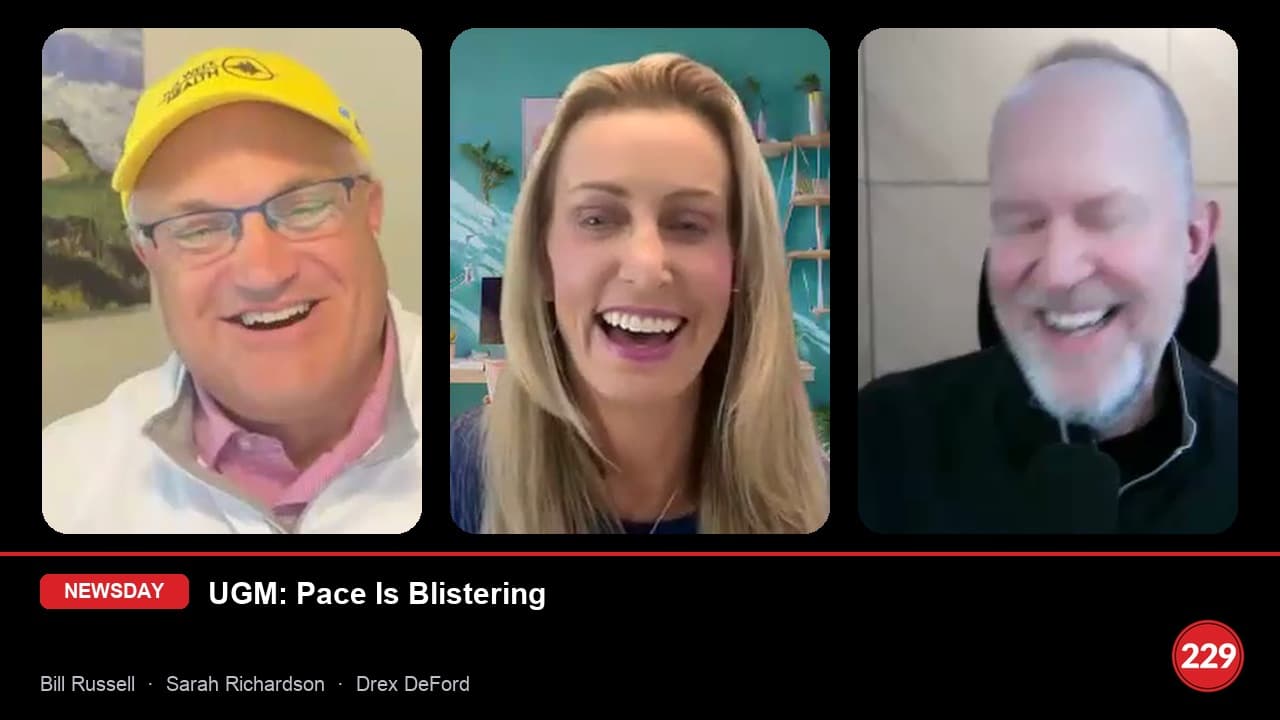
August 24, 2026: Bill Russell, Sarah Richardson, and Drex DeFord debrief Epic UGM from the week they were in the room. Last year was aspirational. This year has a roadmap, and the pace is blistering enough to consume an entire IT shop. Drex's read: a lot of CIOs have already conceded technical innovation to Epic. What is left is implementation, scale, and governance. Sarah's test: distinguish integration from dependency. The constraint is not whether Epic can ship. It is how much you can absorb, what it costs, and whether operations will own the work.
Key Points:
00:00 Epic can consume your entire IT shop
06:23 Conceding innovation to Epic
07:49 The pace is blistering
11:14 Rangers, Gold Star, and your career
19:45 The dollars are in operations
22:01 The CIO role is bifurcating
Donate: Alex’s Lemonade Stand: Foundation for Childhood Cancer
Transcript
This transcription is provided by artificial intelligence. We believe in technology but understand that even the smartest robots can sometimes get speech recognition wrong.
Epic's Pace Is Blistering — Can You Absorb the Roadmap?
[00:00:19] Bill Russell: Loud… And… alright, it's Newsday! Today, I'm joined by Sarah Richardson, Drexford. Somewhere around…
[00:00:29] Bill Russell: I don't know, what, 80 years of IT leadership between us, and still, we do not have the ability to keep this show under 30 minutes. I don't know why. Maybe we need to assign a project manager, maybe… maybe that's what we miss, is, like, having that team around us to keep us.
[00:00:45] Drex DeFord: some governance. Somebody needs to govern this episode.
[00:00:48] Bill Russell: Oh, man, this is good, and this…
[00:00:50] Sarah Richardson: Oh, well, to being told what to do.
[00:00:52] Bill Russell: This is gonna be a tough one to keep there. I mean, if you're recording on the week of UGM,
[00:00:56] Bill Russell: the news cycle is furious. It's crazy. Hey, Sarah, welcome back from being on the road, I mean…
[00:01:02] Sarah Richardson: Yeah.
[00:01:03] Bill Russell: What was it, like, two weeks, two and a half weeks? Two weeks?
[00:01:06] Sarah Richardson: Yeah, 16 days! Got home yesterday, and I was like, just enough time to unpack and get laundry sorted and organized, and I'm home until the 31st, and today, even though, when you listen to this, it'll be later, but today is… I'm home for 11 days.
[00:01:18] Bill Russell: I was gone for 3 days, I came home and crashed last night, sat down in front of the TV, watched iRobot, and hung out with my… with my robots. I hung out with my AI tools and had a good time. My wife… my wife's out of town, and I'm like.
[00:01:33] Bill Russell: I did talk to her for a little bit last night. She goes, I guess being home with you tonight would have been the same as me being away. I'm like, pretty much.
[00:01:40] Bill Russell: I was spent, that was a lot of people in 3 days, for sure.
[00:01:46] Sarah Richardson: We kept you out past your bedtime. Like, you were out past 9pm, like, multiple nights. It was impressive.
[00:01:50] Bill Russell: Yeah, but that's not why people tune into this show. They don't want to hear my sleep schedule.
[00:01:56] Bill Russell: UGM, wow. So we're gonna talk about UGM, and
[00:02:01] Bill Russell: The good news is, Drex is they did talk about cybersecurity a little bit, so let's break it down this way. We'll talk about,
[00:02:09] Bill Russell: Judy's talk, we'll talk about the CIO forum. I don't want to get into, oh, they released this, released that, I want to talk about some substance, and maybe, if there's time, we'll talk a little bit about the Pulse Survey. We did a Pulse survey, got responses from 200 and…
[00:02:26] Bill Russell: 25 and counting. We're gonna release it sometime
[00:02:30] Bill Russell: Sometime this afternoon, we will release it to… the people who completed the survey will get a copy of it. Those who didn't will get the highlights, and we'll give you, some of those highlights, on this show. Judy's talk. So…
[00:02:44] Bill Russell: Sarah, you got to sit in the, in the room for the first time.
[00:02:49] Bill Russell: Escorted by, by an Epic employee. This is the first time they let me roam around, which is kind of fun.
[00:02:57] Bill Russell: Takeaways. Do you have any takeaways from Judy's talk? You want me to run through the things that she talked about, or do you want to do…
[00:03:04] Sarah Richardson: I've got the three that I like the best, or the three things I thought about headed home from yesterday, and, you know, you guys can pick what you want to hear more about or opine upon, but three main things came through for me. Their integrated AI vision, I believe it's compelling. The thing about it is that all roads lead back to them, not surprisingly.
[00:03:24] Sarah Richardson: The other piece is that Cosmos could move healthcare.
[00:03:27] Sarah Richardson: From hindsight to foresight, but I didn't… I'm not picking up yet. The prediction is not, yet about prevention.
[00:03:34] Sarah Richardson: There's more just about how we predict what's happening, and then…
[00:03:36] Sarah Richardson: Epic has the scale to convene providers, payers, and pharma around prevention. You know, I'm a big fan of equity and affordability and the other aspects of healthcare, so I see those things starting to converge in a way that could be helpful, although my concern is that all the eggs in one basket still could resonate with it not moving as quickly as it could.
[00:03:57] Bill Russell: Sarah is clearly the best student we have on the show.
[00:04:03] Bill Russell: Ergo, I think, is their overall platform. I think that's a new name. I don't remember that from last year. It's sort of an umbrella. It talks about how AI is going to be used in all these different things. So, they talked about AI in MyChart, they talked about AI in Cosmos.
[00:04:19] Bill Russell: AI… well, Art, Emmy Penny, obviously, but it's… it's sort of their… Ergo is the umbrella of… of the AI things, and she spent a bunch of time on that, and they had tons of breakouts on each one of these. Let's see, there was…
[00:04:38] Bill Russell: Couple new platforms that they talked about. Obviously, Agent Factory was top of mind, they talked about Agent Factory a little bit. Epic Ops is Futures.
[00:04:48] Bill Russell: I don't know if I'll get in trouble for saying that, but it is… it is futures, it's their ERP solution, and they did talk about it in the CIO forum as well. They talked about,
[00:05:00] Bill Russell: about the… their ERP solution, and the fact that it will be… I mean, their whole play is vertical integration. I mean, they do just about everything. And so, with the ERP vertically integrated, you're going to be able to do a bunch of stuff. Trying to see if there's anything else from my notes,
[00:05:16] Bill Russell: Curiosity learns from Cosmos, you sort of touched on that. Drex will talk about Glasswing when we get to the CIO forum. They actually confirmed that they were part of Project Glasswing, and the amount of code they have released as a result of that is pretty significant.
[00:05:35] Bill Russell: Number one thing, what are you hearing from the community with regard to… To this.
[00:05:43] Bill Russell: You know, to all these announcements. I think it's pretty common. We're probably all hearing sort of the same thing, but I'm just curious. Drex, what are you hearing? You haven't talked yet.
[00:05:53] Drex DeFord: Yeah, I… so, I mean, I think, for me, I take a bit of a step back on this.
[00:06:00] Drex DeFord: And I went into it… I've had kind of my own preconceived notions here for a while about how…
[00:06:07] Drex DeFord: not all, you really can't ever say, you know, everything, but not all CIOs, but a lot of CIOs, a lot of IT information services departments have
[00:06:19] Drex DeFord: Essentially decided that from a technology perspective, they are largely conceding
[00:06:26] Drex DeFord: their innovation to Epic. Epic is going to be how they innovate from a technology perspective.
[00:06:34] Drex DeFord: I'm not sure I'm crazy about that, but, you know, all the eggs in one basket, and monoculture, and, you know, when there's a mistake, everybody's making the same mistake, all those things bother me.
[00:06:45] Drex DeFord: I think that if there's innovation that's left, the innovation that health systems will be putting their shoulder against is implementation and scale and governance, and how are we going to actually make these things work in our environment.
[00:07:02] Bill Russell: My takeaway, by the way, is going to be very close to yours. Sarah, I'm curious what your takeaway was.
[00:07:08] Sarah Richardson: Yeah, I mean, on that specific topic, that they are making a strong case for an integrated platform, what I'm hopeful that healthcare leaders think about is the need to distinguish integration from dependency.
[00:07:18] Bill Russell: You know what? The thing I'm taking away from this is the pace is blistering. I mean, it is just flat out… you could just…
[00:07:30] Bill Russell: consume your entire organization's IT capacity with… with epic stuff alone.
[00:07:36] Bill Russell: They're releasing so many things so quickly. The pace is blistering.
[00:07:41] Bill Russell: And, you know, last year was sort of aspirational. This year, it has roadmap capabilities.
[00:07:49] Bill Russell: You know, it's just… it's interesting to watch, and the CIOs who are there are not only looking at the pace which is blistering, there's still a little confusion around the cost.
[00:08:04] Drex DeFord: I definitely, I definitely got that vibe, too. There's, you know, we kind of have to do this, so, I mean, what choice do we have? We're gonna implement the stuff that they bring.
[00:08:16] Drex DeFord: we're… as soon as the product that they have is pretty good, we're probably gonna switch to Epic. And…
[00:08:24] Drex DeFord: out of the other side of their mouth at the same time, saying, like, man, this costs a lot, and I hope we don't get hosed by all these token fees and everything else. So, they're worried about cost, but they're…
[00:08:35] Drex DeFord: there's some inconsistency in what they're saying and how they're behaving that also is one of those things that bothers me a little bit of coming out of UGM and having those conversations.
[00:08:45] Sarah Richardson: When you've got the space where… now they'll talk about the… you've got booths, but you've got rangers that'll go in and be long-term, either employees or admins for them, and you know, there's a space that says that's awesome, because now you have, you know, your recommended playbook opportunities, you have people from the mothership there to help you do it.
[00:09:02] Sarah Richardson: Because you still need to decide what makes sense to implement for your health system. So, if you're gonna keep up with the pace, you gotta keep up with the cost reimbursement opportunities, as well as the things that make sense for your organization. So, I appreciate that they laud organizations that use everything.
[00:09:17] Sarah Richardson: When you get to… it's like personalized medicine is the same as personalized EHR implementation activities. Which ones are the absolute best for your organization or for you? And that's the path that gets carved secondarily to what's being shown on stage, for sure.
[00:09:32] Drex DeFord: Let me argue with you a little bit on that, though, because I think the…
[00:09:36] Drex DeFord: I think the Gold Star is our strategy isn't really necessarily a really good strategy. It's a great way to get as much epic stuff installed and running
[00:09:48] Drex DeFord: As you possibly can, and maybe that's good.
[00:09:52] Drex DeFord: But I feel like, again, if you've, if you've…
[00:09:56] Drex DeFord: you know, handed over your technical innovation to Epic, and now you're gonna hand over, essentially, your implementation strategy operations to Epic, and Rangers are gonna be on the premises helping us do that.
[00:10:09] Drex DeFord: What are those jobs now? What else are they doing? Like… Yeah.
[00:10:16] Sarah Richardson: And this goes back to Bill, okay? You're the CEO, CIO, you're the, you know, you're the king of the 229 health system. We all just came back from UGM. Are we pursuing more stars? Are we going after honor roll? Because you can argue which one's better or more important for the org, or do we just keep carving our own path because…
[00:10:34] Sarah Richardson: We have heard, and we've seen, and we have our own prediction modeling that we want to use to forecast what's best for our org.
[00:10:42] Drex DeFord: And by the way, there's plenty of other things for them to do. Oh, yeah.
[00:10:45] Bill Russell: Just in the clinic.
[00:10:45] Drex DeFord: sense of Epic, it's like, I, you know, I've outsourced that whole giant part of the job.
[00:10:53] Bill Russell: By the way, I agree with you, Sarah, that the, Rangers… is that what it's called? Rangers?
[00:10:58] Sarah Richardson: Yeah.
[00:10:59] Bill Russell: I thought it was brilliant. I think it is brilli, because people are complaining, hey, we don't have enough time, energy, talent, you know, we need more build, we need you to cut our staff, whatever. They just gave people a way to add 3 to 5 people to their staff, which I think it's brilliant.
[00:11:15] Sarah Richardson: But it's like Drex says, just sprinkle some more sugar.
[00:11:18] Drex DeFord: Well, and they've always been really good at, you know, when you implemented Epic during Meaningful Use, the reason you bought Epic wasn't that it was the most amazing tool, it was a pretty good tool. The thing that came with Epic was the, and you have to do the workflow our way, that's how you're going to be successful. So that…
[00:11:37] Drex DeFord: culture is there, and clearly, to me, continues to be there. And we're just gonna now put people in your organization as a way of giving you money back.
[00:11:48] Bill Russell: There are, like, a million things we could talk about. And, you know, just to throw out the controversial quote that everybody's going to run away with on this, is there's only two reasons, really, to go after stars, from my perspective.
[00:12:05] Bill Russell: And one is, your organization needs to, move forward with the EHR. You haven't gotten good buy-in, you need them to…
[00:12:14] Bill Russell: to, you know, standardize some things, and start using the tool, and that kind of stuff. So you use the lever that Verona has given you in your own organization to get higher adoption, more buy-in, and that kind of stuff.
[00:12:29] Drex DeFord: Look, and this is the… they're using the lever that you use with 5-year-old kids and gold stars on the refrigerator for doing your chores. It's exactly the same thing.
[00:12:39] Bill Russell: I get it, and the second reason to do it, and this is the quote, is for your career.
[00:12:46] Bill Russell: And I've seen plenty of CIOs do both.
[00:12:50] Bill Russell: I mean, head in both directions. I'm not gonna name them by name, but it's like, tell me why you're doing stars, and, you know, you get this answer, and you're sitting there going, yeah, you're just building your resume.
[00:13:00] Bill Russell: But, I don't want that to be the quote of this thing. There's so many… look, I think the Ranger program is great. There's a thesis here that I could actually get 3 to 5 people on my staff.
[00:13:11] Bill Russell: that my CFO can't touch.
[00:13:13] Bill Russell: Because I'm just taking the money from Honor Roll, and I'm plugging it back in.
[00:13:17] Bill Russell: And, actually getting staff. I would… the question becomes, where do you put them? Do you put them on the build team? Which I think is the only place you can put them. I don't know. I don't know where that goes. I do want to get into some of the… some of the other stuff. As I said, this could easily, and we will struggle to keep this under 30 minutes.
[00:13:33] Bill Russell: CIO Forum, and Drex, I'll start with this. They're a part of last week. Thank God they're a part of last week. And Sterling stood up there and said, I don't know how much I'm allowed to say from… it doesn't matter, I'm just.
[00:13:46] Sarah Richardson: He'll know if you get invited back next year if he said too much.
[00:13:49] Bill Russell: Yeah, we'll see. And Sterling sat up there and said, he goes, you know, everything you've heard about mythos.
[00:13:56] Bill Russell: He goes, it's probably more powerful than your imagination can even
[00:14:00] Bill Russell: Fathom. It's like, he sort of was, like, in awe of, this thing's amazing. And then they showed this graph of the amount of code they've released over, like, the last 3 years, and it's like… And I'm telling you, Drex, it went, like, through the freakin' roof over the last 2 months.
[00:14:17] Bill Russell: It's all… he didn't say it's all glass wing, he goes, but it's… it's a lot of Glasswing stuff that got released.
[00:14:24] Drex DeFord: Yeah, organizations, you know, I think a lot of them, and I mean, Epic's been around for a while, so they've been writing code for years and years and years and years, and that comes with whatever the tech debt legacy stuff that's still in the code, and still sitting there, and has been running fine, and has never been compromised, but then you add something like Glasswing Mythos.
[00:14:44] Drex DeFord: Hey, go in, take a tour, tell me what you think, and Mythos comes back and says.
[00:14:49] Drex DeFord: Wow. We have…
[00:14:50] Bill Russell: I know.
[00:14:50] Drex DeFord: problems. And we're getting…
[00:14:54] Bill Russell: Oh, I'm low!
[00:14:55] Drex DeFord: Sick in?
[00:14:55] Sarah Richardson: We're good.
[00:14:56] Bill Russell: and that with Fable alone.
[00:14:58] Drex DeFord: Yeah, I mean, it is the, you know, it starts to unload this opportunity to make your code better, and more secure, and more bulletproof, even though it won't be completely bulletproof, but this is a good thing. I mean, I think writing better code, writing more efficient code, writing simpler code.
[00:15:17] Drex DeFord: doing all the things that makes the codebase more secure is a very good thing. So yeah, I'm sure there are a lot of, there's a lot of the release that is…
[00:15:26] Drex DeFord: tied to things we found that we didn't know were problems.
[00:15:31] Bill Russell: I heard one other thing that Sterling said that fascinated me.
[00:15:35] Bill Russell: And he, he said, that they are, using OpenStack in a serious way.
[00:15:42] Bill Russell: And I didn't… I hadn't really thought it through, but they have the same VMware problem that everybody else has.
[00:15:49] Bill Russell: In a… in a… probably in a larger… larger scale.
[00:15:53] Bill Russell: And…
[00:15:54] Bill Russell: what do you… I mean, he didn't go into depth, and nobody asked him, because it almost doesn't matter to them. It's like, is it going to run, is it going to be secure, and all that. But OpenStack, for those who don't know, I mean, if you're… if you're going to replace that… that hyper… if you're going to operate as a hyperscaler and get rid of that thing, and you… and the fees are getting outrageous, you have to figure out a way
[00:16:13] Bill Russell: to either write your own code or use open code so that you can drive… you can control your own destiny, and what I hear from Epic is, we're going to do that.
[00:16:24] Bill Russell: What do you take away from that for… for, the health system that is still hosting locally? Is it… is it…
[00:16:32] Bill Russell: man, I've got to find somebody else that can host this, or is it, I'm going to also head in this direction? Sarah, you used to have a phenomenal team, and I used to love talking to them about,
[00:16:44] Bill Russell: their architecture and where they were going. Would you… would you like…
[00:16:48] Bill Russell: Would you be hosting this with somebody else now, or would you have your really smart team building out more of an open stack to run something like Epic on?
[00:16:58] Sarah Richardson: I would have my own team doing an OpenStack stuff for those elements of it, and I would find a way to make both situations be true, because I want… I want the economies of scale that can come with… with Epic being my host or those aspects, but I'm still gonna have my own garage band on the side that does amazing things, that can innovate around the edges, and can continue to push out
[00:17:16] Sarah Richardson: some of the other needs, and you get the ninjas that are a step ahead of even what's being presented on a stage, so that you never lose that innovative edge, and you really can wear away at the things that make the most sense. And so I would have… I would have both. I'd have the core be, obviously, and I did that when I was with Cerner. I mean, they hosted my instance, but I had a whole team, and some of those people were with me at the shop you just talked about.
[00:17:40] Sarah Richardson: that we were creating our own IP and own capabilities on the side. And when you have that type of thought leadership in an organization that's focused on the operational aspects of the business as much as the clinical outcomes, you can really stay ahead of the game. And, you know, you could say this about your resume or career. To me, that's just about doing the right thing and being curious enough to
[00:17:58] Sarah Richardson: Not be told what to do, but to shape some of those futures, for sure.
[00:18:02] Drex DeFord: It's really interesting, you know, living in the Pacific Northwest, there's a major aircraft manufacturer here, and I've spent time with them, and one of the things they do is
[00:18:12] Drex DeFord: continue to optimize and optimize how they produce these aircraft, but then there's this side hustle, your garage band, Sarah, it's called a moonshine shop, and they actually are always trying to figure out
[00:18:23] Drex DeFord: I mean, there's the most bizarre people in the show, I mean, good people, but they don't think like the normal rest of the manufacturing facility, and they're always working on new ideas, and how…
[00:18:35] Bill Russell: Can you get them to stop working on making the seats smaller on airplanes? I want them to make them a little bigger, give us a little more… every time I.
[00:18:43] Drex DeFord: Pretty good.
[00:18:44] Bill Russell: Certain airlines, when I get on them, I'm like, how did you even design this seat? Like, this… this wouldn't qualify as a seat anywhere else except on an airplane.
[00:18:53] Drex DeFord: I think, they're just assuming everybody's doing GLP-1s now, and so we're gonna be fine.
[00:18:57] Sarah Richardson: But only 15%, even this morning, I was listening to my usual Wall Street Journal,
[00:19:02] Sarah Richardson: podcast, and only 15% of Americans are on them, so the packaged food industry is, still trying to re-figure out how to make money off of that. I literally was joking that we should just all be flying GLP Airlines, because I… I barely fit in a seat right now, and I'm not very big, and I couldn't even work. Yesterday, I was, like, literally, I call it T-Rexing. That's impressive. I could have, like, eaten my laptop yesterday. The person when they reclined was so close to me, so I finally just
[00:19:27] Sarah Richardson: gave up and… and finished a book, I have to be honest.
[00:19:31] Bill Russell: While we still have a ton of stuff to get through, CIO Forum. Let me tell you what the CIO Forum was about, in a nutshell. And if you want to, just go back and read my Tuesday morning, because it's essentially from my notes.
[00:19:42] Bill Russell: But the CIO forum was about, you already have the software you need, and, you know, they gave us a couple of cost levers to pull on, but they're like, look, your opportunity is far greater if you pull these operational levers. And so the whole thing is.
[00:19:59] Bill Russell: the dollars you're looking for are not necessarily in IT cuts, the dollars you're looking for is in operations. You know, look at access, look at RevCycle, look at the OR. I mean, they just highlighted… it felt to me like… it was almost like, hey, we have talked to so many CIOs.
[00:20:20] Bill Russell: And what we hear is, Sarah, you did this project, and you're saving $12 million, and Drex, you're doing this project, and you saved $8 million. But you know what? Sarah, you haven't done Drex's project, and Drex, you haven't done Sarah's project.
[00:20:33] Bill Russell: If you would just do those projects…
[00:20:35] Bill Russell: Now the reality is, if you sit there, and you're sitting next to CIOs, and you lean over to them and just… just blithely say, well, why haven't you done that?
[00:20:45] Bill Russell: man, you get near full. It's like, yeah, it's not that… it's not as easy as what they…
[00:20:50] Drex DeFord: They just…
[00:20:50] Bill Russell: rattle off.
[00:20:51] Drex DeFord: It's not about innovation, right? It's not about the technology innovation. The technology innovation is already there, it already exists, and Epic has given it to you. The innovation that you're gonna really have to lean into if you're a CIO, and that team now is.
[00:21:04] Drex DeFord: collaborating with others in the organization, because that's the way you're going to get more revenue in. You can't continue to cut the fuel that goes into the engine. You need to figure out how to create more power coming out of the engine, and that is the…
[00:21:20] Drex DeFord: That's… that's the revenue opportunity that is still on the table in a lot of places because of workflow and governance and…
[00:21:27] Bill Russell: Sarah, you're going to want to speak next, but give me…
[00:21:29] Sarah Richardson: look at me, I'm like, I can focus on that.
[00:21:31] Bill Russell: But just, just give me one second here. This is the bifurcation that's happening in the CIO role.
[00:21:35] Sarah Richardson: Yes.
[00:21:36] Bill Russell: And the bifurcation is this.
[00:21:38] Bill Russell: The CIOs who see this and are able to lean into operations and make things happen, it's starting to look more like a chief transformation officer.
[00:21:46] Drex DeFord: And they… And they become hospitals.
[00:21:49] Bill Russell: They are making things happen in the health system. And then there's these others that are like, well, you know, the organization decides what they're… we just… we're a delivery function, and they're going to be a traditional CIO. That bifurcation is real, it is happening, and I… what I almost hear from Epic is, you know what?
[00:22:07] Bill Russell: like, you need to figure out how to partner with the organization and make things happen, because that's where the money's at. I'm sorry, go ahead, sir.
[00:22:16] Sarah Richardson: I've got two… I've got two views, maybe, like, two and a half views, but I know you guys will both play off on this one. The first piece is, what worries me is that it becomes a little bit of a commoditized MSA model. And so, flavor A is, I mean, vanilla, chocolate, strawberry, go for it, yay. I mean, those are the most common flavors still sold, I think, in all of ice cream today.
[00:22:33] Sarah Richardson: The other part of me says, if you have that type of standardization, and you have things that make more sense, that's where the equity and the accessibility and the prevention and the access all can be better for Americans, or globally. I mean, let's be honest, but we could do a much better job here in our own country.
[00:22:48] Sarah Richardson: And then there's the other side of me that's like, but you still gotta be able to say, you're right, the cuts don't come from IT, and there should be maybe one way to run RevCycle, and there should be maybe one or two ways to run access and capabilities, but in the end, it's still gonna come down to policy, and to payer, and to other interactions, and I am
[00:23:06] Sarah Richardson: so leaning into the ability for us to do those things more effectively. And should CIOs that really understand the business have the opportunity to go be the COO and COO, because you saw the trend of the physicians becoming the CEOs?
[00:23:18] Sarah Richardson: Absolutely, yes. I mean, we've been doing this for, what, we said 80, 90 years collectively? There's absolutely zero reason we should not also be running the operations of the hospital, and there's a handful of CIOs out there we know well who can and should be doing that. Absolutely. So you marry the operations, you understand the tech, you have your pulse on what really the trajectory needs to be for us in the country, without taking away some of the autonomy that I believe we all
[00:23:43] Sarah Richardson: went into this industry to have as well. So, it is an absolute balancing mechanism at this point.
[00:23:48] Sarah Richardson: But I would say that I worry about it becoming commoditized, because doing what you're told, and hey, I came from one of the best-run companies in the entire world, from my perspective, because we did things basically one way. And ironically, they're not mostly on Epic, so go figure. It's really how you operate the organization, not what EHR you're on.
[00:24:08] Bill Russell: Yeah. Well, let's close this up, because I want to close on Drex's most recent post on LinkedIn, which I think is hilarious. So,
[00:24:20] Bill Russell: the,
[00:24:21] Bill Russell: You know, our one-sentence takeaway, you talked to a lot of people, you went, you know, you heard a lot of stuff. I mean, my takeaway is this, that Epic is essentially saying, look, the roadmap is real, we can ship. The constraint now is how much can you absorb, how much can you do, what's it gonna cost, and…
[00:24:40] Bill Russell: I think whether you can partner with, and who within operations is actually going to own
[00:24:48] Bill Russell: the implementation of these things, because the things that Epic talked about in the CIO forum all require an operational owner, not the CIO. So the CIO partners with RevCycle, the CIO partners with
[00:25:00] Bill Russell: PopHealth, or whatever it happens to be, whoever happens to own Access in your organization. So, I mean, that's my takeaway. Epic's gonna ship. Constraint is your ability to take all this stuff on. Cost will be constrained as well, and then whether you can do these things. Drex, what's your… what's your…
[00:25:20] Bill Russell: Short takeaway.
[00:25:21] Drex DeFord: I'm with you, right? Technical innovation is something that I think has been largely given away to Epic, and the innovation that's left is the workflow innovation. It's really difficult to push
[00:25:34] Drex DeFord: a piece of cooked spaghetti toward a business owner. It's way easier for the business owner to grab the other end of the spaghetti and pull it into place, and that's the arrangement that you have to have.
[00:25:46] Drex DeFord: If you're gonna be successful in the next couple of years.
[00:25:49] Sarah Richardson: I'm hungry.
[00:25:51] Bill Russell: That's…
[00:25:51] Drex DeFord: Little ragu sauce.
[00:25:53] Sarah Richardson: I mean, like, you know, some noodles sound pretty good right now.
[00:25:58] Bill Russell: Sarah, do you have a takeaway? One takeaway?
[00:26:00] Sarah Richardson: One takeaway, yes. While I'm impressed, I would say, by the ability to connect to the healthcare experience.
[00:26:05] Sarah Richardson: I don't want that to become a control factor, so the next chapter, to me, should make sickness care more automated, and not simply do that, but let's combine the clinical, genomic, behavioral, socioeconomic information to make that prevention that I'm always talking about personable, affordable, equitable, because Epic does have the scale to help convene the future, and for me, the question is whether it will build upon an open ecosystem or try to own
[00:26:30] Sarah Richardson: own the entire, I'll use their words, own the entire garden.
[00:26:33] Bill Russell: the, we're, we're gonna close on this, on this ad, because it's, it's, it's funny, but it's serious. It's a serious issue. And this is, Jason Kelsey, otherwise, not Jason Kelsey. Yeah, no, it's Jason Kelsey, right. Otherwise known as Taylor Swift's brother-in-law.
[00:26:54] Bill Russell: Hattie is a part owner in this beverage company, and I'm just gonna play a little bit of the beginning.
[00:27:00] Bill Russell: And, have you guys… so, hold on one second.
[00:27:04] Bill Russell: AI data centers waste millions of gallons of water.
[00:27:07] Bill Russell: That's why Liquid Descent GarageBear decided to team up.
[00:27:10] Bill Russell: We want your pee!
[00:27:12] Bill Russell: To cool these data centers.
[00:27:14] Bill Russell: Meanwhile, truck…
[00:27:17] Drex DeFord: It's so funny, if you haven't seen the…
[00:27:19] Bill Russell: Oh my god. Best part to me.
[00:27:20] Drex DeFord: It's the eagle flying through the sky.
[00:27:23] Bill Russell: I know, the eagle flies in the sky, and then the guy saluting it as it is peeing down into the jar. Oh my gosh. Half jokingly, half serious,
[00:27:35] Bill Russell: This is, first of all, that is a phenomenal ad.
[00:27:38] Sarah Richardson: Like…
[00:27:39] Drex DeFord: We figured out how to leverage this whole, we're not happy with data centers, into a, you need to drink more beer and water.
[00:27:48] Drex DeFord: Brilliant!
[00:27:48] Bill Russell: Thanks, Carl, thank you.
[00:27:49] Drex DeFord: Brilliant.
[00:27:49] Bill Russell: What's it called? Like, Death Water or something?
[00:27:51] Drex DeFord: No, Liquid Death.
[00:27:52] Bill Russell: Liquid death! Yeah, there you go. Anyway, just, just kind of funny. Hey, this whole data center's a thing. It's, you know, people picketing, now you have,
[00:28:04] Bill Russell: I think the state of New York, for sure. State of Pennsylvania as well, essentially limiting the number of data centers that can be built, which is interesting to me, because Microsoft signed a deal with
[00:28:14] Bill Russell: the energy company that owns Three Mile Island to bring it back online. For those who don't… aren't old enough to remember, it's a nuclear power plant that had a significant incident back when I was growing up, and I lived in Pennsylvania, and they thought the thing was just gonna, do a Chernobyl, like, melt down, and it's not far from people.
[00:28:34] Bill Russell: And so, you know, the same way that people once would picket nuclear power plants, they're now…
[00:28:41] Bill Russell: you know, organizing and picketing the building of data centers. You know, Drex, I'll start with you. I mean, what do you… what do you make of this? I mean, this is… does this feel like a movement that has…
[00:28:53] Bill Russell: I mean, well, it already has two states banning them, you know?
[00:28:57] Drex DeFord: I mean, I feel like it has legs. The…
[00:29:00] Drex DeFord: it's just… it's a very complicated thing, right? You want more tech, you want more AI, but to have that, you're gonna have to have more data centers, but there's…
[00:29:09] Drex DeFord: Problems with data centers, and the noise, and where they've decided to place them near cities and neighborhoods, and…
[00:29:17] Drex DeFord: the water challenges, you know, like, I think there's this conversation around, well, it just uses water and it cools, and it just puts the water back, but there's a lot of condensation and other things that happens, when that
[00:29:32] Drex DeFord: when that water is used, and so the impurities are… distilled in a lot of ways, so the water becomes… if it was bad water to begin with, it becomes really bad water. If it was good water, it may become bad water. There's a lot of… it's complicated, so I see why people are…
[00:29:49] Drex DeFord: upset about it, and you know, keep it peaceful out there, that's all I would say.
[00:29:54] Bill Russell: Keep it peaceful.
[00:29:57] Bill Russell: you know, I'll take the last word since it's 1231. Oh my gosh, we're already past 30 minutes. Yeah, I mean, my last… this is a real thing, and it's interesting. You might think, oh, they're just talking about Silicon Valley, they're not talking about us, but when they start to realize
[00:30:15] Bill Russell: Like, you know, we had 1, 2, 3, 4, 5… we had 5 data centers in Orange County, California, which is one of the most populated
[00:30:22] Bill Russell: counties in the… in the country. So, once they start realizing, oh my gosh, that's a data center that's sitting right there, and one sitting there, and one next to that hospital, and all this other stuff.
[00:30:32] Bill Russell: And I think this, this whole idea of…
[00:30:36] Bill Russell: You know, most of the… and by the way, I don't think they're building them… I mean, our data centers were small compared to what they're building now.
[00:30:44] Bill Russell: But you have people picketing in Alabama. I don't think they're building that in a, you know, metropolitan area. They're building that near a lake in the middle of nowhere. But still, there's people going, hey, you're gonna drive up the…
[00:30:57] Bill Russell: the cost of power and whatnot. So I think our innovation teams will have to… not our healthcare innovation teams, but the innovation of the United States, our universities, and that power is going to have to be drawn
[00:31:11] Bill Russell: That's the wrong word to use, because it has double meaning here, but… but that energy of those people, of those institutions, is going to have to be, targeting this problem and changing how much power it draws, how much noise it generates, how much,
[00:31:27] Bill Russell: water it, it utilizes. So, we'll see, we'll see how this plays out. Hey, you know what? We're probably, next week gonna talk about UGM some more, because stories will continue to be released, and, and…
[00:31:40] Sarah Richardson: more signal data.
[00:31:41] Bill Russell: Oh, yeah, we never got to that. We'll get… yeah, we'll get to that next week. Next week. It's always good to have something else to talk about.
[00:31:47] Bill Russell: Well, hey, great seeing you guys. Next, next time I see you, we'll be in New Orleans, I think.
[00:31:53] Drex DeFord: Yeah.
[00:31:53] Bill Russell: Wow. Well, we'll talk about that next week as well. Thanks, everybody. Thanks for listening. That's all for now.