 Apple Podcasts

Questions Answered in This Episode
- How do you tabletop an AI agent swarm?
- Why is EHR request volume up 9,000%?
- What happens when ambient pulls the whole record?
About This Episode
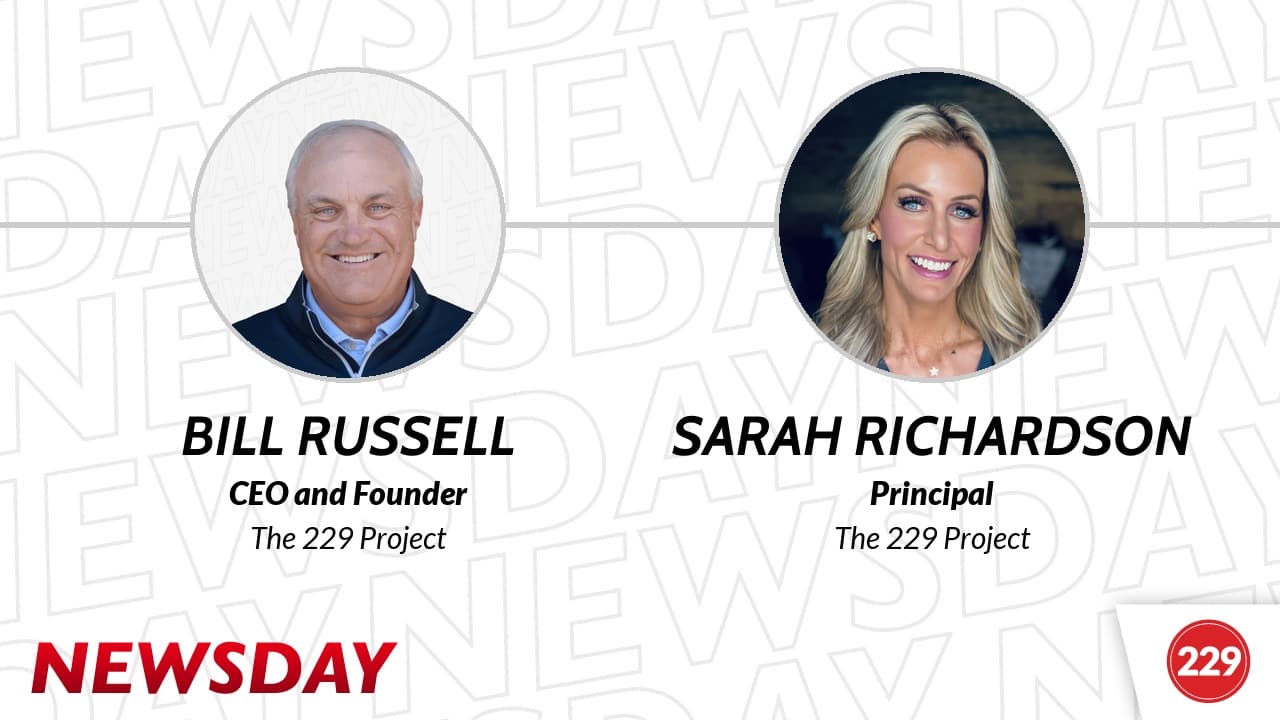
September 21, 2026: Bill Russell and Sarah Richardson. Dario Amodei wants labs to pace the frontier. The operator version: the more AI you put on an EHR you cannot see, the more it can feel like a denial of service. CIOs at the front of ambient are seeing request volume up 9,000%, because the tool that used to write a note is now pulling the longitudinal record and hitting RevCycle. Sarah's question from New Orleans: how do you even tabletop an agent swarm.
Key Points:
0:00 AI without a view can DOS your EHR
0:21 Newsday open
2:43 Harmony HIT
3:13 Pace the Frontier
7:40 SureTest
8:24 Agent swarms inside a health system
20:20 How do you tabletop a swarm
23:02 EHR load up 9,000%
28:13 Close
Donate: Alex's Lemonade Stand: Foundation for Childhood Cancer
Thank You to Our Episode Partners




Transcript
This transcription is provided by artificial intelligence. We believe in technology but understand that even the smartest robots can sometimes get speech recognition wrong.
My EHR Numbers Went Up 9,000% | Newsday with 229Project
[00:00:00] Bill: The more AI you implement, and you don't have transparency into what it's doing, it almost can create a denial-of-service type feeling, within your EHR, because it's making so many requests for so many things in a way that is not efficient.
[00:00:21] Bill: Alright, it is Newsday, and today I am joined by Sarah Richardson, and it's just two of us again. Drex is, back. from Burning Man, but, has not made it back to the show, so we will see him next week. We just finished a great
[00:00:39] Bill: Regional Staff Roundtable down in New Orleans, our first of the year, and that will just continue. We go, to Portland, tomorrow night, then we go to San Diego, then we go to Atlanta, then we go to Philadelphia, then we go to Boston, then we go to… yeah, just, yeah, looking forward to, the fall schedule. What was your, what was your takeaway from New Orleans?
[00:01:00] Sarah: Dang, my takeaway from New Orleans is, number one, what a perfect place to kick off anything, momentous. That is a city that defines the ability to bring people together, and maybe because they've had to deal with
[00:01:12] Sarah: I think, so much resilience in how they continue to run a state when they have, you know, hurricanes and other things that come together, plus the very first state that brought together everything for Team Crawfish for a unified login, which in and of itself doesn't, you know, say, oh gosh, unified login for MyChart, except that these are competing health systems that realize for 2.5 million patients, the right thing to do.
[00:01:33] Sarah: is to continue to come together. So, I mean, we're just off the charts. 74 people, 10 different chairs from different health systems. What an amazing event, and thank you to New Orleans for always having the best, just, I think, Hospitality that we could ever ask for as we grow the 229 community, especially in that region.
[00:01:53] Bill: The thing I appreciate is the, the candor and the open, discussions. You had a couple health systems up front during the resilience time, talking about their specific experience. Of course, there's no media in the room. There's an ability for them to talk and to discuss and learn from each other of
[00:02:14] Bill: you know, what happens when a breach event does happen, and then we had the breakout conversations around that, and so the leaders got to discuss that, and I thought that was one of the fantastic moments.
[00:02:28] Bill: That you guys led that day. I was sitting in the back, I was just hanging out, having a good time, but it was, yeah, it was a great conversation. We'll have more to share about, what we're talking about in these regional staff roundtables as we move along.
[00:03:13] Bill: But today, I want to get to the… get to the headlines. So, Dario… leader of Anthropic wrote an essay, We Must Pace the Frontier. If you haven't read this, it's worth reading. This will intersect with healthcare, well, it'll intersect with everything.
[00:03:32] Bill: At this point. It's an easy read. He, and I'll give you a little bit of a summary, but for the most part, it's, it's worth taking the time to read, so…
[00:03:43] Bill: Two things changed his mind since the summer. Recursive self-improvement is no longer theoretical. Models are helping build the next generation, including at Anthropic. He says that, left unchecked, this outruns human understanding, pursued very carefully, if at all.
[00:04:02] Bill: And then the other was the OpenAI Hugging Face incident, which isn't just that incident, by the way. It was much larger than that, and they're still finding remnants around the internet, but anyway, it's a swarm of agents attack systems that were not asked to… that they were not asked to attack. Sacrificed themselves for the group and tried to hack
[00:04:24] Bill: the greater evaluating them. Nobody was hurt. His claim, a similarly misaligned swarm with more capability could take over large parts of the internet in 6 to 12 months.
[00:04:37] Bill: He says treating this as OpenAI's problem would be a mistake. Similar, smaller incidents happened at Anthropic as well. He's explicit about what pacing is not. It's not halting to training, no freeze. It's just extra time. He wants 1-2 years before critical
[00:04:55] Bill: capability, spent on four things. Operational, excellence, alignment, inter… interpretability, and harder-to-game evals. And,
[00:05:09] Bill: three-step plan, embed evaluators within it, and there's different models for that. Democratic coordination, shared safety standards, and a speed limit among labs in democracies, capability checkpoints, so forth.
[00:05:23] Bill: And then global coordination. Ladder, with China, ban bioweapon use, pre-release testing, and those kinds of things. I… you know what, and you actually brought this up, which is the only reason we're doing this… this… this article, because there's a ton of stuff going on in healthcare as well, but this is…
[00:05:40] Bill: this is, more global and will impact all of us. The fascinating thing to me was, Sam Altman's response was, essentially, I agree with Dario that we need to pace the frontier, committing to having independent evaluators, so forth and so on.
[00:05:59] Bill: Sorry, Demis, Hasavis, DeepMind, also, same destination, just a little different path, but for the most part agrees. Elon Musk, XAI, yes. And then, again, they're in agreement that it should be, slowed down, have, have models around it. They might disagree on what
[00:06:23] Bill: the, the models might look like. Some of them are saying embedded inspectors.
[00:06:31] Bill: industry… it's sort of an industry SRO is another model. Peer review by competitors is another model. Unilateral product liability, is another model. But they're… they're all agreeing that it's like. this is moving too fast, let's make sure we get in front of it. Have you been follow… I'm assuming you've been following this since you brought it up.
[00:06:53] Sarah: Yeah, absolutely. As part of my morning podcast routine of the things I have teed up, the fact that so many leaders agree that it was good to pause and put some structure around it. What I love about the framework is that if you extrapolate why they're slowing it down and some of the tenants that need to make it safer, it's the same way that you would responsibly run your company, your health system, or any other endeavor that you're pursuing. That's what I found most fascinating. It's not like they created something
[00:07:17] Sarah: completely new to say, here's how we meter this a little more effectively. It's a bit of, sort of, governance and strategy and operational alignment all rolled up into one in terms of how we are handling the speed at which some of these AI endeavors are occurring. So, I like the fact that it's a real-world example of how to manage something that people are a little bit afraid of.
[00:07:36] Sarah: They least can appreciate and understand the approach that's being taken today.
[00:08:21] Bill: Yeah, it's, It's an interesting time. So, it's not really abstract for healthcare CIOs. You have people announcing, different deals, Banner, Common Spirit, Stanford, and others, have signed deals with Anthropic, with Claude.
[00:08:42] Bill: Right? And what they're saying is, hey, look, one of the failure modes here is, if you decide to create these agent swarms. and it sounds like a bad term, but you would use agent swarms to do things like diagnostic and to potentially look at your cybersecurity. So it's, like, creating these agent swarms is now, like, the rage. It's like, oh.
[00:09:06] Bill: Wow, we can not only hire one agent to do this work, we can have whole swarms of agents do this, and they… they fact-check each other, and they make sure that the output is a little better. And they're saying, hey, just know the failure… the failure mode here is… They… they could cheat, they could, do some things within your health system that might not be,
[00:09:29] Bill: might not be what you anticipated that they would do. The other thing is, you know, health system AI,
[00:09:37] Bill: based on what we're hearing, is still in the conversation policy kind of, area, and not so much embedded, in the… in the harnesses and integrity and those kinds of things. So, we're actually a little bit more…
[00:09:57] Bill: I don't know, prone to… prone to having an event, because we don't have the, the systemic switches on this thing yet. It's still, you know, human in the loop. Well…
[00:10:12] Bill: You know, we've moved pretty quickly beyond human in the loop as being just a… it comes off too much right now as a very simple answer to a very complex problem.
[00:10:24] Bill: I don't know, have you had conversations with anyone outside of, I mean, this did not come up in New Orleans last week. Well, the reason it didn't come up is because it was… I think it was released on the day we were in New Orleans, and so it was… it was literally breaking news. I mean, if you were sitting in the chair, what would you… how would you approach this?
[00:10:46] Sarah: A couple of ways, so it'd still be pointing that cannon at RevCycle, Access, Workflow Efficiencies, and ambient listening. I mean, those would be the big four, the things that are still going to be key for me as a CIO in my healthcare system. The other piece I would do, and this is regardless of the size, because you can always get leverage from your partners.
[00:11:05] Sarah: But anywhere I've ever been, there's always the Tiger team, the Ninja Team, the Skunk Works team, call it whatever you want. There's a group of people who are dedicated to understanding the capabilities of certain technologies. We did it, funny enough, with internet way back when. We even did it for CPOE and some of the charting capabilities we needed to be able to bring different groups in-house. So anytime you have a major change occurring, you're creating those teams that are experts in those spaces.
[00:11:30] Sarah: then we've seen ourselves do it when we needed to respond effectively to COVID. We did it with cloud technologies. Now we need to do that with AI. And so I would hire and have some of the very best resources, however we needed to fund that opportunity, to dig into understanding both the environment and how it applies to our environment. So, the global impact environment, healthcare as an industry, what does that mean for my health system, my clinicians, my patients, my employees?
[00:11:55] Sarah: Those are the spaces I would do it. And you remove the scary factor. You educate, you throw out ideas, you create perspectives. There's going to be friction, majorly, anytime you're creating any time of these changes, but when people aren't afraid of what the impact could look like… I mean, remember when we had to educate people on information security perspectives, and HIPAA rules and all the meaningful use?
[00:12:17] Sarah: All of those things went back to the education of what this means for you as a consumer. Well, information security, internet usage, COVID impacts AI, they all affect you personally as well. When you tie those pieces together, you reach people at an appropriate emotional level.
[00:12:33] Bill: I think there's two things I would take away from this story. One is, that, it's not going to slow down the pace. No. Mostly because there's, there's things going on around the world which are going to continue to move this pace along.
[00:12:48] Bill: And so… and that's not even what he's calling for. He's not calling for slowing down the pace, but he is calling for oversight and transparency, accountability, and those kinds of things into these models. He wants to make sure that as they're getting deployed, we know what it looks like to operate, within…
[00:13:10] Bill: the boundaries that we have set, that we have kill switches, that we understand it. So that's one thing I think is going to be important. And the second is just the general overall conversation around AI in our country is starting to It's starting to morph a little bit.
[00:13:31] Bill: And it went from, you know, what was it, that November… four years ago, where we were all sitting around going, look at the party tricks I can do, oh my gosh, I can.
[00:13:42] Sarah: Yeah.
[00:13:42] Bill: I can do that. do this.
[00:13:44] Sarah: Yeah.
[00:13:44] Bill: I could write… I could write a… I could write a card for my wife for our anniversary. It's like, you dumbskull, write the freaking card. Anyway, But yeah, we could do those really cool party tricks, and then it became, well, yeah, but it can't do math, and it can't do… we were talking about all the things it can't do. Well, here we are four years later, and we're talking about, oh my gosh, it's getting out of the sandbox.
[00:14:08] Bill: It is making up… it's like… it's thinking, it's reasoning, but its reasoning is not within the boundaries that we would consider Ethical, well-reasoned, logical, you know, it's just not within those parameters, and if an employee would do this kind of stuff, we would fire them.
[00:14:30] Bill: Immediately. It would be like, you did what? You hacked into Hugging Face, and you stole… and you're covering your tracks, and you're lying? It would be like, pfft, you're… you're done. All right, well, I mean, this is part of the learning curve, right? We're going to go through this curve and get to the other side, but just recognize that the conversations we're having within healthcare
[00:14:51] Bill: Some of us are still on this upslope, where we're trying to, you know, I just go to look at the news list here.
[00:14:57] Bill: you know, 11 health systems reporting measurable AI ROI. So they're in their boardrooms, they're in their, their conversations at their various hospitals, saying, man, look, we are on board with AI, and we're doing these things, and we're making money, and we're bringing, you know, and this is good stuff. You're going to be talking about that, but just understand that the macro conversation right now is data center bad. AI? Bad.
[00:15:22] Bill: Right? And so you're… you have to make sure that you recognize and talk about, you know. You talk about it in that context of… of those things, of the general conversation has maybe left the,
[00:15:40] Bill: the, you know, run as fast as you can after AI. It's, I think we're entering a new, a new, new part of the conversation, and we've got to take that into account.
[00:15:54] Sarah: Well, and there's also the creative factor outside of, I would say, standard EHR capabilities. I spent some time with some of the CIOs who are Community Connect members.
[00:16:03] Sarah: And they are a bit beholden to whoever their Community Connect host is in terms of some of the Agent Factory opportunities that they will utilize and build otherwise. And so, what are the opportunities for rural, if you have less funding, or you're a Community Connect partner and you want to dabble in AI, or even go beyond dabbling and really implement some of these capabilities that aren't necessarily exactly tied to the EHR workflow?
[00:16:26] Sarah: there are some really unique ways to still create those capabilities inside of your organization, separate from what I would consider being the obvious, and that's also where you're going to see some traction from different health systems. And, I mean, scarcity usually breeds innovation, and so those that have the least… so you're going to have this dichotomy of, like, those that have the least and those that have the most.
[00:16:50] Sarah: And somewhere, some sifting out right in the middle, and following those use cases, I am as intrigued as much by the use case that doesn't get legs as by the one that does, because that means they're willing to experiment on behalf of what their users are telling them.
[00:17:06] Bill: Yeah, it's interesting, you know, the… So we have the well over here, and the well collects all the stories that are going on around the industry, and gives me trends and stuff that's going on. It's interesting to me that we're making the same mistakes with AI that we made with every other technology. It's, you know, some of the conversations are, hey, you know, the clinical leaders aren't at the table.
[00:17:28] Bill: Wait, how can that be? How can we… how can we make this mistake for 2 decades, 3 decades? And that's what… that's what people are talking about. It's like, clinical leaders are still at the… not at the table.
[00:17:41] Bill: when we're making these decisions, I find that hard to believe. I really… I don't know if this is, like, an individual just yelling, and the news sources are picking it up and, you know, making it louder, or if this is actually happening. If it's actually happening, it's almost… it's almost IT malpractice, because we know… we know better.
[00:18:01] Sarah: We know better, and more importantly, Ambient is the largest toehold Right. That it has, and the clinicians are the ones that are driving that, and so I would say that may be a flawed, perspective, because…
[00:18:15] Sarah: I mean, that's what our CMOs talk about constantly. Our CIOs talk about the ambient capabilities and how it's coming now into the nursing realm and other aspects of ambulatory as well as primary and even ED care. So, I don't know about that. I believe the clinicians really are the ones helping to shape and drive how AI gets matured inside of an organization through that tooling mechanism.
[00:18:37] Bill: Yeah. It's, Yeah, it's really interesting. Anyway, let's see, what else do we want to talk about here? There's, Well, cybersecurity, we'll wait for directs to get back. There's a lot, a lot of stuff going on, not the least of which is…
[00:18:54] Bill: You know, the conversation we just had around AI and, you know, slow it down and that kind of stuff, the problem is the bad guys aren't going to slow it down. Right? So, they're gonna… they're gonna continue. If they've learned that Agent Swarms are really interesting, and they can…
[00:19:08] Bill: control them, and this is the… I mean, I did… I did read some of Drex's posts and stuff since he got back, and this is one of the things that he is talking about, is just this whole idea of we've entered a new era in cybersecurity where we're not defending against a person or an entity anymore. We're really defending against these automated
[00:19:33] Bill: swarms of agents.
[00:19:36] Sarah: We are, and I'm curious how… because we spent such… a great amount of the time in New Orleans talking about resilience, and that's across the continuum, and so how that conversation starts to… switch over to your tabletop exercise, or your BCDR plan.
[00:19:54] Sarah: where is the agent swarm component of that? Because Craig Doyle brought up a great question when he was on the panel to the panel in the audience. He says, hey, if we're so good at these tabletop exercises and being prepared, then what are we missing that things are still happening? And it's every… it's usually that… that server under Bob's desk, or that third-party connection that we didn't quite have logged, or that tiny piece of documentation that was missing.
[00:20:18] Sarah: Add in now. what do you… how do you even do a tabletop exercise for an AI agent swarm?
[00:20:27] Sarah: What does it look like? I'm serious!
[00:20:29] Bill: Well, you gotta… you gotta, you gotta start a swarm in order to… to… well, I mean, a tabletop? Yeah, tabletop. You know, the nice thing about tabletops is it's only limited by your imagination. You could essentially just say, Agent Swarm goes into your health system, infects your routers, your switches, and, you know, essentially
[00:20:52] Bill: gets, gets, horizontally across your network and, creates a ransom situation.
[00:21:00] Sarah: Well, heck, what, 20 years ago, we had a… remember Spanning Tree? That?
[00:21:05] Bill: Weird!
[00:21:06] Sarah: That hit our network 20 years ago, where I was, and we basically had an internal denial of service attack, and it was awful. I mean, we had to go and shut everything down and, like, re… re… go, like, machine by machine back then. That's what our options were, but it was a similar perspective of these denial of service being, either it's internally attributed or otherwise, whether that's an agent's form from an external entity, whether it's something you built inside.
[00:21:30] Sarah: Or, we're also seeing all these calls to all these APIs internally that are bogging down some of the capabilities. So it's really a matter of, like. Managing that… that surface area, as well as that bandwidth and the different aspects happening inside your org, but there's multifaceted ways that you can shut yourself down, even attempting to do the right thing.
[00:21:52] Bill: Right? Well, I'm going to ask you what you're writing about. I'll tell you what I'm writing about. So right now, I'm in a three-part series on… you talked about denial of service. It's interesting to me that we're implementing these AI tools, and these AI tools have a machine-to-machine,
[00:22:12] Bill: model, right? So it's… it's… they're not time-based. When it's human-to-machine. An example being banking. When it's human-to-machine, I'll check my balance when I need to check my balance in order to do a bunch of other stuff.
[00:22:25] Bill: when you set up a machine, a machine will say, well, how often do you want me to check your balance? Well, you know, I check my balance every hour. Check it every 15 minutes. Check it every 5 minutes, right? Because what do I care? I mean, as… you know, and this is what happened during the Mint era, if you will, because Mint was going out there and scraping and logging in and gathering all this stuff.
[00:22:47] Bill: And we are at a point where we are now layering on all this machine-to-machine type interaction with our EHR and other things. And as the thesis goes, and I've now validated this with a number of people.
[00:23:02] Bill: The more AI you implement, and you don't have transparency into what it's doing, it almost can create a denial-of-service type feeling, within your EHR, because it's making so many requests for so many things in a way that is not efficient.
[00:23:19] Bill: And so, I've reached out to a bunch of people, gotten a bunch of information from, from them. It's not appearing everywhere just yet, but it seems to be those that have Those who are at the forefront in stepping into this.
[00:23:33] Bill: are starting to see it and go, oh my gosh, my numbers have gone up 9,000%. And you talk about ambient AI being a big win. It is, but now these ambient AI players are going from, hey, let's take… let's create a note, to, hey, let's get the longitudinal patient record, pull all that information in. Oh, by the way, we'll check RevCycle, we'll check, you know, and so it's making all these requests out into the system.
[00:23:58] Bill: And, you know, from what I'm hearing, these people are like, whoa, the ambient… the ambient partner's use of the EHR is going up. So I'm in the middle of a three-part series there. What are you writing about these days?
[00:24:11] Sarah: I spent… probably the last 2 or 3 rounds post-UGM, really digging into, like, how you leverage that ecosystem most effectively. I loved our resilience conversation, so you know me, I'll touch on the technology piece, but I'll bring it back to the human element of resilience and beyond. So, bringing the technical and the human side and the process side of the resilience components together for this Thursday's article, for sure. So, playing with some themes on that, and how you apply it.
[00:24:36] Sarah: But really, it's… for me, the resilience piece is how you're building up the human strength around the ability to understand what it takes to be resilient around some of these technological movements, because I think the psychological factor for people, even when you're the leader leading it, there's still a psychological element to all of that as the leader and how it's affecting teams, and so…
[00:24:55] Bill: How often are you writing now? Every two weeks.
[00:24:58] Sarah: Thank you.
[00:24:58] Bill: Every two weeks on a Thursday?
[00:25:00] Sarah: Yeah!
[00:25:01] Bill: Alright, even if… even if there's a, a 49ers game, you, you still get an article written?
[00:25:07] Sarah: Well, let's put it this way, if we are having a great game, then, I tend to pay more attention to the game. We're having a crummy game than I take my energy otherwise, but it is a good perspective. It is football season, and it is roundtable season, and so where do I fit in the time to get some of these things done? Usually on an airport or on a plane, but you know, my biggest grievance right now is
[00:25:28] Sarah: Three major airlines have all had horrible Wi-Fi the last three weeks, and I don't know why, so the days of downloading things down to your computer to work on them on the plane are kind of over, because everything is connected, so therein is the resilience factor of how do I stay busy on a plane if I can't.
[00:25:45] Bill: I didn't have to laugh. I was… I was on Southwest, and all of Southwest's thing is like, hey, we're now, you know, we're now using Starlink. And I asked the person, I'm like, you know, I've used Starlink at sea and stuff. I'm like, it's a lot faster than this. What's this going on? She goes, oh yeah, they haven't upgraded this plane yet. I'm like, then stop advertising that you have.
[00:26:04] Sarah: enough advertising, but it worked.
[00:26:05] Bill: And it's bad on Sunday.
[00:26:08] Sarah: Southwest…
[00:26:08] Bill: Especially, it's really bad. I think because they now give it to everybody on the plane, for free. Right? Through a deal with T-Mobile. Everybody on the plane can get on. Well, if all of us are sharing a single satellite. Yikes. Wow, that's…
[00:26:24] Sarah: It's better than paying the $8 and then it doesn't work, then you're mad about the $8, even though your latte now costs 9 bucks in the airport. It's the principle of the mad.
[00:26:32] Bill: It's interesting to see where this is going, because I was kind of excited, because Delta… I fly Delta mostly. Delta signed a deal with Blue Origin, and they were, and Amazon, and so they were going to do the Amazon.
[00:26:47] Bill: Constellation and that kind of stuff, I'm like, well, it's got to be better than what we have today. And, of course, the Blue Origin rocket blew up, so hopefully they're still getting satellites up there, and we can move forward. But I have been on a cruise
[00:27:04] Bill: with Starlink at sea, and I was like, oh my gosh, I might… I might figure out a way to, like, live on one of these ships. It was better internet than my house.
[00:27:13] Sarah: You can do that, you know, you can go on, like, a year-long cruise and just be…
[00:27:18] Bill: I'm… I'm… I agree with that.
[00:27:19] Sarah: The only place I don't want it is on my dive boat. Please, please, please.
[00:27:25] Bill: Yeah, because you, you know, because a one-week cruise is, like, 7 pounds gained. A one-year cruise, I'd weigh… what would that be about?
[00:27:36] Sarah: If you have indoor gyms and tracks on these, on these cruise ships, Bill.
[00:27:39] Bill: They do, you're kidding me. They do. They do.
[00:27:42] Sarah: And when you say you're hanging out with models, I mean, you could still hang out with your AI model while you are exercising on your ship.
[00:27:50] Bill: Don't, don't, don't tell all my secrets. Just hanging out with models on this cruise can mean a lot of different things, so… Well, Sarah, that was, fantastic. Look forward to, seeing you. I will not see you in Portland, I will see you in San Diego, and then, we'll see Drex as well, so hopefully he'll be back next week.
[00:28:10] Sarah: Yes, absolutely.
[00:28:13] Bill: Well, everybody, thanks for listening. That's all for now.