Who Really Owns Healthcare's AI Future? | Newsday with This Week Health
 Apple Podcasts
Questions Answered in This Episode
- Is healthcare ready to lose access to AI platforms it doesn't actually own?
- Will healthcare systems get caught using shadow AI they can't control?
- Can healthcare afford the token costs of heavy-thinking models for routine tasks?
- Who decides which AI model healthcare systems can and cannot use?
- Are healthcare organizations repeating the EHR playbook with AI deployment?
About This Episode
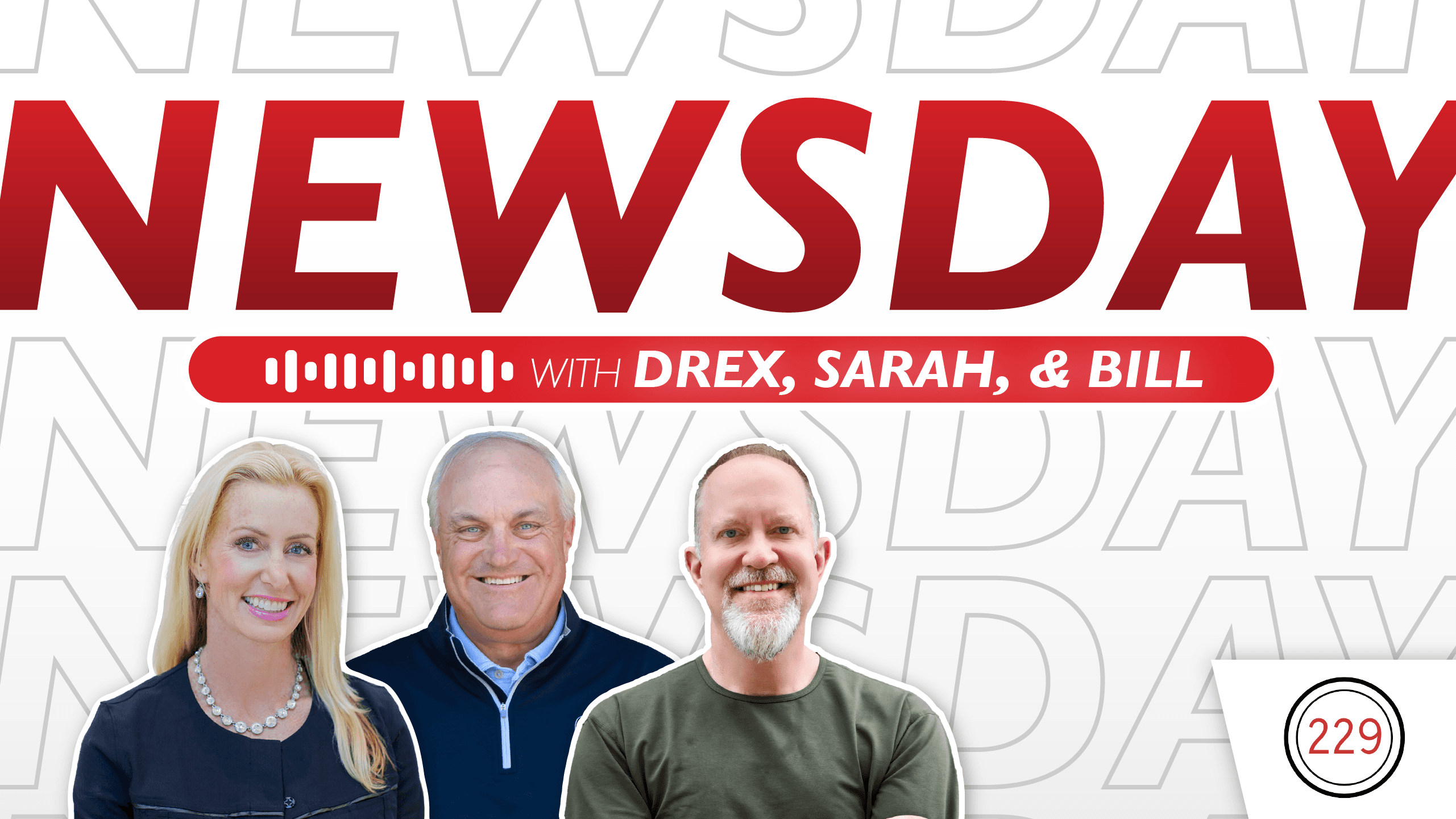
July 27, 2026: Bill Russell, Drex DeFord, and Sarah Richardson break down a week's worth of headlines, starting with Bill’s AI musings on the future "workhorse" models built for speed over depth. The conversation turns serious fast: healthcare doesn't own its AI platforms; it rents them, and that dependency carries real resilience risk. They dig into who's actually accountable when AI gets a clinical decision wrong, unpack the first fully autonomous ransomware attack, and revisit why CIOs keep reacting to agendas instead of setting them.
Key Points:
05:16 Platform First and Shadow AI
13:13 Owning the Harness
15:57 Mayo AI Safety Lawsuit
18:33 Autonomous Ransomware Agents
Donate: Alex’s Lemonade Stand: Foundation for Childhood Cancer
Thank You to Our Episode Partner

Contributors
People featured in this episode — open a profile for more.


Transcript
This transcription is provided by artificial intelligence. We believe in technology but understand that even the smartest robots can sometimes get speech recognition wrong. Who Really Owns Healthcare's AI Future? | Newsday with This Week Health Bill Russell: [00:00:00] I'm Bill Russell, creator of This Week Health, where our mission is to transform healthcare one connection at a time. Welcome to News Day, breaking down the health IT headlines that matter most. Let's jump into the news. Drex DeFord: All right, it is News Bill Russell: Day, and today we are... It's the team. It's,, the incomparable Drex DeFord, dressed in black as always, and Sarah Richardson sporting her new white 229 Project, uh, quarter zip, which looks great by the way. Is that your first... That's your first white one? Sarah Richardson: Took me two years to get this. I'm wearing it every day. It's my new whoopie. Bill Russell: We don't do swag. You gotta earn these things. And so- Sarah Richardson: PRO, proper recognition of peer service. Bill Russell: Yes. Sarah Richardson: Principle service. Look, it's a, it, it's so- It still fits that useful acronym I- Yeah. Bill Russell: So I was, I was on a cruise for the last week sitting on a, sitting on a deck, hanging out with all sorts of models. Um, you know, one of the more interesting things was I'm [00:01:00] getting to the point where there's- there's differentiating- differentiation between models. There's- there's, uh, har- heavy thinking models and then there's what I'm calling workhorse models, and the workhorse models are good enough They're faster, they're good enough, they don't use that many tokens, and they give you a decent answer. Whereas the others, uh, uh, the, the, the others just take a long time. Like, I've, I've used Fable a bunch this past week. It just takes forever. I mean, it's like, it's thinking about it. I'm like, "Just do something. Will you just Sarah Richardson: produce something?" Bill Russell: So, okay, Sarah Richardson: we're gonna make fun of you right now because- ... we see him hanging on a cruise ship with models, Drex and I are like, "Oh, like Vogue or like-" What? These are the models Bill Russell: I'm hanging with on the cruise. Drex DeFord: Like the Instagram influencers. "... large language Bill Russell: models." I don't know what you're talking about. Drex DeFord: It's so funny, we have models. So now you think about it in that context. Well, there's some models that need a lot of tokens- ... and there's other models that are just kind of slow, but they're very methodical. Oh, my Bill Russell: gosh. And I'm like, "Wait a minute, wait a minute." We're gonna need heavy editing, heavy editing this morning. No, but, you know, anyway, I, [00:02:00] I did take my laptop and I was sitting out on the deck, and yeah, people were walking by me, looking at me like... You know. And I was, I was drinking while I was doing this, so drinking and modeling at the same time. So who knows what, what was happening, but it was more I was playing with the tools. I was... Uh, give you an example. I, with Fable, I gave it a one-shot prompt to develop Ms. Pac-Man. I just said, "Develop a, a model, or develop the game exactly like the 1980-something version of Ms. Pac-Man." And I could show it to you right now, and it is this... I, I had to do a couple things like, "Hey, that doesn't look right, and the cut scenes aren't right," whatever. And it... But within about an hour and a half, two hours, I had a perfect working version of Ms. Pac-Man on my laptop. Drex DeFord: That's Bill Russell: pretty cool. Now, was that a good use of tokens and stuff? Uh, n- no, it wasn't, but for me, it was like, all right, I wanna see... First of all, hey, it took up my whole token budget. That, that one thing on Fable for two hours took up my entire budget, and I'm on [00:03:00] the $200 plan. It took up, it just, like, sucked them all up. And, uh, so this tokenomics thing is a, is a real deal and, and I, I wanna get out in front of it. But the, the thing I would- point I was trying to make is that there's these workhorse models- That are faster. , Grok 4.5 came out, and the Grok 4.5 is f- is a great workhorse model because it is 1/10th of the cost of Fable. 1/10th. Not like 10%, 1/10th the cost for the API calls and stuff like that, and it's a workhorse model. I'm not saying it's as good as, it's nowhere near as good as. But if I'm doing things like, hey, go into our SQL database and get me, you know, event attendees and that kind of stuff, it's like boom. It's instantaneous, it comes back, and it's correct. I'm like, all right, well, you know. I... And I think what we're gonna see is this division of workhorse, because it's gonna use less tokens, it's gonna use less compute, it's gonna use less [00:04:00] energy, and then there's gonna be these, these things that you're like, hey, I need to design a new fill in the blank, and you're gonna want the most comprehensive, deep thought model out there. But my gut tells me a lot of people are just going to the deep ones and asking- Yeah ... very mundane questions and just- Drex DeFord: But really expensive prices, right? I think- Really expensive ... we've already done this with people, right? It's a division of labor thing. Like, this LLM I need to, you know, dig ditches, and this LLM I need to build skyscraper designs. And like, you don't use the same people for the same... You know, y- it's the, it's the same kind of issue. I think somebody's gonna get really smart and figure out, like, when you ask a question it's gonna say, "You know, you could probably just use this model. It would be fine." Bill Russell: Yeah. Drex DeFord: As a token saving. We could build this maybe, that's, could be- Bill Russell: Yeah. Well, ChatGPT has it amongst itself, right? If you ask it a question, there's an auto l- thing- Mm. That says- Pick a, pick the right one ... oh, oh, [00:05:00] yeah, I'm gonna use this or I'm gonna use this, and it decides. But it's only within the ChatGPT family. Drex DeFord: Mm-hmm. Sarah Richardson: So what happens when we bring into the space of, you know, locking into the right foundational model or the right LLM, most healthcare organizations have an investment with Microsoft, so they got the whole Copilot universe. We, we... This came up in a conversation amongst ourselves today. As we think about how you would stratify your architecture around parts that make sense with Copilot and Microsoft, parts that make sense with Claude, parts that make sense with Chat and others, I mean, if you're back to running a healthcare system, where do you start to differentiate how you can not only have the accountability factor figured out so that you have the right modeling, but also that architecture component? Bill Russell: It's like what's old is new again, right? So we didn't give them cloud fast enough, so they started using cloud and, and all of a sudden we're just like, "Where are you storing your stuff? You're storing it on Dropbox?" Yeah. Like, you can't do that with this. Like, that's what was happening. And then the [00:06:00] reality is we're saying, "Hey, on our computers, you can't get to ChatGPT or whatever. You can only use the Microsoft models." And they go, "Okay, fine. Let me take a picture of this screen. Hey, ChatGPT, blah, blah, blah," and it comes back with an answer, and they use that answer 'cause they're using their phones, and we're not blocking their phones. We can't... Well, we can't block their phones unless we're using technology for that, but I, I don't know many health systems that are locking the phones down in that manner. And, uh, so because we're not getting in front of it, people are using whatever models that they can, so there's that shadow AI that we keep talking about. Uh, I agree with you, Sarah, in that, healthcare has sort of made a decision because we're, we're... remember when we heard cloud first every day? Like, for like- Mm-hmm ... two years, "Oh, we're cloud first." Now we're hearing platform first. Drex DeFord: Mm-hmm. Bill Russell: And Microsoft's the platform. That's not to say that, uh, I, I know at least three health systems have signed Anthropic deals. Mm-hmm. Which by the way was not [00:07:00] easy according to them. Drex DeFord: Yeah. Bill Russell: Like, they're, they're not designed to, to foster that, and some of them had to go through third parties to get that whole, all the machinations done, which is really interesting to me. A couple of them have, OpenAI, but even the ones who are doing OpenAI tend to be doing them through Microsoft. So is, is, does Microsoft become the de facto winner in healthcare on the AI, uh frontier model side? Sarah Richardson: I believe it might for some of the frontline components or some of the easier objectives you may want to achieve, but if you've got some of these bigger perspectives of, like, I need a multi-model strategy, I need sovereign AI, then you're looking at the workflow versus the model. And so your dev team may very well be super well-versed on Claude as an example. So you're creating spaces for the types of workflows and outputs that you need. So gen pop, great, they get Copilot. But, like, your team that's doing the fin ops and other aspects of your organization, you may want to have them lean [00:08:00] into more robust modeling so you get the best output for the organization. Drex DeFord: I feel like we had this conversation. I, I said this about something earlier before we started recording. History doesn't repeat itself, but it sure does rhyme. Like, we went through this with EHRs too. Everybody had their own model. Everybody had their own version of an EHR in the emergency department and lab and radiology and transplant and blah, blah, blah. And then we decided that it was probably better to go to a platform. Now, the platform wasn't as good maybe as all those individual EHRs that we had, but the platform allowed a lot better cross-conversation. It was financially maybe more well-organized. We didn't have to build a bunch of stuff to allow these models to talk to each other. I feel like we're going through this process again, uh, with the, with the AI models in that, there's going to be platforms, and they're gonna be, like you said, Sarah, good enough for the general population in my health [00:09:00] system. But there's gonna be some specialties that are still gonna need their own special version of an application, their own special version of a thing, and they're, they're gonna, they're gonna go down that road. But it's the same cycle that we're- We've been through, we're going through again. Same on security, right? We went through ARRA, we got meaningful use, we deployed a bunch of electronic health records. We didn't really secure them when we did that, and then now we got busted, right? Ransomware came along, all kinds of problems. We're going through the same thing with AI right now. Deploying a bunch of AI, our partners are deploying a bunch of AI. There's a lot of unsecured AI vulnerabilities that are out there, and the bad guys are taking advantage of it, and we just got a little ahead of our headlights again. So yeah, it's, it's the rhyme that just keeps on rhyming. Bill Russell: Here's the... I feel like I'm screaming into the void here and no one's listening, which is, um, we're, we're renting. We rent every... This platform [00:10:00] first, by the way, is, is- Mm ... essentially saying, uh, you know, we no longer buy cars, we only lease them, which is great, but you don't own the car. You don't own the car until you buy the car, and, and we don't buy cars anymore, we lease them. And so the, the, the, the event that sort of was a shot across the bow, and hopefully people saw it as that, was the government, federal government coming into Anthropic and saying, "Hmm, let me pull the pin on that one. You can't use that, that platform." Drex DeFord: Yep. Bill Russell: Okay. Um, uh, it... I mean, are we, are we essentially saying, "Oh, yeah, yeah, but that would never happen to Microsoft. That's why I don't need to worry about it as healthcare"? Um, but the reality is, we're renting these, we're renting these platforms, and we don't own them. And as such, they could be, they could go away. Are we prepared from a resilience standpoint, from a business continuity standpoint, for they could go away or they could stop [00:11:00] work... I, I wanna keep, I'm gonna keep hammering this thread. This whole thing might be, uh, uh... But, but let me, let me stop on this one, 'cause the, the next one I wanna touch on is patching in the age of AI, which I think is an interesting one as well. But what about this not owning anything? And, and we rent now, we rent everything. Drex DeFord: I, I think it's some of this is the dependence on the model, right? And whether you rent it or you own it. Uh, we saw this really early in the OpenAI cycle maybe, you know, two years ago when they decided to just delete one of the models because they were fielding new models, and a bunch of companies who were reliant on that model got really upset. They wound up having to bring it back because they had, they had, you know, shut down a bunch of operators who had decided that they had built all their stuff on that particular model of OpenAI, and then OpenAI took it away. Then again, as you pointed out, we saw it again with Anthropic. They fielded, uh, you know, the, the, the [00:12:00] cutting edge frontier model, and people started using it, and then they yoinked the, you know, the, the rug got pulled out from under everybody, so- Bill Russell: Yoink, is that, is that a Scooby-Doo reference? Drex DeFord: It is. It might be. Sarah Richardson: The yoinks. Wasn't it, kind of the space? Drex DeFord: No, Sarah Richardson: the, the yoink- Yeah, but those are different than... The only things that we ever owned were the things we built, and for a long time we built stuff, and then we went to go, go buy it. Don't build it, and the whole build versus buy. Now we're back, oh, wait, we're back to square one again. But hey, how many systems did you work in where you built it and you had one person who had the history or the environment or the documentation? That person went on vacation, that person left, and you're stuck back then reverse engineering, trying to figure out what the heck- But that's changed ... to do with something you built yourself. Bill Russell: But, but that's changed, Sarah, right? Sarah Richardson: Yeah. It has now To a degree, but there's still a lot of legacy stuff floating around out there that has no owner, that runs major systems [00:13:00] because that's just what we built back in the '80s Bill Russell: Every coder I'm talking to now is like, "Man, we- we've built this tool that's gonna replace us." And, uh, a- again, I'll give you the example, and the example is, we have a good harness. We've developed a harness, and I'm not saying redo the model itself, but we've- we've built a good harness at- at our company, at the 229 Project. Everybody has a copy of the harness, and they're all customized a little different to each one of us and the things we focus on and that kind of stuff. But the harness itself is- is structured. And so my harness can now run with Claude. Mm-hmm. It can now run with- with Codex. It can now run with, with Grok 4.5. And my guess is I could run it with other models. Those are just the only three I've done. And I will take as an action item figuring out if I could run this with the Microsoft models, 'cause if I can do this with the Microsoft models, then I think the answer is, yeah, I don't have to own the model. I can swap out any model as long as I own the harness that says, "Hey, [00:14:00] here's how you operate in our company, and here's how you op- here's how you handle our data. Here's the- the trust boundaries you can't- you can't cross." But I'll tell you, I- I took... Grok 4.5 was in place, and I thought, "Oh, this is interesting. Hey, take a look at our code base and identify any security holes or whatever." It took the entire code base, read through it, and was done within about three and a half minutes I mean, that used- It's, I mean, I, Drex DeFord: I- Bill Russell: That used to be a big deal ... yeah. Drex DeFord: This is the, I think, the resilience conversation, right? That ability of being able to sort of move and plug and play in a different model when, you know, use the one that's the most advantageous. I was talking to somebody the other day, and they were actually shifting their projects between one model and another model, depending what was, what was the most advantageous, and that changes on a daily basis, right? It seems like new models are released a couple times a week. Um, big models maybe every couple of [00:15:00] weeks. And so that ability to shift and not be overly reliant just on one of these companies turns out to be really important, I think. Bill Russell: All right, so let me ask you this. The, probably the last question on this is, is patching. So I was talking to somebody and they said, "Look, we, we have to own the, the model itself," 'cause they're patching that model. Like, every time I log into ChatGPT, it's like, "Hey, do you want to upgrade? Do you want to upgrade? Do you want to upgrade?" All right, well, if I'm running things on top of that, I mean, will the, will it produce a different answer? Potentially. If you, if you didn't structure it correctly, it could potentially produce a different answer. This, this creates a different governance than we're used to. I don't want to touch on that one today. Here's the one I want to touch on. So a former Mayo Clinic research operations director is suing the system, alleging she was pushed out for flagging AI safety and compliance failures. Um I don't know if that claim's gonna end up [00:16:00] holding up or not, and there could be all sorts of other things behind it. We, you know, when you read a headline like that, it's flashy, but you don't know all the s- subtext to it. And knowing the people I know at Mayo, they're not trying to pull the wool over... They're, they're, they're, they're trying to be above board and, and, and whatnot. But regardless, the precedent has been set, right? So who is the watchdog of how AI gets implemented within a health system? And my gut tells me we're gonna see more of these kinds of headlines. Sarah Richardson: Well, it's just if you ask the question to even today, who's accountable when AI makes or contributes to a bad decision? Is that governance? Is that ownership? Is that a board conversation? Is it executive accountability? Like, no one loves doing a RACI document, but the difference between deploying and accepting liability is pretty significant. And so- A Bill Russell: RACI document would be a great idea, wouldn't it? Sarah Richardson: Well, I've always loved RACI documents because it's clearly accountable that if this decision gets released into the [00:17:00] wild, here's the person who's responsible for it, and that's now gonna have multiple indicators based on how you are structuring AI ownership. Governance, fine, great. Where are we gonna use it? Once you decide where you're using it, who's responsible for that decision? Bill Russell: So you were in the CNIO room. This is what I'm hearing from clinicians. They're like, this, whole human in the loop thing is bogus. It's, we don't want to take responsibility, therefore we're gonna make sure that there's a human in the loop and that human is responsible. But the reality is that human, is, you know, there's a confirmation bias that, kicks in, and all of a sudden they're like, yes, yes, yes, yes, yes. And then the next three times they say yes and it's wrong. And now all of a sudden they're liable. It's like, hey, who really made the mistake there? we know confirmation bias exists. Drex DeFord: It's not the, it's not the AI ultimately who's responsible for it, right? and back to the rhyming, conversation, we built EHRs and we built a lot of these, [00:18:00] alerts in our EHRs to say, this and this is gonna interact or have a, maybe have a negative interaction. Uh, are you sure you want to place this order? And there's a lot of yes, yes, yes, yes, yes that happened. And, you know, we found out the hard way, and a lot of places found out the hard way. A lot of patients found out the hard way. Uh, but this is the same thing. It's just one step to the right Bill Russell: Drex, I try not to read, um, cybersecurity stories while I'm on vacation, but- Drex DeFord: Uh-huh Bill Russell: um, but it, it is kind of wild. You, because a long, long time ago you told me how, how structured the attackers were. Yeah. And they had people that were specialists at getting in, and people that were structured at getting to the data, moving, laterally. And they, they sort of outsourced different pieces of it and, and orchestrated a, a, an attack. Well, it looks like they're, they're now figuring out how to do that all with agents. It's like, "Hey, this agent's job is to get in. This job, this [00:19:00] agent's job is to identify the vulnerabilities once it's in. This one's..." And they, they now have these entire org structures of agents that can work 7/24, 365. Just give me power and point me in the right direction. Not even point me in the right direction. Like, go after healthcare. Tell me who you get into. Drex DeFord: it's kind of a division of labor. Uh, but it's the agents that are the labor sub-specialization, letting them get really good at whatever their part of the ransomware effort is and working well with others. And if you can build that into the prompts, then, then they turn out to be, uh, pretty successful. We had the first completely autonomous, um ransomware event happen, I don't know, a week ago, two weeks ago. And, the only thing that kind of caused the breakdown was that somewhere in the training material, the agents, the agent that was responsible for asking for the ransom [00:20:00] used an IP address to deposit the Bitcoin. That was something from training material. So the, they couldn't actually deposit the, the, the Bitcoin, and that's how kind of the whole thing got held up. But really close to being all the way through. Sarah Richardson: Well, and that's where I'd ask the second question. Besides, like, who's accountable for the decisions, it's can we identify which vulnerabilities create the greatest clinical and operational risk for us, and how do we respond before patient care is impacted? Becomes like a cascade of really key decisions within the organization beyond where it's being utilized is what's the, what's the after? Bill Russell: did we talk about Summit, uh, Summit Raina retiring? We Sarah Richardson: did, we did last week- Oh ... while you were, while you were on vacation- Oh ... with your large language model. Oh, Bill Russell: dang, I didn't listen to the podcast. Last time I talked about it. I gotta, I gotta listen to that podcast. Sarah Richardson: You gotta go listen to your, to, to our stuff too. Bill Russell: did you talk about the, the family of four that she's named as potential [00:21:00] heir parents? Sarah Richardson: We did not. We didn't Drex DeFord: really Bill Russell: get into the, those specifics. Yeah. It's interesting. So she, in, in an interview not, uh, too long after that was announced, she talked about the four people, and I think what she has set up is sort of a, a competition of sorts. It's like, hey, let's see, let's see which one of these four people sort of steps up, and they're, they're now being vetted at a different level, and UGM's coming up, and I think those four people will be vetted at a different level. How do they step up and- Come on the Drex DeFord: stage and, Sarah Richardson: yeah. Sounds like The Hunger Games. Drex DeFord: Mm. Bill Russell: Yeah. It's a, it's a little bit. It used to be a pretty prevalent model for naming your successor. You'd say, "I'm retiring in a year, year and a half, and, you know, these, these three people are considered." Then they would beat the crap out of each other for three years until two of them left and one of them stayed as the CEO. Sounds like fun. It, it wasn't... It, it has to be handled well. Uh, I'll tell you one, one phrase, a CIO left me with this phrase right before I left, and, uh, I've [00:22:00] been thinking about it a lot, and he, h- his, uh, comment to me was, um, "The, the problem we're having right now with intake, everybody's complaining about the fact that we have too many projects. We can't say no." But it, it rhymes. Right, Drex? We've heard this over and over again for years. Mm-hmm. And now,, and his, his take was, he said, "Bill, the, the CIOs don't set the agenda. They just react to it." And he goes, "That's the problem." He goes, "'Cause other people are setting the agenda. Every agenda item has a technology aspect associated with it. It's being set by people who do not understand the ramifications of the things they're actually saying, and then we have to react. We have to respond to it. And, uh, the only appropriate way to respond to it is to say, 'Yes, we'll figure it out,' and that kind of stuff. However, if you do that long enough, you get buried by that same... by the avalanche." Drex DeFord: Massive [00:23:00] spaghetti that you've had to build work arounds and all the things that you've had to do to accommodate all the decisions that didn't, were suboptimal decisions. Yeah. Bill Russell: Setting the agenda, reacting to it. Sarah, what's the, what's the, what's the way around that? Sarah Richardson: There's not a way around it. There is a way to try to integrate or infiltrate it to a degree. A lot of that's gonna come to reporting structure and how decisions get made organizationally. And then also, what is the composition of that leadership team over a longer period of time? It's not just the CIO reacting. CIO's often reacting to the fact that a new peer is walking in the door every two to three years as well, inclusive of some of the IT teams. And so how hard it is to maintain that complete strategic alignment when players are constantly switching in and out. So you're not really playing Moneyball in this case because there's not one championship. This is, like, this continuous stream of information coming into the organization. So I don't know that you fix it as much as you try to [00:24:00] get in front of it. The thing that bothers me, though, is how often there is changing of the guard at all levels of all healthcare organizations. Mm. Average tenure is not that long anymore, and what you spend most of your time doing is re-educating and re-influencing to achieve the two or three things that you know are most impactful. Drex DeFord: I don't know that most health systems know what the two or three things are, though. I mean, I don't think- And if they're set ... I don't think they have the... This is a, this is a, a lot of it's a leadership issue of just like- Yeah ... prioritization and setting focus, shining a light on the wall and saying, "That's the place we're going. That's the North Star." And, I don't know. I just don't see it,, there's a lot of lacking, I think, in the healthcare industry at the very top of our organizations, folks who are actually setting those standards and then sticking to those priorities. There's 100 things that are all most important, and that just creates chaos. Bill Russell: AI should be p- pointed at [00:25:00] three things. Access is number one, number two is rev cycle, and the, the third becomes the care setting and e- and efficiency for the, clinicians and, and doctors. And yes, we started with ambient listening, but it needs to move into that full care setting with computer vision and whatnot. Those are the three areas it should be set. Any CIOs listening to this, if yours is pointed in 55 different directions, my, my gut tells me if your salary is anything north of 700,000... Not salary, but your total comp is anything north of 700,000 and you're unwilling to get in front of your leadership and take a position on things, you really should step aside and let somebody else do the role. Uh, it takes courage to do this role, and it takes the ability to, to be able to walk away from that salary and say, "You know what? I'm gonna do the right thing regardless." I think once you approach that amount, y- you have to, you have to have your voice be heard. And if the decisions that are made over and over again, if you're not making your voice heard, then, give the [00:26:00] salary to somebody else, and you'll find an organization that'll listen to you- Yeah quite frankly. So- I Drex DeFord: think that's great advice. Sarah Richardson: you could create your own organization. Bill Russell: Is that a reference to me? Oh, man. Throw yourself in Drex DeFord: front of the Bill Russell: oncoming Drex DeFord: traffic and then go create your own- Bill Russell: I, I, I have said I, I do not have the temperament to be a CIO anymore because, I just, I don't, I don't have a, a high bullshit, uh, quotient. Drex DeFord: That would be calling a lot of people stupid, which, so you would be in HR all the time. Bill Russell: Yeah. I, I mean, when I sat in the chair I didn't- That's the stupidest Drex DeFord: thing I've ever heard ... Bill Russell: when I, when I sat in the chair, I didn't, I didn't do that all that often. But now- Yeah ... l- looking at it externally when people say, you know, "We're, we're doing this project," I'm like, "You have, you have limited amount of money, right?" "Yeah." "Why are you doing that project? Like, how is that tied to any one of your c- uh, core outcomes?" They said, "Well, we have to do it because of this." I'm like We don't question, you know, again, I hate to do this [00:27:00] twice in one episode, but there's a, a guy who used to work for Tesla who's making the rounds, and he wrote a book on the, uh, operating model, the five things that, uh, the operating model that works within the Elon Musk companies. And the first is eliminate requirements. So if a requirement, like identify what, what the requirement is and why it's there, and we don't ask why enough. And he tells a great story, by the way. He tell- that the Model 3, they were having trouble making this plate that was on the bottom of the car, and they went to the guy who said, who, who, identified the requirement and they said, "Well, you gave this requirement. Why do we have to do this?" And he goes, "Oh, I didn't get it from me. I got it from this other group." And so they went to the other group and they said, "Well, hey, why do we have this requirement?" He goes, "Oh, that guy over there told us we had to have the requirement." They were pointing at each other. Drex DeFord: Hmm. Bill Russell: And he goes, "Well, someone check to see if we need to do this for any reason other than the two people-" Is there like a regulatory requirement for this plate? And it turns out they burned six months doing this thing- Yeah ... and they didn't have to do it. And I can't tell you the number of times in healthcare I sort of sit there and people [00:28:00] go, "Well, yeah, I, I mean our, our data retention policy is forever because it has to be forever." And I'm like, "Does it?" I- does it for all information or does it for pediatric records, or does it... Even for pediatric records, it's not forever. Drex DeFord: No. It's, it's interesting too how a lot of these requirements come from just past history. We did this thing, we set it up this way, uh, and then it broke, and Dr. Smith, threw a giant fit, and it went to the CEO, and n- so we built a whole belt and suspenders, super expensive, updated version of this that will never fail because of that one incident with Dr. Smith, and that's how we have to do it from now on. And then, you know, there's turnover, Dr. Smith leaves, but that piece of whatever it is we built stays in place forever. It's super expensive. It's massively redundant, whatever. There's tons of those [00:29:00] in health systems. It's the gorilla and banana story. Not just technology stuff either- The tri- but, like, regulations and policies and- Bill Russell: You mean the monkey's grabbing the banana? Sarah Richardson: Remember the story about the gorillas in the cage and the, the, and the, and the bananas, and, like, the- they would get hosed down, and then they, like, how come they get hosed down? And it's because it happened, like, five generations ago, but because it was learned behavior and it was cultural, no one ever asked, went back to, how come we don't eat these bananas? It's a corollary story. Mm. Anyone who's ever taken a class from me knows the gorilla story, and I'm happy to share it at a future interval. But it's all about Drex's point of going back and asking why we do something, because often people don't know why something- I don't even know why ... the way that it is. Yeah. It's just always been that way. Bill Russell: Yeah, the five whys is always a fun little exercise. I mean, you usually piss someone off by the time you get to why number three. It's like, "Why do you keep questioning me?" It's like, "'Cause- Mm ... you don't seem to understand why we're really, why we really do this Drex DeFord: and why it's-" Because isn't a good answer. Bill Russell: But I, I, but I'll tell you what, five whys would be great to take [00:30:00] into the executive team. Hey, we're building this new building over here. Why? I mean, why? Do you really know, well, that area's growing. At what pace? What's the, you know, what are the number? You know, it's like asking those why questions are interesting to me. Um, I don't know. We'll see, see where things go. Hey, we're actually over time. It's probably 'cause I was on vacation. I've, I've lost track of my, my internal clock. We'll, we will meet up this week in Chicago. We have three, three events. Drex, you're with, who you with? The CMIOs. Ooh, that's a fun group. Yeah. And Sarah, you're, you're RevCycle. Sarah Richardson: I am, which is perfect timing because I'm hot off the heels of a RevCycle summit with Abridge this last week, so- Bill Russell: Oh, you're loaded ... Sarah Richardson: I'm stoked. Bill Russell: Yeah, you got to list- you got to listen to, uh, Mr. RevCycle down there. Um, oh, I forget his name. I had him on the show. He's, he's exceptional. Um, yeah, I'm looking forward to, either the Academic Medical Center [00:31:00] CIOs are coming together, in Chicago, so we will have,, more to talk about next week when we get together, so. Sarah Richardson: Eric Bricker- Yeah ... and he's so much fun to hang out with for two days, for sure. Eric Bricker Bill Russell: is brilliant with regard to RevCycle. I l- Yep ... I love listening to Sarah Richardson: him. He was fun. Bill Russell: Well, thanks everybody for listening. You know how this ends. Bye for now. Speaker: That's Newsday. Stay informed between episodes with our Daily Insights email. And remember, every healthcare leader needs a community they can lean on and learn from. Subscribe at this week, health.com/subscribe. Thanks for listening. That's all for now.