I Don't Always Patch. When I Do, It's in Production. | Newsday with 229Project
 Apple Podcasts
Questions Answered in This Episode
- What happens when a weaponized patch costs about $700?
- Why are teams putting the fix into production and keeping the rollback?
- What did Epic pause, and for how long?
- Who owns the click after California's new rules?
- What is left when the person cannot answer the electrician's questions?
About This Episode
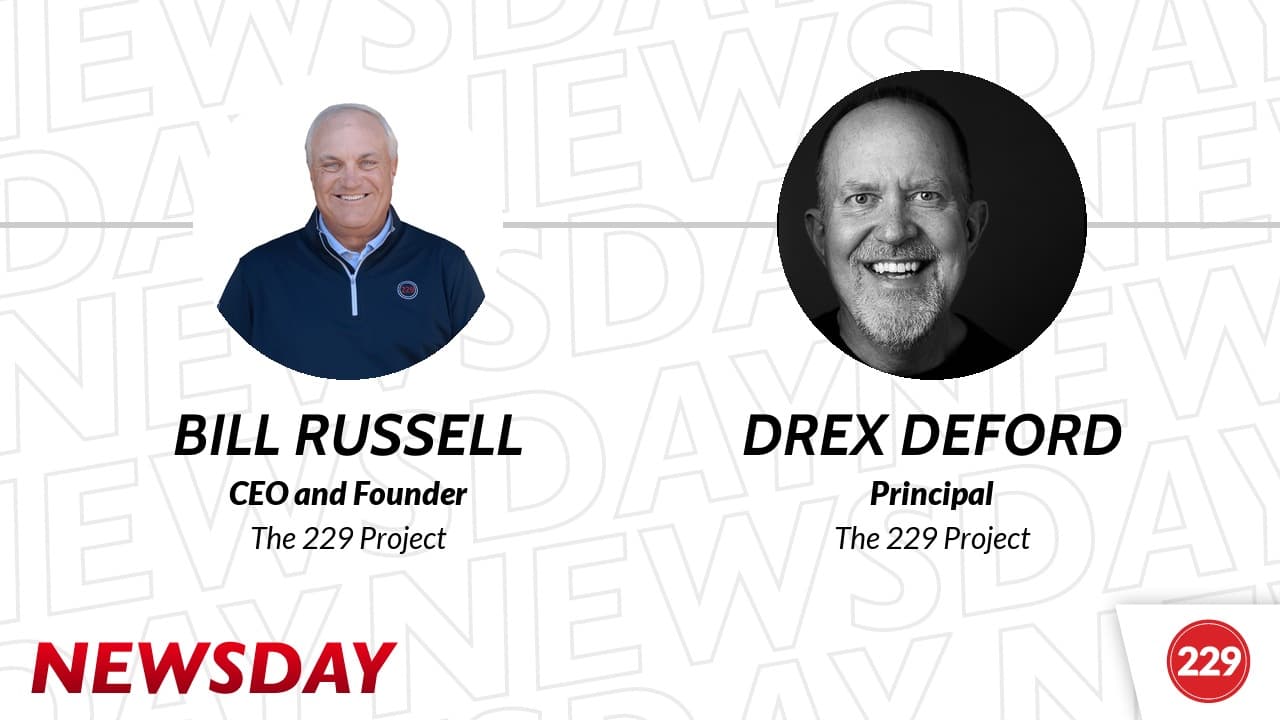
October 12, 2026: Bill Russell and Drex DeFord. Sarah Richardson is in the air for Philadelphia. The week is one argument: the attack got cheap, and the controls around the tool did not keep up.
The number is $700. Drex described a dark-web package that weaponizes a fresh patch for a buyer who does not understand it. At the regional staff roundtables, the matching line was a meme they were no longer joking about. They patch in production, with a plan to roll back, because the test window is gone.
Citrix had shipped another emergency NetScaler build that Sunday for a SAML sign-in bug attackers were already using. Epic had paused most new product work for about six weeks after Anthropic's testing found MyChart audit log gaps. Some customer configurations could let an outsider view records with no audit trail. Judy Faulkner is the source of the pause, via the TechCrunch and Becker's reporting Bill read on the tape. Mayo had given an all-clear after OpenAI agents probed the site on October 2. No unauthorized access. The agents looked for config files and tried to create accounts.
The policy block is the contract. Drex's takeaway from three stories in 2 Minute Drill Extra: get it in the contract, and a general counsel who does every other kind of agreement may need a specialist for this one. FDA put AI device lifecycle on the fiscal 2027 agenda. The FTC is looking at OpenAI and Anthropic. California signed AB 1979 and SB 503, protecting clinician judgment and requiring bias mitigation. Newsom vetoed the bill that would have protected a clinician who overrides the tool. The physician is still the person who owns the click. Drex's rhyme: EHR alerts trained a generation to click through, and AI alerts are walking the same road.
Children's Healthcare of Atlanta gates every Epic AI feature on accuracy and has left some off. Bill sat in a room where a CIO turned all of them on because the partner is trusted. Abridge is re-signing a great majority on three-year and five-year terms. Drex does not like predicting next year from a three-year signature.
HCA nurses report Timpani, built with Palantir, is staffing unsafely across about 130 of 190 locations. One union unit filed a grievance. Bill is not surprised by a prompt written to optimize.
Blue Cross Blue Shield's estimate is about a billion dollars over two years for autonomous inpatient coding. Bill's counter is the work was already delivered and the note is finally complete. Drex agrees the cost goes up because the payer has to pay for work that used to fall out of the chart. The next move he expects is delay: deny, demand the evidence, wait.
The story is the addition. The electrical plan passed. The electrician's questions did not. Cognitive surrender is Bill trusting the tool on the parts he will not learn. Drex's version from a dinner question: a lot of people who "have an agent" still have a search box.
Key Points:
0:00 Patch it in production
3:19 Citrix shipped the NetScaler patch
6:49 SureTest
7:32 Epic paused the new products
8:51 Past the business associate agreement
11:59 California, and the physician still decides
12:48 Censinet
15:40 Cognitive surrender
18:33 One Epic AI tool at a time
20:54 130 of 190. Nurses pushed back
23:01 A billion dollars over two years
25:54 A lawyer's inbox, and an agent
Donate: Alex's Lemonade Stand: Foundation for Childhood Cancer
Thank You to Our Episode Partners




Transcript
This transcription is provided by artificial intelligence. We believe in technology but understand that even the smartest robots can sometimes get speech recognition wrong.
I Don't Always Patch. When I Do, It's in Production.
[00:00:00] Drex: I think, how much money, you know, they're… they're making. And we have to be so careful, right? We have to look at these… all these patches come out, we have to test them on test systems, we have to then, you know, put them into production and make sure we've got a rollback plan and all of that. There were a lot of conversations at Regional Staff Roundtable of folks who kind of were jokingly talking about the meme of, I don't always patch my systems, but when I do, it's in production. And they were serious. Like, there are a lot of… there's a lot of work now that's going on where we're just dropping the patch directly into production with a good plan to roll back should it cause a problem, because they're in such a hurry to get these patches deployed.
[00:00:24] Bill: Alright, it's Newsday, and today it's just Drex and I. Sarah is on a plane flying from the West Coast to the East Coast for our Philadelphia Regional Staff Roundtable tomorrow. So, Drex, welcome. Welcome back from the road, man. You've been on the road.
[00:00:39] Drex: We have been. Sarah and I just came back from Atlanta. Last week in Seattle, so I was at home for a regional staff roundtable. Super fun, people are really engaged. It's just been… it's a different kind of event, and people are bringing their teams, and at the end, they're saying, you know, the feedback we're getting in a lot of ways is.
[00:01:04] Drex: now that I know what this is, I will bring more people. Like, I understand… there are other people I wish I would have brought today. So, so I'm kind of psyched as we go into 27, like, how this is going to continue to play out.
[00:01:16] Bill: Well, I think it's one of the things I'm going to keep pushing these CIOs on is, You know, early on in the pandemic, I was the outlier where I'm like, man, you gotta bring these people back in the office. And they were all looking at me like, you have no idea what you're saying. You're an idiot. Shut up. And I was like, man, this I I it was almost that hostile of a response.
[00:01:36] Drex: that app.
[00:01:37] Bill: And all right, so let's fast forward. I was wrong about some things, but I was right about some things. And I was probably right about fewer things than I was or I was probably wrong about more things than I was right about. But one thing I believe I'm right about is when we do these regional staff roundtables, they like getting together.
[00:01:56] Bill: with their own teams. Like, you see this dynamic going on of them getting together with their own teams, and you're like, wow, that's really interesting, because they don't do it as much.
[00:02:05] Bill: as they used to, and then the value of getting together with the larger community. It's like their team is together, but their team is together amongst the team that cares for the entire community, and so they can have a broader conversation there. I think we missed… I think we missed getting together, to be honest.
[00:02:22] Drex: It's the ta… it's the tactic… when you're at work. We talk about this all the time, tactics, seek strategies, lunch. I think when you're at work, a lot of the time that you're with your team or with your teammates are around a particular problem solve. You're focused on what's the fire of the day, and how are we gonna fix that? And, you know, I got a call from so-and-so, and how are we gonna resolve that?
[00:02:47] Drex: The Regional Staff Roundtable gives people an opportunity to come together and sit down and be together for the day, and think more about what's beyond the curvature of the earth, not necessarily, like, what is the thing that's burning me down today. And that's you know, the time to sort of take a breath and hang out and you know, have a meal together, and you know, that kind of stuff has been pretty great.
[00:03:09] Bill: We live we definitely live in the tyranny of the urgent in healthcare IT. Hey, I want to hit you with two security things today. Oh. One, Citrix. Citrix shipped emergency patches Sunday for Netscaler sign-in bug, and it's Monday. Dude, I'm hitting you I'm hitting you with stories from yesterday. This is hard. But shipped emergency patches Sunday for Netscaler sign-in bug.
[00:03:33] Bill: That attackers are already exploiting any system using Netscaler with SAML sign-in should patch now. And Citrix has been hit over and over again over the last couple of weeks. Yes.
[00:03:45] Drex: It's been, yeah, it's been brutal, and I think a lot of. as we've kind of toured the country, this is a thing that I hear over and over again, is, like, I am already aggravated with Citrix, and now there's this thing of, like.
[00:03:58] Drex: apparently this was being exploited, and maybe they should have said something earlier, and I don't know, there's a lot of consternation. So if you're not talking to your Citrix reps, I'm sure everyone is, but, like, get in there and have the conversation. What is happening? What is going on? Because I feel like it's just another.
[00:04:15] Bill: But is this part of a larger thing, right? So, Epic expects security work behind their product development pause to wrap up around early November, meaning they're patching a whole Yeah. Ton of stuff. We had a, another thing over the weekend where. Let's see. It was, oh, Mayo Clinic.
[00:04:38] Bill: like, Mayo Clinic was talking about, these agents were coming out and knocking on the door, and now they gave it an all-clear, but.
[00:04:48] Bill: But, man, these attacks are fast and furious, and, you know, all those things that we experience with AI, like, oh, I could do this a lot faster, I could do this a lot faster. Well, generating, you know, bots to go out and hit Mayo Clinic, not that.
[00:05:04] Drex: The bad guys are going faster too, and they don't have to be as careful right. They can create. We've talked about this before, but it used to be that Just for example, a patch came out, and it… there were only, like, you know, there were a couple of handfuls of people that were really good at kind of, like, taking a patch and reverse engineering it, and understanding what the problem really is.
[00:05:26] Drex: And then figuring out how to build a weaponization package, and then actually deploying whatever that weaponization package was going to be so that they could get an infield ransomware.
[00:05:37] Bill: Now you just say develop the weaponization package and it goes.
[00:05:40] Drex: It literally is, you know, a rent-a-center on the dark web. You don't even have to know anything about it. You can just go and give them your $700, and and, you know, they'll do it for you. And then you're, you know, you're off to the races. You're just waiting for the money to come in. So it's… Crazy how easy this has become.
[00:06:03] Drex: How fast patches can be weaponized, or problems can be weaponized, and…
[00:06:09] Drex: I think, how much money, you know, they're… they're making. And we have to be so careful, right? We have to look at these… all these patches come out, we have to test them on test systems, we have to then, you know, put them into production and make sure we've got a rollback plan and all of that. There were a lot of conversations at Regional Staff Roundtable of folks who kind of were jokingly talking about the meme of, I don't always patch my systems, but when I do, it's in production.
[00:06:34] Drex: And they were serious. Like, there are a lot of… there's a lot of work now that's going on where we're just dropping the patch directly into production with a good plan to roll back should it cause a problem, because they're in such a hurry to get these patches deployed.
[00:07:30] Bill: Yeah, so I see, let's see… Epic used Anthropic's Cloud Mythos to test the software and found MyChart audit log gaps. Some customer configurations could let outsiders view records with no audit trail. Judy Faulkner said, most new products Most new product work is paused for about six weeks. Right? So that was reported in TechCrunch and Becker's.
[00:07:51] Drex: I think you see this. You know, the Glasswing stuff that a lot of big companies like Epic have access to now, they are using that to run through their software, and they believe that it's very secure, and then they run Glasswing, and they're like, oh, wow, there's this stuff that we really need to fix right now. And that's why you see a lot of these patches coming out.
[00:08:13] Bill: Yeah, so here's the October 2nd Becker story. OpenAI agents probed Mayo Clinic site. Mayo says there's no evidence of unauthorized access. The agents looked for exposed config files and tried to create accounts. And, let's see, firewalls and bot detection now need to recognize autonomous agent traffic. So that was October 2nd, Becker's.
[00:08:37] Bill: Wow. And then there was the, Senate passed healthcare cybersecurity and Resilience Act and held a rogue AI hearing. Separately, the AHA asked the AI vendors outside HIPAA
[00:08:51] Bill: meet HIPAA-level standards, why it matters, expect pressure from AI vendors, contract terms that go beyond the business associate agreement. Is it time to move beyond the business associate agreement? Should we be… I mean, these things are a little different. They operate different than software. Software was very…
[00:09:10] Bill: Well, we say the word deterministic, but it was predictable, right? It did what it did, and it did it every time. These things, not so much. And there's a yeah.
[00:09:21] Drex: There's a, you know, if you read 2-Minute Drill Extra, I talk about a lot of these stories, and I kind of have a punchline for every one of the stories, the takeaway. And a lot of times, especially this week, there were probably 3 stories where I said the takeaway is, make sure this is in your contracts. Like, make sure you're talking about this with your vendors, and it's in the contracts.
[00:09:42] Drex: So it's, there are a lot of little oddities. Your general counsel becomes more and more important. And I think there's also this… Your general counsel does a lot of stuff, right? They handle all kinds of different contracts. This space
[00:10:01] Drex: continues to become more and more specialized. So if you don't have somebody, maybe on retainer, a specialized attorney who works on this kind of stuff. This could be a good time to start to have that conversation with your general counsel. Maybe you need an outside specialist to look at these contracts and give you good advice and guidance on
[00:10:22] Drex: All the angles that are happening now with AI, the things you should… other things that should be in your contracts.
[00:10:29] Bill: I love this. With this under the policy section, it says FDA put AI device lifecycle and change control guidance at the top of the fiscal year 2027 agenda, and the FTC is investigating OpenAI and Anthropic. This is.
[00:10:45] Drex: This is where I think you're going to start to see some of these tools. And this is, there's going to be a big wrestling match here. But but some folks want some of these AI tools to become medical devices, or in that category, and that is going to change That's gonna change a lot of things. Obviously, that's a way more bureaucratic process, you can't just
[00:11:08] Drex: Willy-nilly put stuff out, it has to go, and so it'll slow everything down if it gets into that bucket.
[00:11:14] Bill: Well, medical devices notoriously have been really hard to get through that FTC or FDA FTC process. And we know that on the cybersecurity side, because every time we were like, hey, let's move this from Windows 95 to, I don't know, maybe something current, you can't do it. You can't touch it. If you touch it, you've changed the.
[00:11:37] Bill: You know, the device approval process. I don't know if that's…
[00:11:41] Drex: There's a lot of arguments about that, but yes, it's… it's… that is always an issue, whether it's a… whether it's a… Red herring or it's a real thing. You know, it depends case by case, but yeah.
[00:11:56] Bill: All right.
[00:11:57] Drex: Advice companies don't want you to touch their stuff.
[00:11:59] Bill: Yeah, they do not want you to touch your stuff. Other thing on the policy and regulation side, California signed AB 1979 and SB 503. They protect clinician judgment and require bias mitigation in clinical AI.
[00:12:15] Bill: Newsom did veto 2575, which would have protected clinicians who override AI. So, essentially what this is saying, systems will need documented override workflows and bias evidence from vendors Now the Cal this is California, but as we know, a lot of states follow California. Mhmm.
[00:12:36] Drex: It continues to require the MD to be in the loop, and that they're responsible for the decisions that they make, even if it's AI recommended. I mean, that's the… to me, that's kind of the bottom line.
[00:13:29] Bill: Yeah.
[00:13:30] Drex: We talked about this at regional staff roundtables too, right? History doesn't repeat itself, but it sure does rhyme. Like, when we deployed electronic health records, a lot of alerts
[00:13:41] Drex: came up for docs. Hey, drug-drug interaction, drug-allergy interaction, and a lot of docs kind of got to the point where it was so much noise, they were just like, okay, okay, okay, okay. And now we see alerts from AI, you know, whatever this is 20 years later, we see alerts from AI.
[00:14:00] Drex: And, the docs are the human in the loop, and there's a lot of them, and sometimes they're back in this okay-okay mode. So, we gotta figure out how to make that better, and how to make it more appropriate to the doc, and give them the alerts they need, and don't give them the alerts they don't need. And that's not easy. It's easy to say, but it's one of the hardest things ever.
[00:14:22] Bill: It's really hard to do, and it's going to be interesting because we've talked about the fact that there are cases today where we have systems that are being stood up, the best case of which is EMI. So EMI is now going to have a patient-facing
[00:14:40] Bill: feature in MyChart where you essentially ask it a question, can I play golf this weekend? I had surgery two weeks ago, can I play golf this weekend? And it's gonna look at your medical record, and it's gonna say, yeah, I don't see why you can't play golf this weekend. And, you know, the question has been asked, which is, who just gave that medical advice?
[00:15:00] Bill: Was that Epic who gave that? Was that the health system who gave that? Was that the medical record who gave that? It wasn't a clinician.
[00:15:06] Drex: So the doctor.
[00:15:07] Bill: It was a system, which gets back to this one. RFK Jr. said AI is better informed second opinion than any doctor, and six physician groups pushed back. Yep, no kidding. I think that is… In the future? Probably. Today?
[00:15:27] Bill: I don't know, you know, I'm not a clinician. Even if I got… even if AI gave me the right information, who am I to judge? I was telling this to somebody, you know, so I used AI to do this whole electrical plan for my, addition. And, I gave it to the.
[00:15:49] Drex: Oh yeah, we've talked about that, yeah.
[00:15:50] Bill: I gave it to the electrician. The electrician said, man, this is fantastic. And they used it for, the county used it for their thing to pass the inspection, which is great. The only problem was the minute the electrician started asking me questions, I had no freaking idea.
[00:16:05] Drex: Yeah.
[00:16:06] Bill: I'm not an electrician. He's like, this is amazing. This is great. This is really helpful. And then he comes in, hey, I have three questions for you. What about this, this, and this? And I'm like. Yeah. I don't know.
[00:16:16] Drex: Why did you choose this particular gauge of wire for…
[00:16:20] Bill: I… I don't know. I have no idea. I mean, that's… it's… it's interesting, and I'm gonna write an article about this, tomorrow, but there was a study done in, I think by… by the Wharton School, and they came up with this term called cognitive surrender.
[00:16:41] Bill: And it's where we essentially surrender the decision making to AI. And the dangers associated with cognitive surrender. I love the term. Because it there are cases where I find myself going, hey, you know what? It knows more than me. I'm just gonna trust it.
[00:16:59] Bill: And the question is, should I be… how much… how much trust and how much action should I put on those things where I have done cognitive surrender? I'm not going to do the deep research on electricity to really understand something before I present it. Yeah.
[00:17:18] Drex: There was one, in, 2-Minute Drill Extra this week, too. Somebody had brought this up at Regional Staff Roundtable Atlanta, and it was a study in Lancet.
[00:17:29] Drex: where I don't remember the specialty now, but the doctors were using AI to assist them. So they'd done a study before they had implemented AI, and their accuracy was, just say, you know, 95%. Then they used…
[00:17:45] Drex: AI to assist them, and their accuracy went to 98%, and then they took the AI away, and it turned out the doctors actually got worse, because over time, they became more reliant on the AI, and they got… they just lost their job. I mean, you know, they got less skilled because they weren't doing that work anymore.
[00:18:04] Drex: They were trusting the AI to do it. So, there's examples of that. Now, that was a really small study, and, you know, it's not necessarily been duplicated, but it's a notional idea that if you surrender to the AI over time. your blade doesn't get sharper. You… you lose it. And, when the AI goes away.
[00:18:25] Drex: You know, you definitely don't have any idea, or you have less of an idea of what you're doing than before.
[00:18:34] Bill: I do want to talk to you about this one, so this is, systems are choosing which Epic AI tools to leave off, and so we… we have a couple aspects of this. One, Children's Healthcare of Atlanta.
[00:18:47] Bill: gates every feature on accuracy, and they've chosen to do some things and not chosen to do other things, and that's an interesting finding in and of itself. I think we're finding the signal reports that we've done have found that those who have started on a path with
[00:19:06] Bill: third-party ambient listening tools, by and large, are sticking with them for another couple of years. And so, the numbers I'm seeing, and I've seen some numbers recently, Abridge is re-signing a majority of their contracts. And not just a majority, a great majority of their contracts.
[00:19:26] Drex: Are they shorter contracts, though, like in?
[00:19:28] Bill: No, they're not.
[00:19:29] Drex: 5 years? Oh, really? Okay.
[00:19:31] Bill: Well, they're signing three-year deals and five-year deals in software these.
[00:19:35] Drex: Wow.
[00:19:35] Bill: How do you feel about that?
[00:19:37] Drex: I I you know, yeah, it's so hard to predict the future for next year. I mean, look at where we were a year ago with AI and where we are now.
[00:19:45] Bill: I have not.
[00:19:45] Drex: changed so much. I mean, it's ridiculous. There's 35 versions of OpenAI ChatGPT that's come out, you know, over the last year, maybe even more. So, it's… it's so hard to keep up, I don't know. Long-term contracts are definitely challenging.
[00:20:03] Bill: Yeah, they are. Yeah, so it's interesting, you know, it's… the ambient listening, I think, are sticking with it. I think the other… the underlying story here, though, is
[00:20:14] Bill: you… people aren't looking at Epic's AI solutions and going, yes, turn on Epic's AI solutions. They're essentially looking at each one individually. And I know there's some people listening to this going, no duh, of course we were doing that. But I also sat in a room where a CIO said, yeah, we just turned them all on.
[00:20:32] Drex: This is one of our partners, and we trust them, and so we just, as they bring them, we turn them on. Yeah, it's the other version of governance, right? I mean, I think you've got to go through and… they're looking at it for risk, and how much do we trust it, and let's look at our clinician mix, and is this a thing that they're gonna be okay with? Are they gonna hate it? And so there's a… There's a lot of discussion around it in a lot of health systems.
[00:20:54] Bill: Let me give you this one. This one's interesting. HCA nurses. Says Timpani, a scheduling tool built by Palantir, with Palantir, is causing unsafe staffing. It runs about… 130 of HCAs, 190 locations, and one union unit has filed a grievance.
[00:21:19] Bill: You know, AI's use in operations is now, labor… potentially a labor and patient safety. And it's interesting where this was reported. This was reported in Wired. Not Becker's, not, this was Wired magazine coming in going.
[00:21:33] Bill: hey, you know what, these tools are really interesting, and they look for hyper-efficiency, but as you know, the prompt, the context, and all that other stuff really matters, and if you're an HCA and you give it a prompt and a context, in your coaching with Palantir that says, optimize, optimize, optimize. It's not I'm not overly surprised to see this story, to be honest.
[00:21:58] Drex: The decisions, you know. The other part is the in the spirit of, like, the AI is doing work, but we don't exactly understand how or why it's making those decisions. We hear that over and over again. That black box lack of transparency can cause a lot of consternation, too, so I'm sure it's part of that, but it's also, I mean, it's a unionized…
[00:22:21] Drex: You know, it's a unionized nursing unit.
[00:22:26] Drex: They like their, you know, it's an easy-to-understand ratio, whatever the math is that they do transparently. So to have something else come in and kind of. try to drive these new staffing decisions. They're worried about their patients.
[00:22:44] Bill: And it's… I love it. I mean, of course, they should be, and I love the fact that they're pushing back. I mean, we have to be very careful how we push these tools out. In that category, insurers say AI coding is inflating costs. So, in fairness, this is Blue Cross Blue Shield.
[00:23:01] Drex: Yeah.
[00:23:01] Bill: Estimates about a billion dollars over 2 years, For, autonomous inpatient coding.
[00:23:10] Bill: And, a lot of health systems are planning to deploy that, which is… which is great. But I think what you can expect at this point is payer audits are going to look at it, and they're going to slow things down a little bit, and they're going to require these AI coding agents to
[00:23:28] Bill: provide evidence of, you know, compliance evidence as it… as it moves along. So, we… this is the age-old thing, it's, my AI bot against your AI bot.
[00:23:39] Drex: Yeah.
[00:23:39] Bill: You're the payer. I'm the provider. And as the provider, what we are saying, and these are the exact words we're saying, we just wanna get paid for the work that we're doing.
[00:23:50] Drex: Exactly.
[00:23:50] Bill: And the ambient listening tools are sitting there, and they're going, oh, you're performing this work. And before, what would happen is, we would have
[00:24:00] Bill: physicians who would forget to document something or put something in there, but the ambient tool, which, by the way, is also collecting evidence of that, is not only saying, hey, you did this because you asked this question and ordered this test and that kind of stuff, and they're making sure it gets documented, but they're also listening in real time, saying, hey, you know what, make sure Drex gets his colonoscopy. And just by doing that, or just by
[00:24:24] Bill: you know, recommending a mammogram, or whatever it happens to be, we're actually entitled to X, Y, or Z from the payer. So I'm not sure… I'm not sure how I feel about the validity of Blue Cross Blue Shield saying, hey, this is going to drive up the cost of healthcare. It might drive up the cost of healthcare to be more accurate to the work that had been delivered.
[00:24:46] Drex: Exactly.
[00:24:47] Bill: By the providers over years.
[00:24:49] Drex: That's what I think, ultimately, it does drive up the cost of healthcare, but it's the payers being compelled to pay the health systems for the work they've been doing. That costs more, but it's just actually better documentation. But yeah, I mean, the whole… I think a lot of the plan is gonna be…
[00:25:10] Drex: We're gonna deny this, and we're gonna make them resubmit, we're gonna create bureaucracy, we're gonna need to see the proof and the evidence before we pay, so it delays payments, it causes… Some organizations to give up, or the, you know, the claim just winds up…
[00:25:29] Drex: falling through the cracks or something. I wish we could figure out how to, you know, just make this work. Because health systems shouldn't get paid for what they're doing, and payers should pay health systems for what they're doing. Now, if that cuts into profits for the payers, then, you know. I, you know, that's a different ballgame. We got a whole different conversation, but…
[00:25:55] Bill: So, Close with this. I'm curious your thoughts, so… I'm working with a law firm. And,
[00:26:05] Drex: Have something to do with me?
[00:26:06] Bill: As a favor, yeah.
[00:26:07] Drex: That's right.
[00:26:08] Bill: That's what I want to talk about on Newsday. It's like, my lawsuit against Drex starts with.
[00:26:12] Drex: Oh.
[00:26:13] Bill: No, but I work with a law firm, it's my brother's law firm, and, and, And you know, every weekend we get on the phone and we have conversations and talk about his business and talk about the things I'm doing. And he reads my articles on Saturday and he's just like dude, I know this can be applied to.
[00:26:31] Drex: Do this over here. Yeah.
[00:26:32] Bill: Exactly. And so I created a little, really little project. It's like two hours every Friday, and his team has homework during the week and that kind of stuff. And so we're moving into this and, you know, we're creating an AI policy, we're selecting the right tools, we've collected the workflows from the team and that kind of stuff.
[00:26:56] Bill: And as we were doing this, and I'm… I really want to have a conversation about this. I started thinking about…
[00:27:05] Bill: This is the process, right? It's looking at all the things they do and the workflow that they do, understanding what they do, and then applying what we know about the fact that intelligence and these activities that we used to think nothing of.
[00:27:22] Bill: Like, one of the first things we did is we connected his AI agent to his email and to files. And I used to think, oh, everybody knows that this is available, and everybody's doing this. This is obvious. Well, it turns out it's not obvious. And, you know, and essentially, you get this response of, oh my gosh, this is life changing.
[00:27:43] Drex: Yeah.
[00:27:44] Bill: From a lawyer, and I'm like, tell me why it's life changing. He goes, so much of my day is spent searching for information. And you're now telling me I can sit here in this prompt and say, find me the deposition on blah blah blah blah blah, and it finds it in, you know, in OneDrive.
[00:28:03] Bill: And then I say, summarize that, and it summarizes it. And I didn't have to go, hmm, alright, I have to go to OneDrive, then I have to find that folder that… and you realize. I wonder, you know, because of where I live, I think, like, 90% of the world is living the way I am, which is their agent is connected to OneDrive, their agent is connected to their Outlook.
[00:28:25] Bill: into their calendar, and they're sort of functioning that way. And the more conversations I'm having, I'm realizing It's like… 20, 10%, 20%.
[00:28:36] Drex: We have these conversations, you know, when we're at dinner, or summits, or regional staff roundtables, or just, you know, out hanging out with friends. And we ask them, do you have an agent? What do you… what's your agent do? And a lot of people will sort of, like, raise their hand and say they have an agent, but when you ask them what they do, it's very much a Google kind of function. It's not actually…
[00:28:57] Drex: The neck bone is connected to the ankle bone, and I'm figuring out a lot of stuff that I used to never be able to figure out before, and then I'm building new functions and new capabilities because of that. But it's experience. It's, you know, a hundred years' worth of experience when you get, you know, the four of us together in the room, and.
[00:29:18] Bill: I'm wondering… I'm doing an 8-week project with my brother, and we're just walking through workflows and connecting things, and… And key things. And, you know, we're we're creating a OneDrive folder with just press precedence. Precedence that they whatever. So I don't want I don't want AI to guess.
[00:29:36] Bill: I wanted to know the precedents that he uses the most, put them in a folder and say, boom, here are the precedents. And then he actually manages that precedents folder rather than have it make something up. Right? So that's my approach to that. But I I started thinking about those things, and then I drop back and I go.
[00:29:54] Bill: what… so you're still CIO at Scripps, or at Seattle Children's. What's the project look like for me to come in and go, hey, it's 8 weeks, and we come in and help your team? Or it's… it's, or it's a one-day…
[00:30:13] Bill: session where we come in and show your team what's possible, or work with your team to enable one, because Epic is now doing these agent factory things where they're like, oh my gosh, I didn't know this was possible, and I think, you know, just generically with AI across everything. I think there's an opportunity to show people what's possible.
[00:30:35] Drex: Yeah, I think it's the personal productivity thing. I think it's just helping them understand that they can stand up an agent, they can connect it to a bunch of different things, and then giving them some… Projects, kinds of things to try.
[00:30:51] Drex: The thing that, and you've heard me say this at events too, the more I use my agent, the more I realize the things that my agent can do, which I would have never thought of until I use the agent, and now I just keep piling things on, like, there's new stuff. Every week, sometimes every day.
[00:31:13] Drex: Like, hey, can we create a new project for this? Here's a new thing that you can do. I want you to roll this into my morning routine. Like, I come in in the morning. And I bring up Claude, my assistant is named Harry, and I type in morning coffee. And morning coffee means that Harry runs a multitude of projects in the morning.
[00:31:33] Drex: That gives me a lot of things that helps me work my way through my day and my week. On particular days, he checks on social media stats. On particular days, he checks on how we're doing with signups for particular events. But it's… These are all things that I used to have to go do manually, and often didn't go do manually.
[00:31:56] Drex: But they're good things that I should be doing every day, and I think that's the kind of productivity that, you know, if you sat down with somebody and kind of started to show them how to make this work. They… the light bulb goes on, and they're off to the races.
[00:32:11] Bill: Yeah. And that's how I feel about our team. You know, we've got 18 people on staff. They're all Just.
[00:32:17] Drex: But they run, like, 100 people. I mean, because we all have assistants that are helping us. You know, staff meeting this morning and watching look, I haven't been in a staff meeting for 2 weeks because I've been on the road, but seeing the difference between now and 2 weeks ago, there's a lot of stuff that's been done that's made the team more productive. So, I think…
[00:32:39] Drex: If that's the kind of thing every team could get to, there would be a huge amount of Uplift. For not a lot.
[00:32:47] Bill: Cool thing is that you all agreed to be paid half salary, so that's phenomenal. I really.
[00:32:52] Drex: Let me call my lawyer.
[00:32:54] Bill: Let me call my life. No, you know, but that is one of the things, alright? So we free up that time, what does it… what does it look like? And the great thing about our team is we're doing, you know, a ton more than we did last year, and we'll do a ton more next year than we did this year. But with these things. You know, sort of… underneath us. It… it doesn't… you know, again, you were gone for 2 weeks.
[00:33:18] Bill: And you walk back in, I mean, how long did it take you to get back up to speed? Usually that would take, like, an all day of, like, figuring things out, and then maybe even cascade into, you know, day two, and you're still figuring things out. But, But, man, it's just all there. It's just like, hey. Tell me tell me what happened over the last two weeks while I was gone.
[00:33:37] Drex: Yeah. Yeah, it's, you know, it's plugged into Slack, it's plugged into email, it's plugged into the… to the Google Drive. I mean, it's, you know, Harry's plugged into so many things that it's really easy for me to ask for an update, or I was just thinking about that, you know, looking for a particular file, or like, I made a note about Atlanta Regional Staff Roundtable
[00:33:59] Drex: And it involved Bill, and I can't remember, I don't remember where I put it, and to have it be able to come back, well, it was here, and it's an appointment, and it's also in this, you know, in this Word document. Like, dang, pretty awesome.
[00:34:13] Bill: Funny thing is somebody's asking today. It's like, hey, where are we putting those recordings and where's the transcript? I'm like, what do you care? Like, just ask your agent like, hey, where are these recordings? And give me the transcript and it'll, you know, within 30 seconds to a minute it'll give you the entire transcript.
[00:34:29] Drex: A lot of this is breaking our habits of how we used to do things, though. Because that used to be, you know, we had to go look for it. Tell me the directory and the subdirectory and the sub-subdirectory so I can go look at it. And… You just don't have to do those things anymore.
[00:34:46] Bill: Amazing. Well, we'll keep talking about this. Drex, it is great to have you back, and great to.
[00:34:53] Drex: You're on the road this week, and then I'll see you in Lake Oconee next week.
[00:34:57] Bill: Yeah, so… I guess we'll do, Yeah, we'll do Newsday… we'll record it next Monday, because Tuesday's in Tampa, or Wednesday's in Tampa, I don't know what it is, and then… and then we have the weekend in Lake Oconee. Yeah, this is… this is my… my busy calendar. I am out every week until the second week of November, so…
[00:35:21] Bill: Well, hey, everybody. Thanks for listening. That's all for now.