10-15% of the Beds Cannot Be Scheduled. | Newsday with Venkat Kavarthapu and 229Project
 Apple Podcasts
Questions Answered in This Episode
- Are we going to see another patient if an IT administrator is 20 percent more productive?
- What keeps 10 to 15 percent of the beds from being scheduled?
- Where does a productivity gain have to show up before the CFO is happy?
- What is left after a team builds the module itself?
- Who gets hired when writing the code gets cheap?
About This Episode
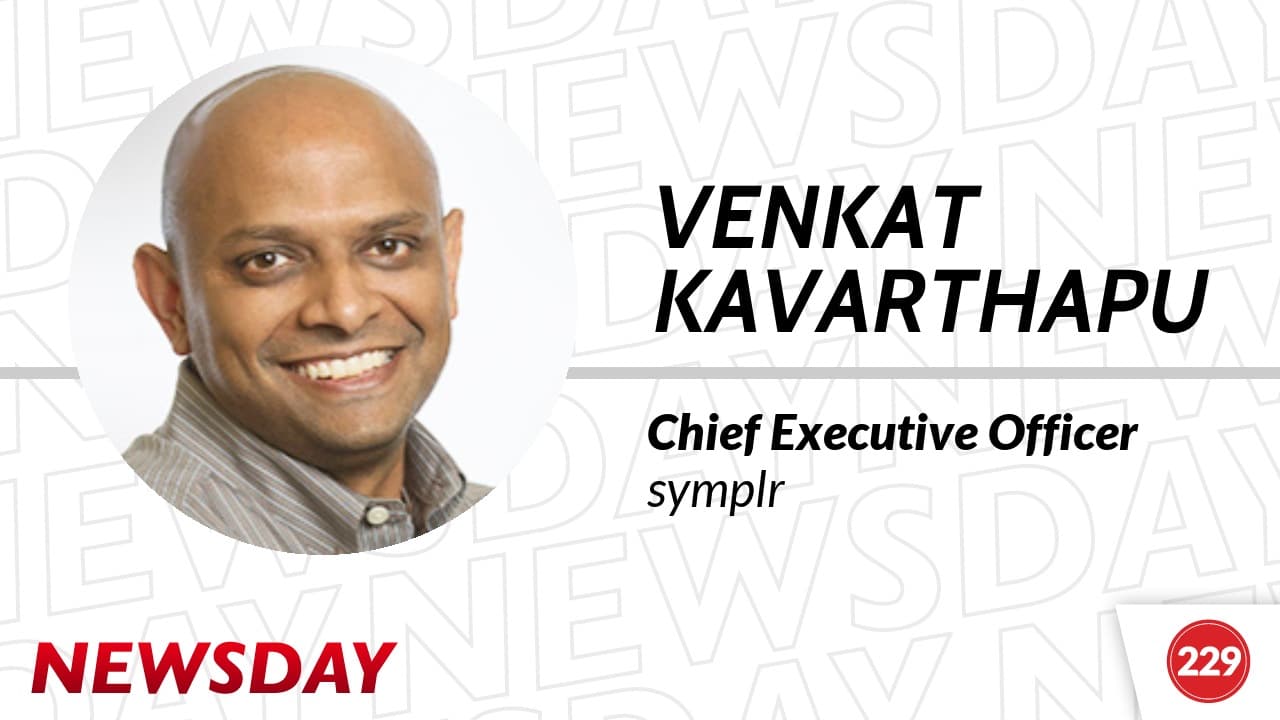
October 5, 2026: Venkat Kavarthapu, CEO of Symplr, joins Bill Russell and Drex DeFord. The argument is about where AI time goes. Bill cites a study that put individual productivity up about 20 percent, and asks whether a faster IT administrator sees another patient. Drex's sticking point is the missing link to the CFO: less spend, or more revenue.
Venkat's picture comes from a CFO at a large system. Ten to 15 percent of the beds sit unused, on lock, unable to be scheduled. He puts the cause upstream. Credentialing a physician takes 120 to 180 days. Shrink that, and the capacity can open. Bill's answer is the buying rule. If that is what AI does, buy more of it.
Bill then reads a September 14 piece on health systems cutting jobs, including IT outsourcing at Trinity Health (557 positions on his read) and reductions at Wellstar, PeaceHealth, Maine Health, UPMC, and others. Venkat's frame is single-digit margins and no spare administrative cost. He says half of a nurse manager's time goes to scheduling.
The back half is build versus buy, what Symplr is focused on once Bill asks, and who gets hired when coding is cheap. Venkat wants domain depth and people who can listen to a customer. Drex wants curious problem solvers, because the supply of nurses and doctors is not about to jump. Venkat cites a Becker's finding that 85 percent of nurses, nurse practitioners, and doctors want AI to take administrative work off them, and argues the tool should feel as ordinary as a phone.
Key Points:
0:00 Another patient?
0:30 Atlanta: capacity versus demand
2:20 A 20% gain, and the CFO is not happy
4:26 Symplr
9:08 Ghost beds and a 120-day credential
10:30 Tegria
11:12 The cuts, the build, and who gets hired
12:58 Ping Identity
28:36 That's all for now
Donate: Alex's Lemonade Stand: Foundation for Childhood Cancer
Thank You to Our Episode Partners



Contributors
People featured in this episode — open a profile for more.


Transcript
This transcription is provided by artificial intelligence. We believe in technology but understand that even the smartest robots can sometimes get speech recognition wrong.
10-15% of the Beds Cannot Be Scheduled.
[00:00:00] Bill: Great! Like, are we gonna be able to see another patient if my IT administrator is 20% more productive?
[00:00:10] Bill: And, much, much more so than I could say for myself. All right, it's Newsday, and today I am joined by the incomparable Drex DeFord. Sarah Richardson is gone, and sitting in for her will be Venkat. CEO of symplr. We've got, we've got a fair amount to talk about on Newsday. There's, there's always a lot going on in healthcare. Drex, I wanted to start with you. You were in… Atlanta last week, right?
[00:00:32] Drex: Yes.
[00:00:34] Bill: So, we did a, we did a regional staff roundtable in Atlanta, and, I don't know, about 80-some-odd people in the, in the room. Same two topics. We had AI, in the morning and, resilience in the afternoon. You led the AI discussion. I'm curious, curious what what you heard in Atlanta.
[00:00:55] Drex: I did. I mean, these are always great conversations, and they always go. 100 different directions, depending on who's in the panel and where the focus is. I think folks are continuing to sort of struggle with the challenges we saw in the 229 signal report. People continue to struggle with
[00:01:18] Drex: capacity versus demand. So many things that everybody wants to do that they think is a really good idea, but how do we figure out how to slot all that into not only the
[00:01:30] Drex: time and space and money we have for projects, but that also is competing with good operations and sound operations, and it drives a lot of burnout and a lot of frustration. Not only
[00:01:44] Drex: with the information services staff, with a lot of the folks, the operators who are out in the lab and RAD and pharmacy and on the units and in the emergency department and on the business side of the house. It's a tough, it's a tough play, but, you know, folks are doing their best to try to manage it. I don't think anybody really has it figured out. That's the struggle.
[00:02:06] Bill: The promise of AI is very real, so last week I had COVID, so I got to stay home for 8 days and just hang out and read an awful lot, and it was really interesting to read. A couple things really struck me. One is. There was a study done that showed that organizations, the people that are using AI are seeing about a 20% increase in productivity.
[00:02:29] Bill: the individuals using AI. And they went on to talk about that the real challenge now is if you can get a 20% increase in a single person's productivity, to get that across an organization is a pretty dramatic increase in productivity, and so that becomes one of the challenges. And they also went on in this article to talk about a country, like a country that can
[00:02:52] Bill: utilize AI across the entire country. Venkat, I'm wondering, you know, as you're out there talking to clients and whatnot, you know, are they looking at AI as a potential productivity gain? Are they looking at it as a… as something that's going to potentially change the… I don't know the calculus of the whole healthcare equation.
[00:03:15] Venkat: For the last five, six months since I joined Bell, I've been touring the country, meeting with as many hospital CFOs, CIOs, chief medical officers as possible. One thing is on top of everybody's mind, and you've heard this many, many times. What can AI do to reduce administrative costs in healthcare is on top of every single executive.
[00:03:37] Venkat: I emphasize on administrative costs, because that's an area where I have expertise and where I focus on. And we keep hearing about the clinical advances and the concerns around using AI for diagnostics, for modern medicine, and so on. That's not my area of expertise, but I'm sure phenomenal. Improvements are happening there and lots of cures are being discovered, but the point I want to make is the industry leaders
[00:04:01] Venkat: our competitors, technology innovators are all super optimistic in terms of what the transformation which AI can bring in. into administrative space. people are super…
[00:04:15] Venkat: focused on how can AI be leveraged within the healthcare context to reduce the one-third of the spend which is happening in, in just administrative waste.
[00:04:55] Venkat: Every single leader I met is in process of embracing this, adopting it, experimenting with and deploying it in their ecosystem.
[00:05:04] Venkat: And you nailed it very well, which is, what does individual productivity improvement mean in terms of organization and as a country? And I use, let us say, Copilot, or ChatGPT, or Cloud, or whatever, for my personal work. I'm becoming productive, but that does not necessarily translate into my company becoming more productive, and that is the number one problem, which is on top of their minds also.
[00:05:26] Venkat: When do we get AI out of experimentation into real game?
[00:05:31] Drex: I think part of the problem, too, is that you see these folks become individually more productive, which gives them more time back, but that time isn't necessarily converted into the thing that the company needs. And when you have a bunch of those kinds of projects going on, a lot of these things are happening individually.
[00:05:53] Drex: the claim is there, I'm so much more productive, I'm getting so much more work done, or I'm saving time, but that… there's a math problem there, I think, that… Is the challenge of how do you take the time saved and convert it into something the company actually wants done?
[00:06:13] Drex: especially when you start trying to figure out how to scale. That's a lot of what you guys do. How do you scale this up to a bigger solution that everybody can use, and we can get the bang for the buck that we intended.
[00:06:27] Venkat: Absolutely.
[00:06:27] Bill: I'm surprised. I've been kind of surprised to watch the… I've asked people about their Copilot licensing for the year, and everybody's increasing, and it's a pretty significant increase. And so, that's a net additive
[00:06:41] Bill: Budget item at a time where… and we're going to talk about, some of the health system, cutting, cuts that are going on right now across the country. At a time where the the cuts are coming and people are struggling financially, they're adding this this AI layer on top because there's a belief that there's there's going to be a return on that.
[00:07:05] Bill: One of the things I've I've sort of been wondering and really pushing people on is you know, where do you you have a choice? All these AI projects come across your desk, and you have a choice of which ones you're gonna prioritize. And I feel kind of rude and crass when I say this, but I think your first couple of projects have to be focused on money.
[00:07:28] Bill: I mean, yes, I want them to be focused on outcomes, yes, I want them to be focused on patient experience, I want all that stuff to come, but typically that doesn't come until you've established a foundation that AI can be applied to the business of healthcare, and then you're able to… you almost get permission to move on and say, okay, we're going to apply it to the patient experience, we're going to apply it
[00:07:50] Bill: to quality outcomes. And so I'm a little worried about giving my IT administrator 20% productivity gains Drex because of what you're talking about. It's like. Great! Like, are we gonna be able to see another patient if my IT administrator is 20% more productive?
[00:08:09] Drex: We see this go through, just like with any other project, right? We do the project. and we create a business case for it. And it's going to save hours. But that back to my original point, we'd never necessarily connect the hours back to the, and that in turn means we're going to spend less money as an organization, or we're going to see more patients and add revenue.
[00:08:32] Drex: If you can't make that connection, then… Yep, everyone likes their job better, and their job got easier, and maybe things that they should have been doing now they're doing, but they weren't doing those things before, but it doesn't… The Cfo's not happy. It doesn't accrue to that bottom line. That's the sticking point.
[00:08:52] Venkat: Yeah, both of you make good points, but some of these are truly interconnected, right, Bill and Drex?
[00:08:58] Drex: Everything's connected to everything else.
[00:08:59] Venkat: Everything, yeah. So, you know, just a simple example, right? I was chatting with the hospital CFO, one of the large hospital system. One of the things which they are dealing with is, I'm sure you know this, 10-15% of their beds stay underutilized or unutilized. They call the so-called ghost bed problem, which is the hospitalized capacity, but they cannot use it, they are on lock and key, they cannot be scheduled, they cannot see patients.
[00:09:24] Venkat: impacts capacity impacts revenue impacts quality of care and impacts population as well. Right now, you stretch this problem across the industry across a number of hospital systems. Suddenly, you realize, hey, 10 to 15% of capacity is just lying vacant because of an upstream problem. And the upstream problem perhaps could be reasonably solved using tools which are at our disposal today even, right?
[00:09:47] Venkat: Let us say credentialing. It takes 120 to 180 days before you can onboard a physician into your hospital system. If it is shrunk, now suddenly you have unlocked maybe 10-15% of excess capacity. There are a number of such areas where, and perhaps through the course of our conversation, we can peel back a little bit and discuss, but these are interconnected. How can AI be used to unlock hidden capacity?
[00:10:11] Venkat: Which is currently locked because of administrative burden in the system.
[00:10:15] Venkat: And what are those slam dunk use cases where you could say, hey, just give me this specific solution and demonstrate and measure quick returns. Like you said, nobody's interested in a two-year-long experiment before they can see the outcome, and a large portion of the outcome has to be financial.
[00:10:54] Bill: I I agree a thousand percent. I mean, like you just look at something that that, hey, we're gonna we're gonna onboard a physician that much earlier. I mean, that has a very real demonstrable something that the CFO goes, yes, I see it, understand it, keep going, buy more AI. If that's what AI can do for us, buy more AI. Which is awesome. I did want to cover this article.
[00:11:16] Bill: It's actually a little old. It's September 14th. 10 healthcare systems cutting IT jobs. You have Stanford cutting 80 jobs, Trinity Health. Trinity Health, this is interesting, outsourcing its IT service desk and application support will affect 557 positions across 120 job titles.
[00:11:34] Bill: Let's see, Wellstar Health cut, 761 jobs. That's not just in IT, that's across a, let's see, $35,000, or 35,000-person workforce. Peace Health, this was a pretty serious move. They're gonna move several IT support functions to Tech Mahindra, and it's U.S. subsidiary, the HCI group.
[00:11:57] Bill: Starting in November, some IT roles will leave Peace Health once, the transition is complete. Maine Health eliminates 56 positions. Pittsburgh-based UPMC let go of approximately 200 employees, eliminated 300 vacant positions. Central Maine Healthcare, Unity Point Healthcare, Rochester Regional, Northwell also, did a reduction as well.
[00:12:21] Bill: I assume this is in preparation for what we're hearing as we move around the country, which is the, the Medicaid cuts and the other cuts that are going on. And Venkat, this is probably why people are saying. to you as you go around, the message is, hey, you know, we need more efficiency, you know, whatever you can do to help us
[00:12:44] Bill: To, to, you know, to absorb these reductions on the top line and, help us, because our bottom line is also getting squeezed from the increased costs that are coming at it as well.
[00:13:27] Venkat: Absolutely, Bill. You know, hospital systems, single digit margin businesses, any small regulatory change which adversely impacts their revenue has a significant impact on the viability and financial health of the system. There's no choice.
[00:13:40] Venkat: but to use every single possible technology at a hospital system or a large health system's disposal to get operationally efficient. That's the only way out. And operational efficiency in this case means shaving away those large-scale costs, and I gave you an example of, let us say, onboarding physicians faster. Does it need a lot more people, or can you do it better with technology? Of course you can do it better with technology.
[00:14:05] Venkat: 50% of nurse managers time is spent in scheduling. Well, can you unlock greater capacity by using technology? Historically, technology meant deploying large scale. It resources right now no longer is the case. If you want to do a 2 year long project, that's hundreds of people with a massive system integration uplift. And you see where the industry is headed now. Right use of AI.
[00:14:29] Venkat: use of Agentic technology, use of modular systems is fast declining. the cost of operations in these spaces without adversely impacting any of the outcome. And the trends you mentioned are
[00:14:42] Venkat: I think it's going to continue. Hospitals are going to see significant cost savings, especially in the space of IT investments, system consolidation, optimization through better deployment of AI. And where we should look at, well, is how does this increase the capacity
[00:15:01] Venkat: for a hospital to bring in more care providers, more clinicians, and more bedside care, and less and less of administrative costs.
[00:15:13] Drex: Venkat, do you see? Do you see organizations making those decisions more often now, this thing that I want to do, this problem that I want to attack. To attack that problem.
[00:15:26] Drex: traditionally, I would have to buy this big system that's going to take me a year to deploy, and it's going to have all these other capabilities, but I really am focused on just this one module that I would love to deploy. Instead of doing that, building it on their own, doing something with AI, and sort of creating that that tech to solve that problem on their own? Do you see more and more of that, or is it still in early stages?
[00:15:51] Venkat: Well, the entry point is always a point solution. That's how I'm experiencing it. But just attacking a point in a piece… problem in a piecemeal fashion, just one specific one, just like when we started the conversation, perhaps shows a little bit of productivity. but doesn't really move the needle in a large scale, right? So, you got to attack the problem in a continuum.
[00:16:12] Venkat: just taking the example, right? So can you onboard a doctor faster? How does it do solve the problem? unless you're able to schedule the doctor to provide care unless you have all the other support systems to actually support staffing, let us say, nurses, staffing contingency staff.
[00:16:28] Venkat: having the equipment, unlocking beds, right? So, like Bill was hinting, just solving one specific problem gives you the illusion of productivity, but not the outcome. So you gotta really look at the continuation of all of these, and see whether we have a bigger outcome here.
[00:16:46] Venkat: Now the challenge is, how do you do that without en masse rip and replace of existing systems, right? And that's where the organizations are really working towards. Can I do this and this and this using technology without a massive rip and replace? And we are actually seeing this. being done very efficiently in some of our customer spaces, not just with our technology, but with some of the evolution which is happening rapidly in how modular systems
[00:17:10] Venkat: can be deployed, integrated, and provide a more comprehensive, cohesive outcome using Agentic approach without a large-scale repair and replace. I have plenty of examples across the continuum of, let us say, credentialing to scheduling to quality management. That's one continuum of an example, which we are.
[00:17:29] Drex: So are they buying those systems, or are they building them themselves?
[00:17:34] Venkat: It's both built and buy. The way the industry is moving towards is the barrier to build new technology is dropping really fast, right? So if I can build an application in 3 weeks using Claude Code.
[00:17:48] Venkat: Why do I need a massive workflow system which costs millions of dollars and tens of years? But there's a lot of domain depth which is hidden in these applications and a lot of intertwined workflow that is critical for the hospital transformation. So yeah, of course, you could take a small piece of a problem and say, I will go away, do an optimal solution here.
[00:18:10] Venkat: But what does it mean in terms of integrating into a large scale hospital workflow? Where is the governance? Where is data? Where is integrated experience? Where is outcome? These all will require hospital to assemble a pool of solution providers. And also in-house tech, to solve this problem more holistically. But yeah, experimentation is happening where some of the technology leaders are trying to do this in-house as well.
[00:18:31] Drex: We hear this over and over again as we go around the country, more and more building, and the more building that they do, the more they realize how complicated the problem they're trying to solve actually is.
[00:18:42] Drex: So as they lower the water level, there are new rocks, you know, pop up out of the water, and they have to build another module. So the building also then becomes a, wow, this is bigger than we thought. We thought it was, you know, a breadbasket, and it turns out it's actually a car. They got a lot of work to do.
[00:19:00] Venkat: Exactly. You could solve a small problem relatively easily by building it, but you need a partner who can truly bring across the enterprise vision in the specific area where you're trying to optimize. Otherwise, you can solve a problem, but doesn't really do anything in the big picture.
[00:19:16] Drex: Perspective is invaluable, yeah.
[00:19:20] Bill: Venkat Symplr is one of those companies that seems to be in everything. I mean, is that the definition of your product set? You guys do a lot of different things. I'm curious, what things specifically are you finding have the most traction right now in healthcare?
[00:19:36] Venkat: Yeah, from an outside angle, you're right, it may look like Symplr has its hands on a lot of things, and these are perhaps disconnected, but Symplr is laser-focused on a continuum of one specific problem, which our healthcare is burdened with.
[00:19:51] Venkat: See, healthcare is a very resource-constrained operation, and resources are inelastic. Resources, I mean, the most precious resources are, of course, doctors, nurses, contingent staff, and specialty equipment. These cannot be increased in terms of capacity at the drop of a hat, and so you have to operate within the constraints you're operating under.
[00:20:13] Venkat: Symplr is focused on solving this problem across the continuum of how do you onboard these very tightly controlled, regulated resources? How do you deploy these in a very optimal manner within a hospital or a large-scale healthcare setting? How do we optimally get outcomes out of these? And I'll just give you an example.
[00:20:35] Venkat: How do you… let us say you take the physician workflow. How do you credential physicians and onboard them? Once you onboard them, how do you make sure that they are appropriately deployed for the right kind of a care based off of the hospital demand and the ecosystem within which the hospital is operating, which is the scheduling piece of it? Once you deploy them, how do you measure the quality of it?
[00:20:55] Venkat: And how do you make sure that some of this quality is proactively predicted, and you take appropriate decisions in terms of having the right kind of staff, right kind of credentials, and the right kind of actions to avoid an adverse event? So that's really what we view our mission as, which is
[00:21:15] Venkat: help the hospitals deal with the most precious resources in terms of onboarding, deploying, and optimizing.
[00:21:23] Bill: Absolutely. Now, I could… the. You know, it's it's it's interesting because one of the conversations I, keep hearing over and over again is
[00:21:35] Bill: how are we going to hire the best people? This isn't necessarily a common segue, but it's one of those things where it's like, alright, what does the physician of the future look like? What does the lab tech of the future look like? What does the IT person of the future look like? In fact, I just had this conversation, again, talking about AI and what we can do with AI.
[00:21:57] Bill: The constraint in our in our world over the last decade or so has been access to information, right? So then we have meaningful use, we make all this stuff digital, and now we have access to information. The next thing was access to knowledge, and we would go out and hire people that were really smart and had a lot of answers. The thing is, I can now take a…
[00:22:19] Bill: college grad, and they can become an expert on a lot of stuff, because knowledge itself is readily available. So, somebody who's curious and can ask really good questions now has access to this
[00:22:32] Bill: vast amounts of knowledge. Not only do they have access to this vast amounts of knowledge, they can put these agents to work for them. So now, you hire one good person who can ask good questions and whatnot. They can now put a whole team of people together themselves to do A significant amount of work.
[00:22:54] Bill: I'm curious, as your CEO, I know you're new into this role, but as you're looking at this, and Drex, I'm going to come to you with this same question. As you're looking at this, what are you looking for in hires? As you're going out there to build out this team of people, what do you, in this AI world, what are you looking for in hiring people as you move forward?
[00:23:15] Venkat: Yeah, very well, a valid point. The skill sets required to be a successful company of future are fast transforming right in front of our eyes. However, you cannot discount the domain depth. The customer service skill set, and the intelligence and the ability to listen to
[00:23:36] Venkat: the signals which are coming out of the industry and out of the customers, and translate them into a set of solutions which can be fairly quickly deployed in the industry. That is the skill set we are looking for. These are individuals who have deep domain knowledge, who have deep industry knowledge. How are well works with technology.
[00:23:55] Venkat: but more importantly, are willing to learn and transform in terms of what is required. I mean, if you… I'm sure you're dealing with, you're talking to a lot of, softwares… software companies like ours, as no longer do you need, the expert coder or the expert tester to produce, a… a massively scalable product.
[00:24:13] Venkat: Those are all things which perhaps an AI tool can do for you. But what to build is still, something which comes out of the industry through your software domain depth, and that's the skill set we're looking for in our product management or in our engineering. How can you listen to what the customer needs and translate it into a product, but use all of the tools at your disposal?
[00:24:35] Drex: I think for me, I look at it… yeah, it's… it's the… you know, I want somebody who's curious and a problem solver. Like, they can see problems and think through how to solve them, and that…
[00:24:47] Drex: the solve isn't just a one-time thing, it's continuous performance improvement. So there's an ongoing, constant solve that goes into that piece of work and that conversation. I find the problems in healthcare this problem of…
[00:25:05] Drex: We're not going to necessarily fast track a bunch of new nurses or a bunch of new doctors, or a bunch of new anythings right now. So we have to figure out how to make them more efficient. And that's to me kind of 2 parts. You've got to make the system that they're in more efficient. But you've got to figure out how to
[00:25:23] Drex: make those individuals more efficient. Some of that is just understanding and learning how to work with AI and how to do things differently than they maybe learned them in med school or nursing school. Do you guys… work in that area, too, with how to… how to make those clinicians, not just the system more efficient, but the individuals themselves think differently.
[00:25:48] Venkat: So by and large, that's
[00:25:51] Venkat: There is a significant amount of interest and openness to embrace the way technology can help them become more productive. Recently, Becker's did a study, I believe a few months ago, 85% of nurses, nurse practitioners, and doctors said they would want to embrace AI to reduce administrative burden on them. And I'm sure you've heard of the ambient listening, which people are so fond of, and it's all pervasive, right?
[00:26:15] Venkat: And the same thing exists in scheduling. The same thing exists in all of the mundane tasks, which quality systems and all of the documentation is required, whether it is regulatory burden, whether it's governance burden, or whether it is otherwise impactful data, which is used for making subsequent decisions, right? So, we provide training, we provide hand-holding, but more importantly, we deploy a set of engineers and product people who are
[00:26:39] Venkat: of listening to the signals to make sure that we don't deploy a piece of technology and walk away and say, "Hey, well, this is great technology, you're on your own." How do we make sure that we listen to how it is embraced and used on the shop floor? whether it's an ER setting, whether it's other setting, and how can we make it even better without
[00:26:58] Venkat: making them sit in a classroom training, right? Nobody remembers everything which is taught in classroom training, as you very well know. How can we provide them those prompts and that thing which makes it that much more easier to use the system at the time when they need it? And that's really where most of our investments are going. Make the system so seamless, like you use an iPhone.
[00:27:17] Venkat: It has phenomenal amount of AI in it, but you don't really experience or feel the need to learn AI, right? That's the direction in which applications of future are going. Make it so seamless and behind the scenes that people don't have to learn AI. They know that it is doing it well. You apply governance, security, and guardrails around it.
[00:27:37] Bill: Well, Venkat Drex, I want to thank you guys for coming on the show, and Venkat, thanks for sharing your experience. It's really appreciated. You know, there's… there is a lot going on. I really see the positive of all this. I mean, AI is accelerating things.
[00:27:56] Bill: I think at a very positive clip. I mean, Drex, you and I used to talk about the space program all the time. I think SpaceX shot off 4 rockets in the last 4 days. Four rockets in four freaking days.
[00:28:10] Drex: Amazing.
[00:28:10] Bill: Like, I'm not sure… I'm not sure we ever expected that kind of cadence, to be…
[00:28:17] Bill: to be happening, well, maybe by a country, but I'm not sure we expected that to be happening from a company. Things are accelerating, they're accelerating at a pretty fast clip, and it's exciting to think about what the possibilities are with having
[00:28:36] Bill: these… these kinds of knowledge tools available. Venkat, thanks again. Drex, always a pleasure, and thanks everyone for listening. That's all for now.