If You've Seen One Discharge, You've Seen One Discharge | The 229 Podcast with Sherri Hess
 Apple Podcasts
Questions Answered in This Episode
- If you have seen one discharge, have you seen one discharge?
- What did leadership initially misunderstand before any cart rolled in?
- Why did night nurses want 24-hour coverage, then change the times again?
- When is adding FTEs the right move for a rollout?
- What should a CNIO refuse to implement because it just sounds fun?
About This Episode
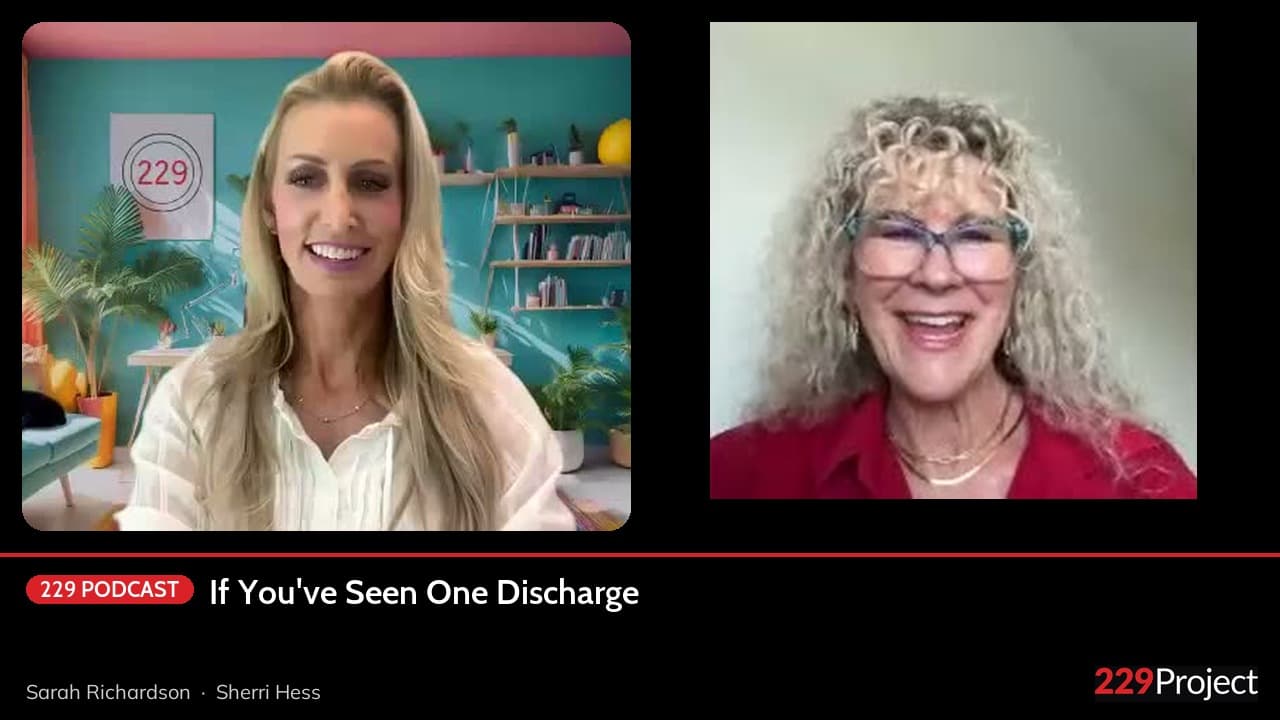
September 10, 2026: Sherri Hess (former VP and Chief Nursing Informatics Officer, HCA Healthcare) sits down with Sarah Richardson. Not enough nurses on the acute-care floor. Too much admission and discharge work sitting on the people who were already there. Virtual nursing left the first unit in 3 to 4 months. The hard part was adding FTEs, not buying the cart. If you have seen one discharge, you have seen one discharge.
Key Points:
0:00 One operational problem
2:22 Tegria
3:05 If you've seen one discharge
6:23 Start on one unit
8:14 Night nurses wanted 24 hours
9:53 SureTest
11:51 What the cart actually fixed
13:14 How they measured it
15:14 3 to 4 months off the pilot
18:21 Fail fast, fix fast
Donate: Alex's Lemonade Stand: Foundation for Childhood Cancer
Thank You to Our Episode Partners




Transcript
This transcription is provided by artificial intelligence. We believe in technology but understand that even the smartest robots can sometimes get speech recognition wrong.
If You've Seen One Discharge, You've Seen One Discharge | The 229 Podcast with Sherri Hess
[00:00:06] Sarah: Sherry, I am so happy to have you with us today. Welcome to the podcast. Thank you
[00:00:10] Sherri: for having me. I'm excited to be here. Yes,
[00:00:13] Sarah: because for this conversation, we're going to focus on an operational problem that was meaningfully redesigned by you and your team, not simply through introducing technology, but by first understanding the people process and reality behind it. So, if you're ready, we're going to jump right in. Let's
[00:00:28] Sherri: do it. All right. What is the specific operational
[00:00:31] Sarah: challenge that you have helped redesign, perhaps related to patient flow, discharge, access staffing or another area? And what did leadership initially misunderstand about it? Yeah,
[00:00:44] Sherri: the one I'm going to focus on, the problem was there weren't enough nurses to staff our acute care floors, even enough to hire whether you wanted to or not. So, the lack of sufficient staff has also been known to lead to burnout, staff turnover, which then leads to there's always opportunities with patient
[00:01:06] Sherri: flow and throughput, also the patient safety, patient satisfaction. And as many are aware, nurses are burdened with multiple time-consuming tasks. So, with the goal to focus on how to reduce their burden, which led to looking to opportunities to take away some of these tasks, we really looked at emission and discharge task reduction to take it away from the frontline staff.
[00:01:30] Sherri: And this is where virtual nursing came into play to reduce that. And with that was, you know, how do your staff, how do you staff? So, kind of that problem, if there is a nurse that's remote. So, before we even got to that technology, what we wanted to use, you had to look at as you're talking
[00:01:52] Sherri: about that people process, you know, other questions around actually changing nurses, how many you have at the bedside that could also make changes or differences with patients and family, do the nurses accept this new dynamic of a nurse on a video? So, the focus really, that problem was,
[00:02:10] Sherri: how do we decrease the documentation burden at the bedside for our nurses and give them more time
[00:02:19] Sherri: to spend with their patients? At
[00:02:46] Sarah: what point was it more difficult or more complex than you had initially anticipated with your thesis statement? Yeah,
[00:02:54] Sherri: that's, you know, where the piece the complexity comes into play was really the discharges. So, in admission, pretty straightforward. We've got that emission history, same questions. But if you've seen one discharge, you've seen one discharge. There's a lot of complexity in that. So, it's not a one-size-fits-all. And some units had,
[00:03:18] Sherri: this word's different. Every unit, every hospital, some units had a discharge nurse that focused on that. There are some that had discharge lounges. And some that actually, of course, utilized the nurses that were there at the bedside and had to work that into their day. Did it
[00:03:37] Sarah: turn out that one design was better than another? Like, how possible was standardization when it came to putting these pieces in place? Because a lot of that, you don't put the technology in place until you have the process worked out. So, was it adapting for every unit's process? Or was there something you were able to standardize as part of it? Yeah,
[00:03:57] Sherri: this is where the complexity came in. And where, for a no matter the project, really understanding that current state. So, while we knew discharges are complex, right? Which is why many organizations have problems with some of the throughput. Like I said, one discharge, you've seen one, you've only seen one. And so, what you needed,
[00:04:18] Sherri: what we really needed to do was observations around not just on the unit where we were thinking about making changes, but at multiple units, multiple hospitals to really understand the process. Because what had been ruled out years ago is not how, you know, the understanding of what's
[00:04:37] Sherri: happening today. So, we really had to take a look at what that current state looked like. And that's where we really focused, brought in multiple different departments to say, you know, a lean organ, or a lean team, some of that agile development to say, can we standardize,
[00:04:57] Sherri: or can we even at 80 percent? That's where the difficulty came in. And where you utilize, a lot of times, change management around
[00:05:06] Sarah: this, preparing this stuff. Because they're
[00:05:08] Sherri: so used to doing the same thing that they've done for years. And you can't step back and realize that it's not effective, right? Unless you're laying out what that process is. So really understanding, talking to that staff about the why we were looking at this, because sometimes it
[00:05:29] Sherri: feels like things are being taken away from them. If all of a sudden, wait, I've always done that. Why is there another nurse that's going to do the discharges?
[00:05:39] Sherri: So
[00:05:39] Sarah: with there being a, it's going to get better if we do it differently, perspective. But knowing that there had to be a pretty significant workflow or process redesign to your point, giving up something, even if you didn't like it very much. How much energy had to be put into that aspect of the planning before people were willing to want to truly do it? So
[00:06:02] Sherri: that's a great point. So you have to make a decision, do you work to get it perfect? Or do you start with some of your hypothesis and start around discharge and then have more of an agile, lean process to continuously improve to get that team on board, knowing that let's start,
[00:06:23] Sherri: or we could wait multiple months, but let's get started on one unit. Start on one unit, that's what we really want. That's what we really focus on. Let's start on one unit. Let's talk through where there wasn't really a throughput issue. There wasn't a turnover problem. We wanted to really look at if we started making some changes in that people process,
[00:06:46] Sherri: even before we brought the technology in, could we make a difference? And so that's where the focus of some changes, adding in that technology, and then looking to continue a improve to make a better. Then
[00:07:08] Sarah: you're solving it with them. You're not doing this to
[00:07:11] Sherri: them. Can you start with, hey, what do you like about this? What do you hate
[00:07:14] Sarah: about this? How do we figure out the pieces in the middle? How important was that frontline perspective in solving the real problem versus just delivering a solution that somebody made up in a conference room somewhere?
[00:07:27] Sherri: So that was instrumental. And especially with the frontline and the informatics team, because as we talked about, you come in with the hypothesis on what is that people process and adding the technology in their look like. And that agile mindset, the continuous improvement,
[00:07:46] Sherri: and then adjust with their input and insight. For example, when we're looking at staffing, because this is a new model, right? Even doing research before we went in is, how many do you staff? When do you staff them? So what we did was we used our data to look at when patients are admitted,
[00:08:08] Sherri: one of the peak times, one of the discharge, and then come up with a number. So we started with 10 hours a day, seven days a week. But staff really wanted 24 hours a day coverage, because the night nurses, as we were covering more throughout that day, a little bit at night, but not through the
[00:08:28] Sherri: night. And having been a night nurse at one time, you always feel left out. So we did change with their input to a 24 hour staffing. But that really didn't also what their input didn't meet what they thought it would, because when a patient's admitted at 3 a.m., you're not necessarily going to spend your full 30 minutes to do an admission history on them. You can wait. You can do some
[00:08:53] Sherri: event, but you can wait and do the majority when they're awake. So we changed the times, once again, with their input. And then we also found that what happened was nurses were actually the night nurses would leave their admission histories when we didn't have it 24 hours a day for the morning shift.
[00:09:13] Sherri: So then the virtual nurses, when they came on, they're shifted 6 a.m., there was a lot of admissions histories waiting there. And at that point, they needed to focus on the discharges. So once they understood that we couldn't, you know, here's why we can get to them, but we really need to be focusing on those discharges to get them out from some of the initial reasons we went with this
[00:09:36] Sherri: around the discharge improving throughput. So that was completely worked together with them, with the nursing leaders, with input from staff on the timing and how many we had and at what shifts
[00:09:52] Sherri: they worked. So
[00:10:35] Sarah: their input materially changed what you had initially envisioned? Correct.
[00:10:40] Sherri: Correct. Those, once the nurses saw also that they could, that the VRN, what they could bring, they also brought forth, what are some other tasks that could be done by the virtual nurse? So while we focused, what I talked about, the admission discharge, they started also coming
[00:11:00] Sherri: forth with what are some other things they could be doing? Could they do rounding, come in, check on the patient? Are there opportunities for looking at having a wound ostomy nurse, someone that really focuses on your skin? Could they come in and take a look and give input feedback?
[00:11:25] Sherri: So once this, you know, you looked at the timing, then they saw what the benefits that were happening. They wanted to have them do more. How do we have them do more? Well,
[00:11:36] Sarah: and you got to love that when you start to dig into a process that you're solving for one problem, more ideas are coming forward. So they're embracing the change and almost getting greater buy-in throughout that. I'm curious to you, like once you have the right processes redesigned, where did technology add the most value versus what technology couldn't solve? It
[00:11:59] Sarah: how the routine works into these units? Yeah,
[00:12:03] Sherri: so technology, without that, we couldn't have brought that nurse who was working at a different location into the patient's room in a seamless experience. So that technology made that happen. It also brought family members and interpreters right on the video screen, right there where the patient could see them as opposed to
[00:12:26] Sherri: our interpreters prior to this were more on a phone. And you know, we all know how face-to-face can happen better. The VRNs also, because of the virtual nurses, didn't have to wait. They didn't have to be the ones to summons the virtual nurse. With that technology, we set up so the virtual nurse
[00:12:47] Sherri: knew when to engage, when the patient had a discharge order, when that patient had been admitted. Without that, what we didn't want to do was add more burden onto the nurse, right? Because then they're not going to want to do it. If they have to go and I got a call or text, say, okay, now my patient is ready. They're not going to want to do that. So we had to have that technology to bring them in
[00:13:11] Sherri: and do it seamlessly. What
[00:13:14] Sarah: should the metrics did you use to measure success? Many.
[00:13:20] Sherri: At first, we started out with a whole page. I said to the team, let's just look at what are some of the hypothesis that really could change. But initially, we saw very quickly, just from feedback from the patients, the satisfaction, having that virtual nurse that was there,
[00:13:40] Sherri: there was no interruptions. If you've been into the hospital, if you've done any observations, you know nurses are in and out of the room a lot. Their callbells going off, their phones may be ringing with a virtual nurse. You're not being interrupted. It's actually happening right here in front of you without that. So we saw that right away. We also had nurses that said,
[00:14:05] Sherri: I wouldn't work in anything. Any other unit, if they didn't have a virtual nurse in it because of the reduction in those burdensome tasks that I talked about, not that they didn't want to do them. It just was a lot. So patient satisfaction, nursing satisfaction that could decrease turnover. We also looked at a couple of the others were around medication errors that could happen.
[00:14:30] Sherri: Adverse drug events from capturing the correct medication history leads to a decrease in medication errors when the patient med recs are done when the patient leaves.
[00:14:43] Sherri: Readmissions was one we thought about and put on there, a throughput improving discharge times and getting them more in line with what we wanted, you know, depending on each hospital may have been a little different out of their 11 or 1. Those were just a few of them that we saw.
[00:15:04] Sherri: But that was key, right? In order to continue with technology, you've got to be able to show to our leaders where's the improvement that's going to happen. How
[00:15:14] Sarah: long does something like this take? I mean, when people step out into, hey, we're going to go ahead and the grand scheme of like, we are going to reduce, you know, the friction that's caused by discharge planning, et cetera, have better throughput. How long does it take for this to be sticky enough in the organization that it's passed a pilot unit?
[00:15:35] Sherri: So that's where it can be dependent on we did take it fairly quickly, I will say, from the first initial pilot unit within months, once we knew the technology was going to work, we had the initial people process down within less than six months, three to four months from the very first unit,
[00:15:56] Sherri: looking at a next actually bigger than just one unit, growing to multiple units. And the other thing is ensuring that you have the right technology that it works right in your right vendor. So within months, we got it to another hospital and multiple acute care,
[00:16:16] Sherri: these were acute care units. Then what you've got to, you've got to decide from a leadership, because this is more, this was more than a technology, you're also adding FTEs with those virtual nurses, where this is the first time in my career, I'm actually adding FTEs to help with what you're rolling out there. So it can take a little bit longer, depending upon
[00:16:41] Sherri: what your leaders are looking for, but initially within about six months, and then you can continue to grow from there. I
[00:16:51] Sarah: bet it was nice to have something that added to the cause versus always being expected to somehow reduce, there's certain metrics you want to reduce and take out is in one of them. And so it becomes
[00:17:02] Sherri: something that's embraced more often.
[00:17:04] Sarah: One last question for you, when you look back at this work, what is an element of the approach you are especially proud of that you believe other CNIOs should consider adapting within their own organizations? So
[00:17:18] Sherri: really the one that I'm really proud of is, and nothing we've done that differently, including your nurse leaders, and that having them, not only the nurse leaders, but the charge nurses and also bedside nurses as we designed it, and that they really wanted it. Many times we implement technologies where, yeah, it's okay, we have to do it because we have to do it, but they
[00:17:42] Sherri: are asking, they'd hear about it, and they're like, when can we get it? I would get calls all the time. Hey, here's why we need it. And so that's really one of them I'm proud of, and actually always learning from others. Reach out to those organizations, those leaders that you know, and also vendors of who've gone through, what have they learned before? Find the right vendor that fits into your culture,
[00:18:07] Sherri: focus on your organization, and your strategic goals, does this fit into your nursing strategic goals? And don't implement it because it's new technology that sounds fun, and also don't be afraid to fail. Fail fast, fix fast, and that will continue to make your what you rolled out even better. I
[00:18:29] Sarah: love that. Thank you for sharing the story specifically when nursing leadership is inclusive of the front line, because that's where y'all started too. And so having that just continuous loop of perspective is so important. What a powerful reminder that successful technology transformation begins with deeply understanding the operational problem and the people closest to it. I appreciate you sharing and sharing your experience and insights with us today. Thank
[00:18:52] Sherri: you. Perfect.