 Apple Podcasts
Questions Answered in This Episode
- $2.8 billion in validated outcomes. Did the tool do anything?
- What happens when you automate a refill queue as if every drug is the same?
- If 100 million Americans cannot get usual primary care, what does top of license change?
- Why does a meeting scribe fail in front of a doctor?
- What do you lose when you hand beginner software to a seasoned nurse?
About This Episode
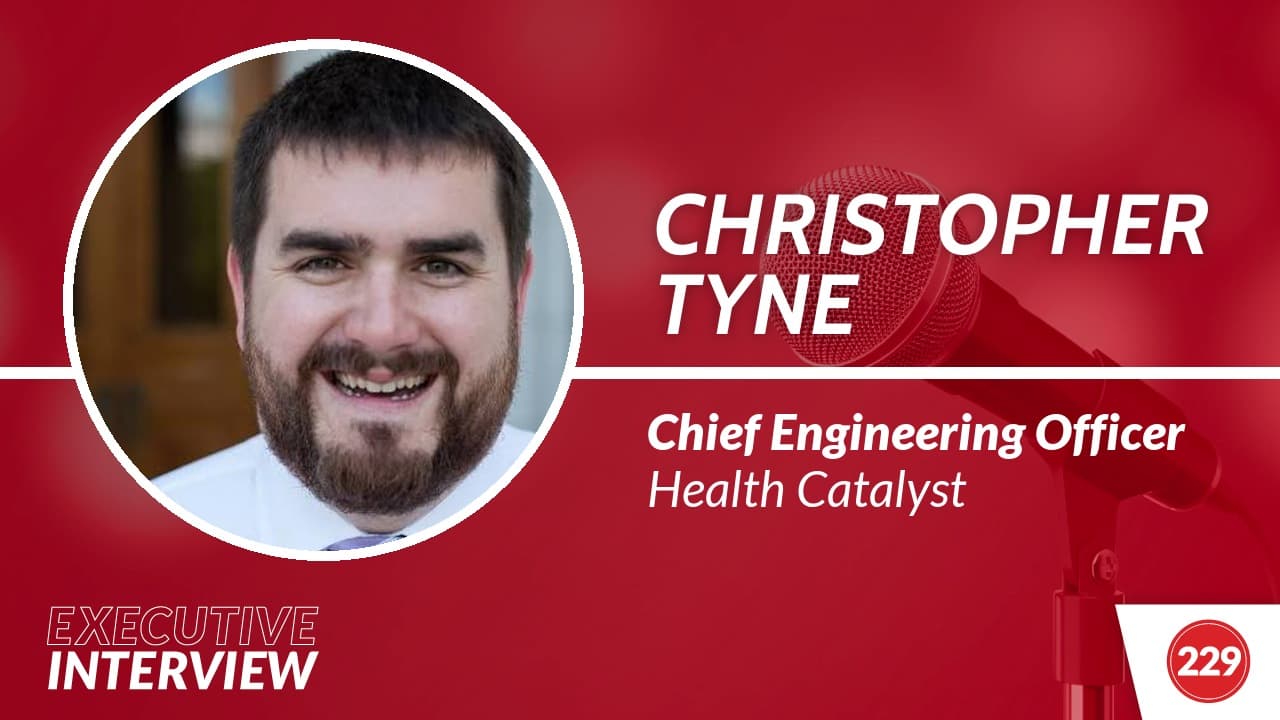
September 30, 2026: Christopher Tyne, Chief Engineering Officer at Health Catalyst, sits with Bill Russell. Health systems are being sold AI that demos well and does not move an outcome. Chris puts $2.8 billion in validated outcomes on the table, then the test: do not just shine a flashlight at the fire. Hand them the extinguisher. Then check whether it is still burning.
Guest: Christopher Tyne (Health Catalyst)
Key Points:
0:00 $2.8 billion. Did it do anything
0:06 Chris Tyne, Health Catalyst
2:04 AI without the healthcare lexicon
4:03 Health Catalyst
4:34 100 million Americans without primary care
6:10 Mix of experts
7:44 Coumadin
10:00 The medical record starts giving back
12:08 Clients, exploration, trained models
13:48 Don't just shine a flashlight
15:52 Close
Donate: Alex's Lemonade Stand: Foundation for Childhood Cancer
Keep up to date on the latest in health IT:
https://thisweekhealth.com/news/
Thank You to Our Episode Partner
Contributors
People featured in this episode — open a profile for more.

Transcript
This transcription is provided by artificial intelligence. We believe in technology but understand that even the smartest robots can sometimes get speech recognition wrong.
$2.8 Billion. Then Check If the Fire Is Still Going
[00:00:06] Bill: Alright, today we have an executive interview, and I'm excited to be joined by Chris Tyne, Chief Engineering Officer at Health Catalyst. Chris, welcome to the show.
[00:00:16] Chris: Thanks, Bill. Great to be here.
[00:00:18] Bill: Alright, so, Chief Engineering Officer, tell us, tell us about the role, and what's the, what does the role do at Health Catalyst?
[00:00:25] Chris: Yeah, our job is to create the software, from the broadest sense, as it stands. My team is a mix of our engineers, of pure coders and R&D folks in the traditional sense, as well as our DevOps and our QA folks that help build out each of our products as we go.
[00:00:49] Bill: So, Health Catalyst, the, so I've come to your event a couple times. Out in Salt Lake, and it was very focused on data analytics, insights, and those kinds of things. Bring me up to speed. From, maybe 4 years ago to today, I assume AI is really shaping where you guys are going.
[00:01:13] Chris: Yeah, Health Catalyst is really an intelligence company as it comes into it. Our job is to try and find the intelligence and the data, whether that's through the analytics, as you've seen in the past, or with new tools with AI as it goes forward. So we've spent The last 18 years, really with that same mission of trying to make that massive change through the healthcare space.
[00:01:37] Chris: At this point, we've done, $2.8 billion in validated outcomes that we've driven through those analytics and that data, and that's really where we drive ourselves to make sure that we're making that change in the health system, and trying to adapt to make sure that Whatever software we're putting out and whatever services we're providing.
[00:02:01] Chris: We're able to help make a difference.
[00:02:04] Bill: But it's interesting you talk about outcomes. A lot of times when we have these conversations, we talk about AI, and it almost feels like AI for AI's sake. Give me an idea, I mean, from your chair, how is AI changing the conversation, or changing maybe a health leader's approach
[00:02:22] Bill: To, the traditional data that they do have, and the… and the… potentially the insights they have that's being thrown off from their workflows.
[00:02:32] Chris: It's an exciting time for a couple reasons. I think first, it has opened up a lot of possibilities, but it also opened up a lot of people's eyes to the ability to change. And that's something that people know what we're doing today is not working very well. Margins are tight, people aren't getting the care that they need. So I think AI started that.
[00:02:56] Chris: But there is a lot of AI for AI's sake, and what becomes really important is how do you make sure you have the nuance in the AI that you actually make a difference as you go forward. For instance, you can take scribing as a generic source of AI. There's a lot of scribing companies
[00:03:16] Chris: you know, the big ones, the small ones. If you take something that was meant to take notes for a call like this, and put it in front of a doctor, it's gonna start to make all sorts of
[00:03:30] Chris: grammatical errors. It's not going to understand medication names. It's going to assume that it's people talking as opposed to a patient and a doctor. That…
[00:03:41] Chris: you have to build that AI product with the right lexicon, with the right nuance around it, so that you can really drive things, forward and make a difference for a useful tool. And that would start to give you the outcome that you need. Or else, it's gonna be…
[00:03:58] Chris: Ineffective, and not necessarily drive anything faster as you go forward.
[00:04:35] Bill: So, give me an idea of what you're excited about. What are you building, changing, rethinking? As, as we move forward with these tools.
[00:04:44] Chris: Yeah, one of the biggest areas that we're focused on is ambulatory care. the problem, there's 100 million Americans, about a third of the nation, that don't have access to the usual primary care. The issue is… That the… that there's a shortage
[00:05:07] Chris: of openings. We're operating in inefficient ways. People are waiting weeks and months to be seen unless it's urgent, and those little urgent prob… or problems that don't seem urgent may go unnoticed and become much more complicated as you go forward.
[00:05:24] Chris: So we're working to make sure that we have ambulatory care that's accessible and optimized across the organization, making sure that those routine care pieces aren't left undone.
[00:05:37] Chris: Making sure that each of the people are working to the top of their license within the clinic, so that we can do lab checks without a full visit. We can make sure that people are following up on something that looks abnormal. That the PCP is seeing exactly who they need to see, and trying to get the right care in the right place.
[00:06:00] Chris: But there's also real financial pressure around that as well, so trying to balance that and make sure that each of these clinics are viable, and seeing as many patients as they possibly can.
[00:06:11] Bill: What's the… what's the hardest part? Of turning a vision into something that works in practice within healthcare.
[00:06:23] Chris: I think the hardest part Is getting all the right experts together. You'll see this in AI, as well as you'll see this in the world of business, but you really do need a mix of experts to create an idea at scale. There's a lot of things AI can do that allows one person to make a solution that works really well for them.
[00:06:47] Chris: But then when you break it off of one computer, you break it off of just your site or just your health system, you need other people to help make that idea happen. You need the nuance of how the whole workflow works, not just your piece, if you're making it yourself. You need the understanding of how do you…
[00:07:09] Chris: keep the security in line, so that if you move it from one place to the other and two things need to communicate, that comes in line. You need to make sure that the disruption of other workflows that are happening as you go forward, doesn't cause more trouble than the actual product is worth.
[00:07:29] Chris: And without that mix of experts, you're gonna either have a faulty product, or no way to sell it. And I think you need all of those pieces to come together, and… and really bring that to a full-fledged piece of software. At one point, we were working, with pharmacy, with a team of, within the pharmacy that were working on prescription renewals.
[00:07:55] Chris: there was a group of nurses, their job was to look through all the prescription renewals that they can do, and either refill them, deny them, or send them to the provider if it was a controlled substance. As you look through it.
[00:08:09] Chris: They had a very specific workflow that they did, and they looked like machines as they were running through. But I noticed these kind of odd post-it notes that were stuck on their monitors, and there was all these reminders and, like, cue cards that start to come into mind.
[00:08:23] Chris: And one said, beware, beware of a specific drug. So I asked about it. I was young and naive and kind of confused at why… why is that one, of all the 3,000 medications that you're… you're working with, so important? And the drug was Coumadin. It's a blood thinner. It, it… Is complex, and can cause a lot of problems if you get things wrong.
[00:08:46] Chris: So we sat there and we talked about it for a long time, and found out that instead of the 30 to 40 checks you'll do for a normal medication to make sure the patient's healthy, that they have all the right labs.
[00:08:58] Chris: there's 100 to 200 different checks. You should be checking for Coumadin, because there's an interaction. If they had a vaccine, if they have an upcoming surgery, what did they eat for breakfast yesterday? All of those things start to come into play a lot, a lot more.
[00:09:16] Chris: And that is apparent to the expert that has done so many refills and has worked with the drugs for a long time, but is easily overlooked as people are trying to automate an entire system, as it looks just like any other drug. And in this particular case, we actually spun off an entire suite of products just to focus on Coumadin, because they, had a… ended up
[00:09:38] Chris: separating it out from the rest of the refill center, or the renewal center, and it needed its own special piece of software. That could easily go unnoticed, if you're not an expert in that field.
[00:09:53] Bill: You know what's interesting to me is it feels to me like we're finally at that tipping point. We spent the last… decade, maybe even more than that, since Meaningful Use. really serving the medical record, and putting all this detail and all this data in, and it feels like with the advent of AI and the advent of these tools, and with these teams working together, I mean, it's the…
[00:10:18] Bill: as you described it, it's the technical mindset sitting right next to the clinical mindset and the workflow expert. And, we're now… really starting to reap the benefits of that 10 years of putting that information in there. We can now gain these kinds of insights that can really impact care in a meaningful way.
[00:10:42] Bill: I don't know if there's a question there. I just… that's just what I'm noticing as you… as you're talking about these things.
[00:10:49] Chris: It's one of the… it's probably one of the biggest changes in the software world. Coding has always been the slow piece of it. Oh, I gotta wait for IT to go build this, or the engineer to go build this for me. We're putting the tools in front of people in a lot of different ways.
[00:11:05] Chris: And I think it's exciting. There's going to be products that come out that are looked at differently than they've ever been before.
[00:11:15] Chris: And there's gonna be some that are great, and some that are, are struggling. I think as we look back, we… the ones that can really grow and be indoctrined into our health system, are gonna have that mix of experts that are coming there. That it's something that they're not…
[00:11:33] Chris: building software that is at the beginner level, and trying to have experts start to use it within that system. So, if you're trying to build basic nursing tools for a seasoned nurse that's been there for years and years.
[00:11:51] Chris: That's gonna… that's not necessarily going to help them, but really having the understanding and all the ins and outs, that's gonna be something that… that breaks out of that product design trap, and really allows you to… to have that staying power as it goes forward.
[00:12:09] Bill: What does it look like for your team? How are they… how are they working with your clients, and what does that look like? Have you… have you given more of the ability to build some of these workflows and some of these insights out directly to your clients? Are they building it out, or does it still rely a lot on the coding team on the back end?
[00:12:30] Chris: Yeah, so there's… It is a mix. We do allow a lot of our, of our clients to work with AI tools, and really any AI tool either that we bring, or that they bring, something that's off the shelf already. Some are looking for that, some are looking for, more intelligence behind it.
[00:12:54] Chris: So I break it up into kind of two different ways, especially when we work on the analytics side. There's data exploration, and there's great tools where you can ask it a question and say, show me all my diabetic patients that are due for their foot exam. And you get a nice list, and you can kind of work through that.
[00:13:07] Chris: And those are pretty simple. I think that there becomes a point when you start to ask those questions that it gets more and more complicated. And that's where we really rely on the expertise that we have. So we have specific trained models, we have specific products that are built in those cases.
[00:13:26] Chris: And we make sure that we take all of those case studies that we've done over the last 18 years and bring that forward. I feel that allows us to start a lot further down the road, than someone that's building it on their own, or may not necessarily have that experience. And allows us to drive, innovation a lot faster, in those cases.
[00:13:48] Bill: I want to go back to that metric. I think that metric is so powerful that you gave, earlier, and it was about the outcomes, the amount of outcomes. What was that number again?
[00:14:00] Chris: $2.8 billion.
[00:14:02] Bill: 2.8 billion. I mean, that's material, especially in this environment that we're living in right now, where the margins have gotten a lot tighter, there's pressure on the top line, the bottom line costs are going up. This is… I mean, that seems to be the intersection of what health systems are looking for right now, is… Is concrete numbers that get delivered back
[00:14:25] Bill: To the health system, or even back to the patient, in terms of, really saving them, some of the costs that are associated with care.
[00:14:33] Chris: Yeah, and we see that track record as kind of our moat in a lot of cases, right? That's where we can really drive a lot of things forward. We've also are building our products in a different way. So, not only are we saying, here's something you should do. We're not just shining a flashlight at a big problem and saying, go fix it.
[00:14:55] Chris: We've taken that next step, and it now tells you how to fix that problem. So, hey, there's a fire over there, get the fire extinguisher.
[00:15:06] Chris: The next piece is, we are then measuring, is that fire still going or not? Because I think that third piece becomes really important as you drive everything else forward. you'll see a lot of companies that come out. We have a new AI tool, it looks great, it demos great, but did it do anything in the end?
[00:15:29] Chris: We want to make sure, and we pride ourselves on making sure that it does something. We know that the healthcare dollars are so important to the organization that we feel that we have that responsibility anytime someone subscribes to our software, that they are getting something in return. And we want them to see that in real time, as we drive them through that whole process.
[00:15:52] Bill: Well, Chris, I… I appreciate this conversation, appreciate what you guys are doing, for the industry. I look forward to the next time we get together, and you're gonna… you're gonna give me another number that's gonna be in the threes, 3-point-something billion, and it's… I mean, it…
[00:16:07] Bill: It is an exciting time. I think we are at that tipping point where we have worked for the medical record for so many years, and the medical record is now seriously giving back to these health systems, and it's an exciting time. I appreciate… appreciate the time with you.
[00:16:23] Chris: I do as well, thanks for having me.