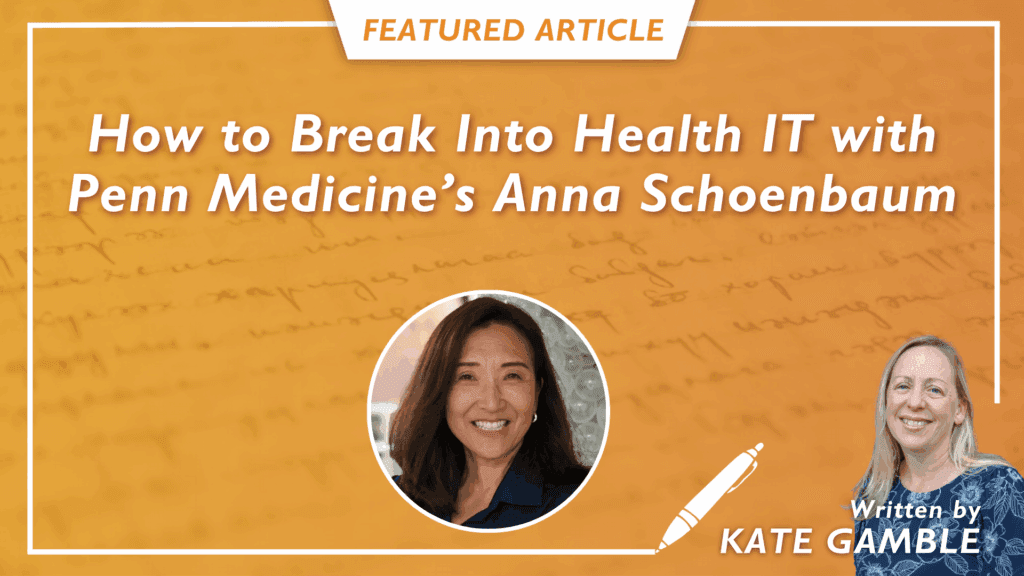
“Own Your Destiny”: Anna Schoenbaum's Blueprint For Launching - Or Advancing - a Health IT Career

Kate Gamble
Managing Editor - This Week Health
Own Your Destiny: Anna Schoenbaum’s Health IT Career Blueprint offers actionable strategies and guidance from a seasoned leader at Penn Medicine. Learn how to break into and advance within the fast‑growing field of digital health.
Anna Schoenbaum’s career didn’t start on the IT side. But it didn’t take long for her to feel the pull – particularly when it became clear that technology’s role in healthcare was only going to grow. “I was enticed by the idea of improving processes from paper to automation,” she said. And even more so, the opportunity to “make a difference. Not just in one department, but across the enterprise.”
The transition, however, wasn’t an easy one. It needs to be approached thoughtfully, according to Schoenbaum, now VP of Applications and Digital Health at Penn Medicine, an $11.9 billion enterprise consisting of The University of Pennsylvania Health System and the Raymond and Ruth Perelman School of Medicine. During an interview with This Week Health, she shared advice for those looking to make the leap, drawing from her own career experience, and discussed how she has benefited from her involvement with HIMSS.
Growing Demands
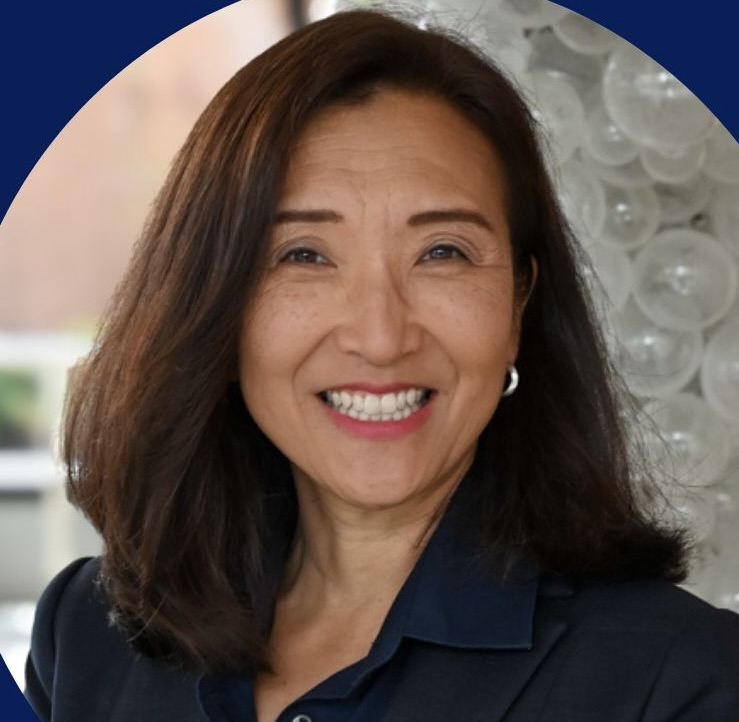
Anna Schoenbaum
It’s no secret that healthcare has a workforce problem. By 2030, the global healthcare worker shortage is expected to reach 10 million, which could lead to $1.1 trillion in costs (McKinsey). And that’s just on the clinical side.
According to a Security Magazine survey, 47 percent ranked IT staff shortages as a top-three challenge. Around two-thirds said routine IT tasks take longer to complete due to limited staff, and 74 percent cited IT staffing shortages as a deployment barrier.
For leaders, this isn’t exactly news. Neither is the fact that as adoption of digital technologies continues to climb, the demand for skilled IT professionals will only grow. And that means organizations need a solid strategy not just for recruiting and retaining talent, but also for helping existing employees transition to IT-based roles.
Infiltrating IT
That’s where Schoenbaum comes in. As both a faculty member at the University of Maryland School of Nursing and a visiting professor at Chamberlain University, she has a great deal of experience mentoring both students and staff, and offered these bits of wisdom for those looking to break into IT.
- Seek Knowledge. One of the first things she tells prospective IT workers? “Get knowledgeable. Maybe it’s by taking a course. Maybe it’s going back to school. Maybe it’s getting a degree,” Schoenbaum noted. It starts with doing some homework to determine whether the organization offers professional development funds – and how to obtain them. It’s also seeking out courses dedicated to specific areas like AI and cybersecurity, which can provide a competitive edge to those already in IT positions.
- Get Involved. “There are so many professional organizations that are top-tier and that offer so many different things,” she said. In addition to being a HIMSS Fellow, Schoenbaum is also involved with the HIMSS Nursing Informatics Committee, HIMSS Social Determinants of Health Taskforce, and Maryland HIMSS Board of Directors. “I’ve found it to be so valuable in my professional growth,” she said. Another recommendation is to join as many workgroups as possible, which can help individuals understand what others do in their roles, along with how they navigated their career.
- Show Gratitude. One of the big advantages of being in an industry like healthcare IT are the myriad individuals who are willing to lend their time, whether it’s by reviewing a resume, conducting a mock interview, or making an introduction. When that happens, it’s absolutely critical to acknowledge the effort. “As you’re having these encounters, be sure to send them a note to say thank you,” Schoenbaum noted. “And be gracious, because you never know what can happen. That person could refer you for a position or reach out to you several years down the road and help connect the dots with someone who is looking for someone with your background.”
- Get Going. Whenever possible, she advised attending industry events – and taking full advantage of networking opportunities. “If you’re going to a conference and someone you know is going to be there, ask if they can meet for coffee,” she said. Doing so can open the door to future meetings or phone calls that can help build a strong relationship. But it starts by taking that initiative, Schoenbaum noted. “You own your destiny.”
- Have a Support System. Finally, she urged individuals to have a “support person that helps you along the way” and acts as “your biggest cheerleader. It could be your professor, a previous boss or current boss – that could be your support structure,” Schoenbaum said. “If you can get a sponsor, that’s even better.”
Equip, Empower & Elevate
This advice, however, isn’t just for those who are seeking a new role, or those who are early in their careers. Particularly the piece about networking. “You learn so much when you’re surrounded by colleagues and industry experts,” she noted. Being at events like HIMSS helps to shed light on common problems and provide forums for discussion and learning. “It’s connecting people to share experiences and say, ‘can we implement the same solution at our organization? If not, why?’ Or ‘what do we need to put into place to make it successful?’”
And for leaders, the objective is to take that knowledge – and that spirit of collaboration – back to the organization to help push forward key initiatives. “Technology is evolving very quickly,” she said. “We have to keep in mind that at the end of the day, technology doesn’t transform healthcare. People do. My job is to equip, empower, and elevate those people who can help drive change.”
When that happens, Schoenbaum concluded, “We’re all successful.”