
This Week Health

Interviews in Action

More
This Week Health is a series of IT podcasts dedicated to healthcare transformation powered by the community

What would you like to learn about today?

Error!
No 'SiteSearch360Widget' widget registered in this installation.

Latest Episodes
View All
Popular Episodes
R25 - Podcasts Category Filter-2
  • All
  • Leadership (729)
  • Emerging Technology (583)
  • Security (334)
  • Patient Experience (311)
  • Interoperability (310)
  • Financial (308)
  • Analytics (185)
  • Telehealth (178)
  • Clinician Burnout (172)
  • Digital (168)
  • AI (167)
  • Legal & Regulatory (146)
  • Cloud (92)
View All
In the News

Hospitals Should Take A Page Out of Amazon’s Digital Engagement Playbook, Argues Providence Digital Chief

September 30, 2023

If hospitals want to win in the game of digital transformation, they have to start thinking a bit more like Netflix and Amazon, according to Sara Vaezy, Providence’s chief strategy and digital officer.

“In every industry, especially those that are making a digital transformation, being close to your end user really matters. In our case, it’s the patient. But the way that hospitals have traditionally thought about this relationship is very hospital-centric — like we’re the center of the universe. But that doesn’t really build a close relationship, especially now as patient and consumer preferences are changing,” she said during an interview this week at Oliver Wyman’s Health Innovation Summit in Chicago.

The average healthcare consumer uses five different healthcare brands a year, Vaezy pointed out. For instance, they get the primary care wherever they can, they might go to a standalone clinic for urgent care needs, and they may use a pharmacy delivery service, she said. 

These different touchpoints are completely decentralized, so it’s silly for hospitals to hang on to the notion that they are the center of Americans’ healthcare experiences. In order for health systems to “not be commoditized fully,” they need to get to know their patients’ behaviors better, Vaezy argued.

“The workforce shortage makes it even harder for us to deliver care at scale, so we need something like self-service options. We need to have that relationship with patients. We have an overarching thesis that we need to innovate at the ends of the value chain — we need to bring ourselves closer to our consumers,” she declared.

Health systems can work on this by learning more about their patients’ preferences and finding ways to sustain engagement in patient relationships. Vaezy noted that while this may seem quite basic, most health systems “don’t know who the heck they care for.” 

Most of the knowledge hospitals have about their patients comes from the EHR. If a patient doesn’t visit the health system for a year or two, that person “basically falls off the radar” — the health system doesn’t know anything about them other than maybe the last time they came in for a visit or who their primary care provider is, Vaezy said.

“Hospitals work with a very limited set of very transactional information, and that is not a good foundation for relationships. What we’re doing is working with this concept to build a platform around identity-driven engagement,” she explained.

Vaezy pointed to Amazon Prime as a good example of a company that provides its users with a deeply personalized experience. No matter where a person is, they can log into their account and be met with a bespoke homepage — one that takes into account their purchasing patterns, demographics and lifestyle.

Hospitals need to figure out a way to connect to their patients on that level, Vaezy declared. 

But to do so, hospitals will need to collect more data on their patients. Providers must take extreme care to collect and use this data responsibly, Vaezy noted. For example, third-party tracking tools like Meta Pixel and Google Analytics can give hospitals insight into the way their patients behave online, but the federal government has warned providers that the use of these tools often violates HIPAA. 

Providence has started to collect online data from its patients using its own trackers, making sure that patients give their consent and know how their data is being used, Vaezy explained. Once the health system learns more about who their patients are and what their preferences look like, it can start to build more effective engagement strategies. This is an approach that consumer brands have been using for years, and it’s time healthcare providers commit to this type of deep knowledge of their end users, too, she argued.

Photo: smartboy10, Getty Images

Read More

Hospitals are dropping Medicare Advantage left and right

September 30, 2023

Medicare Advantage provides health coverage to more than half of the nation's seniors, but a growing number of hospitals and health systems nationwide are pushing back and dropping the private plans altogether.

Among the most commonly cited reasons are excessive prior authorization denial rates and slow payments from insurers. Some systems have noted that most MA carriers have faced allegations of billing fraud from the federal government and are being probed by lawmakers over their high denial rates.

"It's become a game of delay, deny and not pay,'' Chris Van Gorder, president and CEO of San Diego-based Scripps Health, told Becker's. "Providers are going to have to get out of full-risk capitation because it just doesn't work — we're the bottom of the food chain, and the food chain is not being fed." 

In late September, Scripps began notifying patients that it is terminating Medicare Advantage contracts for its integrated medical groups, a move that will affect more than 30,000 seniors in the region. The medical groups, Scripps Clinic and Scripps Coastal, employ more than 1,000 physicians, including advanced practitioners. 

Mr. Van Gorder said the health system is facing a loss of $75 million this year on the MA contracts, which will end Dec. 31 for patients covered by UnitedHealthcare, Anthem Blue Cross, Blue Shield of California, Centene's Health Net and a few more smaller carriers. The system will remain in network for about 13,000 MA enrollees who receive care through Scripps' individual physician associations.

"If other organizations are experiencing what we are, it's going to be a short period of time before they start floundering or they get out of Medicare Advantage," he said. "I think we will see this trend continue and accelerate unless something changes."

Bend, Ore.-based St. Charles Health System has taken it a step further and is not only considering dropping all Medicare Advantage plans, but is also encouraging its older patients not to enroll in the private Medicare plans during the upcoming enrollment period in October.

The health system's president and CEO, CFO and chief clinical officer cited high rates of denials, longer hospital stays and overall administrative burden for clinicians.

"We recognize changing insurance options may create a temporary burden for Central Oregonians who are currently on a Medicare Advantage plan, but we ultimately believe it is the right move for patients and for our health system to be sustainable into the future to encourage patients to move away from Medicare Advantage plans as they currently exist," St. Charles Health CFO Matt Swafford said.

"I feel terrible for the patients in this situation; it's the last thing we wanted to do, but it's just not sustainable with these kinds of losses," Mr. Van Gorder added. "Patients need to be aware of how this system works. Traditional Medicare is not an issue. With these other models, seniors need to be wary and savvy buyers."

Here are seven more recent examples of hospitals dropping Medicare Advantage contracts:

1. Adena Regional Medical Center is terminating its contract with Anthem BCBS' Medicare Advantage and managed Medicaid plans in Ohio, effective Nov. 2. The flagship facility of Chillicothe, Ohio-based Adena Health System said rate negotiations between the organizations "have not been productive," leading it to terminate its agreement with Anthem, whose parent company is Elevance Health.

2. Since Aug. 1, 11,000 Anthem Medicare Advantage members in Virginia have not had access to Cincinnati-based Bon Secours Mercy facilities. Anthem's Medicare Advantage members in Ohio and Kentucky will be out of network with a majority of Bon Secours facilities as of Oct. 1.

3. Corvallis, Ore.-based Samaritan Health Services ended its commercial and Medicare Advantage contracts with UnitedHealthcare. The five-hospital, nonprofit health system cited slow "processing of requests and claims" that have made it difficult to provide appropriate care to UnitedHealth's members, which will be out of network with Samaritan's hospitals on Jan. 9. Samaritan's physicians and provider services will be out of network on Nov. 1, 2024. 

4. Cameron (Mo.) Regional Medical Center stopped accepting Cigna's MA plans in 2023 and plans to drop Aetna and Humana in 2024. It plans to continue Medicare Advantage contracts with UnitedHealthcare and BCBS, the St. Joseph News-Press reported in May. Cameron Regional CEO Joe Abrutz previously told the newspaper the decision stemmed from delayed reimbursements.

5. Stillwater (Okla.) Medical Center ended all in-network contracts with Medicare Advantage plans amid financial challenges at the 117-bed hospital. Humana and BCBS of Oklahoma were notified that their MA members would no longer receive in-network coverage after Jan. 1, 2023. The hospital said it made the decision after facing rising operating costs and a 22 percent prior authorization denial rate for Medicare Advantage plans, compared to a 1 percent denial rate for traditional Medicare.

6. Brookings (S.D.) Health System will no longer be in network with any Medicare Advantage plans in 2024, the Brookings Register reported. The 49-bed, municipally owned hospital said the decision was made to protect the financial sustainability of the organization. 

7. Louisville, Ky.-based Baptist Health Medical Group went out of network with Humana's Medicare Advantage and commercial plans on Sept. 22, Fox affiliate WDRB reported.

Read More

Nuance Announces the General Availability of Dragon Ambient eXperience Copilot to Further Improve Healthcare Experiences, Outcomes, and Efficiency

September 30, 2023

Nuance Announces the General Availability of Dragon Ambient eXperience Copilot to Further Improve Healthcare Experiences, Outcomes, and Efficiency

Based on Nuance's Dragon Medical platform already used by over 550,000 physicians, DAX Copilot leverages conversational, ambient, and generative AI to further the company's position in delivering market leading AI-powered solutions for healthcare and life sciences

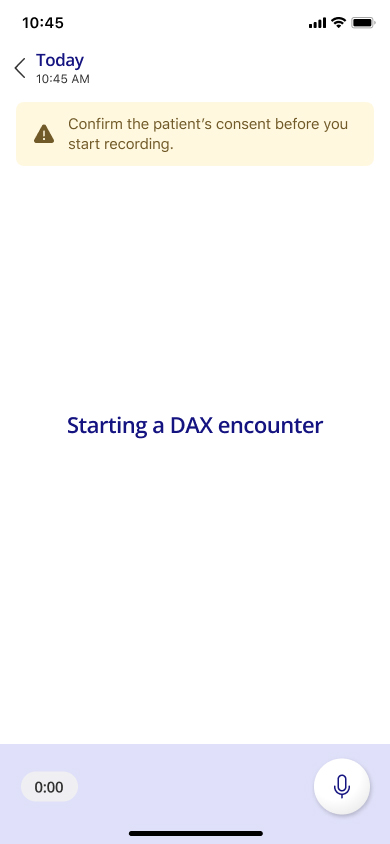
BURLINGTON, Mass., Sept. 27, 2023 /PRNewswire/ -- Nuance Communications, Inc., a Microsoft Company, today announced the general availability of Dragon Ambient eXperience (DAX™) Copilot, formerly known as DAX Express. Serving as an AI copilot for automated clinical documentation, the application uses conversational, ambient, and generative AI to enable more physicians to significantly streamline the creation of medical documentation, improving clinical efficiency, reducing burnout, and freeing their time to focus on delivering high-quality care. 

Experience the full interactive Multichannel News Release here:
https://www.multivu.com/players/English/9205351-nuance-communications-dragon-ambient-experience-dax-copilot/ 

Morgan Stanley predicts AI investment in healthcare will jump to nearly 11% in 2024, compared to 5.7% in 2022. U.S. health systems are rapidly turning to AI-powered solutions to improve clinical efficiency and alleviate clinician burnout caused by heavy administrative workloads. According to a recent Medscape survey, the number of physicians reporting feelings of burnout rose to 53% in 2023, up from 42% in 2018. DAX Copilot automatically and securely creates draft clinical summaries of exam room or telehealth conversations in seconds for immediate physician review and entry in the electronic health record (EHR) system. Amplified by the power and scale of the Microsoft Cloud for Healthcare, DAX Copilot combines Nuance's proven conversational and ambient AI with the newest and most capable generative AI model to improve clinical efficiency and enable clinicians to spend more time caring for patients.

"Over the past four years, Microsoft has worked with partners like OpenAI to hone the power of generative AI to improve outcomes and experiences for all users. As a result, Microsoft is heralding a new and exciting era of AI-powered copilots to assist humans across industries, including doctors and nurses, with complex cognitive tasks," said Diana Nole, Executive Vice President and General Manager of Healthcare at Nuance, a Microsoft company. "Healthcare is one of the biggest areas of potential for copilots given the tremendous administrative burden placed on clinicians and other medical staff. Taking a responsible approach to AI that centers around unparalleled collaboration with the world's top AI researchers and access to a trusted infrastructure and global platform, Nuance is arming healthcare providers with a trusted copilot that enables them with more time to take care of their patients."

Nuance has decades of experience developing AI-powered healthcare solutions used by hundreds of thousands of clinicians that are proven to consistently deliver value and outcomes for physicians, nurses, radiologists, and patients. Nuance has long been at the forefront of innovating conversational and ambient AI in healthcare – most notably with Dragon Medical One and most recently with DAX – and for years has leveraged expertise in large language models, natural language processing, and clinical workflows and needs to deliver refined, trusted AI solutions around the globe.

Dragon Medical One is a Best in KLAS three years running cloud-based speech recognition solution that acts as a workflow assistant and documentation companion to document clinical visits in the EHR. Dragon Medical One, used by more than 550,000 users worldwide, provides clinicians with the ability to use their voices to capture the patient story efficiently and securely, more naturally navigate key clinical systems, and easily access information to facilitate patient care. It is known for its accuracy, reliability, and tight integration with the EHR.

DAX Copilot is part of the larger Nuance Dragon family of solutions, which are currently deployed across hundreds of healthcare organizations and used by thousands of clinicians, resulting in a 70% reduction in feelings of burnout and fatigue, 50% less time spent on documentation, 7 minutes saved per encounter, and 5 additional appointments added on average per clinic day. DAX Copilot provides an immediate and highly accessible entry point for healthcare organizations to adopt at scale a new generation of AI-powered clinical documentation applications, leveraging their existing investments in the trusted Nuance Dragon Medical platform. Clinicians using DAX Copilot in a private preview have reported that it has helped them achieve a better work-life balance, higher job satisfaction, more focused, personable, and conversational patient visits, and reduced feelings of burnout and cognitive load. In a survey of clinicians using DAX Copilot, almost three-quarters say that it has led to a better experience providing care, and 96% agree it is easy to use.

For more information about Nuance DAX Copilot, please visit: nuance.com/DAXCopilot. To see DAX Copilot in action, or to learn more about Nuance, connect with us at HLTH, October 8-11 in Las Vegas.

About Nuance Communications

Nuance Communications is a technology pioneer with market leadership in conversational, ambient, and generative AI. A full-service partner trusted by 77 percent of U.S. hospitals and more than 75 percent of the Fortune 100 companies worldwide, Nuance creates intuitive solutions that amplify people's ability to help others. Nuance is a Microsoft company. 

Trademark reference: Nuance and the Nuance logo are registered trademarks or trademarks of Nuance Communications, Inc. or its affiliates in the United States and/or other countries. All other trademarks referenced herein are the property of their respective owners. 

Media Contact:

Nuance Communications

Caitlyn Keating

Tel: +1.781.565.8926

E-mail: ckeating@microsoft.com

Nuance Announces the General Availability of Dragon Ambient eXperience Copilot to Further Improve Healthcare Experiences, Outcomes, and Efficiency

SOURCE Nuance Communications

Read More

Beacon Health System harnesses AI tool to boost patient capacity

September 29, 2023

Beacon Health System said its artificial intelligence-powered clinical documentation tool from Nuance has allowed its physicians to "improve" the number of patients they see.

The South Bend, Ind.-based health system has been using Dax from Nuance, which can automatically create clinical summaries for review and entry into the EHR.

According to Scott Eshowsky, MD, chief medical information officer of Beacon, this has proven useful to relieving burdens for its staff.

Dr. Eshowsky said in a Sept. 27 Nuance YouTube video that physicians using Dax have "not only improved the number of patients that they're able to see every day, but their overall cognitive burden really seems to be less."

He also said the technology allows physicians to connect with their patients "more effectively" in the exam room.

Read More

Hospitals Should Take A Page Out of Amazon’s Digital Engagement Playbook, Argues Providence Digital Chief

September 30, 2023

If hospitals want to win in the game of digital transformation, they have to start thinking a bit more like Netflix and Amazon, according to Sara Vaezy, Providence’s chief strategy and digital officer.

“In every industry, especially those that are making a digital transformation, being close to your end user really matters. In our case, it’s the patient. But the way that hospitals have traditionally thought about this relationship is very hospital-centric — like we’re the center of the universe. But that doesn’t really build a close relationship, especially now as patient and consumer preferences are changing,” she said during an interview this week at Oliver Wyman’s Health Innovation Summit in Chicago.

The average healthcare consumer uses five different healthcare brands a year, Vaezy pointed out. For instance, they get the primary care wherever they can, they might go to a standalone clinic for urgent care needs, and they may use a pharmacy delivery service, she said. 

These different touchpoints are completely decentralized, so it’s silly for hospitals to hang on to the notion that they are the center of Americans’ healthcare experiences. In order for health systems to “not be commoditized fully,” they need to get to know their patients’ behaviors better, Vaezy argued.

“The workforce shortage makes it even harder for us to deliver care at scale, so we need something like self-service options. We need to have that relationship with patients. We have an overarching thesis that we need to innovate at the ends of the value chain — we need to bring ourselves closer to our consumers,” she declared.

Health systems can work on this by learning more about their patients’ preferences and finding ways to sustain engagement in patient relationships. Vaezy noted that while this may seem quite basic, most health systems “don’t know who the heck they care for.” 

Most of the knowledge hospitals have about their patients comes from the EHR. If a patient doesn’t visit the health system for a year or two, that person “basically falls off the radar” — the health system doesn’t know anything about them other than maybe the last time they came in for a visit or who their primary care provider is, Vaezy said.

“Hospitals work with a very limited set of very transactional information, and that is not a good foundation for relationships. What we’re doing is working with this concept to build a platform around identity-driven engagement,” she explained.

Vaezy pointed to Amazon Prime as a good example of a company that provides its users with a deeply personalized experience. No matter where a person is, they can log into their account and be met with a bespoke homepage — one that takes into account their purchasing patterns, demographics and lifestyle.

Hospitals need to figure out a way to connect to their patients on that level, Vaezy declared. 

But to do so, hospitals will need to collect more data on their patients. Providers must take extreme care to collect and use this data responsibly, Vaezy noted. For example, third-party tracking tools like Meta Pixel and Google Analytics can give hospitals insight into the way their patients behave online, but the federal government has warned providers that the use of these tools often violates HIPAA. 

Providence has started to collect online data from its patients using its own trackers, making sure that patients give their consent and know how their data is being used, Vaezy explained. Once the health system learns more about who their patients are and what their preferences look like, it can start to build more effective engagement strategies. This is an approach that consumer brands have been using for years, and it’s time healthcare providers commit to this type of deep knowledge of their end users, too, she argued.

Photo: smartboy10, Getty Images

Read More

Hospitals are dropping Medicare Advantage left and right

September 30, 2023

Medicare Advantage provides health coverage to more than half of the nation's seniors, but a growing number of hospitals and health systems nationwide are pushing back and dropping the private plans altogether.

Among the most commonly cited reasons are excessive prior authorization denial rates and slow payments from insurers. Some systems have noted that most MA carriers have faced allegations of billing fraud from the federal government and are being probed by lawmakers over their high denial rates.

"It's become a game of delay, deny and not pay,'' Chris Van Gorder, president and CEO of San Diego-based Scripps Health, told Becker's. "Providers are going to have to get out of full-risk capitation because it just doesn't work — we're the bottom of the food chain, and the food chain is not being fed." 

In late September, Scripps began notifying patients that it is terminating Medicare Advantage contracts for its integrated medical groups, a move that will affect more than 30,000 seniors in the region. The medical groups, Scripps Clinic and Scripps Coastal, employ more than 1,000 physicians, including advanced practitioners. 

Mr. Van Gorder said the health system is facing a loss of $75 million this year on the MA contracts, which will end Dec. 31 for patients covered by UnitedHealthcare, Anthem Blue Cross, Blue Shield of California, Centene's Health Net and a few more smaller carriers. The system will remain in network for about 13,000 MA enrollees who receive care through Scripps' individual physician associations.

"If other organizations are experiencing what we are, it's going to be a short period of time before they start floundering or they get out of Medicare Advantage," he said. "I think we will see this trend continue and accelerate unless something changes."

Bend, Ore.-based St. Charles Health System has taken it a step further and is not only considering dropping all Medicare Advantage plans, but is also encouraging its older patients not to enroll in the private Medicare plans during the upcoming enrollment period in October.

The health system's president and CEO, CFO and chief clinical officer cited high rates of denials, longer hospital stays and overall administrative burden for clinicians.

"We recognize changing insurance options may create a temporary burden for Central Oregonians who are currently on a Medicare Advantage plan, but we ultimately believe it is the right move for patients and for our health system to be sustainable into the future to encourage patients to move away from Medicare Advantage plans as they currently exist," St. Charles Health CFO Matt Swafford said.

"I feel terrible for the patients in this situation; it's the last thing we wanted to do, but it's just not sustainable with these kinds of losses," Mr. Van Gorder added. "Patients need to be aware of how this system works. Traditional Medicare is not an issue. With these other models, seniors need to be wary and savvy buyers."

Here are seven more recent examples of hospitals dropping Medicare Advantage contracts:

1. Adena Regional Medical Center is terminating its contract with Anthem BCBS' Medicare Advantage and managed Medicaid plans in Ohio, effective Nov. 2. The flagship facility of Chillicothe, Ohio-based Adena Health System said rate negotiations between the organizations "have not been productive," leading it to terminate its agreement with Anthem, whose parent company is Elevance Health.

2. Since Aug. 1, 11,000 Anthem Medicare Advantage members in Virginia have not had access to Cincinnati-based Bon Secours Mercy facilities. Anthem's Medicare Advantage members in Ohio and Kentucky will be out of network with a majority of Bon Secours facilities as of Oct. 1.

3. Corvallis, Ore.-based Samaritan Health Services ended its commercial and Medicare Advantage contracts with UnitedHealthcare. The five-hospital, nonprofit health system cited slow "processing of requests and claims" that have made it difficult to provide appropriate care to UnitedHealth's members, which will be out of network with Samaritan's hospitals on Jan. 9. Samaritan's physicians and provider services will be out of network on Nov. 1, 2024. 

4. Cameron (Mo.) Regional Medical Center stopped accepting Cigna's MA plans in 2023 and plans to drop Aetna and Humana in 2024. It plans to continue Medicare Advantage contracts with UnitedHealthcare and BCBS, the St. Joseph News-Press reported in May. Cameron Regional CEO Joe Abrutz previously told the newspaper the decision stemmed from delayed reimbursements.

5. Stillwater (Okla.) Medical Center ended all in-network contracts with Medicare Advantage plans amid financial challenges at the 117-bed hospital. Humana and BCBS of Oklahoma were notified that their MA members would no longer receive in-network coverage after Jan. 1, 2023. The hospital said it made the decision after facing rising operating costs and a 22 percent prior authorization denial rate for Medicare Advantage plans, compared to a 1 percent denial rate for traditional Medicare.

6. Brookings (S.D.) Health System will no longer be in network with any Medicare Advantage plans in 2024, the Brookings Register reported. The 49-bed, municipally owned hospital said the decision was made to protect the financial sustainability of the organization. 

7. Louisville, Ky.-based Baptist Health Medical Group went out of network with Humana's Medicare Advantage and commercial plans on Sept. 22, Fox affiliate WDRB reported.

Read More

Nuance Announces the General Availability of Dragon Ambient eXperience Copilot to Further Improve Healthcare Experiences, Outcomes, and Efficiency

September 30, 2023

Nuance Announces the General Availability of Dragon Ambient eXperience Copilot to Further Improve Healthcare Experiences, Outcomes, and Efficiency

Based on Nuance's Dragon Medical platform already used by over 550,000 physicians, DAX Copilot leverages conversational, ambient, and generative AI to further the company's position in delivering market leading AI-powered solutions for healthcare and life sciences

BURLINGTON, Mass., Sept. 27, 2023 /PRNewswire/ -- Nuance Communications, Inc., a Microsoft Company, today announced the general availability of Dragon Ambient eXperience (DAX™) Copilot, formerly known as DAX Express. Serving as an AI copilot for automated clinical documentation, the application uses conversational, ambient, and generative AI to enable more physicians to significantly streamline the creation of medical documentation, improving clinical efficiency, reducing burnout, and freeing their time to focus on delivering high-quality care. 

Experience the full interactive Multichannel News Release here:
https://www.multivu.com/players/English/9205351-nuance-communications-dragon-ambient-experience-dax-copilot/ 

Morgan Stanley predicts AI investment in healthcare will jump to nearly 11% in 2024, compared to 5.7% in 2022. U.S. health systems are rapidly turning to AI-powered solutions to improve clinical efficiency and alleviate clinician burnout caused by heavy administrative workloads. According to a recent Medscape survey, the number of physicians reporting feelings of burnout rose to 53% in 2023, up from 42% in 2018. DAX Copilot automatically and securely creates draft clinical summaries of exam room or telehealth conversations in seconds for immediate physician review and entry in the electronic health record (EHR) system. Amplified by the power and scale of the Microsoft Cloud for Healthcare, DAX Copilot combines Nuance's proven conversational and ambient AI with the newest and most capable generative AI model to improve clinical efficiency and enable clinicians to spend more time caring for patients.

"Over the past four years, Microsoft has worked with partners like OpenAI to hone the power of generative AI to improve outcomes and experiences for all users. As a result, Microsoft is heralding a new and exciting era of AI-powered copilots to assist humans across industries, including doctors and nurses, with complex cognitive tasks," said Diana Nole, Executive Vice President and General Manager of Healthcare at Nuance, a Microsoft company. "Healthcare is one of the biggest areas of potential for copilots given the tremendous administrative burden placed on clinicians and other medical staff. Taking a responsible approach to AI that centers around unparalleled collaboration with the world's top AI researchers and access to a trusted infrastructure and global platform, Nuance is arming healthcare providers with a trusted copilot that enables them with more time to take care of their patients."

Nuance has decades of experience developing AI-powered healthcare solutions used by hundreds of thousands of clinicians that are proven to consistently deliver value and outcomes for physicians, nurses, radiologists, and patients. Nuance has long been at the forefront of innovating conversational and ambient AI in healthcare – most notably with Dragon Medical One and most recently with DAX – and for years has leveraged expertise in large language models, natural language processing, and clinical workflows and needs to deliver refined, trusted AI solutions around the globe.

Dragon Medical One is a Best in KLAS three years running cloud-based speech recognition solution that acts as a workflow assistant and documentation companion to document clinical visits in the EHR. Dragon Medical One, used by more than 550,000 users worldwide, provides clinicians with the ability to use their voices to capture the patient story efficiently and securely, more naturally navigate key clinical systems, and easily access information to facilitate patient care. It is known for its accuracy, reliability, and tight integration with the EHR.

DAX Copilot is part of the larger Nuance Dragon family of solutions, which are currently deployed across hundreds of healthcare organizations and used by thousands of clinicians, resulting in a 70% reduction in feelings of burnout and fatigue, 50% less time spent on documentation, 7 minutes saved per encounter, and 5 additional appointments added on average per clinic day. DAX Copilot provides an immediate and highly accessible entry point for healthcare organizations to adopt at scale a new generation of AI-powered clinical documentation applications, leveraging their existing investments in the trusted Nuance Dragon Medical platform. Clinicians using DAX Copilot in a private preview have reported that it has helped them achieve a better work-life balance, higher job satisfaction, more focused, personable, and conversational patient visits, and reduced feelings of burnout and cognitive load. In a survey of clinicians using DAX Copilot, almost three-quarters say that it has led to a better experience providing care, and 96% agree it is easy to use.

For more information about Nuance DAX Copilot, please visit: nuance.com/DAXCopilot. To see DAX Copilot in action, or to learn more about Nuance, connect with us at HLTH, October 8-11 in Las Vegas.

About Nuance Communications

Nuance Communications is a technology pioneer with market leadership in conversational, ambient, and generative AI. A full-service partner trusted by 77 percent of U.S. hospitals and more than 75 percent of the Fortune 100 companies worldwide, Nuance creates intuitive solutions that amplify people's ability to help others. Nuance is a Microsoft company. 

Trademark reference: Nuance and the Nuance logo are registered trademarks or trademarks of Nuance Communications, Inc. or its affiliates in the United States and/or other countries. All other trademarks referenced herein are the property of their respective owners. 

Media Contact:

Nuance Communications

Caitlyn Keating

Tel: +1.781.565.8926

E-mail: ckeating@microsoft.com

Nuance Announces the General Availability of Dragon Ambient eXperience Copilot to Further Improve Healthcare Experiences, Outcomes, and Efficiency

SOURCE Nuance Communications

Read More

Beacon Health System harnesses AI tool to boost patient capacity

September 29, 2023

Beacon Health System said its artificial intelligence-powered clinical documentation tool from Nuance has allowed its physicians to "improve" the number of patients they see.

The South Bend, Ind.-based health system has been using Dax from Nuance, which can automatically create clinical summaries for review and entry into the EHR.

According to Scott Eshowsky, MD, chief medical information officer of Beacon, this has proven useful to relieving burdens for its staff.

Dr. Eshowsky said in a Sept. 27 Nuance YouTube video that physicians using Dax have "not only improved the number of patients that they're able to see every day, but their overall cognitive burden really seems to be less."

He also said the technology allows physicians to connect with their patients "more effectively" in the exam room.

Read More
View All
Insights by Kate Gamble
View All
Our Partners

Premier

Diamond Partners

Platinum Partners

Silver Partners

This Week Health
Healthcare Transformation Powered by Community

Questions about the Podcast?

Contact us with any questions, requests, or comments about the show. We love hearing your feedback.

Hello@ThisWeekHealth.com

Looking to connect or attend events? Visit our sister organization, 229 Project
Click here.

© Copyright 2024 Health Lyrics All rights reserved