As the healthcare industry continues to evolve at a dizzying pace, leadership roles must keep pace, and the CNIO position is no exception.
“The nature of the role is becoming more and more strategic,” said Wendy Kerschner, Senior Associate, Healthcare & Information Technology Practice, WittKieffer. “As we go from focusing mostly on the EHR to now dealing with all of the other smart technologies needed to improve care delivery, it requires executive-level skills” to navigate the people and process aspects.
Whereas in the past, nursing informaticists were often “relegated to training” when a major initiative was happening, now they’ve taken on a more strategic function, according to her colleague Zach Durst, Principle, IT Practice. “Now it’s change management. It’s driving digital innovation across an organization. It’s analytics, quality metrics, and population health.”
The CNIO position, which had “unnecessarily been limited” in many organizations, “has become as expansive as the CMIO role.”

Zach Durst
The primary reason? “CNIOs can be instrumental change agents in addressing the myriad challenges nurses and other clinicians face,” noted a WittKieffer report. As informatics and technology are continuously woven through strategic plans, the need for a nursing informatics representative who can facilitate integration and lead consensus will only increase.
The position, according to the authors, “brings an invaluable perspective and fills an indispensable function of identifying solutions and leading change based on patient care and clinicians’ feedback and concerns.”
And, importantly, the CNIO acts as a bridge between nursing practice and technology, ensuring needs are being met on both sides so that systems can be utilized safely and effectively. That “bridge,” however, “has gotten a lot wider,” said Durst. “You need the ability to translate at every level of the organization, from the board level down to the frontline nursing staff.”
At the same time, added Kerschner, it’s important for CNIOs to possess “outstanding project management skills, political savvy, communication skills, and change competencies,” along with a forward-thinking mentality.
It’s a significant departure from the original job requirement. And in fact, HIMSS announced a revised description in 2025 “to reflect the evolving leadership, innovation, and digital transformation happening across nursing informatics.”
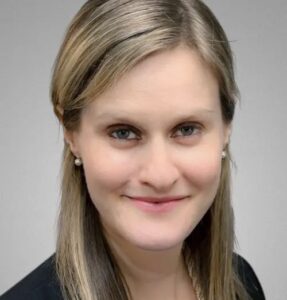
Wendy Kerschner
The update, which incorporates results from the HIMSS Nursing Informatics Workforce Survey, aimed to ensure the CNIO role “remains aligned with modern healthcare priorities, promoting data-driven care, enhancing patient safety and driving operational excellence.”
So what exactly does this mean for the CNIO? How is the job changing, and how are CNIOs viewed by others in the organization?
According to Durst, it starts with technology, which is becoming increasingly pervasive in healthcare. “Everything that operates in the health system, from the heart monitor to IoT devices to unified communications, it all comes back to technology,” he said. Because nurses are so close to patient care – and by extension, technology, “You need that nursing voice at the leadership table.”
Health systems appear to agree, as CNIO and equivalent roles (such as Chief Clinical Information Officer) have become more prevalent, particularly in larger organizations. “It’s not the norm yet for every organization to have a CNIO, but the trend is heading in that direction,” he noted.
In terms of reporting structure, there is still a great deal of variety. “We’re seeing that most CNIOs report to the CIO or equivalent, oftentimes with a dotted line to the CNO,” he said, while some answer directly to the CNO.
Increasingly, however, “we’re seeing it as a dyad partner to the CMIO, recognizing the importance of the nursing voice in informatics, technology, and digital optimization as being more hand-in-hand with the CMIO,” Durst noted. “Whereas in the past, nursing informatics was at the director level, sitting under a CMIO or applications. And so, we think that’s really a positive sign.”
So what are health systems looking for?
As the position has risen in prominence, the qualities that are most valued in the search process have certainly evolved, noted Kerschner. “When we’re speaking with clients and they’re deciding which candidates are going to move forward, things like communication skills and change management are tipping the scales,” she said. The ability to relate to stakeholders from different areas and “distill complex topics in a thoughtful manner” is highly valued.
But while the skillset has been established, questions remain around how candidates can build those skills. “It’s not a matter of getting an Epic certification,” said Kerschner. “There isn’t a clear roadmap.”
Durst agreed, noting that because the CNIO is still relatively novel, “the pipeline isn’t as formalized” for establishing a leadership skillset in nursing IT. The best avenues, they’ve found, are seeking out both informal and formal mentors in nursing, as well as technology, operations, and other areas, and leveraging professional associations such as AMIA.
“A lot of it comes down to learning by doing,” said Kerschner.
The development piece will become increasingly important as advanced analytics continues to infiltrate the healthcare space. “The CNIO needs to be the voice for nursing within the AI strategy,” she noted, and take the lead on “where to invest, how to integrate all of those tools and how they will interact with the overall stack and workflows.”
Added Durst, “organizations are going to need that voice when it comes to governance, data acquisition and utilization, and implementation, because any AI tool is going to affect workflow, and that workflow is going to impact every clinician across the environment.”
As a result, CNIOs will be looked up to help ease the transition for users, which Kerschner views as a natural progression of a position that has already evolved so much. “The role has expanded. It’s about building relationships, identifying new technologies, and being a leader within the organization,” she said. CNIOs, now more than ever, “must be results-driven, and be ready to measure and articulate successes.”
Zach agreed, noting that CNIOs have risen to the point where they are “inherently part of everything, from road-mapping to the execution around it,” he noted. “That's where the executive skillset comes in. You’re figuring out how things are going to get done, and getting them done.”

No contributors linked to this article.

Questions about the Podcast?
Contact us with any questions, requests, or comments about the show. We love hearing your feedback.
© Copyright 2024 Health Lyrics All rights reserved