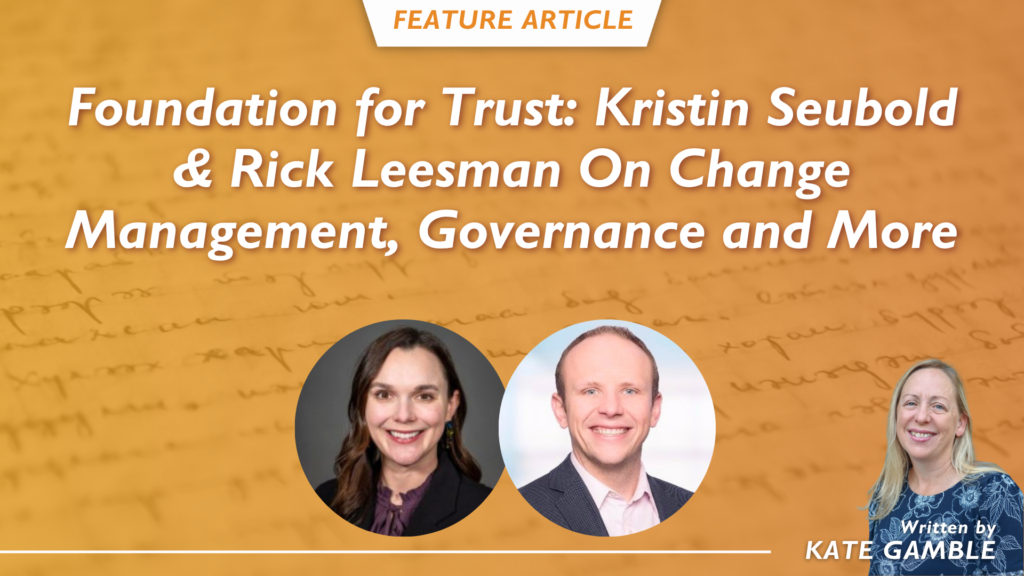
Rick Leesmann of Sky Lakes Medical Center and Kristin Seubold of Skagit Regional Health have taken different paths to the CIO role, but they’ve arrived at the same conviction: sustainable innovation requires getting the fundamentals right first.
There is a version of the CIO job that looks like a perpetual sprint toward the next technology – the next AI tool, the next platform, the next capability that clinicians want deployed yesterday. Rick Leesmann and Kristin Seubold are running a different race. Both lead community health systems where resources are lean, teams are small, and the stakes of getting something wrong are felt immediately. And both have reached the same conclusion independently: before you can innovate, you have to build something worth building on.
Leesmann is the CIO at Sky Lakes Medical Center in Klamath Falls, Oregon, a role he stepped into in 2024 after years in large academic health systems. Seubold is VP and CIO at Skagit Regional Health in northwestern Washington, now in her third year leading IT for a two-hospital system serving Skagit and Snohomish counties.
Their career paths diverged in meaningful ways. Leesmann made a deliberate move from a 16,000-employee system to a smaller organization, while Seubold took seven months off before her CIO role to reflect on what she actually wanted. But the priorities they have set since arriving look remarkably alike.
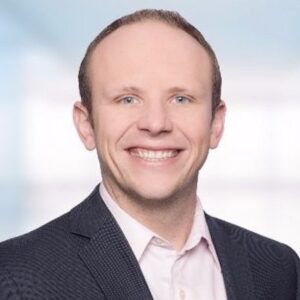
Rick Leesmann
Ask either leader what they tackled first, and the answer is the same: governance. Not AI, not infrastructure, and not a splashy new platform, but the organizational machinery that determines what, when, and why.
At Sky Lakes, Leesmann found a governance structure that “loosely existed” but lacked real enterprise buy-in. IT was doing work, but not the work operational leaders actually wanted. The result was a department that was busy and undervalued at the same time.
“You can’t just port something that worked over here. What you can port are lessons in what worked well and what did not,” he said. “You have to give them a reason to trust; to believe that the time commitment is worth it.”
Seubold encountered a nearly identical situation at Skagit. Her team felt the same disconnect: significant effort, limited visibility, and a growing sense of being out of step with what partners needed.
“My team felt undervalued because they were doing a lot of work, but it wasn’t the work that our partners wanted. We need groups of people coming together to help advise on what to do,” she noted. And even then, “we can’t do it all at once. We need to sequence and prioritize it.”
For both CIOs, establishing formal governance wasn’t just an administrative step – it was a trust-building exercise that gave operational leaders a seat at the table and gave IT a clearer mandate. And critically, it created the conditions for faster action when the right opportunities appeared.
Case in point: within a year of standing up governance at Skagit, physicians were asking why they didn’t have AI scribing tools. Because the foundation was in place, her team was able to move quickly. “I feel pretty proud of that,” Seubold said. “We’re building literacy around what it means to use these tools.”
Both leaders have had to fight a version of the same perception problem: IT as a cost center, a service desk, or what Leesmann called a “science fair department” where the work doesn’t translate into actual outcomes.
“To truly be seen as a partner, you have to get in there and understand what operations are dealing with,” he noted. The solution? Relentless alignment: making sure every technology initiative can be traced back to a clinical or operational outcome. When IT is visible for the right reasons – and not just when something breaks – the entire relationship changes.
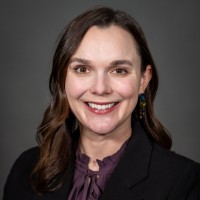
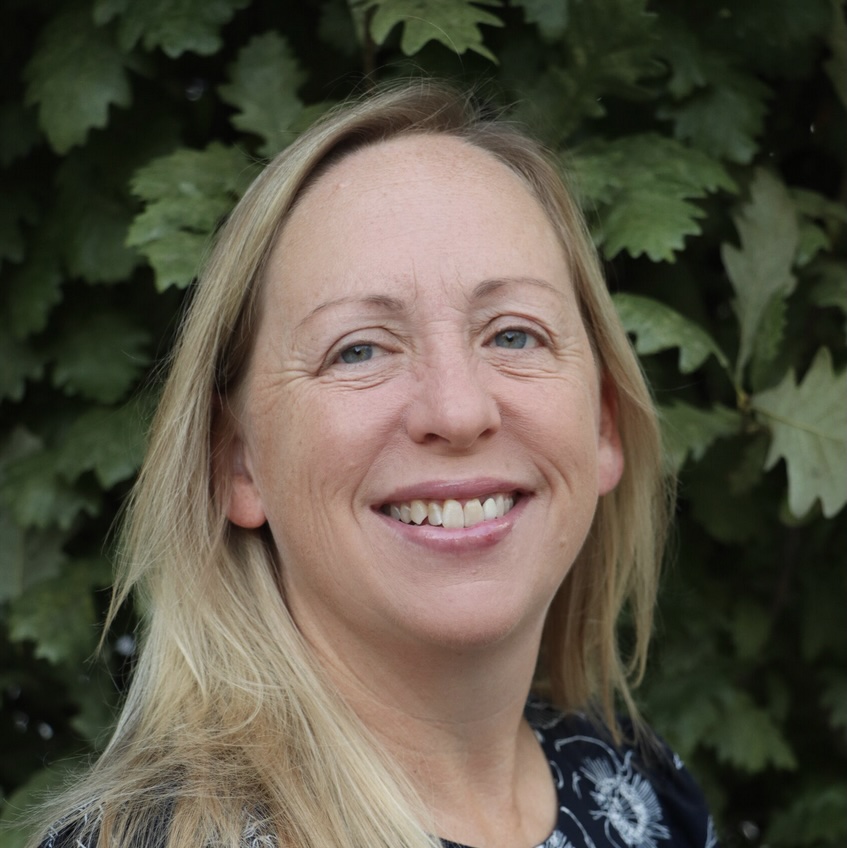
Kristin Seubold
Seubold framed it slightly differently, but the destination is the same. Her goal is to shift IT from a reactive team that responds to requests to a proactive team that helps the organization anticipate and prepare.
Governance, she maintained, is what makes that shift possible. “We’re trying to put some structure in place so that 80 percent of the time we are being proactive, while recognizing that our jobs do come with an ounce of reactivity, because there are some things we can’t anticipate.”
Both leaders have learned that the hardest part of transformation isn’t the technology; it’s the people. And both have invested deliberately in building organizational change capability as a core competency, not an afterthought.
At Skagit, Seubold repositioned an open project manager role to focus primarily on change enablement and communications. That person now consults across the department on any initiative with significant organizational impact.
“A lot of what I would hear when I got here was, ‘We told them it was coming, and then they act like they don’t know about it.’ This is an opportunity to think about how we might do it differently. How might we reach these people in a way that is more effective?”
Her approach centers on early, layered communication – what she termed awareness building – starting as soon as a significant change is on the horizon, and well before execution begins. When Skagit moved to Microsoft 365, a migration that touched how virtually everyone in the organization managed email and files, the change went smoothly, which Seubold credited the deliberate investment in change enablement.
Leesmann emphasized a similar principle: the “why” behind any change has to be communicated clearly, repeatedly, and before people are asked to act on it. It’s particularly true in organizations with long-tenured staff.
“Honoring the past and then talking about and explaining the ‘why’ for what’s coming next is critical,” he said, adding that it helps “plant a seed” and encourage participation.
Another hurdle both leaders face is the prospect of delivering care to geographically dispersed populations, often in areas with limited connectivity and finite access to traditional clinical settings.
At Sky Lakes, Leesmann’s team has tackled this through an Epic-enabled mobile health clinic, which is designed to bring care directly into rural communities. The initiative sounds straightforward until you get into the details: satellite connectivity, generator runtime calculations, physical space constraints that have no parallel in a brick-and-mortar environment.
“The requirements for delivering safe and effective care don’t change just because you’re in a mobile setting,” he said. “They’re still there. So how do I provide not just ‘nice-to-haves’, but the ‘have-to-haves’?”
Seubold faces an analogous challenge at Skagit, where parts of the catchment area lack reliable broadband. “There are spots within our catchment area where it’s hard to get internet,” she noted. “You have to get Starlink or you have to think more creatively about that kind of access.”
Along with creative thinking, both leaders have found that a focus on relationship building is a critical aspect of the CIO role.
Leesmann believes that in a community health system, authority only gets you so far. Real progress depends on building the kind of credibility that makes people want to follow. He has applied the same philosophy to vendor relationships, rejecting transactional dynamics in favor of genuine partnerships.
“It’s the relationships that move things,” he stated.
Seubold concurred, adding that it’s a big focus at Skagit as well. At leadership huddles, she carves out time for reflection, encouraging team members to share what’s on their mind, whether it’s a struggle, an inspiration, or simply something they’ve been thinking about. It’s a practice she carried from her previous organization, and one she credits with building the kind of mutual understanding that makes a team more resilient under pressure.
Seubold, a certified yoga instructor, has brought mindfulness into practice, urging individuals to pause and take collective breaths before getting to business.
“When we are in that space [of high stress], we’re not operating as effectively as we could be,” she said, noting that grounding has helped her to maintain a positive perspective. “This is hard work, but we can still do it from this place of a little more calmness, a little more proactiveness.”
Both leaders are candid about how much work remains. For Leesmann, the near-term agenda includes a significant revenue cycle optimization effort, ongoing infrastructure resilience work, and the governance structures needed to manage AI responsibly as Sky Lakes expands its use of ambient scribing and other tools. His three-year roadmap, he acknowledges, is “more an organism versus an artifact”– something that has to keep evolving as the environment changes. “We should constantly be challenging: is this the outcome we truly meant to create?”
For Seubold, the priorities include data governance and the infrastructure for a data lake that will allow Skagit to make more meaningful use of the information it already has, enabling self-service analytics, better decision support, and a stronger foundation for AI.
What unites both leaders, beyond their shared emphasis on foundations and governance, is a clear sense of why it matters. They are not building technology for its own sake. They are building it for communities that depend on their organizations to show up.
The ability to do so, according to both, is in a willingness to learn from others and share best practices – particularly among those at similar organizations.
“The reality is that healthcare is hard,” Leesmann stated. “But we’re not in this alone. Cultivating a network is incredibly important – just as important as technical skillsets. In this day and age, we need more networks. We need each other.”
This article is based on interviews conducted by Kate Gamble.
No contributors linked to this article.

Questions about the Podcast?
Contact us with any questions, requests, or comments about the show. We love hearing your feedback.

© Copyright 2024 Health Lyrics All rights reserved