For healthcare leaders, ensuring staff are engaged and satisfied isn’t merely another item on the (ever-growing) checklist; it’s an urgent priority.
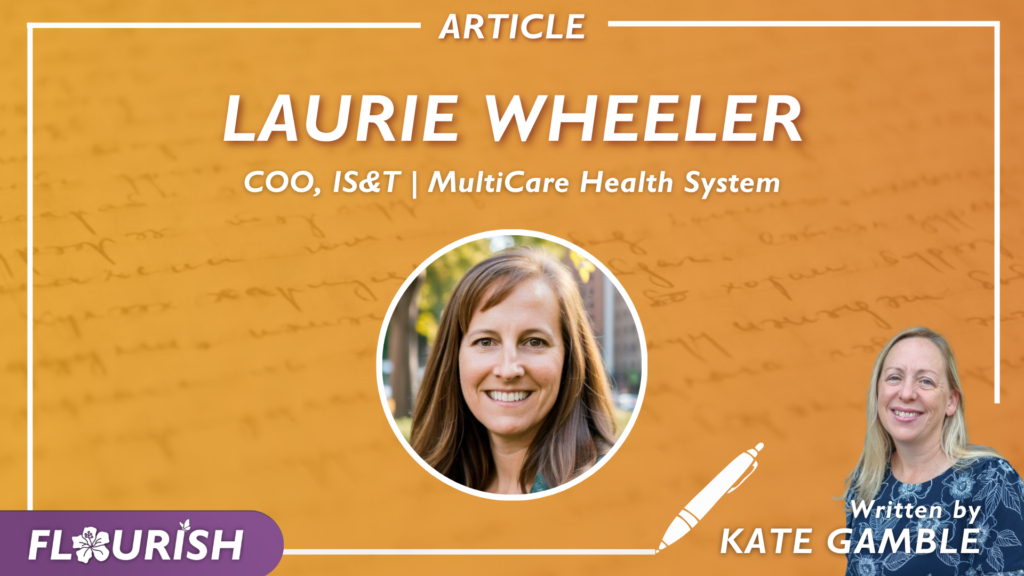
At least, that’s the case for Laurie Wheeler, who has served as COO of IS&T at MultiCare Health System since 2021, but has been with the Pacific Northwest-based organization since 1999. It’s the type of longevity rarely seen in healthcare, but one that she believes can become more common with the right culture in place.

Laurie Wheeler
“I love what I do; I love the people I work with every day,” she said. “I learn something new every day – and that’s what keeps people engaged.” During a recent Flourish episode, Wheeler spoke with Sarah Richardson about her approach to some of the biggest challenges facing healthcare, and the leadership attributes she believes will be critical going forward.
For Wheeler, engagement isn’t an annual event. It’s a daily practice that begins with getting out of the office and rounding.
The key is “talking to patients, talking to staff, and helping solve problems.” Oftentimes, the problems worth solving aren’t necessarily the major issues, but rather, the “pebbles in the shoe,” she noted. Solving what are often simple problems will “make their day.”
That philosophy extends to how on-call responsibilities are handled. Even a 2 a.m. call, she noted, can be a valuable listening opportunity, as it provides a chance to understand what’s actually happening on the ground, in real-time, as opposed to waiting for survey results.
When her team does receive those results, they tend to act quickly. For example, after an engagement survey uncovered frustrations around IT ticket transparency and navigation, they reached out to the chief nursing officer, assembled a group of clinical directors and pharmacy staff, and spent months conducting structured listening sessions.
The outcome? Her team made targeted changes to their ServiceNow environment – building out what Wheeler calls a “pizza tracker” so staff could see exactly where their requests stood at any given moment. By the time the next engagement survey came back, the issue had dropped off the list. “It definitely changed the outcome of the survey.”
It’s a structure that, fortunately, has remained in place.
A clinical super user group for Workday now includes roughly 30 volunteers from across the organization who meet regularly to share what they’re hearing in the field, and help the IS&T team stay ahead of issues.
That responsiveness to staff needs has become a critical aspect of leadership, noted Wheeler, who has cultivated a ‘give it to Laurie’ dynamic by being willing to tackle difficult tasks.
But that doesn’t mean she can fix every problem. “I’m the first to say, ‘I don’t know, but I can find out,’” she said. Doing so “makes folks that are newer to the organization feel safe to speak up if they don’t know. It puts a human side on you. But you always have to follow up.”
That combination of approachability paired with consistent delivery can build the type of trust bank that sustains teams through changes such as mergers, acquisitions, leadership transitions, and technology transformations. During these times, which can test even the strongest teams, it’s critical to be able to connect people to mission.
One way is by partnering with operations, she noted. “Whenever we can, we have them come into team meetings to tell safety stories and connect the dots. Always going back to the why.” Doing so can “really help lead through stressful times.”
It can also maintain high levels of engagement, which has become table stakes. “Healthcare is a tough place to be. You always want to make sure folks are there for the right reasons.”
And while those reasons vary, what seems to tip the scales for most individuals is being seen and feeling like they’re part of a community. “This is definitely not easy,” she said. “Being able to talk to your peers and your mentors is incredibly valuable.”
The ultimate goal for leaders is to leave behind a culture where asking for help is safe, where showing up with humility is valued, and where the mission never gets buried under the noise. Doing so, she believes, requires three core attributes: curiosity, humility, and flexibility. “It’s fascinating to watch the speed of healthcare technology. Being open to new ideas from anyone and being agile is going to be really critical.”
Finally, leaders must make it a point to show gratitude, particularly as staff are being asked to do more and more. “Whether it’s a thank you in the hallway or sending an email, showing your appreciation for others is something I do every day,” Wheeler said, emphasizing the importance of human connection. “You want to be seen in the organization as someone who is trusted, someone who is open. Because if you have this ego, you’re not going to get the feedback you need. And at the end of the day, it is not going to contribute to a successful outcome.”






Questions about the Podcast?
Contact us with any questions, requests, or comments about the show. We love hearing your feedback.

© Copyright 2024 Health Lyrics All rights reserved