Healthcare organizations are experiencing exponential growth, and Texas Health Resources (THR) is no exception. The faith-based system – which provides care across 16 counties through 29 hospitals – is expanding, with plans for a new patient tower in Plano and a 12-story hospital in McKinney.
And that’s just the physical footprint.
The other major growth factor for THR, according to Joey Sudomir, involves advanced AI, which he believes can “allow us to grow the physical or virtual offerings to patients without actually having to increase the staff.”
Of course, doing so requires a solid execution strategy that prioritizes governance, and a commitment to making the right decisions for the organization, he explained during a recent interview with This Week Health.
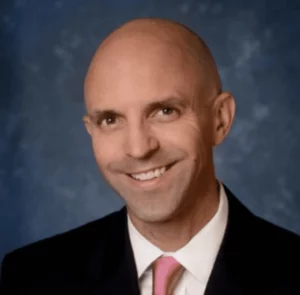
Joey Sudomir
That strategy starts with identifying and implementing tools that meet the most pressing needs. For instance, they recently rolled out generative AI for chart summaries, which can be used to quickly create reports. The results, he noted, have been overwhelming positive. “We’re seeing efficiency improvements, which has been great.”
What they want to avoid is introducing too much change at once – not an easy task in today’s environment. “The pace at which Epic has started deploying over the last year has taken off,” he noted. The challenge for leadership is to “keep up with what they’re making available,” while still staying true to the goals and timeframes they’ve established.
One of those involves ambient listening, which has been live in physician clinics and urgent care for more than two years. The technology has garnered positive feedback for its ability to automate transcription and documentation, enabling providers to focus more on patient interactions. “We’re deploying tools that are helping people to their jobs,” Sudomir stated.
The next destination for ambient is most likely nursing, for which they’ll partner with Nuance. “There’s a lot of conversation about moving to a more mobile nature with nurses,” he said, adding that Epic’s Rover, a mobile app for nursing, will also be in the mix. “This completely changes the paradigm of a nurse’s interaction in the patient room. We plan to go full force on this.”
That’s where AI governance plays a significant role. To that end, they’ve developed a system-level program tasked with evaluating, reviewing, and overseeing use cases. As THR’s strategy matures to include “quicker, more agile deployments,” the strategy will continue to morph.
Also critical is the education and messaging piece, which can get lost in the shuffle. “We share our philosophies and blueprints in meetings, but then people don’t hear about it again for a couple of months, so it’s just not sticking,” he said. And while training modules and microsites can play a role in disseminating knowledge, what he really wants is for messaging to become “hardwired” into the fabric. “We need to start empowering from leadership down: what’s our messaging? How can we provide the right opportunities to apply AI within the business functions? We need to lean into that.”
One way is through executive forums, which can be utilized to convey positive messaging and address common doubts. “People are concerned for the future,” Sudomir said. “How does this impact me and my job? We need to convey that although we’re doing some things with automation, it’s automation with a human in the loop. We can automate tasks, but you still have the final button to push.”
Another key component of the organization’s AI ideology is the decision to leverage existing tools – particularly from Epic – rather than producing their own.
“We’re not going to be a development shop,” he said. “There are very few provider organizations that should be doing development,” outside of systems like Mayo Clinic, Intermountain, Providence, and UPMC that have built innovation arms and established a solid infrastructure. “For us, it makes more sense to take a partner and package-solution approach.”
It’s a strategy that has served the organization well in other areas as well, according to Sudomir, who noted that while AI may be “front and center,” it’s only a piece (albeit a large one) of the pie. In 2026, Texas Health is also reviewing the application portfolio suite, exploring the hospital room of the future, and going live with Epic’s Beaker module, along with “basic blocking and tackling” required to support patient care in a secure and efficient way.
And that, he has learned, means transitioning away from long-term strategic plans and embracing “smaller sprints” to ensure the strategy reflects the rapidly evolving landscape. “Things have changed so much in the past decade,” he noted. “By the time you’re in year 7 of a 10-year plan, it just doesn’t make sense, and so we’re now targeting more like a three-year plan.”
It’s a dramatic shift from what was once considered the standard, but for CIOs, change has become a constant. The role itself is no exception, according to Sudomir, who has held the title since 2015. “It has evolved from someone you rarely see or hear from, to a trusted business partner; someone who sits in on executive decision-making meetings.”
The catalyst – or at least, the primary catalyst – for the shift? Meaningful Use, which he referred to “the first true technology revolution in the healthcare provider space. It completely flipped how we think about technology as leaders. In my opinion, we’re sitting on the precipice of potentially the second with AI.”
As with Meaningful Use, the shift toward AI is forcing CIOs to step out of traditional boundaries and embrace new skills. Now, “it’s really more about business acumen and understanding how to apply technology to achieve results on the business side,” he said. “It's been a crazy evolution of our role.”
And it’s not going to stop anytime soon, according to Sudomir, who believes that going forward, more CIOs will come from the operational and project management worlds, “where they see more business in action,” and consequently, can provide a broader perspective.
Finally, it’s important not to underestimate other key leadership attributes. “You have to be interested in learning and rolling with the changing pace of technology and the new opportunities created by AI,” he said. “But on the flip side, you can’t be a dreamer, because dreamers don’t have to live off a checkbook. You have to be practical. There is so much information, so many tools, and so many people coming at you, and you have to be able to manage all of that. This is still a cost-constrained activity; you have to find that balance between inquisitiveness and practicality.”

Questions about the Podcast?
Contact us with any questions, requests, or comments about the show. We love hearing your feedback.

© Copyright 2024 Health Lyrics All rights reserved