In the past few years, healthcare has seen an unprecedented amount of mergers and acquisitions, and 2026 promises to deliver more of the same, according to industry experts. And as this consolidation continues to shape strategic objectives, it’s becoming clear that how big or how quickly an organization expands is not as important as why it’s growing and the approach being used to navigate that growth.
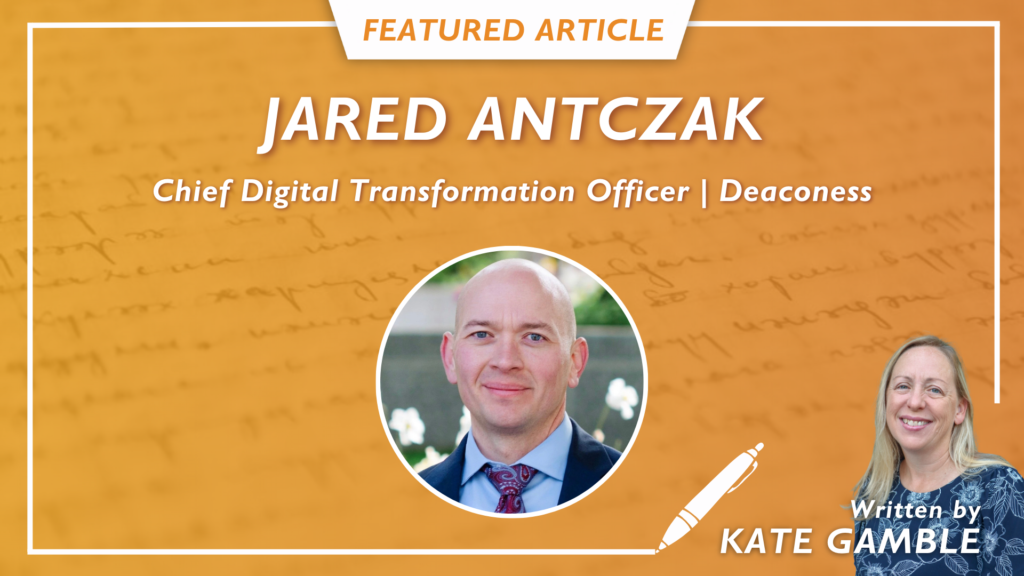
For Deaconess, which has scaled up significantly since 2018, the objective is to “enable smaller hospitals to thrive while alleviating some of the access pressures on larger facilities," said Jared Antczak. “We’re investing in communities and hospitals, recruiting providers, and establishing new service lines. It’s good for the patients, it’s good for smaller, local communities, and it’s good for Deaconess as a whole.”
“It’s a very different growth strategy than I’ve seen with other health systems,” he said, which tend to prioritize increased market share and revenue. Deaconess, on the other hand, “created a win-win strategy that allowed patients to receive care close to home.”
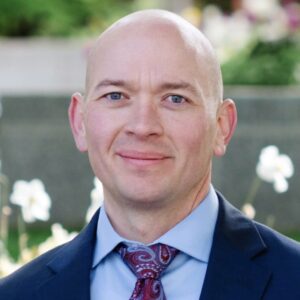
Jared Antczak
And in fact, it was that commitment that drove Antczak to accept the role of Chief Digital Transformation Officer in September 2024. “Their story around growth really caught my attention.”
Recently, he spoke with This Week Health about his journey so far, sharing insights on what it takes to successfully navigate M&A without crippling other areas of the organization, and the challenges facing rural healthcare facilities.
Those challenges can’t be overstated, noted Antczak. “We’re at a real inflection point as an industry. We’re experiencing some big dynamics and pressures,” particularly in terms of reimbursement changes, workforce shortages among physicians and nurses, and increasing demand brought on by the aging Baby Boomer population.
“All of these factors are hitting at the same time,” particularly in the rural health setting, where bed management has long been a sticking point. In Deaconess’ case, hospitals based in cities like Evansville, Ind. tend to hover at capacity, while critical access hospitals “struggle to remain financially viable.”
That’s where larger organizations can play a key role – by helping smaller facilities to thrive while enabling bigger facilities to take on higher acuity patients, according to Antczak. “It’s not growth for the sake of growth,” he said, noting that Deaconess isn’t afraid to turn down opportunities. “We want to be very intentional and look at opportunities that complement us as a growing system while helping to stabilize these communities. That’s the perspective we’ve taken when selecting opportunities to partner.”
A prime example is the recent addition of Hopkinsville, Ky.-based Jennie Stuart Health, which was part of an effort to strengthen physician recruitment and expand specialty services, while investing in technology, according to the organization. Sure enough, within four days of closing on the transaction, Jennie Stuart went live on Deaconess’ instance of Epic, and had begun to stabilize the revenue cycle. It showed, according to Antczak, “how nimble we’re able to move to get smaller hospitals operationally viable.”
The true challenge – something he believes has frustrated many systems – is figuring out how to provide balance and sustainability to newly acquired facilities while still advancing the overall organization. To that end, his team has developed a strategy: run, grow, transform.
“The pipeline isn’t slowing down. We need to grow and extend our capabilities into more communities,” he said. “We have to be able to run the business and support operations. We have to have rock solid, reliable, secure systems, and we have to optimize what we have.”
At the same time, they need to prioritize innovation. “We need to tap into technologies that have the potential to transform how we work and bring new capabilities to bear.”
And although it can be taxing at times, it’s critical to tackle these goals simultaneously, according to Antczak. “I’ve seen larger health systems go down a path where they experience growth and go through a period of optimization and stabilization, and then try to innovate,” he noted. “The challenge with that sequential model is that it takes a long time to get to innovation and transformation, and you end up missing out on opportunities.
Another is that once an organization reaches a point where it’s ready to transform, it has become “so big and complex that it becomes very difficult to transform and innovate at scale,” he said. “The risk we run, I think, is over-indexing on one of those at the expense of others. We can get so focused on running, growing, or transforming individually that we end up neglecting the other two. The reality is that we have to be able to do all three, simultaneously and effectively, finding the appropriate balance with dedicated teams and resources.”
Doing so, of course, isn’t going to be easy, and for many organizations will require a fundamental shift in thinking. Fortunately, this is nothing new for healthcare leaders.
“We have to adapt,” said Antczak. “The capabilities that continue to evolve at an exponential pace are prime opportunities to tap into to help enable and empower a lot of that transformation in terms of how we redefine roles and how we ultimately provide care at a higher quality and in a more sustainable way.”

Questions about the Podcast?
Contact us with any questions, requests, or comments about the show. We love hearing your feedback.

© Copyright 2024 Health Lyrics All rights reserved