The idea of leveraging genetic data in healthcare isn’t new. It’s been more than two decades since the human genome was first mapped, and there’s been no shortage of groundbreaking discoveries in the ensuing years.
Everyday use, on the other hand, hasn’t quite made the leap – at least, not for most organizations.
But at Frederick Health, a 261-bed community hospital based in Maryland, clinicians are using genetic data to create personalized disease prevention and treatment plans, which is leading to a higher level of care. The catalyst, according to CIO Jackie Rice, is being able to integrate genetic information from different labs into the EHR and present it to physicians at the point of care.
When it was first introduced in 2021, she felt it had the potential to be a game-changer.
Sure enough, data gathered from the first two years of the Precision Medicine and Genetics program yielded impressive results: a 25-minute time savings for every genetic test ordered, and a 50 percent reduction in the number of steps in the genetic test results process.

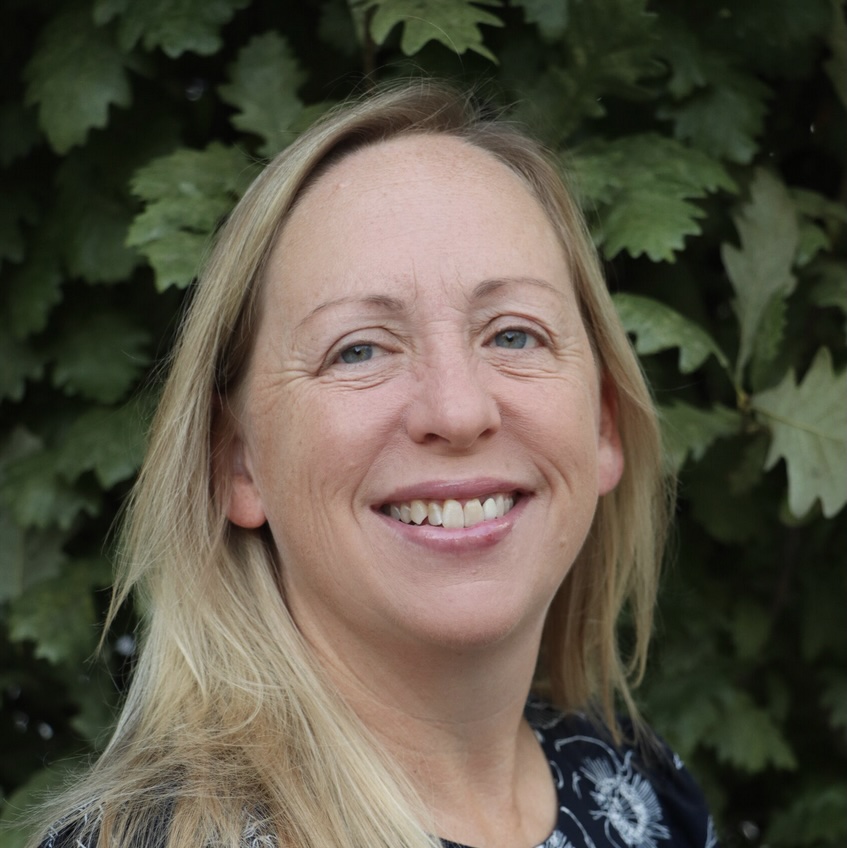
Jackie Rice
“I believe that genomics will be part of routine care across all specialties in the very near future, and be as commonplace as vital signs and routine laboratory diagnostics,” she noted. “We’re going to get vital signs, lab work, and genetic testing, and use them to make specific medical decisions.”
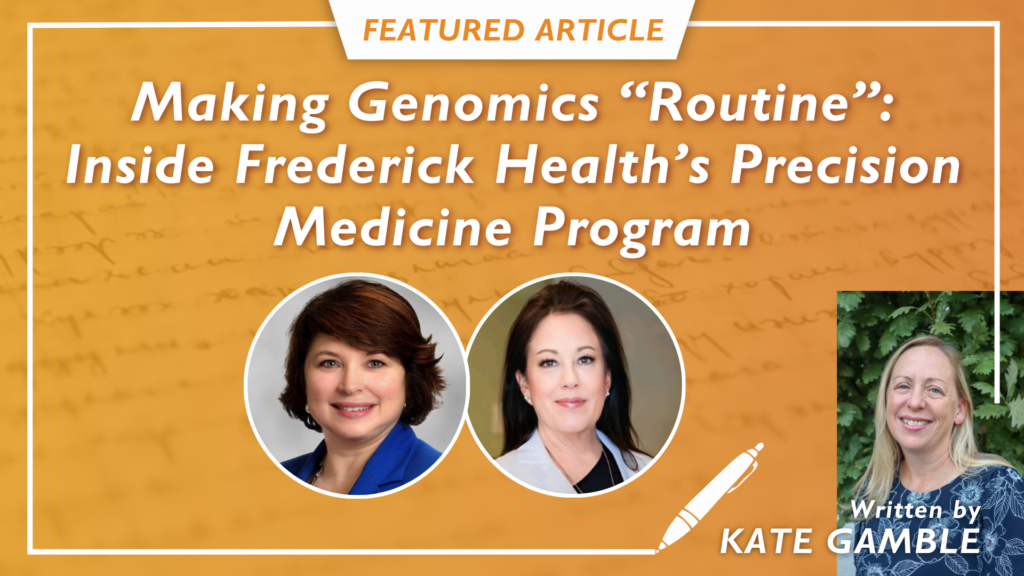
Doing so, of course, requires a significant investment and a great deal of collaboration and legwork. Recently, This Week Health spoke with Jackie Rice and Patricia Rice, Clinical Director of Precision Medicine and Genetics at Frederick (not related) about how the program is structured, what’s required to successfully implement and maintain it, and the benefits it offers for both patients and providers.
The premise itself is simple: any physician at Frederick can order a genetic test from the EHR, receive the results as discrete data in patient charts, and access interpretation and guidance within their EHR. The ability to extract genetic data from multiple labs – and present it at the point of care – is a key component.
“Providers can’t spend time clicking out and going to yet another portal,” Jackie Rice noted. “I say this all the time, about everything we do; we have to put information into their workflow in order for it to be helpful.”
It also has to be presented in a language that primary care physicians – who don’t tend to have an extensive background in genomics – can easily understand. But when physicians are given reports that are 20-30 pages long and need to be scanned, that’s not the case. Not only does it take time away from face-to-face care, but it can also prevent them from finding critical information.
“A patient can be on a statin and it won’t do a thing for them,” she noted. However, if patients undergo genetic testing, it can help unlock potentially life-saving information, particularly when it comes to antidepressants. “Seventy-five percent of genetic information is on just a few genes.”
And with the right pillars in place, providers can access that critical data and take action.
One of those pillars, according to Pat Rice, is clinical decision support. With Frederick Health’s solution, providers can click on the genetics tab to learn what testing a patient has undergone, and gain access to discrete results that may contain critical pieces of information. For example, if a patient has a BRCA1 mutation, and then develops cancer, they may be eligible for a very effective, targeted therapy.

Patricia Rice
Having all that data in one place has also helped dramatically improve the ordering process, according to Pat Rice. “Before, we had to enter all of the demographic information, the ICD-10 codes and diagnostics – that could take 20 minutes. This has sped up the time for order entry while also enabling them to view results discreetly.”
And although time savings are important, what’s just as crucial is ensuring that both providers and patients comprehend the information being presented – and how to proceed with it. To that end, Frederick has focused heavily on education, Jackie Rice stated. When the program was first introduced, providers expressed concerns about being able to effectively communicate with patients about genetic data.
That’s where pharmacy navigators came in. “You have to have the right people in place,” she said. “I don’t think you can start this – have the labs, do the testing, and put it out there – if you don’t have someone who can review it all with the patient,” while also offering support to physicians.
As technologists, “our job is to make sure clinical providers have all the information they need upfront, and they don’t have to click 10 times to try to get it,” Jackie Rice noted. “We put in tools that can flag conditions and ensure information is being accessed by the right parties.
Along with using pharmacy navigators, Pat Rice offered a few more helpful nuggets. First, “securing buy-in from the C-suite, ensuring they’re educated about precision medicine and the workflows and processes involved,” she said.
Second, creating not just a steering committee, but a “strong, passionate team,” with representatives from lab, oncology, IT, marketing, HR and other areas, to oversee the development and expansion of the initiative. “You need a team that’s really dedicated to this,” she added. “It’s not easy work, but it’s for a great cause.”
What organizations should not do, Jackie Rice cautioned, is expect immediate ROI, as it can be difficult to quantify. And so, rather than focusing on hard numbers, her team highlights what they call ‘Hearts and Minds stories’ that illustrate how genetic testing has led to improved outcomes, whether that means better treatments or earlier detection of a disease.
“This has been so beneficial to our community,” she said. “We’re so passionate about this, and we’re excited to see it grow.”

Questions about the Podcast?
Contact us with any questions, requests, or comments about the show. We love hearing your feedback.

© Copyright 2024 Health Lyrics All rights reserved