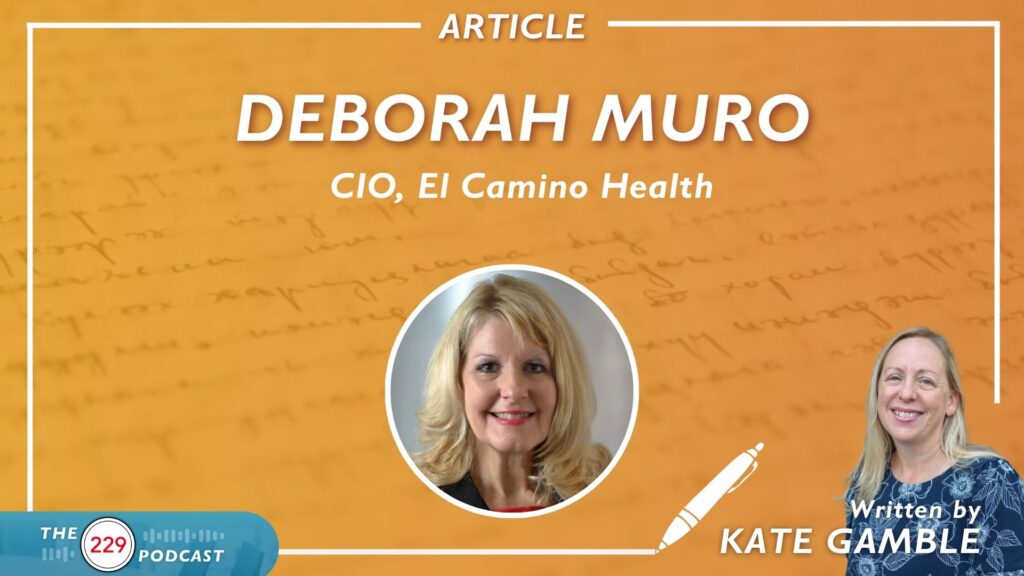
As healthcare organizations continue to prioritize digital transformation – and face the myriad challenges that come with it – there’s no shortage of opportunities to “move the dial.”
Perhaps the most glaring, however, is in patient scheduling. According to Deborah Muro, CIO at El Camino Health, noting that less than 20 percent of consumers are leveraging the capability – and that’s being generous.
“The retail industry would never accept that,” she said during a 229 Podcast interview. Neither does El Camino, which has always been on the cutting edge of technology. In fact, the California-based system was the first organization in the country to implement an EMR, developing a platform in conjunction with Lockheed Martin.
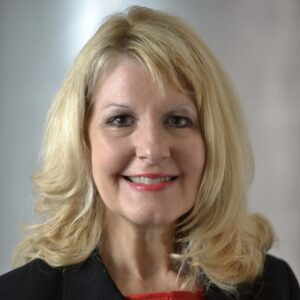
Deborah Muro
And so, when Muro joined the organization in 2014, she was excited to be part of a forward-thinking culture, and spent the next several years positioning El Camino for success in the digital era.
“We spent a lot of time doing what we needed to do for lifecycle management,” she said. “Now, we’re at a place where we’re innovating and transforming while we grow as an organization.”
One of those target areas? Patient experience, which is particularly critical in areas like Silicon Valley where expectations for tech-driven care are sky-high. To that end, her team is focused heavily on removing friction on the front-end. “We brought in scheduling technology that sits on top of the EMR and brings the consumer, wherever they are, to our website or scheduling tool,” and provides them with options based on their preferences, she noted. For example, an individual with back pain could go to urgent care, book an appointment with a primary care physician, or opt for a virtual visit. The goal is for El Camino to have already ironed out any insurance challenges, enabling the patient to focus on their care.
“One of our biggest goals is to deliver on patient experience,” Muro stated. “Retail is constantly bringing people into their products and their ecosystem. We have to do that in healthcare. We need to meet them where they are, personalize the experience, and guide them through their care journey.”
Of course, there are other objectives, many of which leverage AI capabilities to improve patient outcomes and reduce the administrative burden. One of the 30-plus use cases across El Camino is Deterioration Index AI, a class of machine learning models used to predict events such as cardiac arrest and identify patients at risk for falls. So far, they’ve seen “a decrease” in incidents, Muro noted.
In addition, the organization is leveraging AI in radiology to help prioritize image viewing and help uncover incidental findings – “things that wouldn’t have been seen by the human eye,” she said. What it means is that a chest X-ray that was ordered for one reason could surface other issues that AI can detect, such as a nodule or occluded vessel, which can set patients on the right treatment course.
As a result, El Camino has seen impressive adoption among radiologists. “They’re seeing the value,” Muro said.
It’s especially exciting for leadership, as adoption has been a major hurdle when it comes to AI implementation. “It’s the hardest part of the job for a CIO. You need to make sure you’re removing the roadblocks and understanding the pain points. That’s the real work we do.”
That work, she has found, requires a solid governance process. To that end, her team has created an AI steering committee composed of leaders from various departments. Once they’ve had a chance to assess risk and value, a decision is made on how and when to deploy it.
“There’s so much interest in AI throughout the organization,” she stated, noting that the next phase will likely include layering ChatGPT on top of the EMR “so that we can answer our own unique questions.”
Another factor that has weighed heavily in El Camino’s use of AI is interest among nursing leaders, who are “very engaged in decision making,” according to Muro, particularly when it comes to ambient listening. By having nurses work closely with vendors, they can more effectively determine readiness among users and optimize systems.
“We believe in the benefits of going from documentation to voice-to-text, and our goal is for it to become the decisive choice for nurses,” she said. “But it’s a challenge out of the gate and it has to be done well.”
It’s a concept she understands well, having spent time in nursing. Because of that experience, she was able to “approach conversations with empathy” upon stepping into the CIO role, and understand both the workflow challenges clinicians face, and the fact that technology doesn’t always meet those needs.
The best way to remedy that, she believes, is by rounding often – and keeping an “ear to the ground.” By doing so, she noted, “I see what patients are dealing with in the care that we provide, and it really grounds me in the work that I do.”
Importantly, she’s able to share those insights with her team and weave them into the strategy at El Camino, which will continue to move from reactive to proactive care models in the future. “Right now, we wait until a patient walks into the ED to treat them, and we don’t know what’s going to happen,” Muro said. “My goal is to move into a model where we know exactly what’s happening, and can even predict what type of patients will present in the ED.”
As with every initiative, it links back “to our vision and plan so that the work we’re doing is enabling the organization to be successful.”





Questions about the Podcast?
Contact us with any questions, requests, or comments about the show. We love hearing your feedback.

© Copyright 2024 Health Lyrics All rights reserved