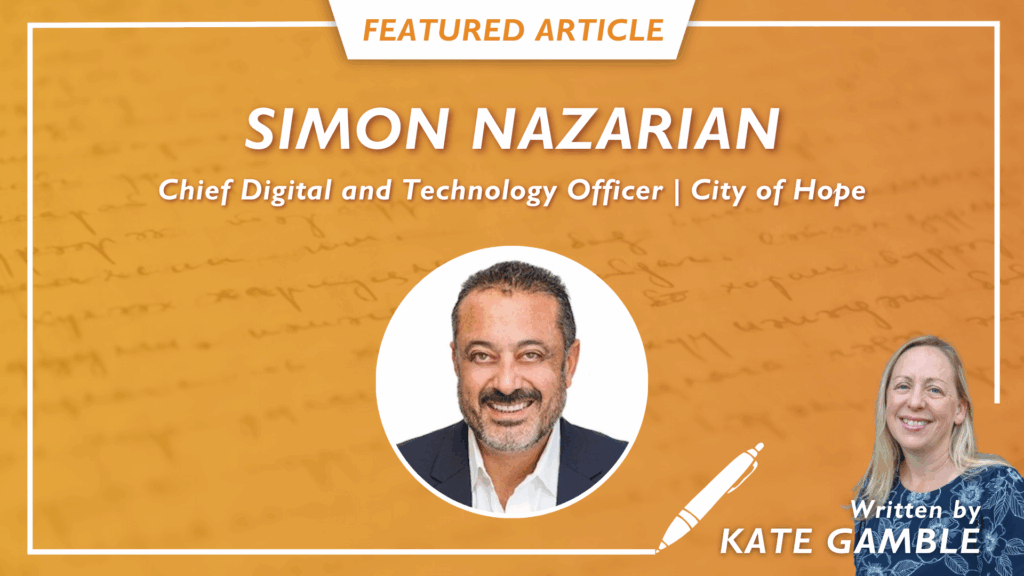
When Simon Nazarian joined City of Hope in September 2024, he saw an organization that was doing extraordinary work in caring for patients with cancer and diabetes. He also saw an opportunity to leverage emerging technologies to advance the digital ecosystem and propel City of Hope to the next level.
In his first year as Chief Digital and Technology Officer, that’s precisely what his team has done.
“Some of the world’s greatest research happens here,” Nazarian said during an interview with This Week Health. “Our goal, first and foremost, is to redefine and accelerate that research, which helps us improve care delivery and provide tools to the marketplace that folks are excited to adopt and utilize.”
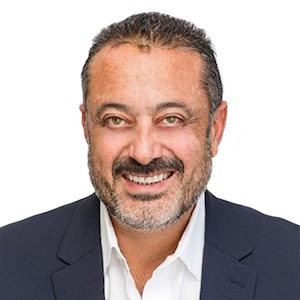
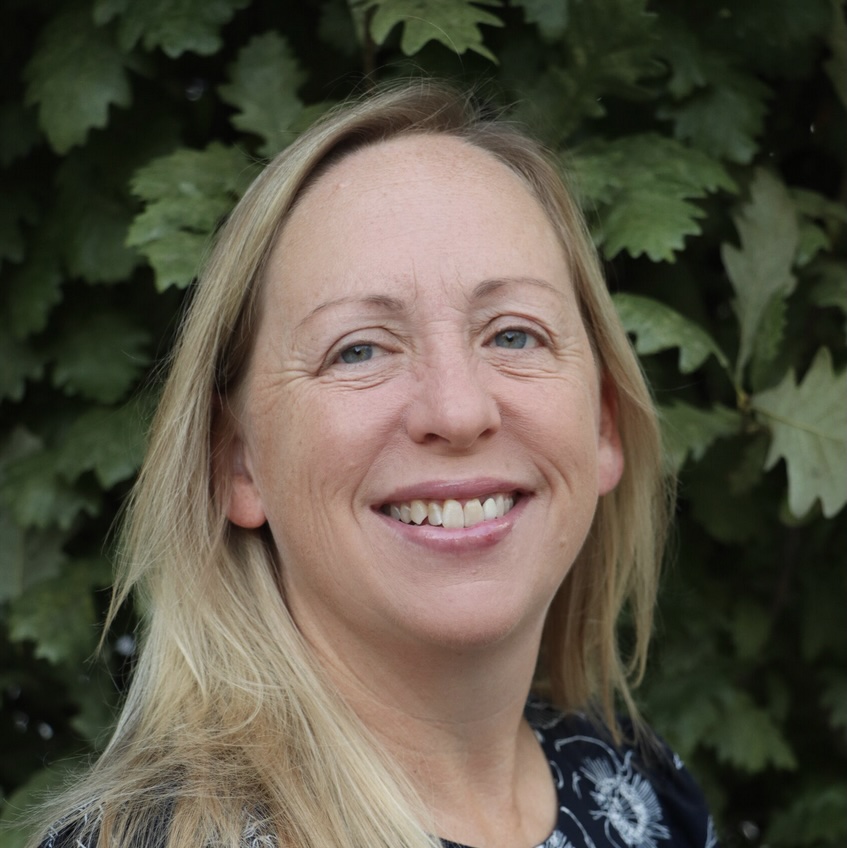
Simon Nazarian
One of those tools is HopeLLM, a generative AI platform that combines multiple commercial and open-source models to assist physicians in summarizing patients’ medical histories, matching them with clinical trials, and extracting data for research. Through the platform, which was engineered and validated in-house, City of Hope is able to drive “more focused, personalized patient care,” while also easing the administrative burden on providers.
It’s a prime example of the leading-edge thinking that he believes will continue to solidify City of Hope’s reputation as a leader in the space. “Our bench to bedside is what distinguishes us,” Nazarian noted. “We have the ability to move quickly and fill gaps with innovation.”
What has made that possible is a concerted effort to “modernize the technology core and make sure we have a resilient foundation to fuel and enable our growth,” which started long before he arrived at City of Hope. “That’s really important.” Not only can it lead to cost and risk avoidance down the road, but having a solid base can position IT teams to be able to “take advantage of all the capabilities out there,” he said. “It’s about harnessing AI, automation, and digital workflows to empower the business and elevate patient care.”
Case in point? HopeLLM, which has created a clinical trials database that’s “streamlined for patient enrollment,” Nazarian noted. The “groundbreaking” model “accelerates research timelines and ensures that patients across the US have access to top-tier cancer treatment without needing to travel far.”
They aren’t stopping there, he said, adding that City of Hope plans to expand the database to grant even more patients access to lifesaving cellular therapies and other biomedical discoveries, including the well-renowned bone marrow transplant program.
And while the response from patients and families has certainly been encouraging, the true boon has been the buy-in from physicians, who have stopped his team in the hallways to thank them for “thousands of hours saved on chart summarization alone,” Nazarian added. Because City of Hope is a referral organization, patients can come with 10,000 or even 20,000 pages of medical history.
With HopeLLM, “we’re able to pull all of that together so that doctors can access it ahead of time, navigate it, and use natural language processing to interact with that information at the point of care.”
Enabling this, however, required more than just the technology piece, he said, noting that change management – and particularly the education aspect – was a key focus. “We’ve made it a practice here to make sure the right training is taking place.”
The first step is getting clinicians involved early and seeking feedback. “You want to understand what exactly they want,” Nazarian said, advising leaders to “pay attention to net promoter scores and be agile so that you can iteratively continue to improve the product.”
The next is to be deliberate in how solutions are deployed, ensuring that each round of users is truly ready. “Oftentimes when they see their colleagues using something, they ask, ‘when are you rolling it out to us?’ But we need to make sure it doesn’t become shelfware.”
Finally, he urged colleagues to listen, especially when it comes to developing ideas or piloting solutions. “It’s one of our core values,” Nazarian noted. “We’ve learned that by listening, we’re able to uncover where innovation is really needed.”
The best source? Frontline staff. “They’re the ones who are doing the work. They can tell us what to innovate and where so that they can do things better, faster, cheaper at the point of care,” he said. Those who are closest to the patient can also provide key insights to improve diagnosis and early detection based on emerging patterns.
In fact, his team has a backlog of use cases for solutions – not just those that leverage AI and machine learning, but also traditional technologies. “Because we have an agile framework, we’re able to meet those demands. We’re not doing anything earth-shattering,” he continued. “We’re applying classic change management practices in a world of emerging technologies.”
As a result, City of Hope is able to help patients and caregivers more effectively navigate the care journey, through the life cycle of the disease and beyond.
“We want to continue to be part of their lives,” Nazarian said. “This gives us the opportunity to do that.”

Questions about the Podcast?
Contact us with any questions, requests, or comments about the show. We love hearing your feedback.

© Copyright 2024 Health Lyrics All rights reserved